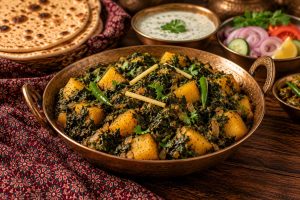
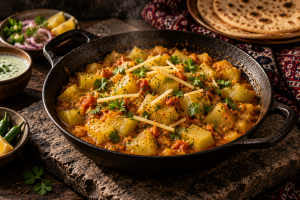
Arvi Gosht
اروی گوشت
Slow-simmered beef and tender taro in a rich masala
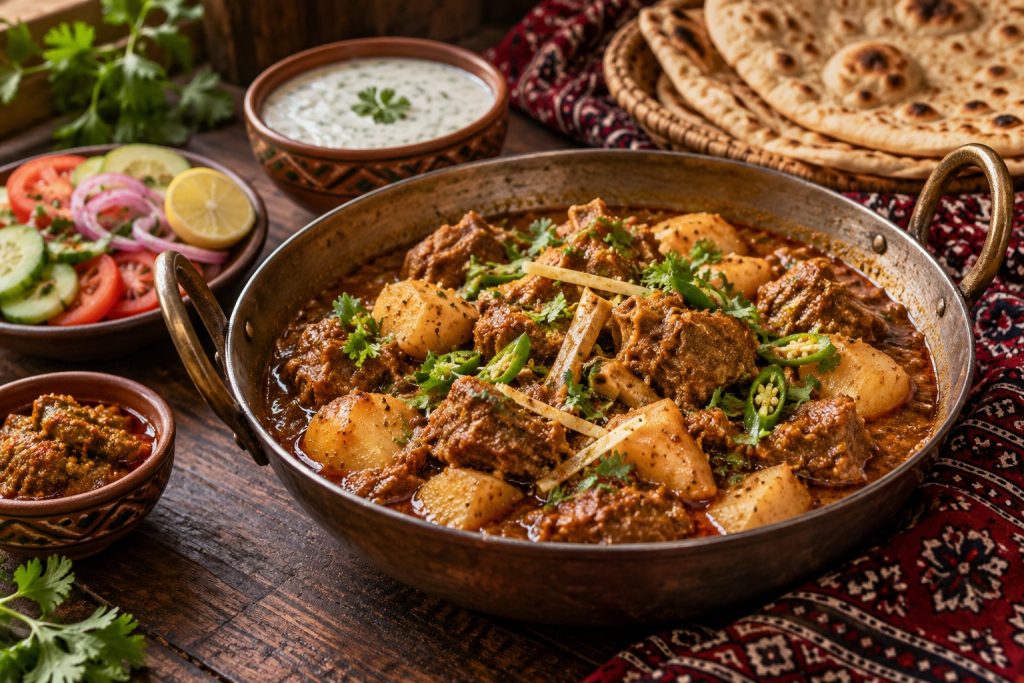
Pakistani meat-and-taro curry with tender beef pieces and thoroughly cooked edible arvi in an aromatic tomato gravy.
One tablespoon = 15 ml; one teaspoon = 5 ml.
About Arvi Gosht
Pakistani meat-and-taro curry with tender beef pieces and thoroughly cooked edible arvi in an aromatic tomato gravy.
Personally cooked and tested by Zohair Fakhar for DailyLife.pk. Cooking times can vary with your stove, cookware and batch size; follow the texture and doneness cues in the method.
Make it work for your kitchen
Also known as arvi gosht.
Original quantities serve 4. Cooking times, pan size and frying-oil depth do not scale, cook in extra batches instead.
Before you start
Before you start
Measure and sequence Prepare vegetables and spices, then arrange the pan. Soak or pre-boil longer-cooking ingredients first as specified. No heat Within prep
Set up the equipment
Have the following tools ready before starting: Wide heavy-bottomed lidded frying pan or saucepan; Knife, chopping board, spatula, measuring scale and spoons.
Clean workspaceMeasure the ingredients
Measure the ingredient quantities for your selected servings before applying heat. Keep separately listed groups, such as dough, filling, sauce or garnish, in separate containers; keep any optional additions separate.
Use the ingredient list aboveCheck allergens and substitutions
Check ingredient labels and any substitutions against these notes: Milk in yogurt; check spice mixes and cross-contact
Before cooking
Step-by-step cooking method
1 Prepare the meat and arvi
Pat 600 g beef dry and cut into even chunks. Scrub the 650 g edible taro; wash, peel carefully with clean utensils and keep separate from ready-to-eat foods.
2 Brown onions and aromatics
Heat 45 g oil in a heavy pot over medium. Brown 220 g onions for 8–10 minutes, then add 4 g cumin and 25 g ginger-garlic for 1 minute.
3 Develop the meat masala
Add beef and stir 6–8 minutes until surfaces are no longer raw.
4 Develop the meat masala (continued)
Stir in 250 g tomato, 9 g coriander, 2 g turmeric, 4 g chilli and 8 g salt; cook 6–8 minutes until thick. Mix in 90 g yogurt off high heat to limit splitting.
5 Simmer meat until nearly tender
Add 700 ml from the measured 1000 ml hot water. Bring to a simmer, cover loosely and cook on low 55–85 minutes, turning occasionally. Add from the remaining measured water when needed. Beef must become fork-tender before the taro is added.
6 Cook edible taro thoroughly
Cut peeled taro into thick even chunks and add to the gently simmering beef gravy.
7 Cook edible taro thoroughly (continued)
Cover and simmer 20–30 minutes, or until every piece is completely cooked through and fork-tender with no firm or irritating interior. Do not taste undercooked taro.
8 Finish and serve
Uncover to reduce gravy 4–7 minutes without mashing taro. Add optional 15 g chillies and 15 ml lemon juice; rest off heat for 5 minutes. Verify the beef is tender and taro fully softened.
Chef’s tips
- Tenderize the beef before adding taro: prolonged simultaneous cooking can dissolve the arvi while the meat remains tough. Only use edible commercially sourced taro and cook completely.
- Use a wide pan and check texture rather than treating times as a guarantee.
Common mistakes & quick fixes
- Beef tough
- Simmer meat longer before introducing taro.
- Arvi falls apart
- Use large chunks and stir gently.
- Taro irritates mouth
- Do not serve undercooked or non-food-grade taro; use verified edible variety and cook thoroughly.
Variations & serving ideas
Variation: Adjust chilli to taste.
Variation: Serve with roti or rice; accompaniments excluded from nutrition.
Perfect result check
| Check | Fork-tender beef and fully softened edible taro in a cohesive gravy. Check the taro with a knife, never by tasting an undercooked piece. |
|---|
Storage & reheating
| Cooling | Refrigerate promptly | Transfer to shallow containers promptly and refrigerate within 2 hours (1 hour if ambient temperature exceeds 32°C). |
|---|---|---|
| Fridge | 3–4 days | Keep at 4°C or below and use within 3–4 days. Freeze promptly cooled portions in sealed containers for longer keeping, then thaw in the fridge; the taro may become softer. |
| Reheating | Reheat until the centres of the meat and taro reach 74°C/165°F, checking with a food thermometer. Stir or turn gently so the gravy heats evenly; add a small splash of water if needed to prevent catching. |
Know when to change the heat
| Stage | Heat | What to look for |
|---|---|---|
| Onions and meat masala | Medium heat | Brown the onion while stirring, then cook the meat and tomato-spice base without scorching the bottom of the pot. |
| Covered simmer | Low, gentle simmer | Keep enough liquid to prevent sticking. Beef becomes nearly fork-tender before adding taro; continue until the largest taro pieces are soft throughout. |
Helpful answers before you cook
How do I know it is ready?
Check the two main ingredients separately: the beef should yield easily to a fork, and a knife should pass through the centre of the largest taro piece without a hard core. Reduce excess gravy gently at the end. Never taste raw or undercooked taro; use edible roots from a reliable food seller.
Why does the beef cook before the arvi goes in?
Beef stew cubes need a longer simmer than taro chunks. Bring the beef close to fork-tender first, then add evenly cut taro and continue until it is thoroughly softened. Adding both at the beginning can leave broken taro while the meat is still tough. The stated times are guides; check each ingredient.
How do I thicken the gravy without crushing the arvi?
Use a wide pot and simmer uncovered near the end, lifting and turning gently rather than stirring vigorously. If the taro is already very soft, transfer the cooked pieces briefly to a clean covered dish while reducing the gravy, then return them to heat through. Avoid reducing over fierce heat, which can scorch the base.
Can I make it ahead?
Yes. Divide the cooked curry into shallow containers and refrigerate promptly rather than leaving a deep pot on the stove. The taro can soften during storage. Reheat only the amount needed, turn the pieces carefully and check the centre temperature as described below.