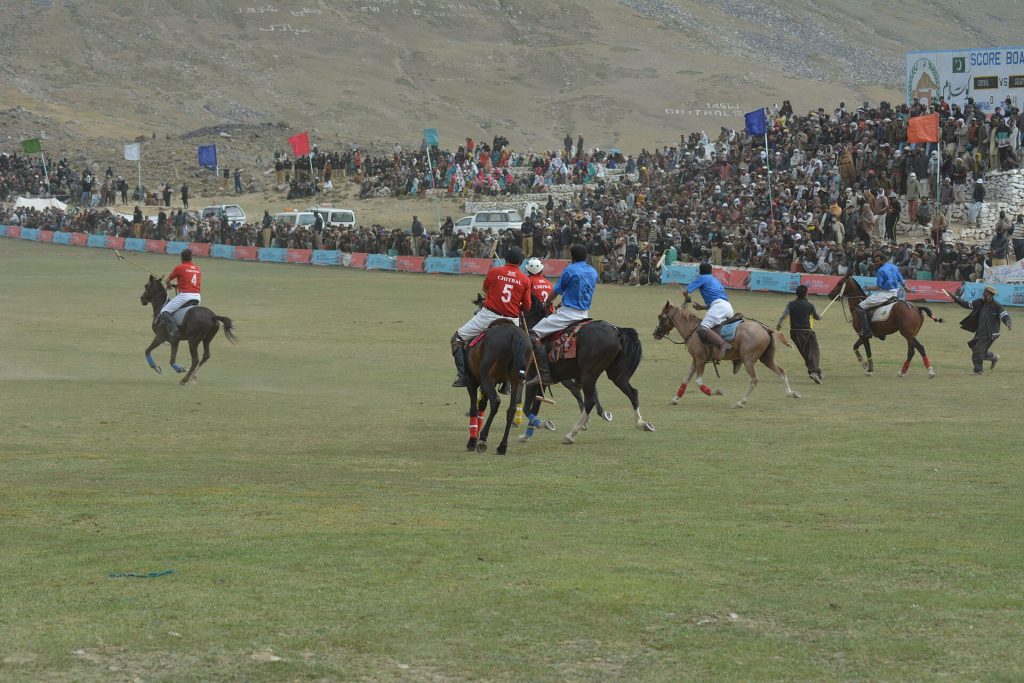
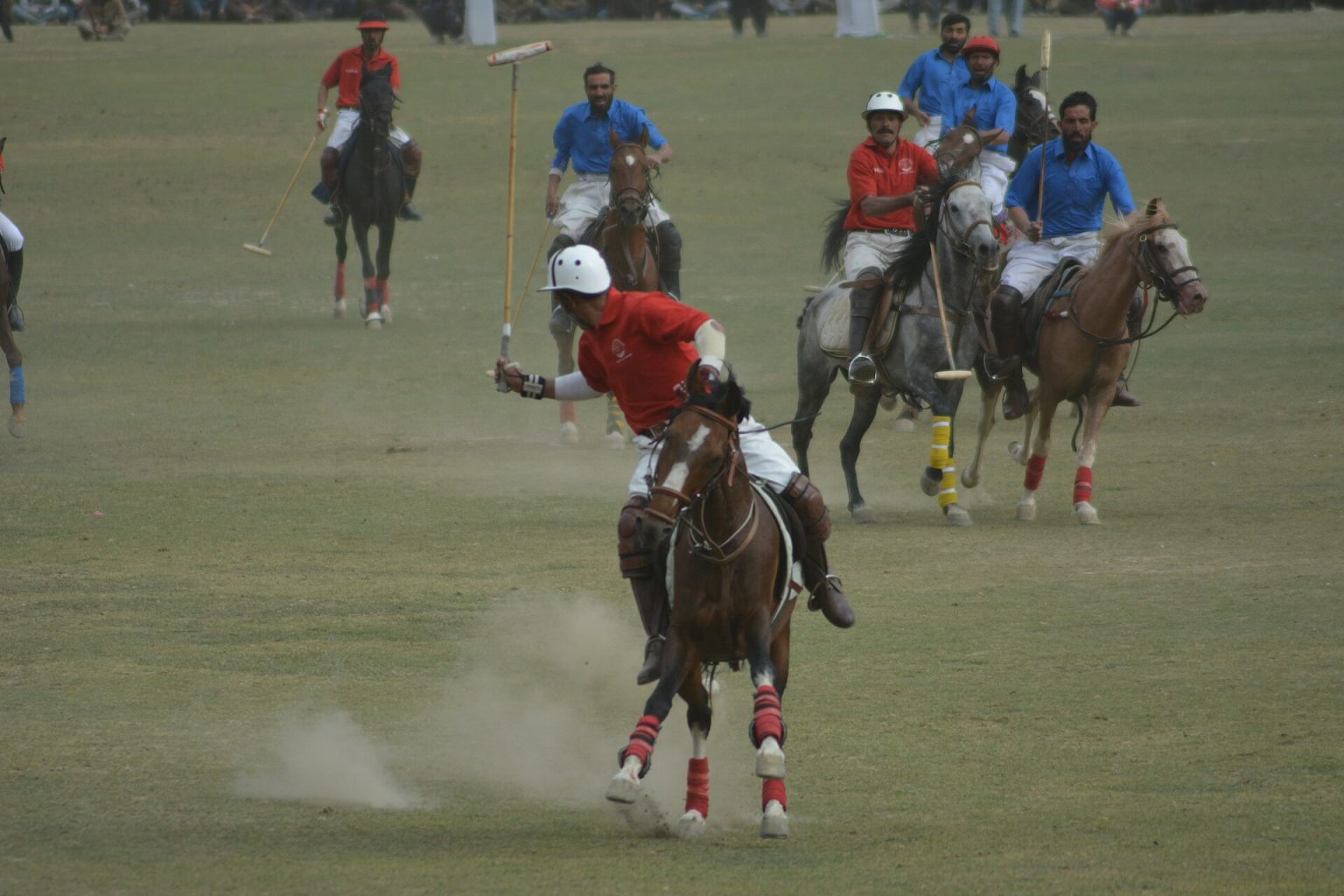
Horsemen playing polo at the Shandur Polo Festival

Sports

Traditional Sports of Pakistan: Mud PitsMountain Polo and Rooftop Kites

Kabaddi in Punjab's villages, wrestling in earthen akharas, freestyle polo in the mountains, tent pegging at country fairs and the return of Basant: the games Pakistan played long before cricket.

  • Village fairs to national festivals
  • Polo at about 3,800 m at Shandur
  • Basant returned to Lahore in February 2026

Shandur Pass

2020Circle-style Kabaddi World Cup in LahorePakistan won the final (SBS, February 2020)
c. 3,800 mHeight of Shandur polo groundAbout 12,500 ft (Dawn)
1910Gama Pehlwan's John Bull BeltWon in London
2007Kite-flying ban in PunjabRegulated return for Lahore's Basant, 6–8 February 2026 (Dawn)

Games Older Than the Nation

Long before cricket and hockey arrived with the British, the people of what is now Pakistan were wrestling in mud pits, racing horses, chasing goats across the plains and flying kites from their rooftops. Many of those games survive. Some are part of daily childhood, gulli danda in a village lane, marbles in the dust, while others are the centrepiece of seasonal fairs (melas), harvest celebrations and mountain festivals that draw thousands of spectators.

These sports are closely tied to place. Kabaddi and kushti belong to the villages and old cities of Punjab; malakhra wrestling to rural Sindh; freestyle polo to the valleys of Gilgit-Baltistan and Chitral; buzkashi to the Afghan border lands and the high Pamir pastures; tent pegging to the horse-breeding districts of northern Punjab. Together they tell a story of agrarian life, of martial traditions and of communities finding entertainment with little more than open ground and a crowd.

Traditional sports face real pressures, urbanisation swallowing village grounds and akharas, the dominance of cricket on television, and limited funding, but several have found new audiences through festivals, international tournaments and social media.

The Shandur polo ground and spectators on the high plateau
Freestyle polo at the Shandur Polo Festival

The Sports at a Glance

KabaddiA contact team game in which a raider, chanting 'kabaddi', tries to tag opponents and return without being held. Punjab's outdoor circle style is the most popular form in Pakistan.
Kushti (pehlwani)Traditional wrestling in earthen pits called akharas, with a strict regime of training, diet and devotion. Lahore and Gujranwala are its historic centres.
MalakhraSindh's folk wrestling, in which each wrestler grips a cloth twisted around the opponent's waist and tries to throw him. Often staged at fairs and on holidays.
Freestyle poloThe fast, rough mountain game of Gilgit-Baltistan and Chitral, played with few rules to the music of drums and pipes.
BuzkashiMounted riders battle to carry a goat or calf carcass to a scoring circle. Played in Chitral's high valleys and by Afghan communities in Quetta.
Tent pegging (neza bazi)Riders at full gallop try to spear and lift a wooden peg from the ground with a lance. A highlight of melas and horse shows.
Gulli dandaA street game played with a short wooden peg (gulli) and a stick (danda), a cousin of cricket and baseball.
Kite flying (patang bazi)Rooftop kite battles, above all at Lahore's spring festival of Basant, which returned in 2026 under strict regulation after a long ban.

Kabaddi: Punjab's Game of Breath

Kabaddi needs no equipment, just a patch of level ground and a lot of strength and nerve. A raider crosses into the opposing half, chanting 'kabaddi' without pause to show he has not drawn breath, and tries to touch as many defenders as possible before returning. The defenders try to catch and hold him. Two main forms exist: the indoor standard style played at the Asian Games and in professional leagues, and the outdoor circle style rooted in Punjab, which is the form most often seen at village fairs in Pakistan.

In February 2020 Pakistan hosted its first circle-style Kabaddi World Cup, organised by the Government of Punjab with matches in Lahore, Faisalabad, Kartarpur and Nankana Sahib. Ten teams took part, and Pakistan won the final in Lahore, beating an India side by two points. The Indian team's participation was disputed at home, India's sports ministry said it had not authorised the trip, a reminder that sport in the region is rarely separate from politics.

In rural Punjab, kabaddi remains a fixture of harvest and shrine fairs, where well-known players attract big crowds and prize money.

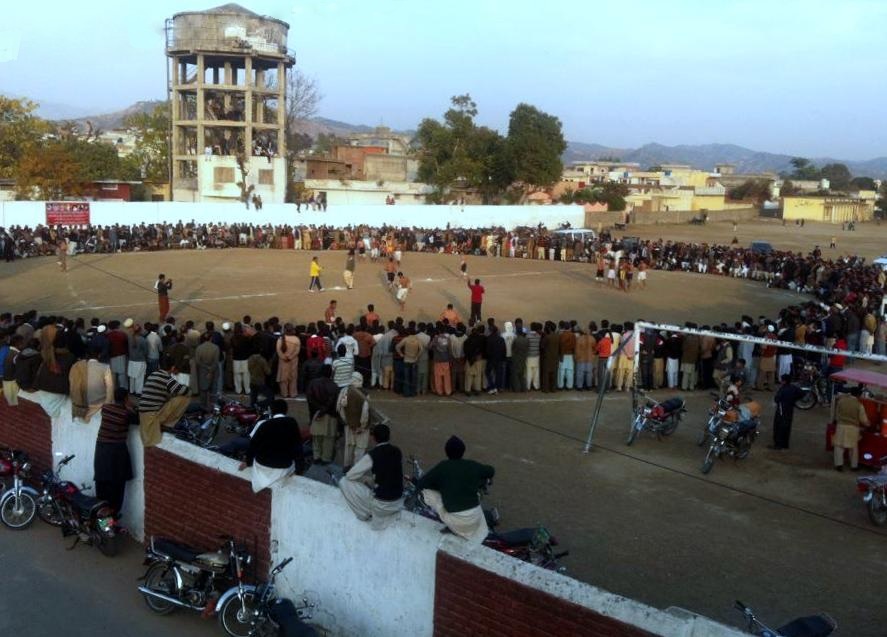
Spectators ring an outdoor kabaddi match in Bhimber
Circle-style kabaddi in Bhimber

Wrestling: Akharas, Gama and Malakhra

Kushti or pehlwani is the wrestling tradition of the Punjab, practised in akharas, soft pits of dug and conditioned earth, often attached to a mosque, shrine or neighbourhood club. Young wrestlers live by a strict routine: early prayers, hours of traditional exercises such as baithak (squats) and dand (push-ups), and a diet built on milk, ghee and yoghurt. Bouts are won by pinning an opponent's back to the earth.

The tradition's most famous name is Ghulam Muhammad, the Great Gama (1878–1960), who won the John Bull Belt in London in 1910 when his opponent, Stanislaus Zbyszko, failed to appear for a rematch after a drawn first bout. Gama settled in Lahore after Partition and died there. His family continued the tradition: his nephew Bholu Pehlwan won the title of Rustam-e-Pakistan in 1948 and dominated Pakistani wrestling for years.

Gujranwala, nicknamed the City of Wrestlers, and the old quarters of Lahore are the historic heartlands. Wrestlers and trainers have long warned that akharas are disappearing as land is built over and sponsors look elsewhere, though annual championships continue in Punjab.

Malakhra in Sindh

Sindh's own wrestling style, malakhra, is regarded as the province's traditional sport. Each wrestler ties a twisted cloth around his opponent's waist and, gripping it, tries to throw him to the ground. Contests are often held on Fridays, holidays and at shrine festivals, accompanied by drums and large rural crowds.

A Pakistani pehlwan (traditional wrestler)
A Pakistani pehlwan

Sports on Horseback

Polo in the mountains

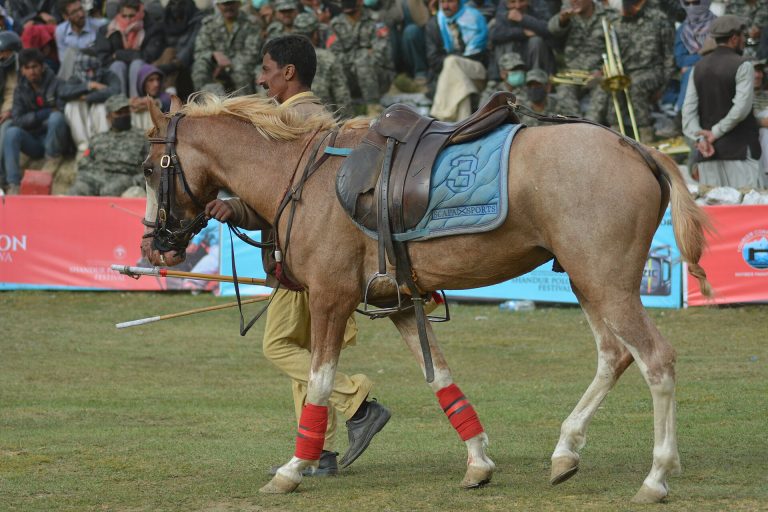
Polo has been played in the valleys of Gilgit, Hunza, Baltistan and Chitral for centuries, and the English word is thought to derive from the Balti word for ball, pulu. The mountain version is freestyle: few rules, small hardy horses and no pause for changing mounts, played to the beat of local bands.

Its most famous stage is the Shandur Polo Festival, held each summer on a plateau at about 3,800 metres between Chitral and Gilgit-Baltistan, billed as the highest polo ground in the world. The first tournament there was organised in 1936, and the festival was revived in 1982.

Explore
Crowds and tents at the Shandur festival

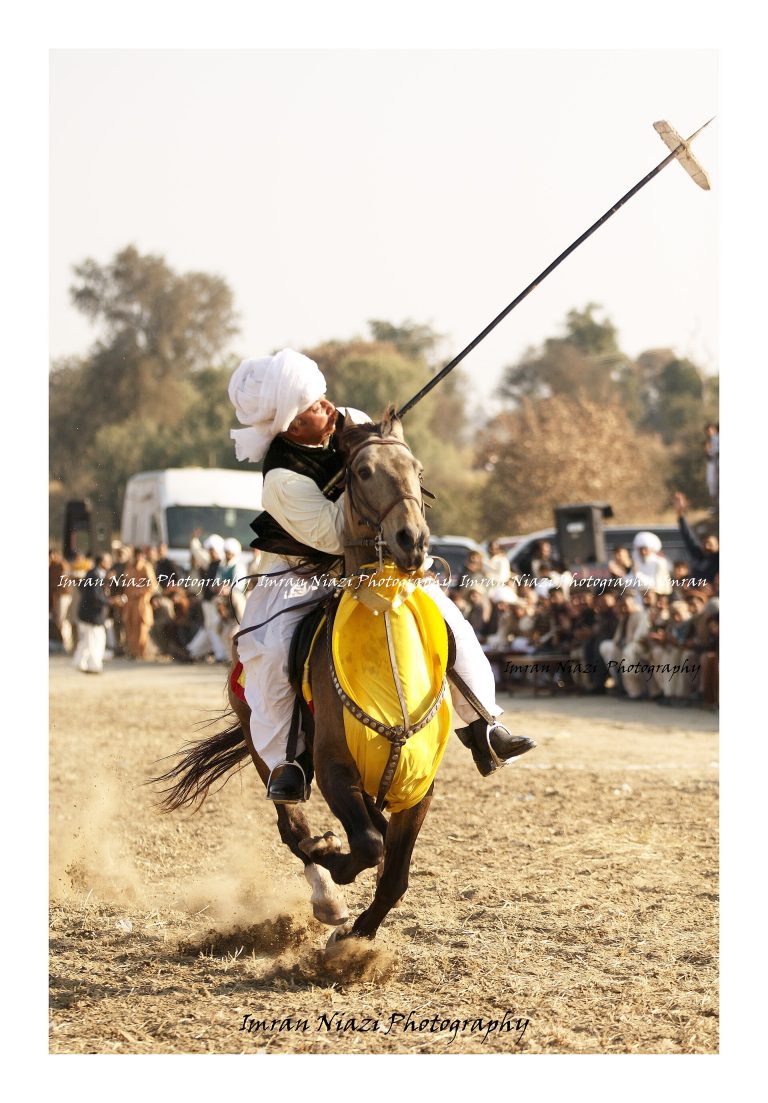
Tent pegging

Known as neza bazi, tent pegging has its roots in cavalry training. Riders gallop at a wooden peg set in the ground, aiming to spear it with a lance about 1.8 metres long and carry it away. Teams compete at melas across northern Punjab, especially around Rawalpindi and Attock, with drums and shehnai adding to the spectacle.

The sport is also contested at the national horse and cattle shows, and Pakistani riders take part in international events. In recent years women riders have formed a national team and, in 2025, a first women-only club.

A rider at full gallop lowers his lance at a tent-pegging event in rural Punjab

Buzkashi and Other Mountain Games

Buzkashi, literally 'goat-pulling', is the national game of Afghanistan and is played across Central Asia. In Pakistan it is seen mainly in two settings. In Quetta, Afghan refugees introduced it in the 1990s, and matches between local clubs are a spring feature, sometimes staged by the Balochistan government. In the far north, in high valleys such as Broghil in Upper Chitral, buzkashi appears alongside yak polo and donkey polo at summer festivals organised by local authorities.

The game is simple and ferocious: riders fight for possession of a weighted carcass and try to carry or throw it into a scoring area. It demands skilled horsemanship and strong, well-trained horses.

Kites and Basant: A Ban and a Return

For generations, Lahore welcomed spring with Basant: families and friends crowded rooftops of the old city, the sky filled with kites, and 'Bo kata!' rang out each time a kite string was cut. Kite flying (patang bazi) was popular across Punjab and in Karachi too.

Over time the festival turned dangerous. Strings coated with glass, chemicals or metal wire caused deaths and serious injuries, especially to motorcyclists whose throats were cut by stray lines, and celebratory gunfire and falls from rooftops added to the toll. The Punjab government banned kite flying in 2007, and the ban was enforced for nearly two decades.

In late 2025 the Punjab government passed legislation regulating kite flying, which lets district authorities permit it under strict conditions. Lahore held a three-day Basant from 6 to 8 February 2026 with rules that included registered kite makers and sellers, limits on kite size, cotton string only, a ban on metal, nylon and plastic cords, and safety wires on motorcycles. Kite flying outside such permitted windows remains prohibited, so check the latest notification from the district administration before buying a kite.

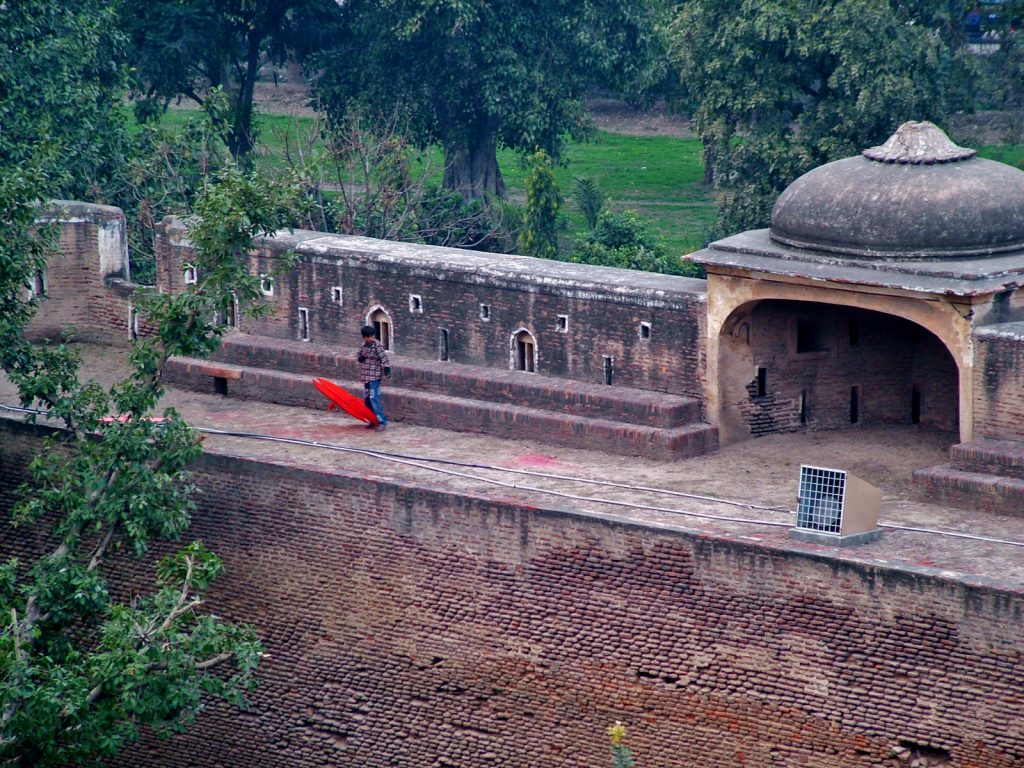
A child flying a kite at Lahore Fort (Shahi Qila)
Kite flying at Lahore Fort

Childhood and Street Games

  • Gulli danda, strike the tapered gulli into the air with the danda and hit it as far as possible; fielders try to catch it.
  • Kanche (marbles), played in lanes and courtyards, with local rules that vary from street to street.
  • Pithu garam (seven stones), one team knocks down a stack of flat stones with a ball and tries to rebuild it while the other team tries to hit them.
  • Baraf pani, a tag game in which players 'freeze' (baraf) when caught and are released with a touch (pani).
  • Tape-ball cricket, not traditional in origin, but now the country's most universal street game.

Frequently Asked Questions

What is the national game of Pakistan?

Field hockey is widely described as Pakistan's national game, although cricket is by far the most popular sport. Among traditional sports, kabaddi, wrestling and polo are the best known.

Is kite flying legal in Pakistan?

In Punjab kite flying has been banned since 2007. Legislation passed in late 2025 allows district authorities to permit it under strict conditions, and Lahore held a regulated Basant on 6–8 February 2026. Outside permitted dates it remains prohibited, so check the district administration's latest notification.

Where can I watch polo in Pakistan?

The best-known event is the Shandur Polo Festival, held each summer on the Shandur Pass between Chitral and Gilgit-Baltistan. Freestyle polo is also played in Gilgit, Chitral and other northern towns.

What is malakhra?

Malakhra is Sindh's traditional wrestling, in which each wrestler grips a cloth twisted around his opponent's waist and tries to throw him down. It is regarded as Sindh's provincial sport.

Who was Gama Pehlwan?

Ghulam Muhammad, the Great Gama (1878–1960), was a celebrated pehlwan who won the John Bull Belt in London in 1910. He settled in Lahore after 1947 and died there in 1960.

How we know this

  • Type Explainer
  • Sources 10 (1 official/academic)
  • Reviewed October 2026
  • Disputed points None
10 sources
  1. Pakistan beats India by two points to win Kabaddi World Cup 2020, SBS Urdu
  2. WRESTLING: The Warrior's Soul, Dawn
  3. The Great Gama (biography and references), Wikipedia
  4. Traditional Afghan 'goat-pulling' draws crowds in Pakistan's Balochistan, Arab News
  5. Yak polo, donkey polo, buzkashi played in Broghal festival, Associated Press of Pakistan
  6. 'Want equal respect': Pakistan's females galloping to glory in tent pegging, Al Jazeera
  7. Three-day Basant festivities to be held under tight curbs, Dawn
  8. Traditional sports of Pakistan, Zameen.com Blog
  9. Polo, Encyclopaedia Britannica
  10. Shandur Polo Festival report (as cited in the DailyLife Shandur Pass guide), Dawn
Photo credits (11)
Suggest a correction

Stay updated

Stay Connected with DailyLife.pk

Get new travel guides, recipes and stories from across Pakistan, no spam, unsubscribe any time.

Your Pakistan journey starts here

From majestic mountains to vibrant cities, rich cuisine to timeless traditions — discover the real Pakistan with DailyLife.pk.