
Education guide
Studying in Pakistan: A Guide for International Students
Choosing an HEC-recognised university, the HEC No Objection Certificate, the study visa, equivalence of your qualifications and getting your degree attested, step by step.
- Regulator: Higher Education Commission (HEC)
- Study visa applied online
- Information as of October 2026
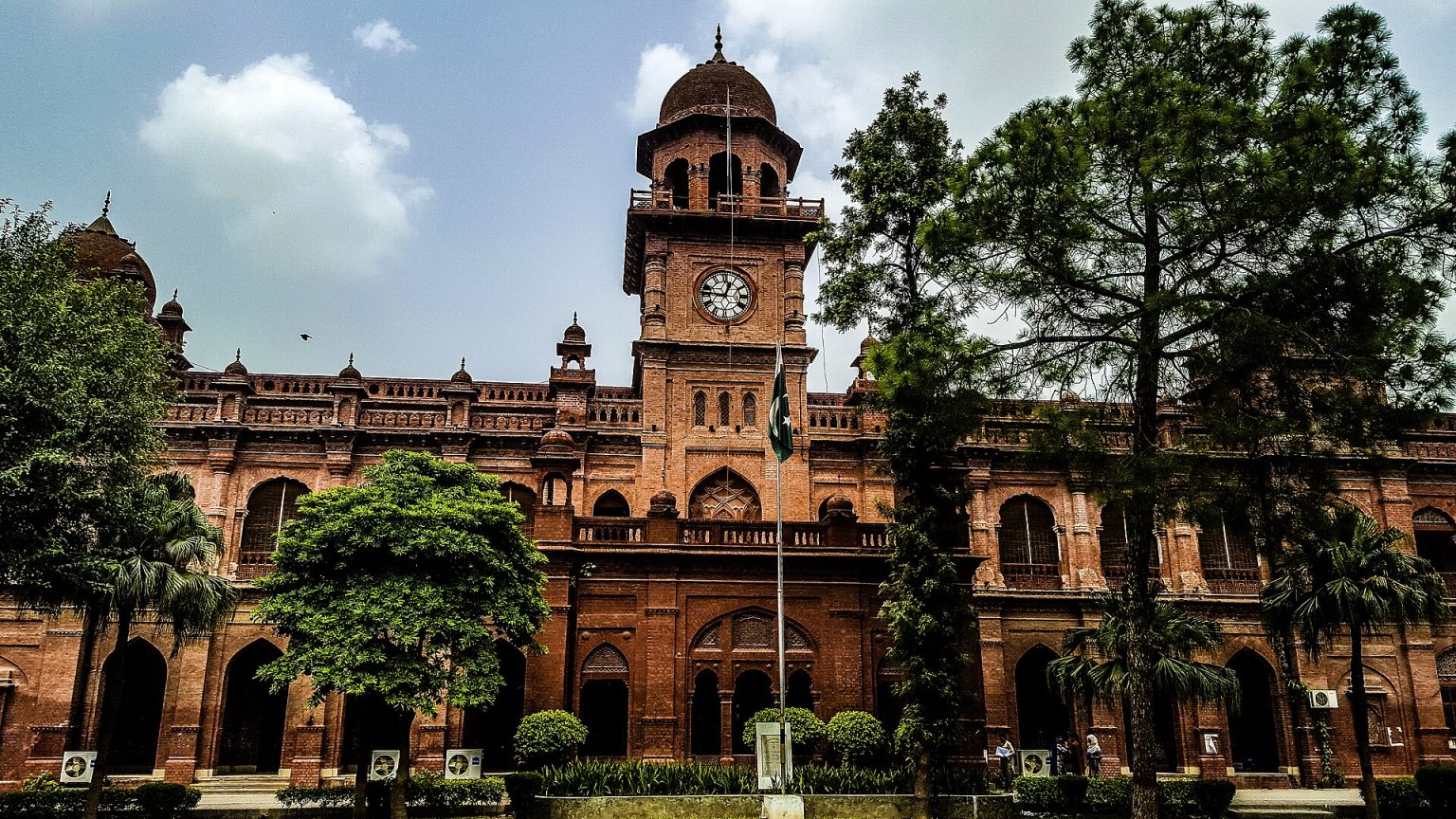
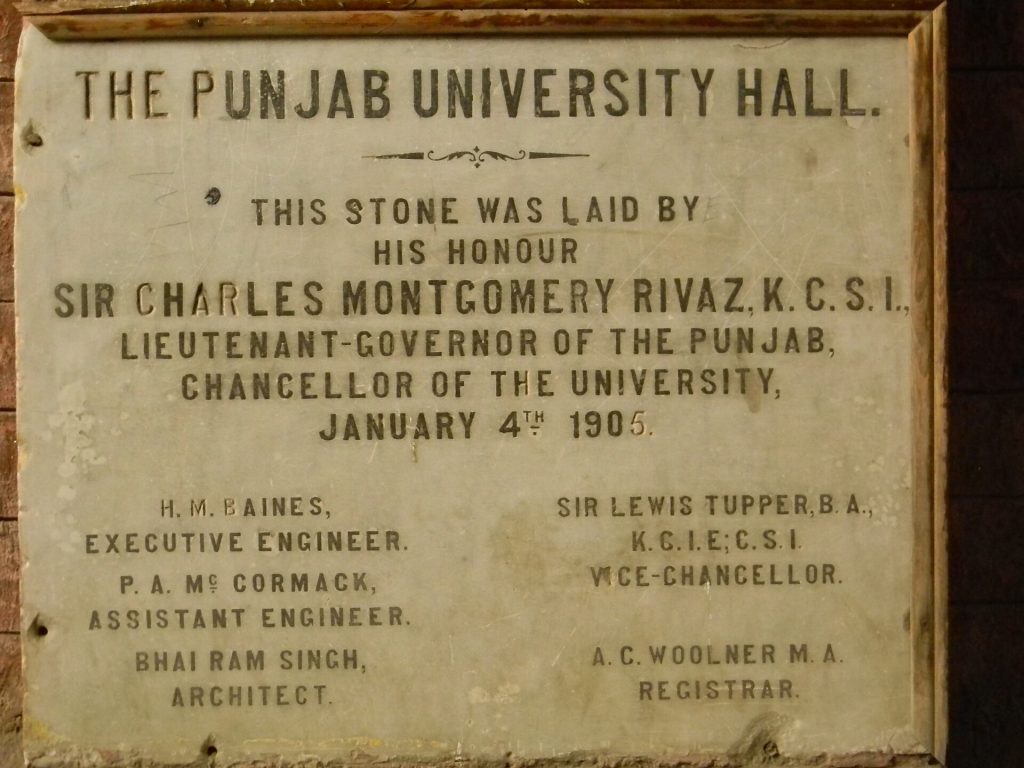
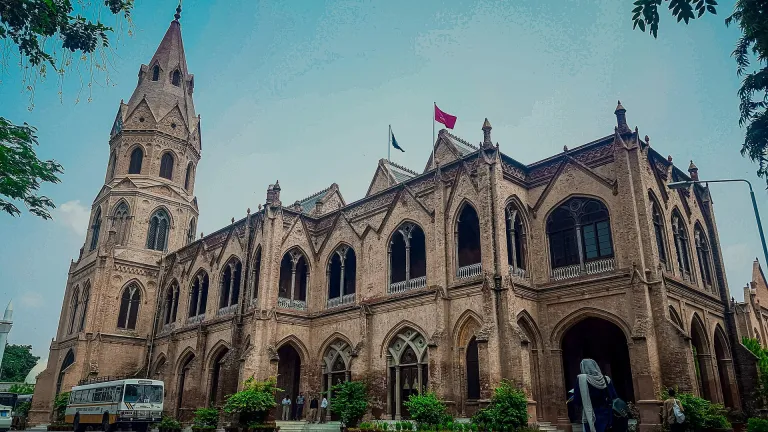
University of the Punjab, Lahore
Why Study in Pakistan?
Pakistan's universities attract students from across the Muslim world, Central Asia and Africa, as well as children of overseas Pakistanis returning home to study. The draws are familiar ones: programmes taught largely in English, tuition that is modest by international standards, strong traditions in medicine, engineering and Islamic studies, and campuses in historic cities such as Lahore, Karachi, Peshawar and Islamabad.
Higher education is regulated by the Higher Education Commission (HEC). According to the Pakistan Economic Survey 2025-26 there are 163 public-sector and 115 private-sector universities and degree-awarding institutions. Only some admit foreign nationals in every programme, and only HEC-recognised institutions, and campuses, award degrees that HEC will attest.
The process has three strands that run in parallel: admission (handled by the university), clearance (an HEC No Objection Certificate and security clearance by the Ministry of Interior) and the visa (applied for online). This guide walks through each. Procedures change, so treat it as a map and confirm details with your university's international office and the Pakistani mission in your country.
From Offer to Visa: Step by Step
- 1
Apply directly to the university
Submit the university's application with your passport copy, transcripts and certificates, and any English-language score it asks for. Requirements and deadlines are set by each university.
- 2
Receive your admission letter
Once you are admitted, the university's international office prepares your case and a Student Information Sheet.
- 3
University requests the HEC NOC
The international office emails your case, admission letter, Student Information Sheet and passport copy, to HEC. HEC does not accept NOC applications from students themselves, and asks students not to visit its offices for enquiries.
- 4
HEC issues the NOC
HEC says it needs five working days from receipt of a complete case to issue a No Objection Certificate for the visa process, with intimation to the Ministry of Interior, which carries out security clearance.
- 5
Apply for the study visa online
Pakistani visas are applied for online at visa.nadra.gov.pk. Upload your passport, photograph, admission or bona fide letter and the NOC; you will only be called to the mission if an interview is needed.
- 6
Arrive, register and keep the visa valid
Register with the university on arrival. Study visas are tied to your programme; extensions require a bona fide student certificate from the university and, according to Pakistani missions, an NOC from your own country's embassy in Pakistan.
Documents to Prepare
- Passport valid well beyond your intended arrival date (universities often ask for at least a year of validity)
- Recent passport photographs to the specification your university and the visa portal require
- School-leaving and degree certificates with transcripts, attested in your home country
- Translations into English by a recognised authority if documents are in another language
- University admission letter and the Student Information Sheet
- HEC No Objection Certificate (obtained through the university)
- Evidence of funds or sponsorship, especially if family members will accompany you
- English proficiency results if your programme requires them
- Medical fitness certificate if your university asks for one
Getting Your Qualifications Recognised
Pakistan uses two equivalence bodies. For school-level qualifications, your equivalent of Matric (Class 10) or Intermediate (Class 12), the Inter Boards Coordination Commission (IBCC) issues equivalence certificates. Students who completed their schooling abroad need only five subjects at O Level standard rather than eight, and foreign nationals can claim exemption from Urdu, Islamiyat and Pakistan Studies with proof of nationality. For bachelor's and higher degrees, equivalence is issued by HEC.
IBCC looks at the recognition of the awarding institution in its home country, the duration and level of study and the content. Documents not in English or Urdu must be translated by the relevant embassy or by the National University of Modern Languages (NUML). Applications are made online at equivalence.ibcc.edu.pk.
Many universities let foreign students start before equivalence is issued but set a deadline, at some private universities, six months after joining, after which you cannot continue without it. Start the application as soon as you have your final results.
After You Graduate: Degree Attestation
- 1
Make sure the degree is attestable
HEC attests degrees from recognised universities and campuses for programmes it recognises. This is another reason to check recognition before you enrol.
- 2
Apply on HEC eServices
HEC describes its degree attestation system as online and paperless; applications are made through eservices.hec.gov.pk.
- 3
Verify and track
Track the case online. Employers and foreign authorities can verify HEC attestation through HEC's verification service.
- 4
Further legalisation
Your home country may also require attestation by Pakistan's Ministry of Foreign Affairs or by its own embassy. Ask the authority that will receive the degree.
Living in Pakistan as a Student
Accommodation
Hostels or private rooms
Many universities reserve hostel places for international students. Private hostels and shared flats are common near large campuses; ask the university for vetted options.
Money and banking
Plan for cash and cards
Opening a local bank account requires your passport and valid visa. Mobile wallets are widely used.
SIM cards
Biometric registration
Mobile SIMs in Pakistan are registered biometrically. Ask an operator's franchise what foreign nationals need, usually your passport and valid visa.
Healthcare
Get insured
Large cities have good private hospitals. Check whether your university provides health cover, and carry your own insurance.
Safety and advisories
Check before you travel
Conditions differ by region. Check your government's current travel advice and follow your university's guidance on travel outside the city.
Academic calendar
Fall and spring
Most universities run a semester system with a main Fall intake (August–September) and a smaller Spring intake. Begin visa work at least two months ahead.
The Single Most Useful Tip
Ask for the email address of the university's international student office before you apply, and keep every message in writing. That office is the only one that can submit your HEC NOC, certify your visa extensions and inform HEC if your status changes, it is your lifeline for the whole degree.
Frequently Asked Questions
Do I apply to HEC or to the university?
To the university. After it admits you, its international student office refers your case to HEC for a No Objection Certificate. HEC does not accept NOC applications submitted by students personally.
How long does the HEC NOC take?
HEC says it needs five working days from receipt of a complete application from the university. Security clearance by the Ministry of Interior and visa processing take additional time, so start at least eight weeks before your semester.
How do I apply for a Pakistani study visa?
Online at visa.nadra.gov.pk, with your passport, photograph, university admission letter and the relevant NOC. Check the Pakistani mission in your country for current requirements.
Can foreign students study MBBS in Pakistan?
Yes. Since the 2021-22 session, foreign nationals and dual nationals apply for MBBS, BDS, Pharm-D and BSc engineering directly to the universities or colleges, which set their own requirements for foreign seats. Check how your home country's medical council recognises the degree.
Will my degree from Pakistan be recognised at home?
That depends on your home country. Choose an HEC-recognised university and campus, keep HEC attestation in mind, and check with your own ministry or professional council before you enrol.
Keep Exploring
Related places and stories on DailyLife.pk
 LahoreLahore travel guide: Badshahi Mosque, Lahore Fort, Shalimar Gardens, the Walled City, food streets, neighbourhoods, metro
 IslamabadIslamabad travel guide: Faisal Mosque, Pakistan Monument, Margalla Hills trails, Saidpur, markets, sectors, Metrobus
 KarachiKarachi travel guide: Mazar-e-Quaid, Mohatta Palace, Clifton, Burns Road, bazaars, neighbourhoods, Green Line BRT
 PeshawarPeshawar city guide: Qissa Khwani Bazaar, Mahabat Khan Mosque, Sethi House, Peshawar Museum, Pashtun food
 Universities in PakistanGuide to universities in Pakistan: public and private institutions, HEC recognition, recognised campuses
 Visa & Entry Requirements for PakistanHow to get a Pakistan visa through the official online system (visa.nadra.gov.pk): categories, step-by-step process
How we know this
- Type Practical guide
- Sources 12 (11 official/academic)
- Reviewed October 2026
- Disputed points None
Rules and fees change, confirm with the official links below before you act.
12 sources
- Grant of No Objection Certificate (NOC) to Foreign Students, Higher Education Commission Pakistan
- Admission of Foreign Students under Self-Finance Scheme, Higher Education Commission Pakistan
- Recognised Universities, Higher Education Commission Pakistan
- HEC Recognized Campuses, Higher Education Commission Pakistan
- Attestation of Degrees/Diplomas/Certificates, Higher Education Commission Pakistan
- Pakistan Online Visa System, NADRA / Government of Pakistan
- Visa Requirements, Consulate General of Pakistan, Milan
- Procedure for Admission of Foreign Students, University of the Punjab
- International Student's Guideline, Mohammad Ali Jinnah University
- Rules for Equivalence, IBCC
- British System (O & A Levels), IBCC
- Highlights of the Pakistan Economic Survey 2025-26, Finance Division, Government of Pakistan
Photo credits (5)
- Punjab University.jpg, Muhammad Dawood Jawad, CC BY-SA 4.0, via Wikimedia Commons
- Punjab University Hall, Lahore.jpg, Khalid Mahmood, CC BY-SA 3.0, via Wikimedia Commons
- Nust h12.jpg, Saarahmmad, CC BY-SA 4.0, via Wikimedia Commons
- PK Karachi Airport asv2020-01.jpg, A.Savin, FAL, via Wikimedia Commons
- Students studying in the newly completed school (7970336972).jpg, USAID Pakistan, Public domain, via Wikimedia Commons
