
Education guide
Matric and Intermediate: A Practical Guide to Pakistan's Board Exams
How SSC and HSSC board examinations work, what the new grades mean, and how O and A Level students get IBCC equivalence for admissions in Pakistan.
- SSC = Matric (Classes 9–10)
- HSSC = Intermediate (Classes 11–12)
- Equivalence and attestation: IBCC
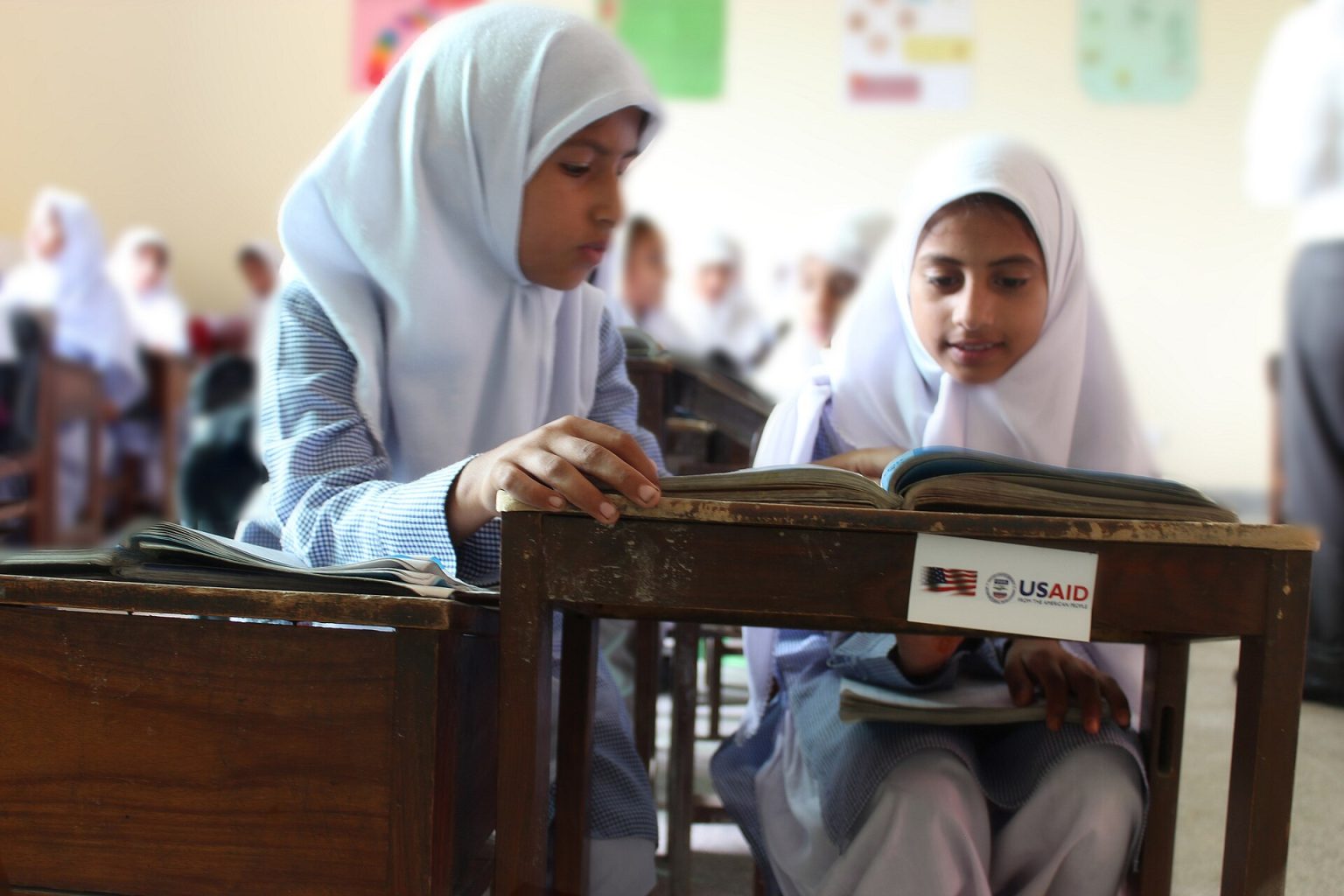
Students in a classroom, Pakistan
Two Certificates That Shape a Career
In Pakistan, two certificates open almost every door. The Secondary School Certificate (SSC), known everywhere as Matric, comes after public examinations in Classes 9 and 10. The Higher Secondary School Certificate (HSSC), known as Intermediate or by its stream (FSc, ICS, I.Com, FA), comes after Classes 11 and 12. Results are printed in newspapers, celebrated with sweets, and used for years afterwards, Intermediate marks still carry heavy weight in university and professional-college merit lists.
The exams are not set by schools but by Boards of Intermediate and Secondary Education (BISE). Each province has several regional boards, generally named after the city where they sit, Lahore, Rawalpindi, Peshawar, Hyderabad, Quetta and many more. Karachi is unusual in having separate boards for secondary and intermediate examinations. The Federal Board (FBISE) in Islamabad examines schools in the capital, cantonment and garrison schools, and affiliated institutions in other areas and overseas. Private boards such as the Aga Khan University Examination Board (AKU-EB) and Ziauddin University Examination Board also award SSC and HSSC.
Above them all sits the Inter Boards Coordination Commission (IBCC), which began in 1972 as the Inter Boards Committee of Chairmen and was reconstituted under the IBCC Act of 2023. It coordinates the boards, sets common policy such as grading, and decides how foreign qualifications like O and A Levels translate into Pakistani equivalents.
Which guide do you need? This guide explains how the matric and intermediate system works. To look up a result, see How to Check Matric and Inter Results.
Grades and Passing Marks
The FBISE version of the new scheme agreed by the boards through IBCC.
| Grade | Marks | Descriptor |
|---|---|---|
| A++ | 96–100% | Extraordinary |
| A+ | 91–95% | Exceptional |
| A | 86–90% | Outstanding |
| B++ | 81–85% | Excellent |
| B+ | 76–80% | Very good |
| B | 71–75% | Good |
| C+ | 61–70% | Fairly good |
| C | 51–60% | Above average |
| D | 40–50% | Emerging |
FBISE notification reported by Dawn, October 2025: applies from the First Annual Examinations 2026 for SSC-I/HSSC-I and from 2027 for SSC-II/HSSC-II. Boards notify their own versions, Sindh's boards, for example, use slightly different bands (A++ from 95%, E for 40–49%, below 40% 'Unsatisfactory') from the 2026 exams. In September 2026 the Express Tribune reported that the Federal, Sindh, AJK Mirpur, Karakoram, AKU-EB and Ziauddin boards had begun implementation. Always check your own board's notification.
From 33 to 40 Per Cent
For decades the pass mark in each subject was 33 per cent. Under the new policy the minimum is 40 per cent. Students who fail one or more papers can usually reappear in the board's supplementary or second annual examination, but the number of subjects and attempts allowed is set by each board, read your board's rules before you register.
The Exam Year
Registration and admission forms
Through your school
Regular students are registered by their school or college. Private candidates apply directly to the board, usually online, within the board's published schedule and fee deadlines.
Annual examinations
Spring to early summer
Most boards hold annual exams for Classes 9–12 between roughly March and June, with practicals scheduled separately. Dates differ by board and year.
Results
Online and by SMS
Boards publish results on their websites, often with an SMS service, a few months after the exams. Position holders are announced at a ceremony.
Rechecking
Re-totalling, not re-marking
Boards allow candidates to apply, for a fee and within a short window, to have papers rechecked, usually a check of totals and unmarked questions rather than a full re-evaluation.
Supplementary exams
A second chance
Held later in the year for students who failed or want to improve marks, subject to board rules.
Keep your documents
Certificate and DMC
You receive a Detailed Marks Certificate (DMC, or result card) first and the final certificate later. Universities and IBCC attestation require the originals.
O and A Levels: Getting IBCC Equivalence
Students who take Cambridge or other British-system exams need an IBCC equivalence certificate before they can join a Pakistani college or university, apply through a provincial merit system, or sit some entry tests. IBCC converts grades into Pakistani marks and states which stream (pre-medical, pre-engineering and so on) the qualification counts as.
O Levels → Matric (SSC)
For exams taken in Pakistan, IBCC requires eight O Level subjects: five compulsory, English, Mathematics, Urdu, Islamiyat and Pakistan Studies, plus three academic electives, each with at least grade E. For exams taken abroad, five subjects are enough (English, Mathematics and three electives). To be placed in the science group you need physics, chemistry and biology (or computer science in place of biology); biology is essential if you plan to study medicine. Students with foreign nationality or qualifications from abroad can claim exemption from Urdu, Islamiyat and Pakistan Studies.
A Levels → Intermediate (HSSC)
A Level equivalence requires a completed SSC-level qualification plus three principal A Level subjects at grade E or above. The subject combination sets your stream: physics, chemistry and biology for pre-medical; physics, chemistry and mathematics for pre-engineering; and any three academic subjects for humanities. Students still awaiting final A Level results typically need an equivalence based on O Levels and AS results to apply on time; IBCC publishes a notification on how this is calculated.
How IBCC Converts Grades to Marks
| British grade | Pakistani marks used by IBCC |
|---|---|
| A* | Above 90 (exam session 2021 onwards; subject-wise values published each session) |
| A | 85 |
| B | 75 |
| C | 65 |
| D | 55 |
| E | 45 |
Source: IBCC 'Conversion for Equivalence', accessed October 2026. F and G grades are not counted. Universities then apply their own aggregate formulas.
Applying for Equivalence or Attestation
- 1
Create an account on the IBCC portal
Equivalence applications are made at equivalence.ibcc.edu.pk and attestation at attest.ibcc.edu.pk. Use your own CNIC or B-Form details exactly as on your documents.
- 2
Upload results and documents
Scan statements of results or certificates for every exam session, your identity document and photographs as the portal asks. Foreign-language documents need an approved translation.
- 3
Pay the fee by challan
Generate the fee challan through IBCC's services portal and pay through the listed channels. Fees and processing categories change, check the current schedule on ibcc.edu.pk before you pay.
- 4
Submit and track
Choose the submission mode offered (in person at an IBCC office or by courier, as the portal directs) and track the case online.
- 5
Verify the certificate
IBCC certificates carry a QR code; universities and employers can check them through IBCC's online verification service.
Using Board Certificates Abroad
Planning to study or work overseas? Foreign universities and embassies often ask for SSC and HSSC certificates attested by IBCC, and sometimes by the Ministry of Foreign Affairs afterwards. Start early: attestation needs original documents, and your board must be able to verify them.
Frequently Asked Questions
Which board will I sit my Matric exams with?
Usually the regional BISE covering your school's district, or FBISE if your school is affiliated with the Federal Board. Some private schools register students with AKU-EB or Ziauddin University Examination Board instead. Your school will tell you.
What are the new passing marks for Matric and Intermediate?
Under the new IBCC-agreed policy the minimum is 40 per cent per subject, up from 33 per cent. FBISE applies it from the 2026 exams for Part I and 2027 for Part II, and other boards are adopting it on their own schedules.
Is an A* in O Levels equal to 90 per cent?
For exam sessions from 2021 onwards IBCC counts an A* as above 90 and publishes subject-wise equivalent marks for each session. A is counted as 85, B as 75, C as 65, D as 55 and E as 45.
Do overseas students need Urdu and Pakistan Studies for equivalence?
No. IBCC requires five O Levels for exams taken abroad, and foreign nationals or students with qualifications from abroad can claim exemption from Urdu, Islamiyat and Pakistan Studies with proof.
Can I apply to university before my A Level results?
Many universities accept a provisional IBCC equivalence based on O Levels and AS results. Check each university's admission rules and IBCC's current notification.
Keep Exploring
Related places and stories on DailyLife.pk
 The School System in PakistanHow schooling works in Pakistan: stages from early years to Class 12, public
 Entry Tests: MDCAT, ECAT, NAT and HATGuide to Pakistan's admission tests: MDCAT (PMDC) for medicine, ECAT (UET Lahore) for engineering, NTS NAT
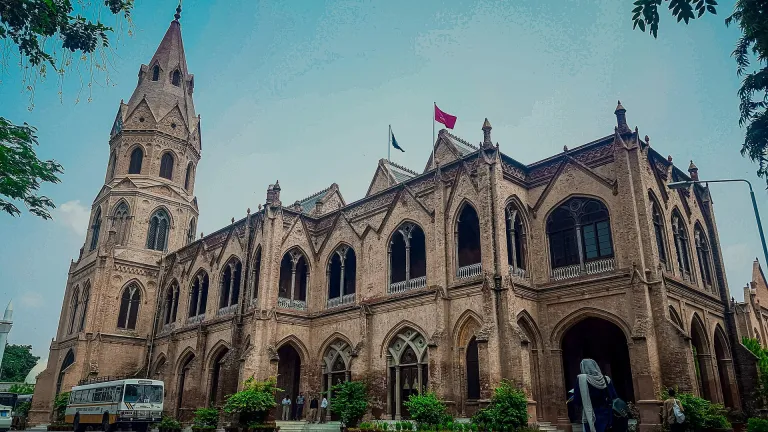 Universities in PakistanGuide to universities in Pakistan: public and private institutions, HEC recognition, recognised campuses
 Scholarships for Pakistani StudentsScholarships for Pakistani students: HEC need-based, BISP undergraduate, PEEF and SEEF, plus Fulbright, Chevening
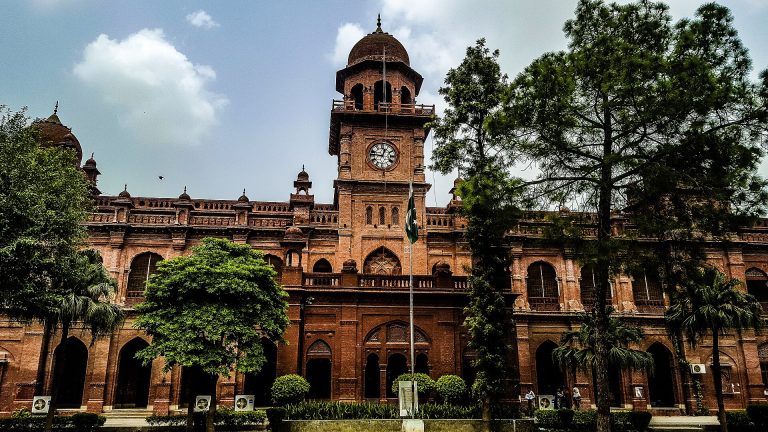 Studying in Pakistan for International StudentsHow international students can study in Pakistan: HEC-recognised universities, admission, HEC NOC, study visa via NADRA
How we know this
- Type Practical guide
- Sources 7 (4 official/academic)
- Reviewed October 2026
- Disputed points None
Rules and fees change, confirm with the official links below before you act.
7 sources
- Inter Boards Coordination Commission (home, services and forum members), IBCC
- British System (O & A Levels), IBCC
- Conversion for Equivalence, IBCC
- Rules for Equivalence, IBCC
- Passing marks raised as Federal Board revises grading system (reproducing Dawn, 8 October 2025), State of Children in Pakistan / Dawn
- New policy sets 40% minimum passing marks, The Express Tribune
- New grading policy for matric and intermediate exams to take effect from 2026 (Sindh), ProPakistani
Photo credits (5)
- Students studying in the newly completed school (7970336972).jpg, USAID Pakistan, Public domain, via Wikimedia Commons
- Govt. Elementary School Hamboki.jpg, M. Moaz, CC BY-SA 4.0, via Wikimedia Commons
- King Edward Medical University lahore.jpg, Junaidhassan710, CC BY-SA 4.0, via Wikimedia Commons
- School girls in a classroom (7970335706).jpg, USAID Pakistan, Public domain, via Wikimedia Commons
- Bukhari lawn - Government College University, Lahore.jpg, Arham abtahi, CC BY-SA 3.0, via Wikimedia Commons
