
Education guide
Entry Tests in Pakistan: MDCATECAT, NAT and HAT Explained
Who sets each admission test, what is on the paper, how scores feed into merit, and the rules that changed for 2026, a practical guide for students and parents.
- MDCAT, PMDC
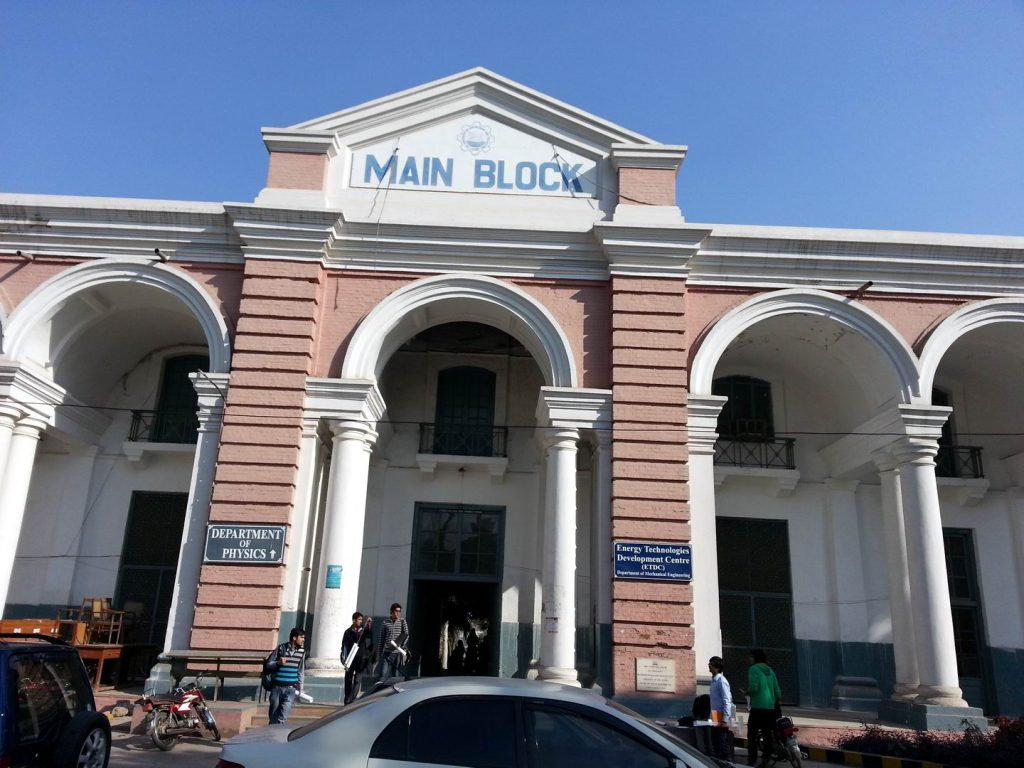
- ECAT, UET Lahore
- HAT, HEC's Education Testing Council
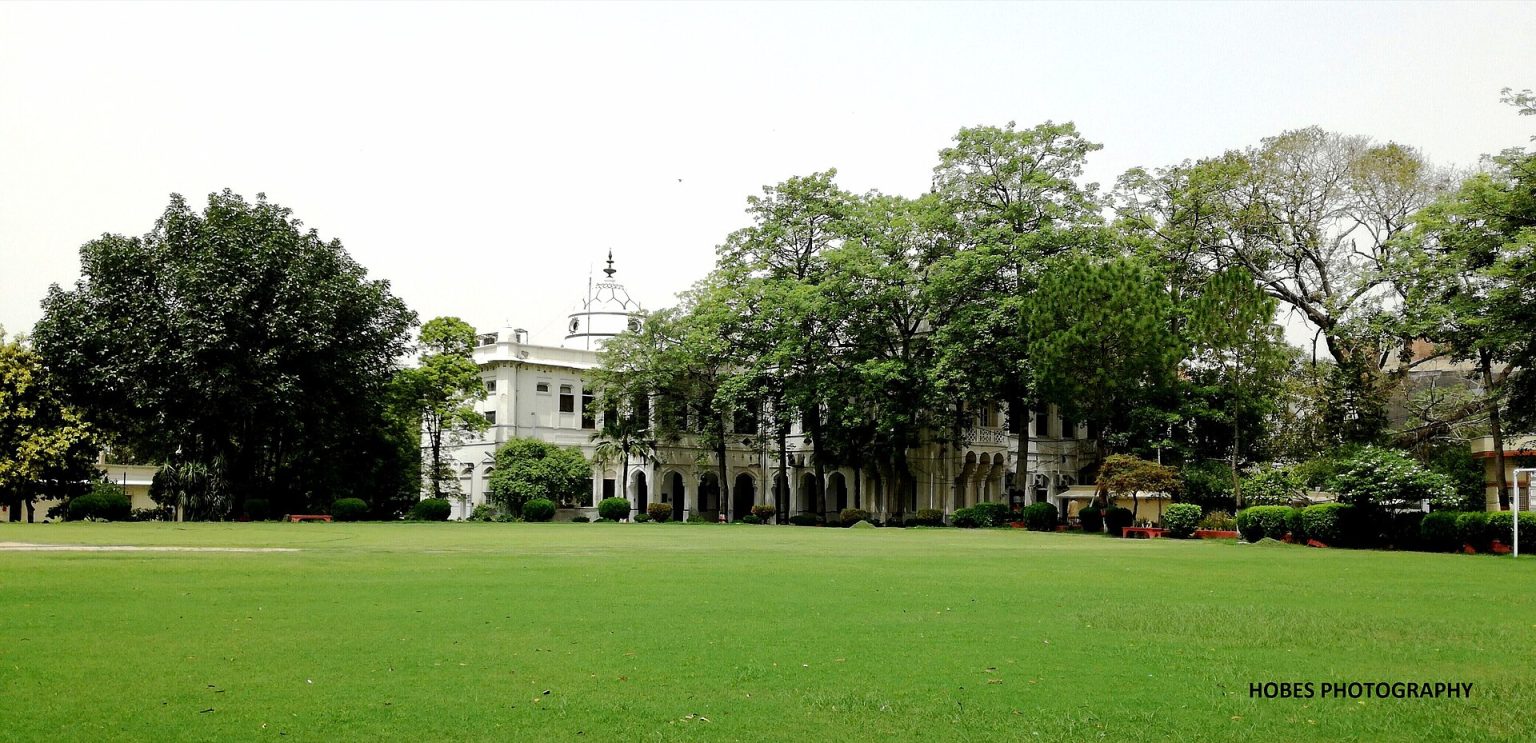
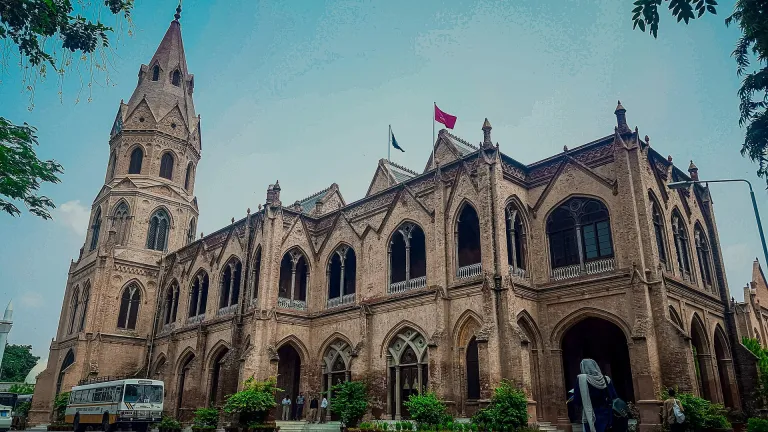
King Edward Medical University, Lahore
Why Entry Tests Matter
For Pakistan's most competitive degrees, Intermediate marks are only half the story. Places in medical and dental colleges, engineering universities and postgraduate programmes are awarded on merit lists that combine board results with a standardised admission test. A few marks either way can decide between a public seat with modest fees and an expensive private one, or between one city and another.
Each field has its own gatekeeper. The Pakistan Medical and Dental Council (PMDC) sets the MDCAT for MBBS and BDS. The University of Engineering and Technology (UET) Lahore runs the ECAT used for engineering admissions in Punjab. The National Testing Service (NTS), a long-established testing body, offers the NAT for undergraduate admission at associated institutions. And for MS, MPhil and PhD, the Higher Education Commission's Education Testing Council (ETC) runs the HAT, which became mandatory nationwide from the Fall 2026 intake.
Rules, dates and fees change almost every year, sometimes more than once. Everything below reflects official and press sources; always confirm on the conducting body's website before registering.
The Main Tests at a Glance
| Test | For | Set / conducted by | Key points (as of Oct 2026) |
|---|---|---|---|
| MDCAT | MBBS and BDS in public and private colleges | PMDC sets policy and question bank; designated universities conduct it in each province | 180 MCQs, no negative marking; one national sitting each year |
| ECAT | BSc engineering and some computing programmes in Punjab | UET Lahore | Computer-based, 100 minutes, no negative marking, no pass mark; several phases a year |
| NAT | Undergraduate admission at NTS-associated universities and institutes | National Testing Service (NTS) | Stream-based categories; result valid for one year |
| HAT | MS/MPhil and PhD admission at all HEC-recognised universities | HEC Education Testing Council | Mandatory from Fall 2026; pass 50 (MS/MPhil) or 60 (PhD); valid two years |
| University tests | Undergraduate admission at individual universities | The university itself (e.g. NUST, FAST, GIKI, LUMS, IBA) | Own syllabus and schedule; some accept SAT or other scores |
Compiled from PMDC-related reporting, UET Lahore, NTS and HEC-related sources listed below. Check each body's latest notice before applying.
MDCAT: Medical and Dental College Admission Test
The MDCAT is the single gateway to MBBS and BDS in Pakistan. PMDC frames the regulations, syllabus and a central question bank, and the test is delivered by a designated public university in each province. For MDCAT 2026, held on 20 September 2026 after being moved from an earlier date, press reports named the University of Health Sciences (Punjab), Sukkur IBA University (Sindh), Khyber Medical University (Khyber Pakhtunkhwa), Bolan University of Medical and Health Sciences (Balochistan) and Shaheed Zulfiqar Ali Bhutto Medical University (Islamabad and an overseas centre in Riyadh).
Paper pattern
The 2026 paper had 180 multiple-choice questions in three hours, in English, with no negative marking: 81 biology, 45 chemistry, 36 physics, 9 English and 9 logical reasoning. The syllabus is published by PMDC and is based on the Intermediate pre-medical curriculum.
Eligibility and pass marks
From 2026, PMDC rules reported in October 2025 require at least 65 per cent in FSc pre-medical or an equivalent qualification to sit the test, up from 60 per cent. Reported minimum passing marks for MDCAT 2026 were 55 per cent for MBBS and 50 per cent for BDS. Passing is only the first hurdle: provincial admission authorities then build merit lists using their own weighting of Matric, Intermediate and MDCAT scores.
Studying medicine abroad
Students planning to study medicine or dentistry outside Pakistan and later practise at home are also subject to PMDC rules. As reported in August 2026, they need at least 50 per cent in the MDCAT or must pass an equivalent foreign admission exam, check PMDC's current regulations before enrolling abroad.
ECAT: Engineering College Admission Test
UET Lahore's Entrance Test for engineering (ECAT) is used for BSc engineering admissions at UET's own campuses and is accepted by other public and private engineering institutions in Punjab. It is now a computer-based test lasting 100 minutes, pitched at Intermediate level, with no negative marking and no fixed pass mark, your score simply feeds into the admission aggregate.
Candidates choose a combination that matches their Intermediate subjects: mathematics, physics and chemistry; mathematics, physics and computer science; mathematics, statistics and computer science; or biology, physics and chemistry, each with English. In 2026 UET ran the test in more than one phase: an early window at the end of March, and a Phase II from 17 to 21 June in which 24,288 candidates sat the test at ten centres, according to the Pakistan Observer.
Outside Punjab, engineering universities run their own tests or use other testing bodies, NUST's NET, GIKI's admission test and the tests of Sindh and Khyber Pakhtunkhwa universities are separate exams with their own schedules.
How to Prepare
- Download the official syllabus from the conducting body, PMDC, UET, NTS or ETC, rather than relying on academy notes.
- Practise with past papers and timed mock tests; MDCAT and ECAT reward speed as much as knowledge.
- Revise your Intermediate textbooks thoroughly: most questions are drawn from the national Intermediate curriculum.
- Do not neglect English and logical reasoning, they are small sections but easy marks to lose.
- Register early and keep copies of your CNIC or B-Form, Matric and Intermediate results (or IBCC equivalence) and photographs ready.
- Pay fees only through the official channel named on the conducting body's website, and keep the receipt.
- Check your admit card for the exact centre and reporting time, and the list of items you may not bring.
- After the result, track provincial merit-list schedules closely; deadlines for choosing colleges are short.
Beware Leaks and Fake Notices
Every test season brings fake 'leaked papers', bogus result pages and social-media notices with wrong dates. PMDC has tightened security with biometric checks and multiple paper versions per province. Trust only the official websites and social-media accounts of PMDC, UET, NTS and HEC, and never pay anyone who promises a guaranteed seat.
Frequently Asked Questions
Who conducts the MDCAT?
PMDC sets the rules, syllabus and question bank, and designated public universities conduct the test in each province. For MDCAT 2026 these were reported as UHS (Punjab), Sukkur IBA University (Sindh), KMU (Khyber Pakhtunkhwa), Bolan University (Balochistan) and SZABMU (Islamabad and Riyadh).
Is there negative marking in MDCAT or ECAT?
No. As of 2026 neither MDCAT nor UET Lahore's ECAT uses negative marking, so attempt every question.
What is the passing score for MDCAT?
For MDCAT 2026 the reported minimums were 55 per cent for MBBS and 50 per cent for BDS. Admission itself depends on the provincial merit list, which also weighs Matric and Intermediate marks.
Do I need HAT for an MS or PhD?
As reported in 2026, HEC made its HAT (or GRE, per HEC's notification) mandatory for MS/MPhil and PhD admissions from the Fall 2026 intake. Reported minimums are 50 for MS/MPhil and 60 for PhD, valid for two years.
Can I take ECAT more than once?
In 2026 UET Lahore offered ECAT in more than one phase. Check UET's admission notice for how multiple attempts are counted in the current year.
Keep Exploring
Related places and stories on DailyLife.pk
 Matric and Intermediate ExamsPractical guide to Matric (SSC) and Intermediate (HSSC) exams in Pakistan: BISE boards, FBISE
 Universities in PakistanGuide to universities in Pakistan: public and private institutions, HEC recognition, recognised campuses
 Scholarships for Pakistani StudentsScholarships for Pakistani students: HEC need-based, BISP undergraduate, PEEF and SEEF, plus Fulbright, Chevening
 The School System in PakistanHow schooling works in Pakistan: stages from early years to Class 12, public
 Healthcare in PakistanHealthcare in Pakistan: public and private hospitals, Sehat Card status by province, emergencies, DRAP and medicines
How we know this
- Type Practical guide
- Sources 9 (3 official/academic)
- Reviewed October 2026
- Disputed points None
Rules and fees change, confirm with the official links below before you act.
9 sources
- MDCAT 2026 schedule revised, ARY News
- MDCAT 2026: UHS question paper and answer keys, Daily Pakistan
- PMDC introduces new rules for MDCAT 2026 onwards, ProPakistani
- Over 24,000 candidates take ECAT-2026 Phase-II at UET, Pakistan Observer
- Combined Entry Test of UET Lahore (ECAT 2026), NFC Institute of Engineering and Technology
- National Aptitude Test (NAT), National Testing Service
- Education Testing Council, Higher Education Commission Pakistan
- HEC makes HAT mandatory for Fall 2026 admissions, University news post (gaus.edu.pk)
- HEC announces new admission policy, ARY News
Photo credits (5)
- King Edward Medical University lahore.jpg, Junaidhassan710, CC BY-SA 4.0, via Wikimedia Commons
- UET Main Block.jpg, Taha Tahir, CC BY-SA 3.0, via Wikimedia Commons
- Nust h12.jpg, Saarahmmad, CC BY-SA 4.0, via Wikimedia Commons
- Students studying in the newly completed school (7970336972).jpg, USAID Pakistan, Public domain, via Wikimedia Commons
- Bukhari lawn - Government College University, Lahore.jpg, Arham abtahi, CC BY-SA 3.0, via Wikimedia Commons
