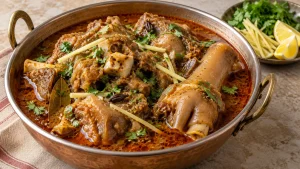
Beef Nihari
بیف نہاری
Slow-cooked beef shank in a warming, fennel-spiced gravy.
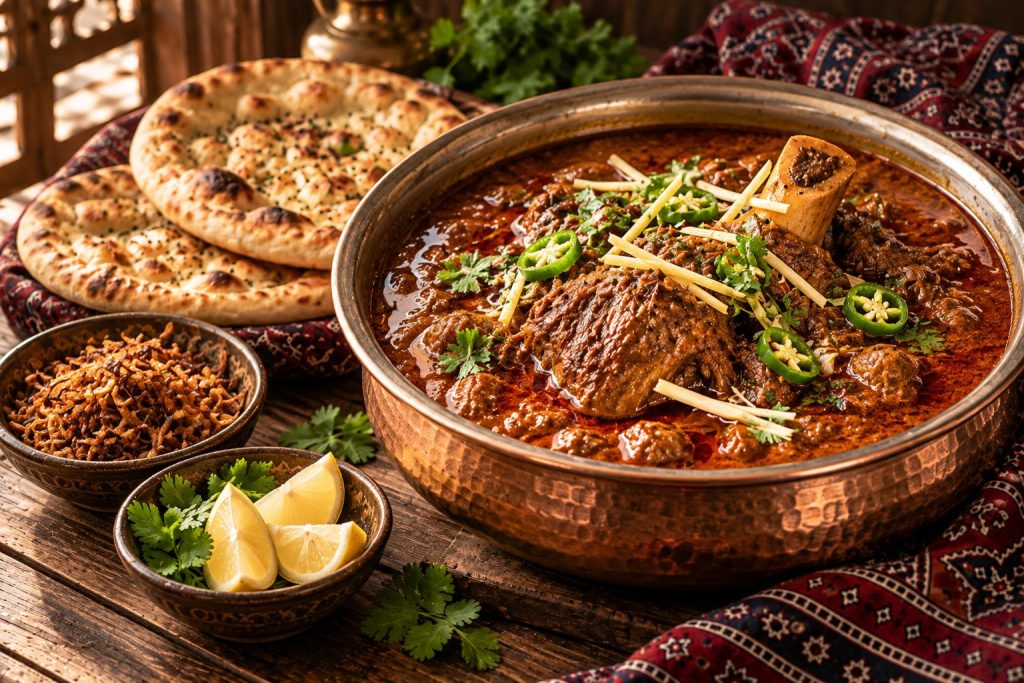
A slow-simmered Pakistani beef-shank nihari with warming fennel-forward spices, marrow-rich gravy and a smooth atta thickener. This is one home-style beef version among regional approaches. It is intentionally not a quick minced-meat curry; shank needs gentle extended cooking to soften connective tissue.
One tablespoon = 15 ml; one teaspoon = 5 ml.
About Beef Nihari
A slow-simmered Pakistani beef-shank nihari with warming fennel-forward spices, marrow-rich gravy and a smooth atta thickener. This is one home-style beef version among regional approaches. It is intentionally not a quick minced-meat curry; shank needs gentle extended cooking to soften connective tissue.
Personally cooked and tested by Zohair Fakhar for DailyLife.pk. Cooking times can vary with your stove, cookware and batch size; follow the texture and doneness cues in the method.
Make it work for your kitchen
Also known as Nihari, Beef Shank Nihari, Pakistani Nihari, Gosht Nihari.
Original quantities serve 4. Cooking times, pan size and frying-oil depth do not scale, cook in extra batches instead.
Before you start
Prepare the beef, spices and reserved portions
Use the ingredient amounts for your selected servings. Pat the beef dry and cut it into roughly 5–6 cm pieces, trimming only excess exterior fat; keep it chilled until cooking. Weigh the whole spices and powdered spices into separate bowls; toast and grind them in the first cooking step. Slice the onion and mince the garlic. Grate the fresh ginger, set aside two-sevenths of its selected total for garnish and keep the remaining five-sevenths for the cooking pot. Measure the salt, keeping one-sixth aside for the final adjustment. Weigh the atta for the later slurry. The Helpful answers section lists the ginger and salt portions for each serving size.
35 min preparation · keep raw beef chilledSet up the equipment
Have the following tools ready before starting: 5–6 L heavy casserole with lid; Dry spice grinder or mortar; Frying pan for flour; Whisk and ladle; Instant-read food thermometer; Kitchen scale.
Clean workspaceMeasure the ingredients
Measure the ingredient quantities for your selected servings before applying heat. Keep separately listed groups, such as dough, filling, sauce or garnish, in separate containers; keep any optional additions separate.
Use the ingredient list aboveCheck allergens and substitutions
Check ingredient labels and any substitutions against these notes: Wheat/gluten (atta); optional ghee contains milk
Before cooking
Step-by-step cooking method
1 Bloom and grind the spices
Dry-toast the fennel, cumin, coriander, black peppercorns, cloves, cinnamon and cardamom in a dry skillet over low heat for about 3 minutes, stirring until fragrant, never blackened. Cool briefly and grind with chilli powder, turmeric, dried ginger and optional mace.
2 Colour the onions
Heat 60 g ghee in a heavy 5–6 L pot over medium heat and cook 180 g sliced onion for approximately 10–12 minutes until evenly golden, not dark-brown.
3 Fry the ginger, garlic and beef
Measure 35 g total fresh ginger for your selected servings. Keep two-sevenths aside for garnish and use the remaining five-sevenths in the pot now; see Helpful answers for the exact split. Add this cooking portion with 30 g garlic to the golden onions and stir for 1 minute. Add 1000 g beef shank and the selected beef marrow bones if using. Fry, turning carefully, for around 10 minutes until the outside loses its raw colour.
4 Coat with the nihari spices
Use 12 g salt as the total allowance for your selected servings, not as an extra addition. Keep one-sixth aside for the final adjustment and add the remaining five-sixths with the ground spice mixture now. Stir over medium-low heat for 2–3 minutes so the masala coats the meat without scorching.
5 Simmer the shank until tender
Pour in 1800 ml hot water and scrape the pot base. Bring briefly to a full boil, skim surface foam if desired, then reduce immediately to the gentlest covered simmer. Cover with a slight vent and simmer gently 3½–4½ hours, checking every 40–60 minutes for sticking and adding hot water only to keep the beef submerged enough to cook evenly. A fork should pull apart the meat with minimal resistance. Longer or tougher pieces require additional time.
6 Toast the atta and make a smooth slurry
When the beef is tender, toast 55 g atta in a dry skillet over low heat for 3–4 minutes until slightly aromatic. Put it in a separate heatproof bowl. Whisk in ladlefuls of cooking liquid gradually until the mixture is completely smooth and pourable, adding only as much as needed for your selected flour amount. This liquid is drawn from the cooking pot, not an extra water allowance. Add the prepared slurry gradually in the next step.
7 Thicken and balance
Stir the slurry gradually into the gently bubbling nihari. Simmer uncovered for 15–20 minutes, stirring bottom and sides, until lightly coating a spoon, not pasty. Adjust with extra hot water if too thick, and add remaining salt only after tasting.
8 Rest and serve
Turn off the heat and rest for 5 minutes. Skim excess surface fat if desired, then divide into the selected number of servings. Add the reserved ginger, fresh coriander leaves and optional sliced chilli and lemon just before serving. Serve naan separately if you wish.
Chef’s tips
- Choose shank rather than tender steak for gelatine-rich texture.
- Do not add atta until the beef is genuinely soft; a thick sauce disguises firm meat.
- A wider casserole may evaporate faster; monitor actual liquid level instead of assuming fixed final volume.
Common mistakes & quick fixes
- Tough beef after stated cook time
- Continue at a gentle simmer; time depends on cut size and animal.
- Grainy or lumpy gravy
- Whisk toasted atta with hot cooking liquid until smooth before adding.
- Burning spices
- Toast briefly on low and add water promptly after coating the beef.
- Thin gravy
- Reduce uncovered carefully or add a little extra atta slurry, then fully simmer out the raw flour taste.
Variations & serving ideas
Marrow-rich nihari: Use the optional bones, then remove bones before portioning; nutrient yield needs explicit measurement.
Milder nihari: Reduce chilli powder to 2–3 g; keep fennel and warm spices.
Ghee-free dairy-free variation: Use neutral oil in place of ghee; allergen status changes.
Perfect result check
| Check | Meat Easily separates with a fork while still recognisably in pieces. |
|---|---|
| Check | Gravy Silky and pourable; lightly coats a spoon and is not pasty. |
| Check | Spice Deep toasted aroma, no bitter burnt spices or raw atta flavour. |
Storage & reheating
| Storage | Cooling Remove bones, divide into shallow containers and chill at 4°C or colder within 2 hours (1 hour if above 32°C). | |
|---|---|---|
| Fridge | 3–4 days | Refrigeration Safely cooled nihari is a cooked meat stew: refrigerate 3–4 days. |
| Freezer | 2–3 months | Freezing Freeze individual cooled portions; 2–3 months is a practical soup/stew quality window at −18°C or colder. |
| Reheating | Reheating Thaw in refrigerator, add a splash of water, bring gravy to a boil while stirring and verify the meat-containing portion reaches 74°C throughout. |
Know when to change the heat
| Stage | Heat | What to look for |
|---|---|---|
| Bloom and grind the spices | Low heat | Whole spices smell fragrant without blackening; cool before grinding. |
| Colour the onions | Medium heat | Onions turn evenly golden; reduce the heat before the edges darken. |
| Fry the ginger, garlic and beef | Medium heat | Aromatics lose their raw smell and beef surfaces lose their raw colour; this is not the tenderness stage. |
| Coat with the nihari spices | Medium-low heat | Masala coats the meat without sticking or scorching. |
| Add water and start the simmer | High then low heat | Bring the starting liquid briefly to a boil, then reduce the heat promptly. |
| Slow-cook until the shank yields | Low simmer | Maintain a very gentle covered simmer; the meat pulls apart easily under a fork when tender. |
| Toast the atta and make a smooth slurry | Low heat | Flour smells lightly toasted; whisk with cooking liquid until the slurry is smooth and pourable. |
| Thicken and balance | Low heat | Gentle bubbles and a lightly spoon-coating gravy; stir the base and sides to prevent sticking. |
| Rest and serve | No heat | Heat off; rest briefly, then add the reserved garnish at serving. |
Helpful answers before you cook
What beef cut is best?
Shank is preferred for tender gelatine-rich meat after slow cooking; lean tender steaks do not create the same broth.
Can I use a pressure cooker?
Possibly, but this recipe has no validated universal pressure duration. Follow the exact cooker manufacturer’s minimum-liquid and maximum-fill rules and a tested recipe for the machine; do not improvise a pressure time from this stovetop recipe.
Can I make nihari the night before?
Yes. Cool rapidly, refrigerate promptly and gently reheat to 74°C the next day; flavours may meld while refrigerated.
Is the atta essential?
Atta produces a familiar slightly thick, smooth gravy. Without it the dish is thinner; changing the thickener alters texture and nutrition.
How do I divide the ginger and salt for different serving sizes?
For 2 people: use 12.5 g fresh ginger in the pot and reserve 5 g for garnish; start with 5 g salt and keep 1 g aside. For 4: use 25 g ginger in the pot and reserve 10 g; start with 10 g salt and keep 2 g aside. For 6: use 37.5 g ginger in the pot and reserve 15 g; start with 15 g salt and keep 3 g aside. For 8: use 50 g ginger in the pot and reserve 20 g; start with 20 g salt and keep 4 g aside. These portions come from the selected ingredient totals. Add the reserved salt only if needed after tasting; it is not an extra allowance.