
Travel · Attractions
Read the space in front of the mosque
Discover Wazir Khan Chowk as a conserved public forecourt where street levels, shops, water infrastructure and a monumental entrance belong to one urban story.
- Read the details
- Plan the approach
- Respect the fabric
Wazir Khan Chowk, Lahore
Pause where the street opens
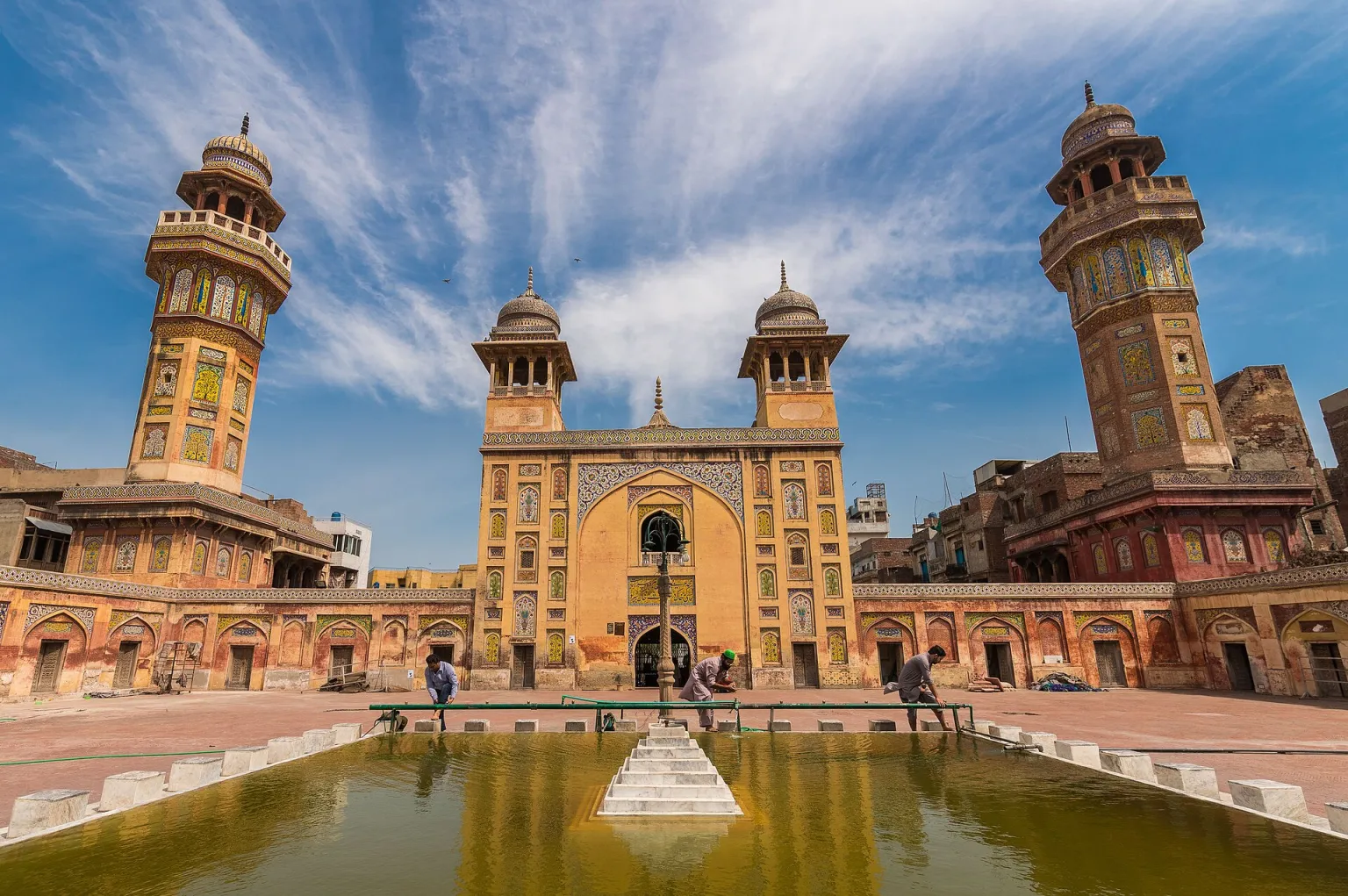
Wazir Khan Chowk is more than the place from which to photograph a mosque façade. It is an introductory public space within a dense part of Lahore, where approaches, thresholds and everyday movement can be read together. The federal archaeology inventory places it at the main entrance of Wazir Khan Mosque, about 250 metres west of Delhi Gate, approached through the smaller Chitta Gate. The distance is orientation, not a promised walking time.
Begin at the edge, away from doors and the main movement line. Notice how the street’s enclosure gives way to a broader view of the mosque entrance. This change in scale is the attraction explored here. A separate interior visit can focus on the mosque’s tilework and frescoes; this outing stays with the forecourt, its built edges and the conservation decisions that made more of those edges visible.
Understand why commerce belongs in the story
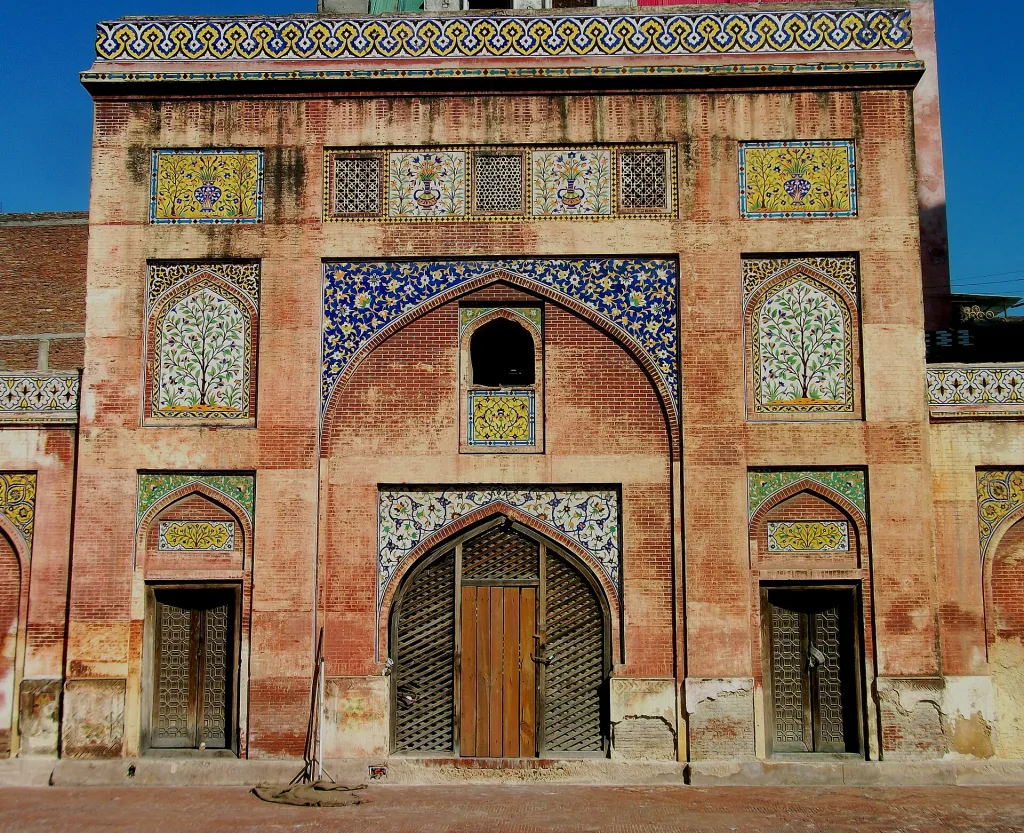
Archnet’s AKTC-sourced account dates Wazir Khan’s mosque and associated structures to 1634–35. It describes a double row of shops within the entrance system intended for calligraphers and bookbinders, together with other income-producing property supporting the mosque. Trade and religious architecture were therefore connected in the founding arrangement. The presence of commerce is not automatically a modern intrusion into an originally isolated monument.
Look at how small openings and larger gateways establish different scales of use. A shop, a chamber and a ceremonial entrance can all occupy a connected architectural frontage while serving distinct purposes. Avoid assuming that the trade conducted in a particular opening today matches its seventeenth-century occupation. The documented historic provision explains a relationship; it does not identify every present tenant or prove continuous use by the same craft across four centuries.
Let the lowered level explain the façade
One of the most significant conservation decisions was to lower the chowk towards its historic level. AKDN’s project account links this with exposing and conserving the mosque’s eastern façade and hujras, or chambers. A façade can appear different when accumulated ground levels conceal its lower portions. The intervention was therefore about the relationship between architecture and ground, not simply repainting an attractive elevation.
From a safe permitted position, observe changes in level, retaining edges and the height of doorways relative to the paving. Ask how much of a building becomes legible when its base is visible. Do not descend into restricted areas or assume every lower route is available to the public. Today’s arrangement includes conservation and visitor-management choices as well as historic fabric. A useful photograph includes enough of the ground to explain this relationship, rather than cutting the base away.
Find the well within a longer urban chronology
The Dina Nath Well is among the chowk’s recorded features. Archnet’s conservation account identifies it as nineteenth century and places its excavation and conservation within the forecourt project. That is an important reminder that the square contains layers beyond the mosque’s Mughal foundation. The presence of a later feature does not make it irrelevant to the historic setting.
Look for the well’s architectural enclosure and its relationship to routes across the space, using signs or a qualified guide to confirm identification. Do not infer from an enclosure’s appearance that the well currently supplies drinking water or can be entered. Historic water infrastructure can remain important even when its operational role changes. Compare the small scale of this feature with the mosque entrance and the open court: different kinds of public need can leave different-sized architectural traces in the same neighbourhood.
Read Chitta Gate as an approach, not an isolated object
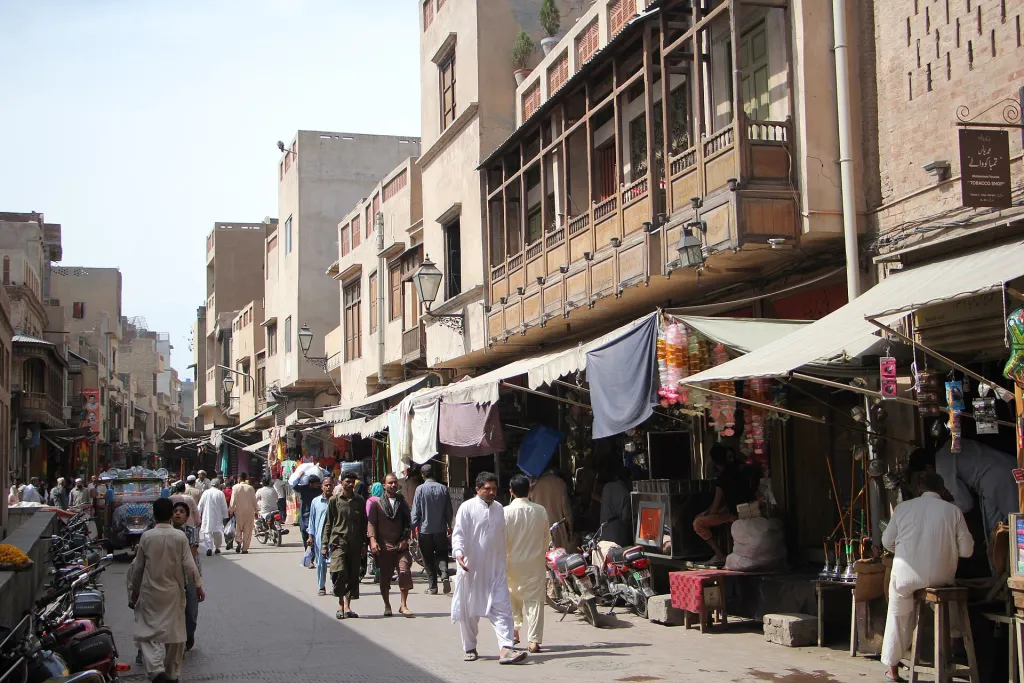
The federal inventory identifies Chitta Gate as the smaller gateway through which the approach from Delhi Gate reaches the chowk. Observe the sequence from a relatively narrow route to the opening of the forecourt. The gate gives the square an approach with a framed view, while the mosque façade provides a strong destination. Their relationship is easier to understand by turning and looking back as well as walking forward.
Keep the two gateways distinct in your notes and captions. Delhi Gate names a major city entrance; Chitta Gate is part of this more local approach. An image looking through one should not be casually labelled as the other. Stop clear of the passage before studying the frame. If the route is crowded, move on and return to the observation later. A continuous stream of pedestrians takes precedence over a perfectly centred photograph.
See rehabilitation as an urban project
AKDN records the initiation of the chowk rehabilitation in 2015 with support from the United States Ambassadors Fund for Cultural Preservation and AKTC, facilitated by WCLA. Its published scope includes the eastern frontage, Calligraphers’ Bazaar, Dina Nath Well and the public open space. These linked works explain why a conservation project can involve ground levels and social use alongside decorative surfaces.
An older Archnet project text describes intended future use for congregational, festive and controlled commercial activity. Read that wording as a project intention from its publication period, not a current events calendar. A square might be quiet during one visit and busy during another. Avoid judging success solely by whether your preferred photograph contains people. Public space is useful precisely because residents and visitors can occupy it, subject to management and the needs of the adjacent religious site.
Fit the visit around worship and everyday movement
Check current conditions with the responsible authority or a reliable local operator before planning an organised visit. Ask separately about the forecourt, mosque entry, photography and any event. Do not assume that arrangements in a public square settle the rules inside the mosque. Dress respectfully, keep noise low near worshippers and follow instructions about where visitors may stand or enter.
Plan the approach for the slowest member of the group. The short mapped distance from Delhi Gate can include uneven surfaces, narrow passages and crowds. Ask about steps and changes in level if mobility is a concern, and identify a realistic place to rest. Carry water and check heat, rain and air quality before setting out. Avoid arranging a group photograph across the mosque entrance. A small party standing to one side can study the square without obstructing worship, deliveries or local journeys.
Use a hypothetical three-edge exercise
For a hypothetical learning visit, choose three safe positions around the square. At the first, note the mosque frontage; at the second, identify the approach and gate; at the third, observe how smaller openings meet the public space. Draw simple arrows for movement on blank paper. This is a suggested exercise, not a record of an actual visitor group, and it does not require a measured plan.
Compare the notes afterwards. Which edge directs attention, which allows movement and which provides small-scale uses? Keep any interpretation tentative unless a source supports it. Do not count or photograph identifiable strangers as research subjects without consent. The exercise is about spatial relationships, not surveillance. A few quiet observations can show why preserving a forecourt involves more than clearing a view: its edges must continue to accommodate different activities.

Leave with a layered account of the square
A concise description of Wazir Khan Chowk should include a seventeenth-century mosque setting, an integrated commercial entrance system, a later well and a modern conservation project. These layers make the space more interesting than a supposedly unchanged Mughal tableau. The restored ground relationship helps explain the façade, while the continuing passage of people explains why the square remains a public place.
Keep practical advice tied to what was actually checked. Neither a historic project report nor a quiet photograph confirms today’s event schedule, access route or available facilities. If the visit must be short, the transition through the approach, one view including the base of the façade and one careful look at the well can still make a coherent outing. The reward is a clearer understanding of how a major monument and an everyday neighbourhood share the same urban ground.
Frequently Asked Questions
Is Wazir Khan Chowk the mosque courtyard?
It is the public forecourt at the mosque’s main entrance. Treat forecourt access and mosque interior arrangements as separate questions.
Why does the square sit below some surrounding routes?
Conservation lowered the forecourt towards its historic level to reveal the mosque frontage and associated chambers.
What is the Dina Nath Well?
It is a recorded nineteenth-century feature conserved as part of the chowk project. Do not assume it currently provides drinking water.
Are there regular public events in the chowk?
Project accounts discuss community use, but they are not a current programme. Confirm any event and access arrangements before visiting.
How we know this
- Type Practical guide
- Sources 4 (1 official/academic)
- Reviewed November 2026
- Disputed points None
Rules and fees change, confirm with the official links below before you act.
4 sources
- Chowk Masjid Wazir Khan, Department of Archaeology and Museums, Pakistan
- Wazir Khan Mosque Conservation, Archnet / Aga Khan Trust for Culture
- Pakistan: Walled City of Lahore Conservation, Aga Khan Development Network
- Protecting Heritage & History, Punjab Walled Cities & Heritage Areas Authority
Photo credits (3)
- Wazir Khan Mosque by Moiz.jpg, Moiz Ismaili, CC BY-SA 4.0, via Wikimedia Commons
- Delhi Gate 11 (WCLA).jpg, The Walled City of Lahore Authority, CC BY-SA 4.0, via Wikimedia Commons
- Courtyard of Wazir Khan Mosque, Lahore.jpg, Muhammad Umair Mirza, CC BY-SA 4.0, via Wikimedia Commons
