
Travel · Attractions
Begin with the octagon, rather than the skyline
Follow the octagonal tiers, brick, timber and tile of Multan’s great shrine, and distinguish medieval construction from its award-winning conservation.
- Read the details
- Confirm the approach
- Respect the setting
Shah Rukn-e-Alam Tomb, Multan
Begin with the octagon, rather than the skyline
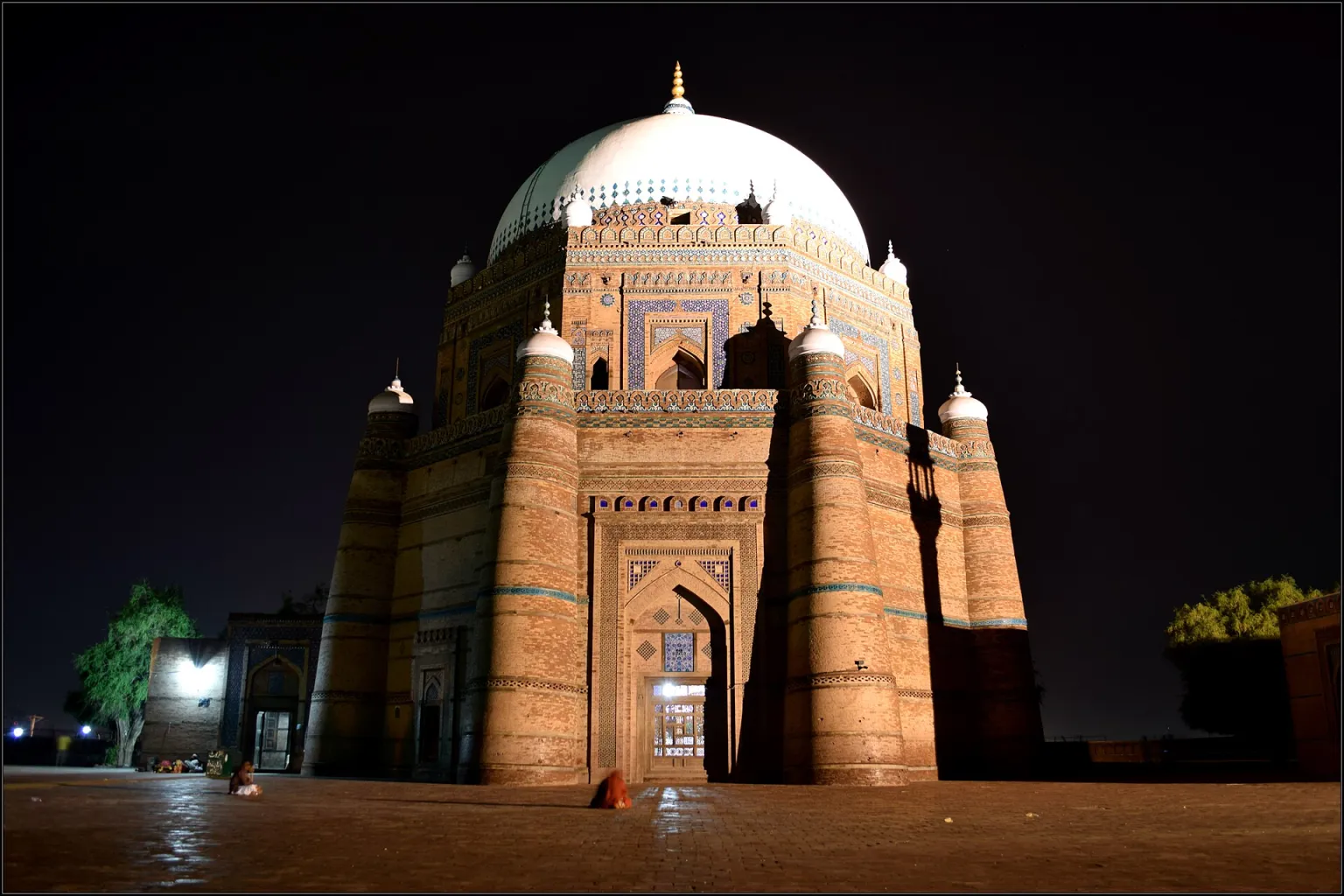
Shah Rukn-e-Alam’s tomb rewards a slower look than a photograph of its dome suggests. From a permitted position in the compound, follow one face of the octagon from the ground towards the roof. Brick, dark timber and coloured tile interrupt one another in horizontal bands, while the corner buttresses pull the eye upwards. The useful question is how these elements make a very large building readable at human scale.
This is also a living shrine. Architectural curiosity belongs alongside the priorities of people who have come to pray. Begin by finding the visitor route, checking where shoes should be left and asking whether photography is appropriate. A quiet view from outside can be more revealing than a hurried circuit through an occupied interior. The tomb’s continuing religious life is part of its significance.
A Tughluq building and a Suhrawardi saint
Pakistan’s submission to UNESCO’s Tentative List places construction between 1320 and 1324 under Ghiyas-ud-din Tughluq. It suggests that the building may originally have been intended for his dynasty before being presented to the saint’s family. Keep the uncertainty in that first intention: the submitted account does not make it an established contemporary declaration by the patron.
Punjab Auqaf identifies Shah Rukn-e-Alam as a Suhrawardi saint and the grandson of Bahauddin Zakariya. That relationship helps explain why the two Multan shrines belong in a connected historical conversation. It does not make their architecture interchangeable. One useful comparison is between this building’s octagonal lower body and Zakariya’s square base. Avoid repeating a precise transfer-of-burial date without checking it: the Auqaf page’s chronology contains an apparent inconsistency.
Follow the changing weight of the tiers
The federal archaeology record describes a three-storey structure with strongly marked corner buttresses. UNESCO’s submitted description similarly explains the building through three tiers. Look at how the lower mass supports a smaller upper octagon and then the dome. The changes in width make the building seem both grounded and ascending; this is an observation to test from the actual permitted viewpoint, rather than a claim about a hidden structural calculation.
Choose one corner and compare it with the flat wall beside it. The buttress is more than decorative punctuation: the official description connects the engaged corner towers with support for the thick lower walls. Notice how light changes the legibility of the sloping surfaces. Do not seek a higher viewpoint by climbing masonry or crossing a barrier.
Read the horizontal material bands
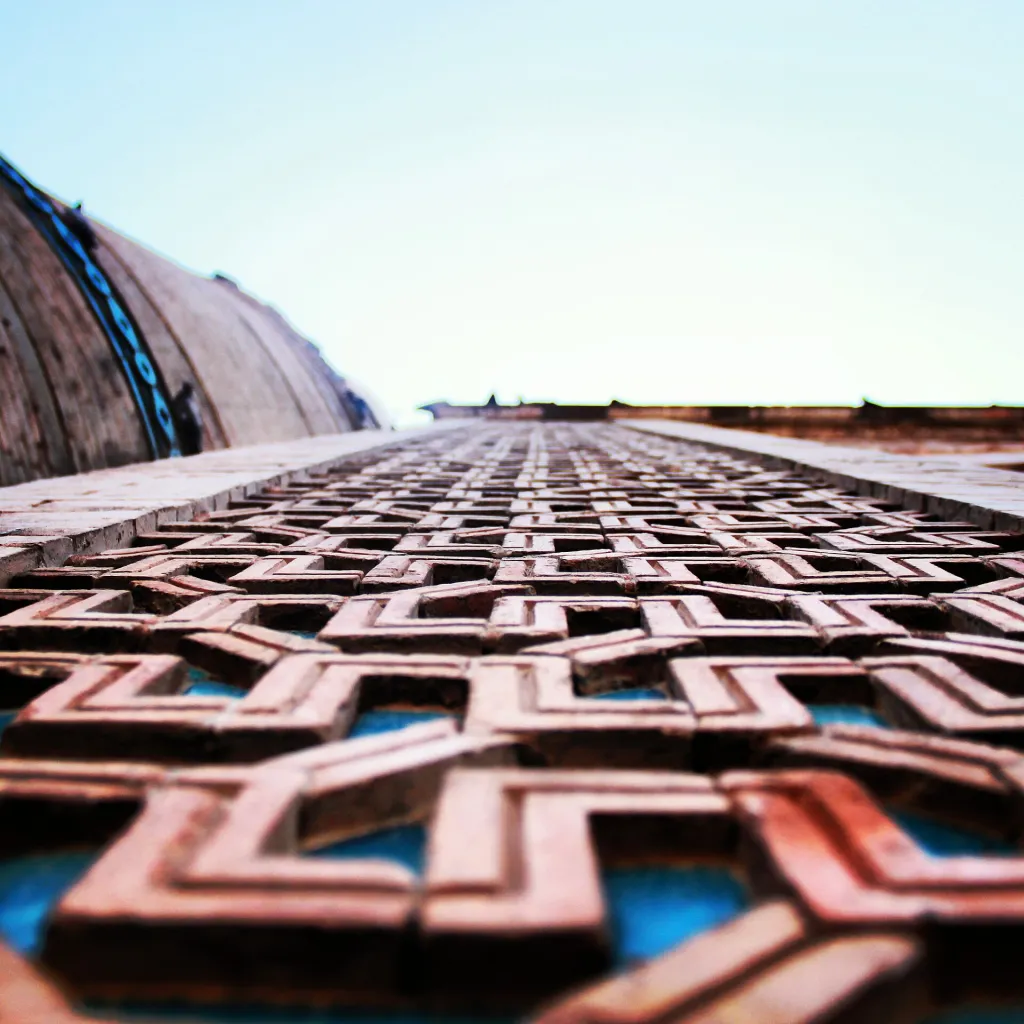
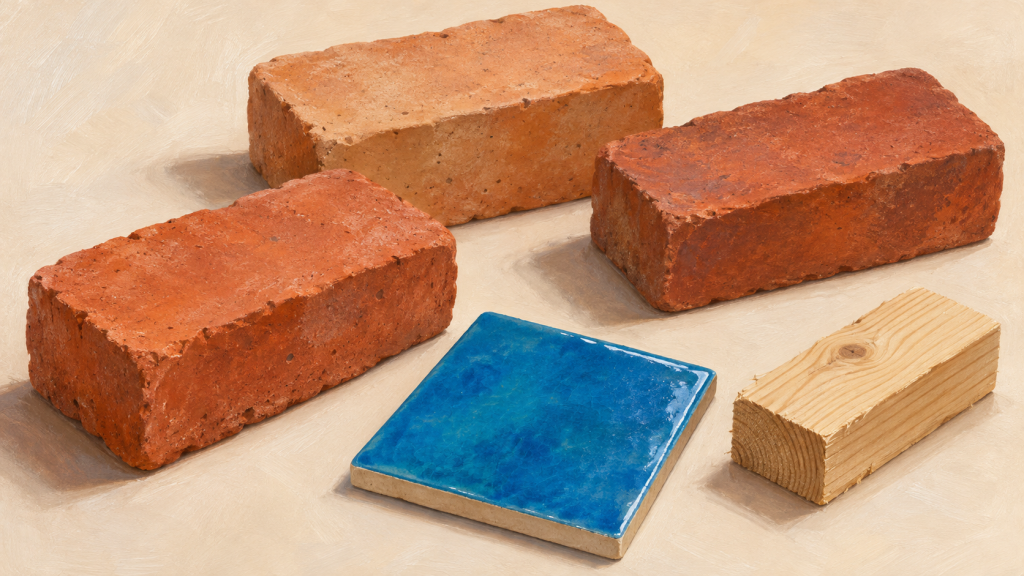
The federal inventory records finely fired brick, timber framing and courses involving dressed brick and tile-faced brick. UNESCO also notes visible shisham beams. Look for the different ways those materials catch light: a glazed surface can shine while the unglazed brick remains comparatively matte. A dark line is not automatically a crack, and a bright patch is not automatically a modern repair.
An accessible close view should supplement a wider one. First see the whole wall; then isolate a short horizontal stretch without touching it. Describe what is visible in ordinary terms before assigning a date. Repeated blue and white ornament can be appreciated as a pattern even when a visitor cannot identify every motif. Leave inscription reading and timber identification to a reliable source or qualified specialist.
Conservation is part of what survives
The Aga Khan Award project account records conservation beginning in late 1971 and lasting six years. Work included rebuilding foundations and lower wall sections, replacing lost tiles and repairing damaged wood. The project received an award in the 1983 cycle. That history makes a simple description of every visible surface as untouched medieval work misleading.
The same account emphasises training in glazed tile work, wood carving and terracotta. Consider conservation as a transfer of craft knowledge as well as a building repair. Ask whether an interpretation panel identifies particular interventions, but do not expect every replacement to be visibly labelled. Differences in colour can prompt a question; they cannot by themselves prove age or authenticity. Keep modern restoration history alongside the monument’s fourteenth-century origins when explaining it to children or companions.
Let worship determine the interior visit
If entry is permitted, pause before choosing where to stand. Keep the main circulation route clear and follow staff instructions about head covering, shoes and the areas available to visitors. Speak quietly and silence your phone. Do not lean on grave enclosures or place bags on surfaces associated with burial or devotion. Photographing the architecture does not provide consent to photograph a worshipper’s face or private act of prayer.
A shrine is not a place to stage a fashion shoot or demonstrate access for social media. Ask before bringing a tripod, recording sound or taking a close photograph of a religious object. If a ceremony or gathering occupies the room, an outside study is a complete visit in its own right. Giving people space is more useful than securing every possible angle.
Plan a flexible Multan stop
Check current arrangements with the shrine administration before setting out, particularly around religious gatherings or conservation work. The sources below establish heritage and religious significance; they do not confirm a daily visitor timetable, admission charge, parking arrangement or unrestricted interior access. Ask separately about each of those matters rather than treating an old travel listing as a booking confirmation.
Allow for the approach as well as the building. Carry drinking water, choose clothing suitable for a sacred place and wear footwear that can be removed and put back on easily. Anyone who needs a step-free route should ask about the entire approach, thresholds and seating, rather than merely whether the compound is described as accessible. Arrange a return pickup at an agreed permitted point, leaving flexibility if the immediate entrance is busy.
Make a comparison without flattening the differences
A visit to Bahauddin Zakariya’s shrine can deepen this one if both places are accessible on the day. Set a small task: compare the lowest visible geometry, the transition towards the dome and the relationship between tile and masonry. Avoid ranking the shrines by beauty or treating one as merely a rehearsal for the other. Their associated communities and religious histories deserve attention in their own terms.
You do not need to finish both buildings in one rushed excursion. If conditions are crowded or tiring, keep the second visit for another time. A notebook entry of three clearly observed details is more valuable than a catalogue of supposed original features copied from an uncertain caption. Name the building carefully when saving photographs so that the two Multan monuments are not later confused.
Leave with a precise account
The tomb appears on Pakistan’s UNESCO Tentative List, submitted in 2004. That is distinct from inscription on the World Heritage List. Use the full status in a caption or school project; shortening it to a UNESCO World Heritage Site changes the meaning. The listing also provides a historical description, not a live report of every accessible surface or current visitor arrangement.
A responsible account can be short and specific: an octagonal Tughluq-period shrine, with brick, timber and glazed decoration, whose present fabric includes important twentieth-century conservation. Record which details you actually saw and which you learned from the listed institutions. Do not take loose fragments, make rubbings or test a surface with water. Leaving the material undisturbed allows the next visitor and the conservation team to read it too.
Frequently Asked Questions
Is this a UNESCO World Heritage Site?
It is on Pakistan’s UNESCO Tentative List, submitted in 2004. That is different from World Heritage inscription.
When was the tomb built?
Pakistan’s UNESCO submission dates construction to 1320–1324 under Ghiyas-ud-din Tughluq; the proposed original dynastic purpose is presented as probable.
Are all the tiles medieval?
No such assumption is safe. The Aga Khan Award account documents extensive twentieth-century conservation, including replacement tile work.
Can I enter and photograph the interior?
Confirm current permission and photography rules with shrine management; historical descriptions do not guarantee visitor access.
How we know this
- Type Practical guide
- Sources 4 (3 official/academic)
- Reviewed November 2026
- Disputed points None
Rules and fees change, confirm with the official links below before you act.
4 sources
- Tomb of Shah Rukhn-I-Alam, Department of Archaeology and Museums, Pakistan
- Tomb of Shah Rukn-e-Alam, UNESCO World Heritage Centre
- Hazrat Rukn-ud-Din (RA), Multan, Punjab Auqaf and Religious Affairs Department
- Tomb of Shah Rukn-i-Alam, Aga Khan Development Network
Photo credits (2)
- Shah Rukn-e-Alam Tomb.jpg, Junaidali88z, CC BY-SA 3.0, via Wikimedia Commons
- Close up detail of the facade of the tomb of shah rukn e alam.jpg, Kkashaff, CC BY-SA 4.0, via Wikimedia Commons
