
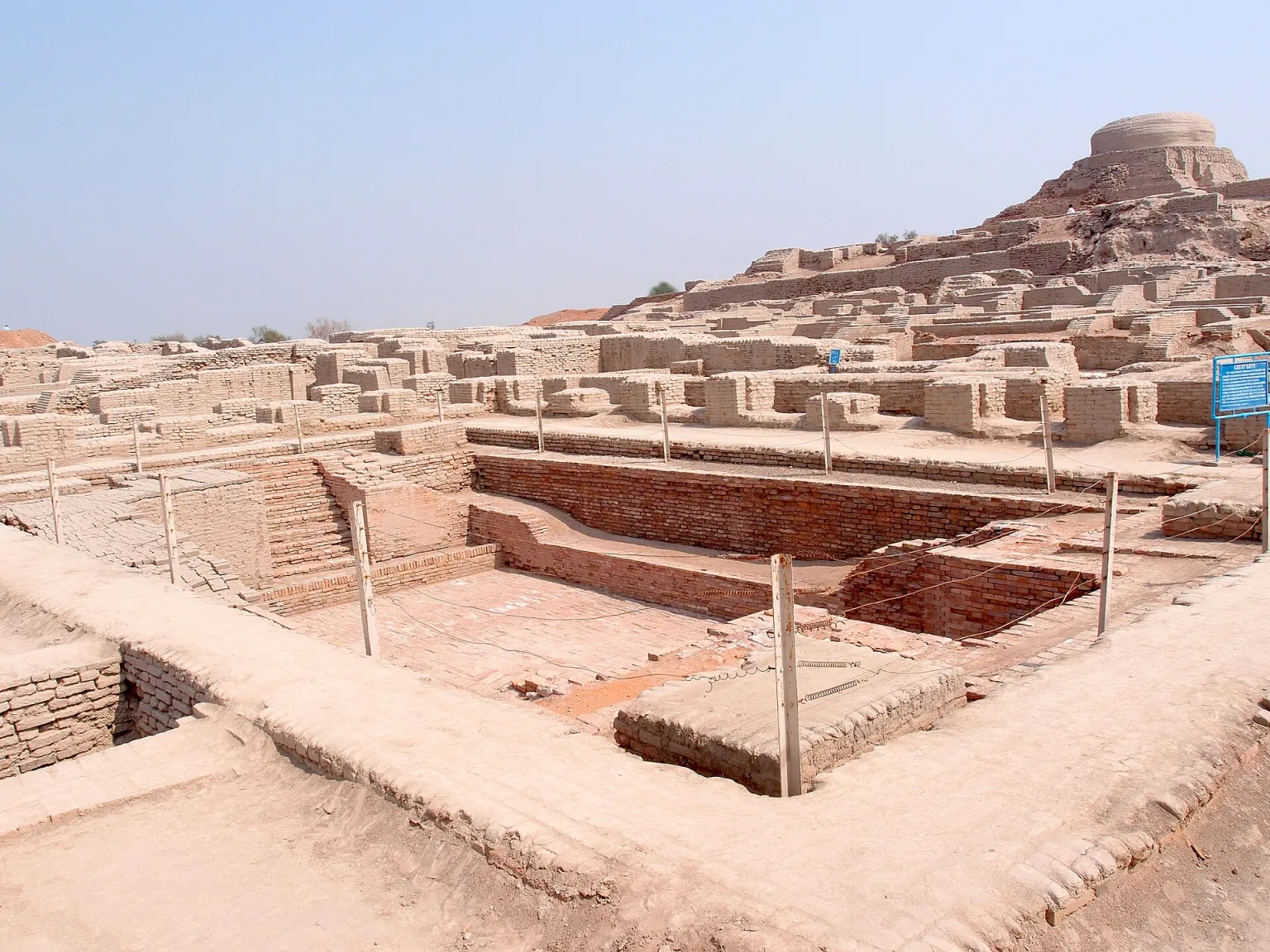
Travel · Attractions
Follow water through the brick city
Read water supply, bathing and disposal as connected questions at Mohenjo-daro, while separating visible engineering from uncertain social interpretation.
- Look closely
- Read the evidence
- Respect conservation
Mohenjo-daro · Larkana district, Sindh
Follow a question rather than a monument checklist
Mohenjo-daro’s brick ruins can look repetitive until you bring a question to them. Water offers a particularly useful one: how was it obtained, used, carried away and managed? Wells, bathing spaces and drains then become parts of urban life rather than isolated curiosities beside a celebrated tank. The aim is to read relationships without assuming every visible channel connects to every nearby building.
Begin with the orientation provided by the site and follow the permitted route. You do not need to trace a drain physically from end to end or step across fragile walls to understand the engineering question. Some connections are concealed, interrupted, reconstructed or outside the accessible area. A plan and a well-framed question can be more informative than entering a restricted feature. Treat this as a focused way to look, not a promise that all water installations are open for close inspection.
Set the city within its archaeological limits
UNESCO identifies Mohenjo-daro as a major urban settlement of the Indus civilisation, with remains dating to the third millennium BCE and a planned arrangement of streets and buildings. Its account distinguishes the western mound and eastern lower city and describes wells, drainage and sanitation among the settlement’s important features. The World Heritage inscription dates to 1980.
The standing remains are an excavated portion of a larger archaeological property, not a complete city exposed at one moment in time. Buildings changed and layers accumulated. A present walking surface may bring features together visually that require more careful chronological explanation. Avoid imagining that a single grand plan visible today tells you everything about how every household lived. Ask what the excavation and interpretation establish for the particular feature being discussed, rather than making every brick support a sweeping claim about an ideal ancient society.
Read a well as supply infrastructure
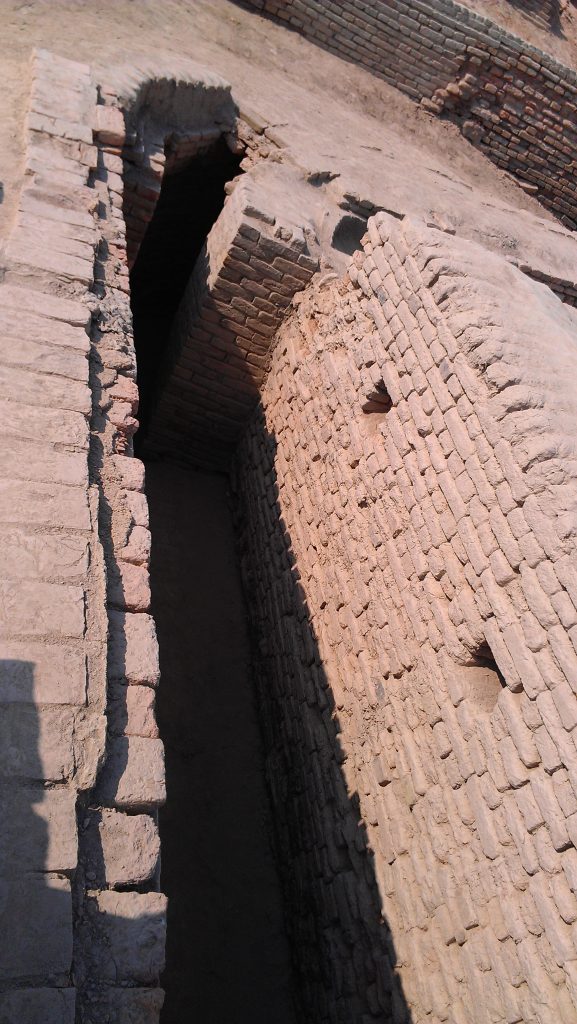
Where a well is identified and visible from the visitor route, examine its relationship to surrounding walls, passages and usable space. Ask whether the interpretation explains who could reach it and how water might have moved from it to nearby activities. A circular brick shaft is evidence of a constructed installation; the daily routines around it need further explanation.
Do not lean over an opening, stand on its rim or drop anything inside. An apparently dry shaft remains both an archaeological feature and a potential hazard. Water visible anywhere on the site today would not establish an ancient level or a safe source to drink from. Avoid estimating original depth from what you can see. Modern excavation, conservation and accumulated material can all affect the visible profile. The useful visitor question is how a documented well fitted into its setting, not how far you can peer down it.
Keep household bathing distinct from the Great Bath
Researcher Jonathan Mark Kenoyer’s discussion of Indus urbanism describes brick-lined wells and bathing platforms, with smaller drains carrying wastewater towards larger channels. This supplies a practical framework: identify a use area, an outlet and the larger disposal arrangement where the evidence is explained. It does not mean every brick-paved floor is automatically a bathroom.
Ask how the site interpretation identifies a bathing space. Does it point to a surface, an outlet or a relationship with a drain? The answer should rest on several features rather than a familiar modern room shape. A hypothetical visitor might notice an outlet and wonder how repeated washing affected the surrounding floor; that is a question, not a report of a tested reconstruction. Keep these smaller installations separate from the Great Bath, whose scale and setting raise different questions about collective use.
Look at the Great Bath’s fabric before its meaning
Archaeological documentation presented by Harappa describes the Great Bath as a brick tank approximately twelve metres by seven metres, with staircases at opposite ends. Its account discusses carefully fitted brickwork, gypsum plaster and bitumen used in waterproofing. The basic engineering question is how a large tank could hold water without the surrounding masonry becoming simply a porous enclosure.
Religious or purification use is a scholarly interpretation, not a directly recorded conversation with the people who used it. The same documentation notes uncertainty about the water supply and the absence of identified inlet drains. Do not turn a nearby well into a fully demonstrated filling system or call the tank a modern recreational swimming pool. From the permitted viewpoint, examine the tank’s shape and relation to the surrounding rooms while keeping interpretation, surviving fabric and inferred operation distinct.
Ask what drains tell you about maintenance
Drainage is more than a channel’s existence. Water must reach it, move through it and leave it; obstructions and sediment must be dealt with. Archaeological accounts describe substantial Indus drainage features and provision for collecting waste. On a visit, ask which details are visible and which are explained through excavation records or plans. A photograph of one channel cannot establish the performance of an entire city network.
Keep sites distinct when reading online. Harappa and Mohenjo-daro are both discussed in writing about Indus drains, but an excavation photograph from Harappa is not automatically evidence for the feature in front of you at Mohenjo-daro. Check captions and place names. Nor does sophisticated engineering prove that all residents enjoyed identical access or perfect hygiene. Infrastructure demonstrates organised technical work; claims about social equality, health outcomes or daily maintenance frequency require evidence beyond the mere presence of brick channels.
Understand why water is also a conservation problem
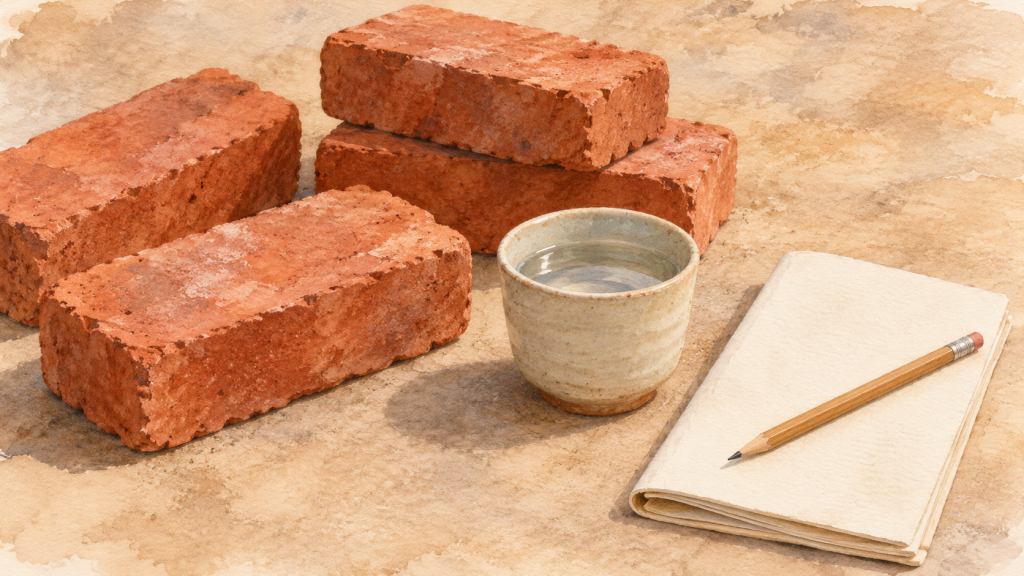
Water made urban life possible, while moisture and salts threaten the excavated remains today. UNESCO identifies salt action, thermal stress and rain among conservation concerns and describes protective work including mud capping, slurry applications and repointing. These treatments can be part of keeping archaeological masonry stable rather than an attempt to make the ruin look newly built.
Do not remove a protective layer because you want a clearer brick photograph. Stay off walls, tank edges and drain covers, including surfaces that appear robust enough for a person. A modern-looking repair does not give visitors permission to treat it as a bench. If rain, standing water or a closure changes the route, follow instructions rather than seeking a parallel path through the ruins. Your interest in ancient water management should make present conservation limits easier to understand, not create a reason to cross them.
Plan a realistic day and record the unanswered link
As checked on 7 November 2026, the UK Foreign, Commonwealth & Development Office advises against all but essential travel to Sindh north of and including Nawabshah. Mohenjo-daro in Larkana district falls within that area. This is UK advice for its audience, not a statement that the site is closed. British travellers should read the current advice before making plans; other nationalities should check their own government’s advice alongside local restrictions and site instructions. Recheck before departure rather than treating this dated guidance as permanent.
Check current access with the responsible site authorities, including closures, museum availability, guide arrangements and the state of the approach. Verify the day’s forecast and any relevant local weather or road advice close to departure. The exposed archaeological setting makes heat and the distance between rest opportunities important planning questions. Do not infer shade, drinking-water provision, seating or toilets from a photograph.
Ask about the actual accessible route if uneven surfaces, steps or long standing periods would affect anyone in the group. Carry the supplies appropriate to your journey and shorten the visit when conditions require it. At the end, identify one documented supply feature, one use feature and one disposal feature from what you actually saw or from a clearly credited plan. Mark any missing connection as unresolved. A water-focused visit succeeds when it makes engineering understandable while preserving the limits of the archaeological evidence.
Frequently Asked Questions
Was the Great Bath definitely a religious installation?
Religious or purification use is a scholarly interpretation; the surviving tank establishes engineering more directly than exact ritual meaning.
Is its filling system completely known?
No. Archaeological documentation notes uncertainty and the absence of identified inlet drains.
May I walk along walls or drain covers for a better view?
Follow the designated route and staff instructions; do not use archaeological masonry as a viewing platform.
Can evidence from Harappa be applied automatically here?
No. Check the site and feature named in each caption, plan or excavation account.
How we know this
- Type Practical guide
- Sources 5 (1 official/academic)
- Reviewed November 2026
- Disputed points None
Rules and fees change, confirm with the official links below before you act.
5 sources
- Archaeological Ruins at Moenjodaro, UNESCO World Heritage Centre
- The Great Bath of Mohenjo-daro C, Harappa
- Ancient Indus City Drains, Harappa
- Urban Process in the Indus Tradition: A Preliminary Model from Harappa, Jonathan Mark Kenoyer / Prehistory Press, hosted by Harappa
- Pakistan travel advice, UK Foreign, Commonwealth & Development Office
Photo credits (1)
- Mohenjo-daro.jpg, Saqib Qayyum, CC BY-SA 3.0, via Wikimedia Commons
