
Travel · Attractions
A close view of stone rather than a second itinerary
A focused guide to recessed bays, fluted columns and worn stone, with care over missing roofs, disputed chronology and the last approach.
- Read the details
- Confirm the approach
- Respect the setting
Malot Temples, Salt Range
A close view of stone rather than a second itinerary
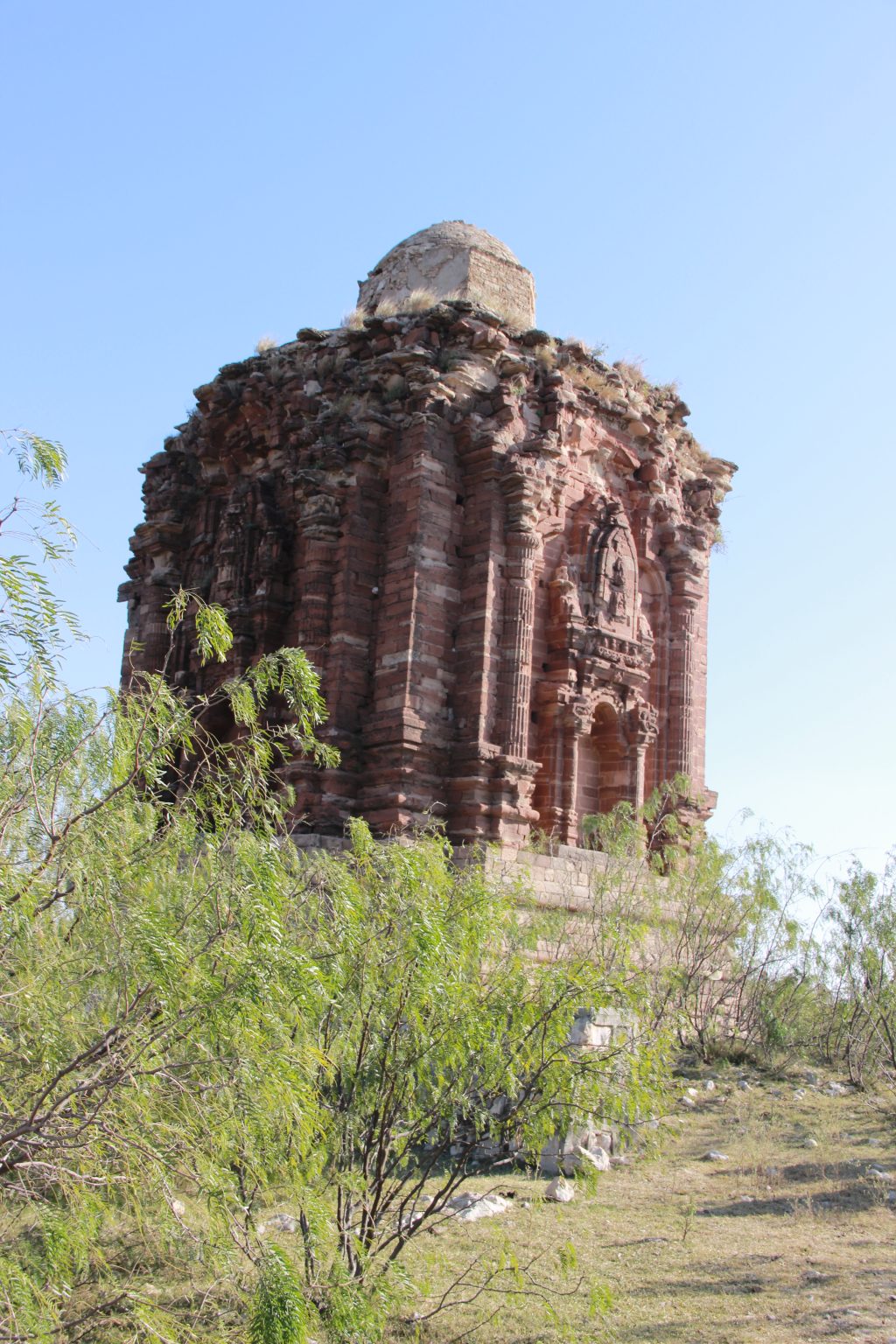
Malot is worth approaching with one modest aim: understand a few surviving architectural details in stone. Instead of treating the temples as a quick photograph between Salt Range destinations, choose a permitted viewpoint and look at the relationship between a recessed wall, its framing columns and the curved outline above. This narrower approach is useful even when the site cannot be explored completely.
The federal archaeology inventory calls the monument Malot Temple; travel material also uses the plural Malot Temples. Keep the actual view clear when captioning a photograph, and avoid assuming every nearby fragment belongs to a single building phase. A ruin contains both surviving construction and losses. What is absent matters, but it should not be supplied from imagination merely to make the scene appear complete.
Keep chronology open where the evidence is limited
The federal record assigns a broad early-medieval relative chronology and associates the building with Kashmiri architectural influence and Lalitaditya’s period. That short inventory is not a detailed demonstration of the date. It is responsible to attribute its account rather than convert it into an uncontested exact foundation year. Popular summaries can sound more certain than the evidence presented to a visitor.
The University of the Punjab’s Ancient Punjab contents list an academic study explicitly questioning Malot’s relationship to the Kashmir style. That research title is a reminder that a regional style label is a research question. Enjoy the surviving carving while leaving room for specialist debate about influence, date and the movement of architectural ideas.
Learn three terms from the surviving façade
The federal description identifies recessed bays, fluted columns and trefoil arches. A recessed bay is a portion set back from the surrounding wall. Fluting means a series of grooves along a column. A trefoil outline has three lobes. Use the terms to find shapes, rather than treating them as a checklist that proves a particular ruler commissioned the building.
Begin with a whole face, then identify where the recess begins and how the column frames it. Look at the column’s upper termination and the curve above. If damage makes a form difficult to read, say so. A broken surface need not be forced into a textbook example. Looking carefully at one legible feature is more rewarding than labelling every worn outline with confidence from a distance.
Let light reveal carving without touching it
Stone carving changes dramatically as light moves across it. A shallow groove can disappear in flat light and become clear when a side is in shadow. If conditions permit, compare the same detail from two safe positions without stepping onto masonry. The exercise reveals relief and depth without requiring a physical examination of the surface.
Do not pour water over stone, rub it with a cloth, chalk an outline or make a tracing against the carving. These methods can damage or contaminate a surface and are unnecessary for a visitor’s record. A photograph with permission, a simple freehand sketch or a written description is enough. Keep any scale reference in your own notebook rather than placing coins or hands against fragile detail. Leave small detached pieces precisely where they lie.
Read the missing roof as a limit
The federal inventory states that the roof had fallen and describes a probable pyramidal stone form in stages. Its wording makes the distinction clear: a proposed lost roof is an interpretation, not a surviving feature a visitor can verify directly. The remains should therefore not be described as though a complete ancient roof still crowns the building.
This is a useful place to practise responsible mental reconstruction. You may imagine how a roof once affected the silhouette, but label that exercise as hypothetical and do not publish a drawing as documentary evidence. Instead, study the surviving upper edge and stop where evidence ends. Missing masonry can also create unstable edges or falling-material hazards. A dramatic view from beneath a damaged opening is not worth crossing a barrier or entering a space that management has not permitted.
Conservation has a history of its own
An Archaeological Survey of India conservation report for 1930–31 records underpinning at Malot’s gateway with stone masonry in lime. That historical intervention means the site’s preservation story did not begin with today’s photographs. It also prevents a simplistic assumption that everything standing has survived without support or repair since the initial construction.
The report is not a present structural assessment. Do not use an old mention of repair to declare an opening safe, nor assume that every visibly different stone belongs to that specific campaign. Ask current management about permitted routes and any active work. If there is a protective fence, stay behind it even when no worker is visible. Conservation depends partly on reducing repeated small pressures from climbing, sitting, graffiti and improvised paths.
Plan the last approach before leaving the main road
The national tourism portal places Malot in the Salt Range near Kallar Kahar and highlights its elevated landscape setting. That location description does not verify a current road surface, parking point or easy final walk. Confirm the correct destination with a local driver or responsible tourism office, especially to avoid confusion with similarly named places. Ask about the last approach and return arrangements before committing to a fixed schedule.
Carry drinking water, sun protection and footwear suitable for uneven ground. Leave enough daylight for the return; do not rely on the existence of lighting or a staffed facility at every moment. If anyone has limited mobility, ask about the actual ground, steps, slopes and distance from the vehicle. A broad claim that a destination is family friendly is not an accessibility assessment.

Treat the landscape and sacred remains with restraint
Keep away from exposed edges and do not move backwards while looking through a camera. Strong wind, loose footing or poor visibility can make an otherwise simple pause uncomfortable. Change or shorten the visit when conditions warrant it. There is no need to turn a heritage stop into an unplanned climb down a slope in search of a wider view.
These are remains of a Hindu religious place, even when the immediate scene feels quiet. Dress and behave respectfully; avoid comic poses, intrusive music or treating a carved architectural element as a seat. If worship or a local religious practice is taking place, ask before approaching and give participants priority. Take litter away, including small packaging. Do not collect stone as a souvenir or accept a fragment offered as a casual memento.
Leave with a measured description
A useful account of Malot can name three things securely: the surviving recessed architecture described by the federal inventory, the worn stone detail you actually observed and the limits imposed by loss or inaccessible areas. Attribute the Kashmir-style association to its source. Do not compress a broad archaeological chronology into an exact year simply because a caption has little space.
Keep this visit distinct from a Katas Raj comparison or a general Salt Range day plan. Its value lies in close attention to a particular ruin. Before sharing photographs, check that the location label is correct and that a supposed detail is not merely shadow or a modern intervention. No hours, admission charge or unrestricted access is promised here. Current arrangements belong with the responsible management, while the monument’s material evidence deserves patient observation.
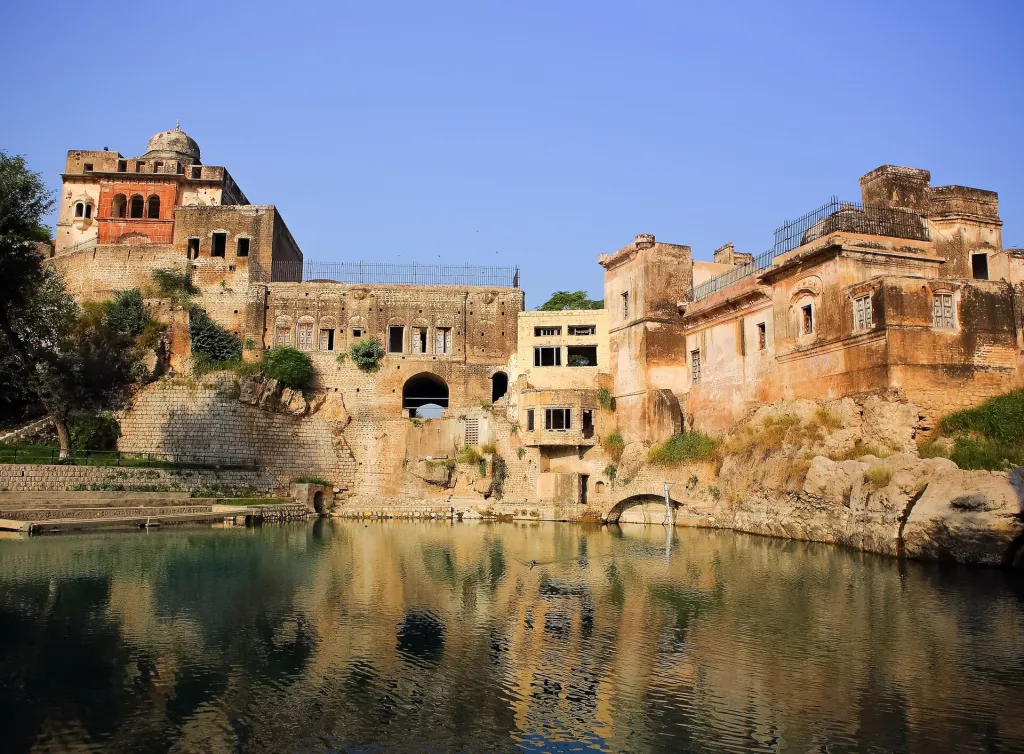
The accompanying comparison photograph shows Katas Raj, not Malot. Its pond and surrounding temples should not be used to imagine missing structures at this site.
Documentary photograph: Malot temple.jpg by kashaf ali, CC BY-SA 4.0, via Wikimedia Commons. Display sizes may be scaled.
Frequently Asked Questions
What details should I look for?
The federal inventory identifies recessed bays, fluted columns and trefoil arches. Study a legible example without touching the stone.
Is the roof complete?
The inventory describes the roof as lost and its proposed pyramidal form as probable. Do not present the proposed form as a surviving observation.
Is the Kashmir-style attribution certain?
The federal inventory uses it, while an academic article title explicitly questions the classification. A precise stylistic or chronological conclusion needs specialist evidence.
Is the final approach easy for everyone?
Current ground conditions and access were not established by the cited heritage sources. Confirm the last approach, slopes and steps before travelling.
How we know this
- Type Practical guide
- Sources 4 (3 official/academic)
- Reviewed November 2026
- Disputed points None
Rules and fees change, confirm with the official links below before you act.
4 sources
- Malot Temple, Department of Archaeology and Museums, Pakistan
- Malot Temples, Pakistan Tourism Development Corporation, Salam Pakistan
- Conservation—Punjab and N.-W.F.P.: The Temples at Malot and Amb, 1930–31, Archaeological Survey of India; archive hosted by IGNCA
- Ancient Punjab, Vol. 3 contents, University of the Punjab, Department of Archaeology
Photo credits (1)
- Katas Raj Temples 2.JPG, ClicksByMohammadOmer, CC BY-SA 3.0, via Wikimedia Commons

