
Travel guide
Lyallpur Museum and the Eight Bazaars: A Faisalabad Route
Plan Lyallpur Museum and the Eight Bazaars: a practical suggested route with transport, meals, family access and current-source checks before booking.
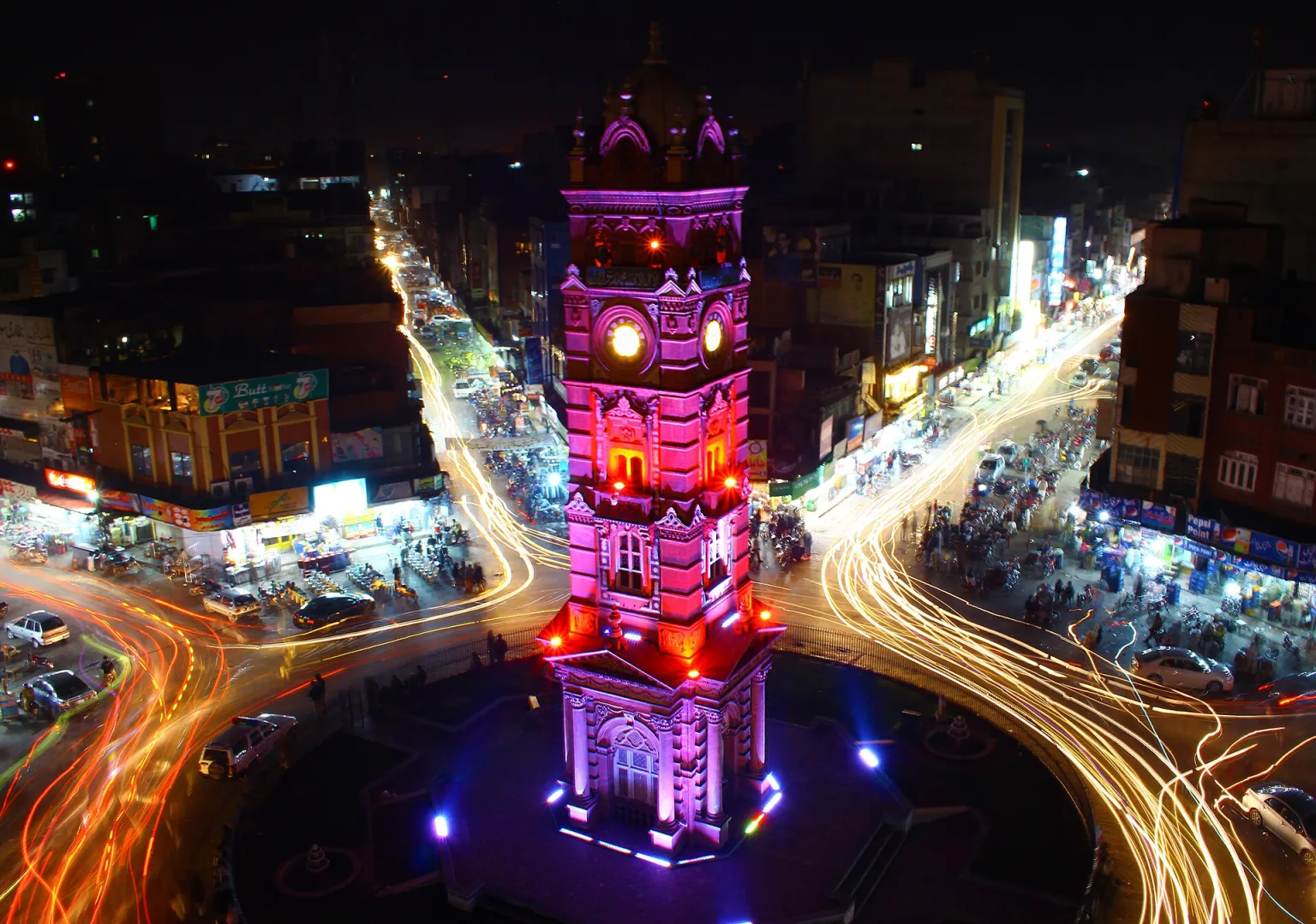
The red sandstone Clock Tower (Ghanta Ghar) at the centre of Faisalabad.
Use the museum to understand the city
Faisalabad’s textile economy often dominates its public image, but Lyallpur Museum offers a way to approach the city through regional history and urban development. The district administration describes ten galleries covering ancient and modern history and culture, and lists the Clock Tower, Gumti and Kaiseri Gate among local landmarks. This suggested day links a selective museum visit with a short exterior route around the old commercial centre.
The aim is not to complete all eight bazaars. A museum morning and one compact market loop can explain more than an exhausting attempt to walk every spoke. Keep textile shopping separate unless it is a deliberate part of your plan. This narrower route complements a general Faisalabad city visit by concentrating on how museum interpretation and the city’s street layout illuminate each other.
Confirm the museum before the market
Ask Lyallpur Museum about current public hours, admission, photography and any closed galleries. Institutional and district pages can provide background without carrying temporary notices. Confirm the correct entrance and whether a guide or group visit requires advance arrangement. If your interest is a particular gallery, verify that it is available rather than assuming all ten spaces will be open.
Choose a day and time that also suit the market portion. Many independent shops follow their own routines, so do not treat one bazaar listing as a universal schedule. Cooler weather makes the outdoor section easier; hot afternoons or rain can justify limiting the day to the museum and a vehicle-based look at the Clock Tower area. Leave enough time for a meal rather than placing the entire outing between two fixed intercity departures.
Morning in Lyallpur Museum
Begin with an orientation and select a few themes: the region before the modern city, agricultural change, or the growth of industry. Ask how the displays connect with the places you will see later. Avoid rushing through every gallery simply because they are numbered. Children can choose one object that seems connected to everyday work and another that represents a different period.
Read labels carefully when discussing dates, materials and communities. Museum narratives are a starting point for questions, not a reason to make sweeping claims about every resident of the region. If a gallery includes a model or reconstruction, distinguish it from an original object. Take a short rest before leaving and decide which street details you want to notice outside. A few purposeful observations will make the market walk less overwhelming.
The district’s landmark list places Kaiseri Gate and Gumti on the Railway Road and Circular Road side of the older commercial area. If you add this pair, treat it as a separate short exterior stop after assessing the current approach. The Clock Tower’s radial market layout remains the main street-planning theme, rather than a requirement to enter every bazaar.
Explore the places and guides mentioned
Photographs show the linked places or guide subjects. Open each page for its own visiting and planning information.

The Clock Tower and a limited bazaar loop
Use a locally advised approach to the Clock Tower area and choose one or two bazaar sections that fit the group’s interests. The district page explains the radial arrangement of the eight bazaars; seeing the relationship between a central landmark and surrounding streets is the main point. Do not enter the tower or another building unless public access is explicitly authorised.
Walk with traffic and deliveries in mind. Stop where there is space, keep shop entrances clear and ask before photographing people. Kaiseri Gate and Gumti can form an additional exterior stop if the group remains comfortable and current access allows it. Avoid a fixed promise that every landmark can be connected by an easy continuous pavement. A short vehicle transfer is reasonable when surfaces, heat or mobility needs make walking inconvenient.
Transport and the shopping temptation
Agree a drop-off and pickup point outside the most congested lanes. A vehicle waiting inside a busy market can create pressure to rush and may obstruct business. If shopping is planned, tell the driver that the return may involve bags and confirm where loading is permitted. Save the pickup location and a backup physical landmark so the group can regroup if mobile data is unreliable.
For textile purchases, decide the specification before buying: fabric type, length, width, finishing and intended use. Ask about washing, shrinkage and exchange conditions. A large industrial city does not make every retail item factory-direct or automatically cheaper. Get receipts and check what you are actually receiving. If the heritage outing is the priority, limit shopping to one planned stop rather than allowing several introductions to replace the museum-and-city connection.
Meals, accommodation and costs
Choose lunch for comfort and practical facilities. A seated restaurant with a toilet can be more useful than a famous snack consumed while standing in a crowded lane. Carry water for the transfers and follow museum rules on food and bags. Families with children should plan a meal before energy drops, especially after a morning of reading labels and standing.
Visitors already staying in Faisalabad need not change accommodation. Intercity visitors can choose a room convenient for their arrival and onward journey, with parking and room access verified directly. Budget for museum entry if charged, transport, parking, any authorised guide and food. Keep shopping money separate. Ask a tour provider whether the price includes the actual museum visit or only a drive past the building; the distinction matters when comparing packages.
Access and an unhurried ending
Ask the museum about steps, lifts if relevant, gallery seating and accessible toilets. For the market, obtain a specific assessment of surfaces and crowding rather than assuming an upgraded street is suitable for every wheelchair. A shortened route with one clear view of the Clock Tower may be the right choice for elders. Keep children close around motorcycles, carts and loading points.
Finish by comparing one museum theme with something observed in the streets: a trade, a pattern of movement or the role of a public landmark. Do not claim to have understood Faisalabad through a single day, but let the outing create a more informed starting point. A museum visit, a bounded bazaar loop and a comfortable meal make a complete itinerary. Extra shopping, distant parks and factory visits can wait for another day with their own permissions and timing.
Continue planning your trip
Frequently Asked Questions
Do we need to walk all eight Faisalabad bazaars?
No. The suggested route uses the museum to explain the city, then chooses one or two manageable bazaar sections and an exterior Clock Tower view.
Is Lyallpur Museum just another name for Lahore Museum?
No. Lyallpur Museum is in Faisalabad and focuses on regional history and culture. Use its correct entrance and current visitor arrangements when booking transport.
How we know this
- Type Practical guide
- Sources 3 (3 official/academic)
- Reviewed October 2026
- Disputed points None
Rules and fees change, confirm with the official links below before you act.
3 sources
- Faisalabad: Important Places, District Administration Faisalabad, Government of Punjab
- Lyallpur Museum heritage record, Department of Archaeology and Museums, Government of Pakistan
- Faisalabad District profile, Trade Development Authority of Pakistan
Photo credits (2)
- Clock Tower Faisalabad by Usman Nadeem.jpg, Usman Nadeem, CC BY-SA 4.0, via Wikimedia Commons
- Clocktower Faisalabad, Panorama.jpg, Minhajian, CC BY-SA 4.0, via Wikimedia Commons
