
Travel · Attractions
Start with what an object did
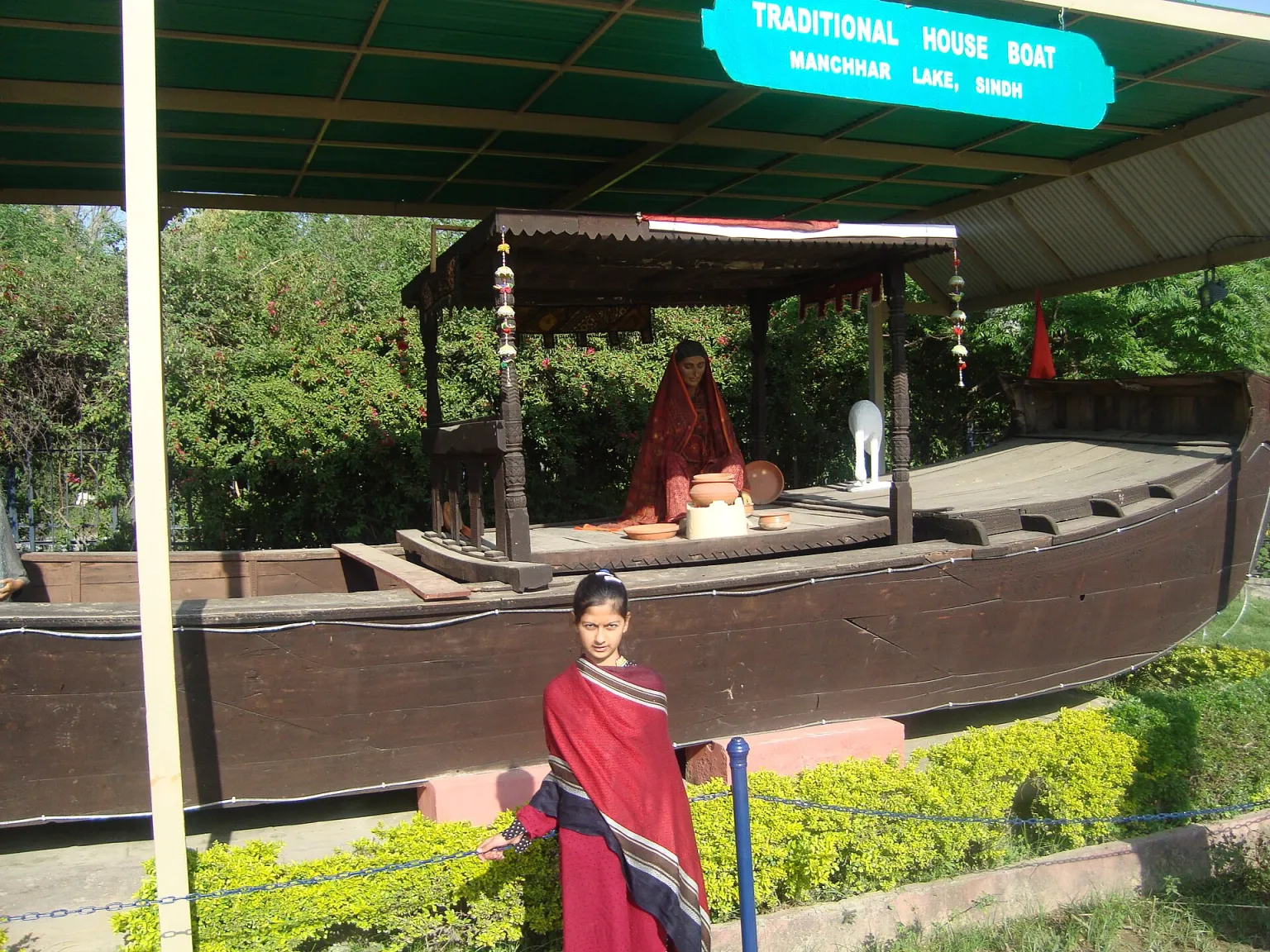
Read function, material and provenance at Lok Virsa without treating a regional display as a complete portrait of a living community.
- Look closely
- Read the evidence
- Respect conservation
Lok Virsa Heritage Museum · Shakarparian, Islamabad
Choose one ordinary object to understand well
A striking costume or elaborate room display can draw you through a museum quickly. At Lok Virsa, try slowing down beside something apparently ordinary: a vessel, a tool, a textile or an item of furniture identified in the gallery. Ask what it did before asking what region it represents. Daily use brings material culture closer to people’s work, care and resourcefulness.
This guide proposes a close-reading visit, not a list of guaranteed exhibits or a comparison-day itinerary. Choose from what is actually on display. One well-understood object can open questions about labour, materials, trade and household life that a rapid photograph of every case misses. If its function remains uncertain, write the uncertainty down. A museum visit becomes more useful when a clear question replaces a confident guess based only on an object’s shape.
Understand the institution behind the display
Lok Virsa is the National Institute of Folk and Traditional Heritage, established in 1974. Its own history describes a mandate encompassing research, collection, documentation, preservation and communication of tangible and intangible heritage. The date belongs to the institute’s establishment; do not automatically apply it to the opening of every present gallery or building.
The institution describes the Heritage Museum as a museum of ethnology presenting history and living traditions. Ethnology concerns human societies and cultural practices, so everyday implements are central rather than minor objects surrounding “real” art. A display can communicate a way of working or gathering as well as a decorative style. Nevertheless, an institution selects and arranges its evidence. The gallery is a curated account, not a transparent window through which a visitor sees an entire region, household or community without mediation.
Read the label before assigning a regional identity
Start with the name and locality written on the label, if supplied. A province is a broad administrative description; a village, district, language community or maker attribution may be more specific. Keep the level of detail the museum actually provides. Do not invent a narrower origin because a pattern resembles something you have seen online or in a shop.
Date and acquisition history matter too. The making date, collection date and date of display can be different. An older object collected recently is not evidence that every household currently uses it. An undated item should remain undated in your notes. Where labels group several objects together, establish which description belongs to which item. Asking staff a precise question about an attribution is more productive than asking whether a whole gallery is “authentic” without defining what you mean.
If a display includes translations or several names, preserve that plurality in your notes. An unfamiliar local term is worth recording accurately rather than replacing it with a broad English category that loses information about use or cultural setting.
Follow material into work and practical choices
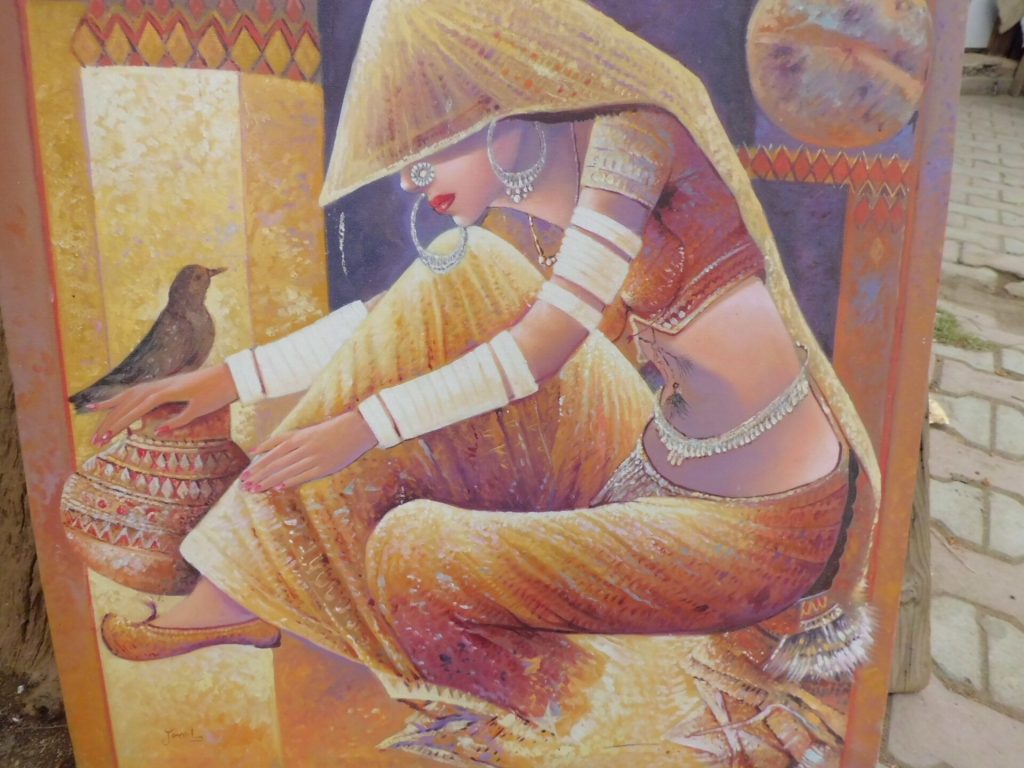
Look at how material supports function. If a labelled textile is visible, consider its thickness, structure, seams and edges without reaching into the display. If a vessel is shown, examine its opening, base and handles from the available viewpoint. These features can suggest how an object was carried, filled, stored or used, but a suggestion is a question to test against documentation.
Do not infer an entire production process from surface appearance. A sheen might come from material, finish, wear or lighting; a join may be concealed. Distinguish “I can see a seam here” from “the maker must have used this technique.” The first is observation; the second needs evidence. Museum lighting and protective cases may hide details deliberately, because preservation and security can take priority over providing an unrestricted view of every surface.
Ask who worked, who used and who is missing
A finished object contains labour that its decorative appearance may not reveal. Ask whether the label names an individual maker, a workshop, a community or only a collecting location. If a maker is unnamed, acknowledge the gap rather than turning an anonymous object into proof that craftsmanship simply arose from a region without people making decisions.
Users are equally important. A garment associated with a ceremony does not establish what everyone wore to work. A richly finished household object may indicate a particular occasion or level of resources rather than an everyday norm. These are interpretive questions, not conclusions you can extract automatically from decoration. Read any supplied account of use and ask how representative the display claims to be. Avoid ranking communities by the amount of ornament, the apparent cost of materials or your familiarity with the design.
Connect objects with living knowledge
Lok Virsa’s Research and Publication Section describes field documentation of oral traditions, songs, games and life-cycle rituals. Its Heritage Library offers resources for studying culture and traditional knowledge. These programmes help explain why a museum case cannot contain all the heritage associated with an object. Knowledge can also lie in a performance, a spoken instruction, a remembered use or a maker’s embodied skill.
If an authorised demonstration or event is offered during your visit, ask what it is and who is participating before treating it as evidence of an entire tradition. An individual artisan speaks from a particular practice and experience. Ask permission before recording or photographing a person, and accept a refusal. Buying a contemporary craft object, where available, is a separate transaction; it does not entitle a visitor to a performance, an interview or unrestricted access to the maker’s working process.
Make notes that keep evidence and interpretation apart
Use three short headings in your notebook: label information, visible detail and further question. For a hypothetical vessel, the label might identify a locality, your observation might concern a narrow neck, and your question might be whether the neck affected carrying or pouring. This example illustrates a method; it does not claim that a specific vessel or label is presently displayed.
Children can use the same approach with simpler language: what is it called, what can you see, and what would you like to ask? Avoid a game that requires touching cases or racing through galleries. Adults should allow children to revise an initial guess after reading a label. Changing your mind in response to evidence is a useful museum skill. A drawing made from a permitted position can record proportions without needing to reproduce every motif or copy a culturally significant design for commercial use.
Plan for the museum you intend to visit
Lok Virsa’s Heritage Museum and the Pakistan Monument Museum are distinct destinations within the institution’s museum offering. Confirm which one you mean when arranging transport, tickets or a group visit. A photograph caption that simply says Lok Virsa may not establish the entrance or building you need. Ask about the relevant museum’s current hours, admission, gallery closures and any event affecting access.
Check the weather for the outdoor portions of the outing and ask about step-free routes, seating and toilet access according to your group’s needs. Do not assume that a large cultural campus has identical facilities throughout. If research is your main purpose, confirm the library’s access arrangements separately; museum entry does not automatically promise research assistance or access to all holdings. Leave with the object’s recorded name and a reliable follow-up question, rather than a broad claim about how an entire region lives.
Frequently Asked Questions
Is Lok Virsa only about old objects?
Its mandate includes living traditions and intangible heritage as well as material collections.
Does a regional gallery represent everyone in that region?
No. Read the specific locality, date, maker and use information, and recognise selection within a curated display.
Is the Heritage Museum the Pakistan Monument Museum?
They are separate museums in Lok Virsa’s offering; confirm the intended destination when planning.
May I photograph an artisan demonstration?
Check the event rules and ask the person’s permission before photographing or recording them.
How we know this
- Type Practical guide
- Sources 5
- Reviewed November 2026
- Disputed points Yes, see the debates
Rules and fees change, confirm with the official links below before you act.
5 sources
- History, Lok Virsa
- Lok Virsa, Lok Virsa
- Research and Publications, Lok Virsa
- Heritage Library, Lok Virsa
- Museums, Lok Virsa
Photo credits (2)
- (Lok Virsa Museum) Islamabad )By @ibneazhar (5).JPG, Ibnazhar, CC BY-SA 3.0, via Wikimedia Commons
- Painting In Lok Virsa MUSEUM.jpg, Abbi kazmi, CC BY-SA 4.0, via Wikimedia Commons
