

Things to do
Try a Heritage Textile Looking Session in Karachi
Karachi’s Nasreen ki Haveli offers a focused setting for looking at heritage textiles. Its own description presents a collection dedicated to.
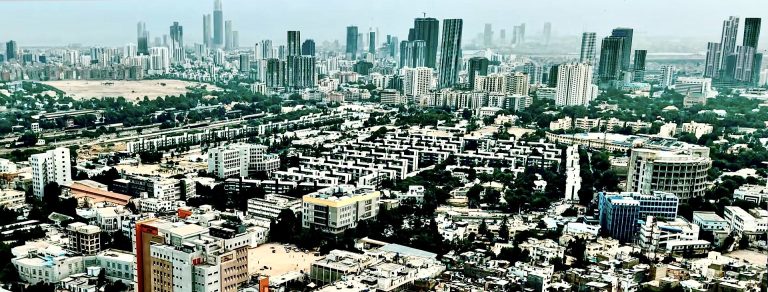
Karachi city context for a booked heritage-textile visit; the photograph does not show Nasreen ki Haveli.
Who this experience suits
Karachi’s Nasreen ki Haveli offers a focused setting for looking at heritage textiles. Its own description presents a collection dedicated to conserving and showing textiles, including material from Sindh. Approach this as a booked cultural visit and a visual learning session, rather than assuming it is an open craft workshop or a place to handle antique clothing.
Choose the actual stops
Nasreen ki Haveli; the exhibition confirmed for your booking; published collection interpretation available through the museum.
The main activity
Compare fibre, construction, colour and decoration as separate features. A striking embroidered surface does not tell you everything about the underlying cloth. Read the attribution for region, community and date, and note where a label expresses uncertainty rather than filling gaps with an attractive story.
Try looking at a textile in layers. First identify its overall shape and intended use as stated on the label. Next consider the structure of the cloth, then the way colour and decoration sit on that structure. A dense embroidered surface may hide much of the ground fabric, while a woven pattern may be inseparable from it. Where the label does not explain technique, write a question instead of confidently assigning one.
Explore the places and guides mentioned
Photographs show the linked places or guide subjects. Open each page for its own visiting and planning information.
A realistic suggested sequence
Contact the museum for the current visitor arrangement before travelling. Begin with the exhibition’s introduction, choose a small group of related textiles and finish with one contrasting example. Allow time to ask questions without expecting access to storage, private rooms or conservation work.
Make the experience more rewarding
Textiles also carry stories of collection and display. Ask how the museum identifies origin and date, and remember that an object may have moved between households, markets and collectors. Avoid describing a community solely through a garment. If a family member wants to try stitching afterward, choose a contemporary learning exercise with ordinary material; do not treat a photograph of a heritage object as an unrestricted commercial pattern. The outing’s value lies in more attentive looking and respect for makers, not in reducing a complicated textile to a decorative motif.
Choose a manageable theme before the visit: stitches, borders, the relationship between a garment and its wearer, or the way a textile is displayed. The current exhibition should decide which theme is possible. A museum dedicated to textiles may still show only a selection of its holdings, so a photograph in a profile is not a guarantee of seeing that object in person.
At the first example, describe the whole object before isolating a pattern. Note its shape and stated use, then examine one area of decoration. At a second example, repeat the same sequence and compare the difference. This keeps the activity grounded in visible evidence rather than becoming a search for attractive motifs to copy. If an object’s region or maker is uncertain, preserve that uncertainty when discussing it later.
A family can finish by designing a simple paper label for an imaginary everyday object from home: material, use, maker if known and one question. This shows why museum documentation matters without requiring anyone to handle the heritage textiles. The exercise is a suggested conversation after the visit, not an advertised museum workshop or permission to reproduce protected designs commercially.
Getting there and returning
Obtain the museum’s current visitor address and entry instructions with the booking. Use that confirmation for a car or other city connection rather than relying on an old social post. A private cultural property may have a discreet entrance, so ask the driver to wait legally without blocking neighbouring homes.
Season and weather decisions
An indoor textile outing is suitable across seasons when access is confirmed. Karachi’s heat and rain still affect transfers; give the arrival enough margin that a delayed car does not turn a timed visit into a rush.
Families, comfort and preparation
Ask about steps, lifts, seating, toilets and the lighting level. Textile galleries may use subdued light to protect objects, which matters for visitors with low vision. A short colour or pattern activity may suit children better than a long specialist explanation.
Bring reading glasses and a small notebook if permitted. Leave pens, food and large bags outside display spaces according to staff instructions.
Costs to check before committing
Ask the museum for the current admission or booking arrangement, whether a guide is included and any group minimum. Confirm cancellation terms if you are reserving a timed visit. A specialist textile outing does not need an accompanying purchase. Add city transfers and a comfortable break, and keep any later contemporary-craft shopping separate so that the museum visit is not evaluated only by what can be bought afterward.
Leave the place and people respected
Do not touch hanging textiles, attempt flash photography or copy a community attribution without context. Buying contemporary work elsewhere can support makers; the collection itself is not a handling rail.
Continue planning your trip
Frequently Asked Questions
Can I handle the textiles?
Assume objects are for viewing unless staff explicitly provide a handling activity with separate material.
Is a textile workshop included?
No workshop is promised. Confirm the current exhibition and any hosted programme directly.
What should I compare first?
Begin with overall shape and stated use, then compare structure, colour and decoration using the labels.
How we know this
- Type Practical guide
- Sources 3
- Reviewed October 2026
- Disputed points None
Rules and fees change, confirm with the official links below before you act.
3 sources
- Nasreen Ki Haveli — The Haveli, Karachi supported by The Hasan A. Foundation, Nasreen ki Haveli
- Nasreen ki Haveli: A Tapestry of Heritage and Hope, AramcoWorld
- Nasreen Askari and the Living Language of Textiles, The Karachi Collective
Photo credits (3)
- Karachi Skyline 1.jpg, Ktownboy103, CC0, via Wikimedia Commons
- Karachi Skyline 2025.jpg, Ktownboy103, CC0, via Wikimedia Commons
- Alamgiri Gate - Main entrance to Lahore Fort.jpg, S.hassanjawad, CC BY-SA 3.0, via Wikimedia Commons
