
Travel · Attractions
Look closely, then ask what was repaired
Look from court layout to fragile stucco, then consider how documentation distinguishes ancient sculpture from later repairs.
- Read the details
- Plan the approach
- Respect the fabric
Jaulian, Taxila archaeological landscape
Begin with the hill and the division of spaces
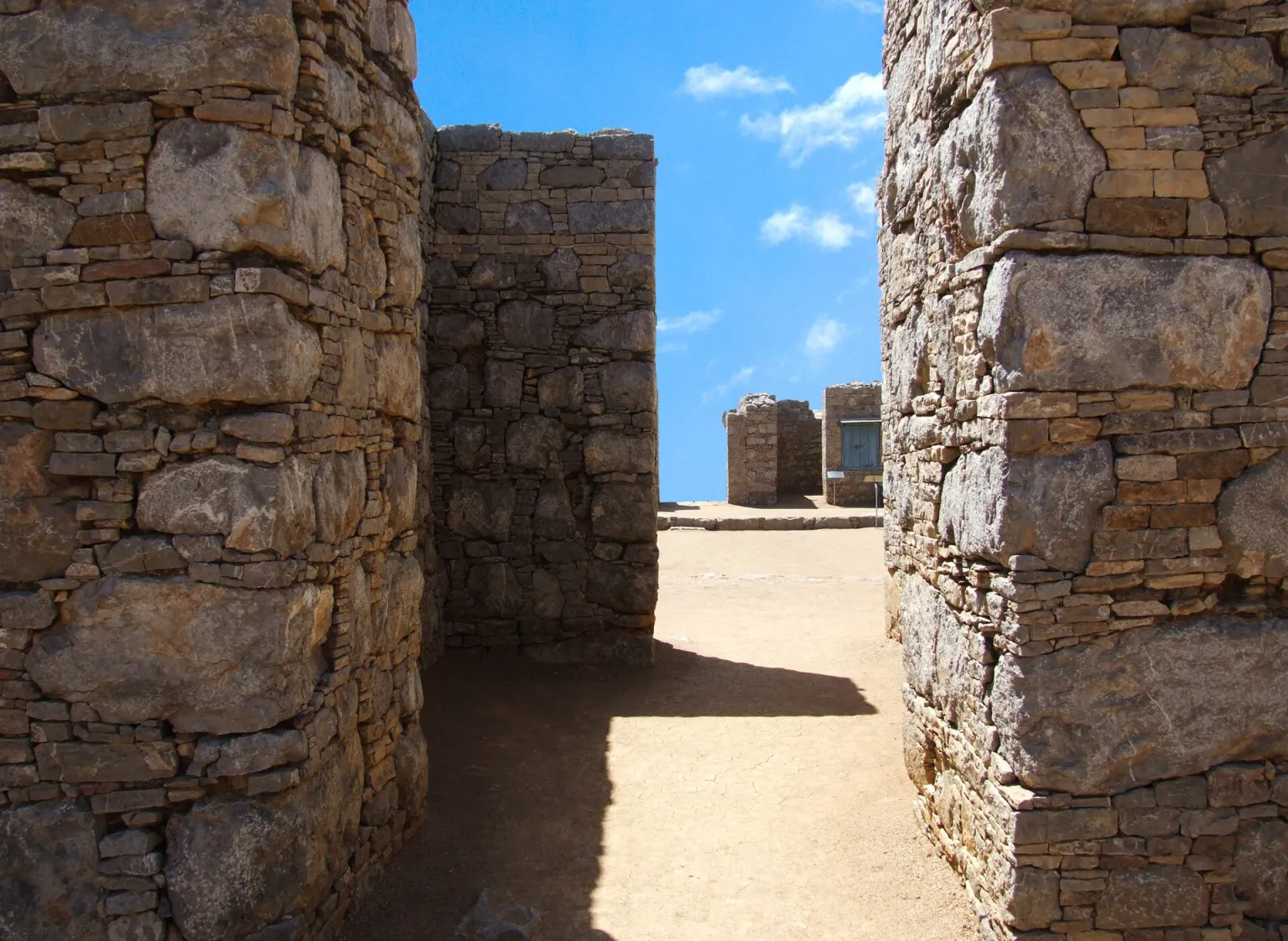
Jaulian is a place to slow down. Its hill setting gives a different relationship to the Taxila landscape from a city ruin on flatter ground, while its courts concentrate attention on individual architectural details. Begin by identifying the authorised path and the main groups of remains. Keep the journey uphill separate from the task of looking carefully: a pause on arrival helps the whole group settle before approaching fragile decoration.
This guide concentrates on how stupa courts, monastic space and material conservation can be read together. It is not a claim that every room is open or every sculpture visible. The monastic establishment contains spaces with different purposes, and the best introduction is the relationship between them. Let the surviving layout supply the first questions before a famous figure or an evocative nickname dominates the visit.
Use the excavation history to frame what survives
Taxila Museum places Jaulian’s foundation in the Kushan period, in the second century CE. It records excavation by Natesa Aiyar in 1916–17 under John Marshall’s direction. Those two historical frames belong together: the site has an ancient history of construction and use, and a later history of discovery, interpretation and preservation. The remains presented today are the outcome of both.
Avoid assigning the foundation date to every surface. A long-lived establishment can be altered, decorated, repaired and partly abandoned in stages. Equally, an excavated room is not necessarily presented exactly as it appeared when first uncovered. If you use an old photograph, check its date and viewpoint before comparing it with the present arrangement. A missing feature might have been moved for protection, damaged or simply outside the earlier camera’s frame.
Read the stupa courts as a group
The main stupa and smaller votive structures create a hierarchy of scale. Begin with their arrangement, not a contest over which is largest or best preserved. Look at the available paths and the spaces between bases. Repeated architectural forms can give a court rhythm while their details remain different. A photograph including more than one structure helps communicate that relationship better than a collection of isolated faces.
Published counts can differ according to which courts and features are included. Rather than treating a number as a challenge to find every item, use the site plan to understand the groups visible to you. A protected or inaccessible area is still part of the monument. Do not cross a barrier to complete a count, and do not assume that an empty-looking base never carried sculpture or a higher structure.
Let the cells explain another kind of organisation
The monastery introduces repeated rooms around a communal space, distinct from the emphasis of a stupa court. Compare the scale of room openings and the direction in which they face. Where the interpretation identifies an assembly hall or service area, relate it to the court rather than trying to recognise its function from a bare wall alone. Circulation and adjacency can be easier to understand than a reconstructed interior.
Jaulian is sometimes described as an ancient university. That popular wording should not imply a modern campus structure, degree system or a documented timetable for every room. A monastic institution could support learning without matching those modern categories. Use the secure description, monastery, and discuss education with appropriate qualification. Assigning a specific subject or daily lesson to an individual cell would require evidence that a visitor’s imagination cannot supply.
Observe stucco as a material as well as an image
Stucco gives a surface a different character from the stone beneath or beside it. From a permitted distance, notice how relief catches side light and how a niche frames a figure. Begin with large forms before attempting to identify smaller attributes. Soft light can make a surviving edge easier to read, but photographs still need a reliable label to support the name or subject attached to them.
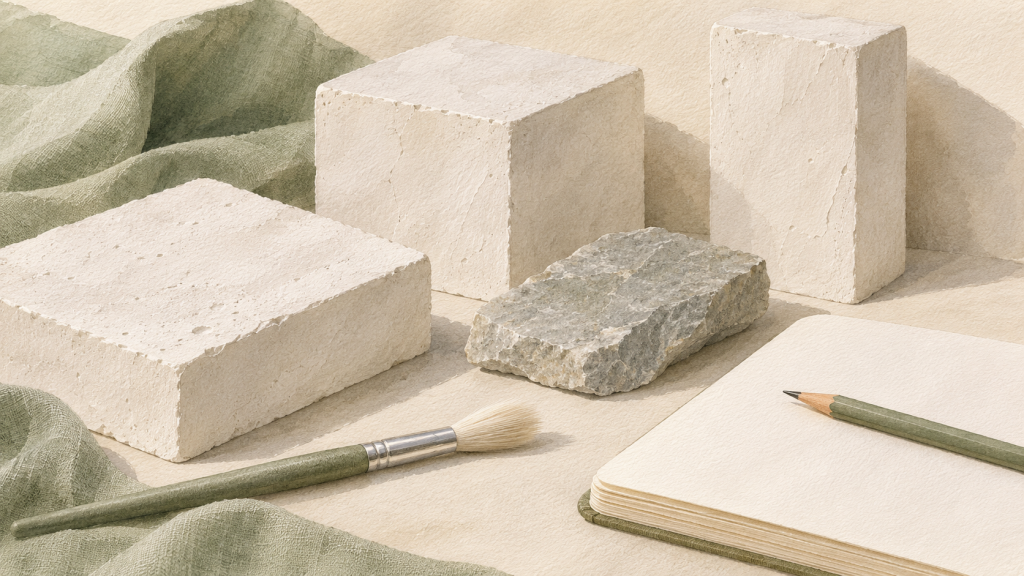
Taxila Museum records the removal of some fine stucco pieces to its collection. That helps explain why an important site can retain architectural settings while associated objects are elsewhere. It does not mean every missing patch corresponds to a displayed museum object. Do not touch, blow dust away or press paper against a surface. The modern plaster samples in the illustration are only a material study and have no archaeological provenance.
Keep the famous navel-hole figure at a distance
The museum’s account describes a seated Buddha with an opening at the navel and a donor inscription beneath, naming Budhamitra. It also gives an interpretation connecting the opening with prayers concerning bodily ailments. Present that as the institution’s interpretation of a particular image, rather than using the feature to promise healing or reconstruct a universal practice across every Gandharan monastery. A donor record concerns a specific gift.
The historical interpretation does not authorise a visitor to insert a finger or repeat a damaging contact practice. Follow barriers and staff instructions even when a popular nickname encourages touching. If the relevant figure is not available to view, accept the limitation. A photograph from another site is not a substitute. The better question is how an inscription, physical feature and interpretive tradition come together around an individually documented object.
Distinguish ancient modelling from later plaster
Conservation is particularly important at Jaulian because a repaired figure can look persuasive at a glance. CyArk’s documentation account describes its partnership with LUMS and explains that three-dimensional records can help identify differences between historic and modern plaster, including restorations following monsoon damage. The point is not that every visible face is modern; it is that accurate documentation is needed to understand which parts survive and which have been treated.
A visitor cannot reliably settle that distinction from colour, apparent completeness or the warmth of the light. Look for an explained repair rather than announcing one from appearance. If you compare photographs across years, keep lighting, camera angle and image processing in mind. A change in expression might result from an intervention, but it might also reflect a different view. Ask for the conservation record before making an accusation or a confident attribution.
Use digital records and museum visits carefully
A scanned model can reveal spatial relationships and provide a dated record of a condition. It is not automatically a complete restoration of the ancient building, and it should not be confused with a reconstruction that supplies missing parts. CyArk’s project is useful precisely because documentation can support monitoring and conservation questions. Treat a model’s capture date as part of its caption, just as you would for a historical photograph.
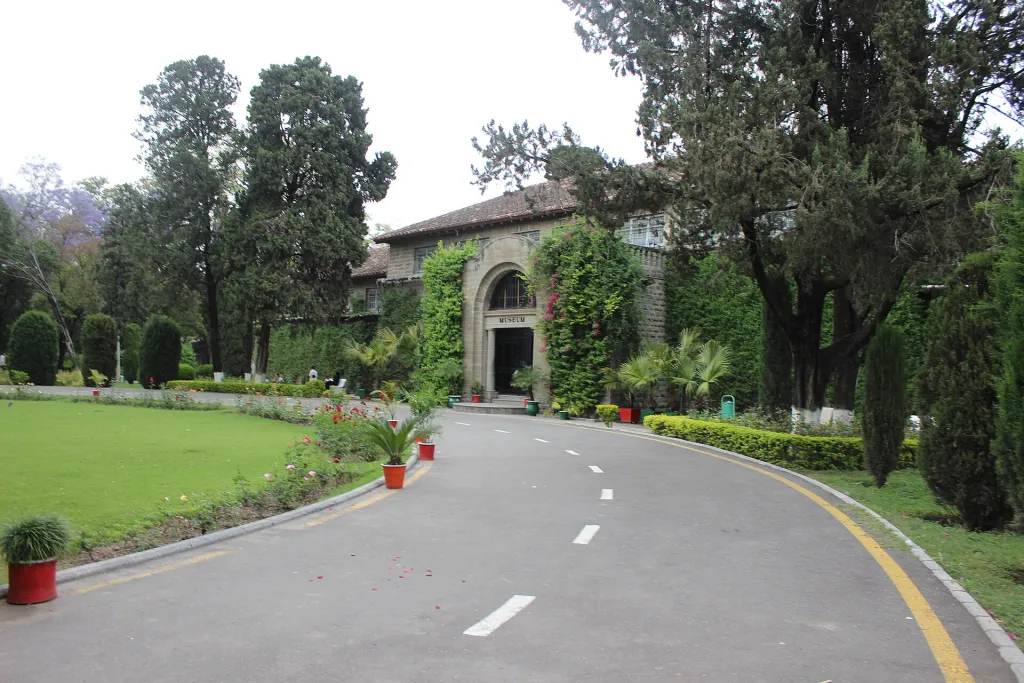
Taxila Museum offers another context for understanding excavated materials, but check its current arrangements independently. Read object labels for findspot before connecting a displayed figure with Jaulian. The museum exterior photograph accompanying this guide identifies a separate institution; it does not document a specific sculpture or guarantee its display. A well-labelled connection between a court and an excavated object is more informative than a vague claim that all Gandharan sculpture tells the same story.
Choose a comfortable hill visit and protect the details
Before setting out, confirm the entrance, permitted route and whether any courts are closed for conservation. Ask specifically about the climb, steps, resting opportunities and the distance from vehicle drop-off. A hilltop photograph cannot establish wheelchair access or the effort required by a visitor with limited stamina. Keep a shorter visit possible and avoid making the group rush to match an ambitious schedule.
Cool, dry weather generally suits a slow hill visit, but check the day’s rain, heat and visibility. Wear shoes with grip, carry water and avoid walking close to exposed archaeological edges. On departure, choose three observations to keep: the difference between sacred and residential space, a particular decorated architectural setting, and one clearly documented conservation question. Jaulian’s significance becomes clearer when careful looking includes the work required to preserve what remains.
Frequently Asked Questions
Is everything on the decorated stupas ancient?
The site includes conservation interventions. CyArk documents the value of distinguishing historic and modern plaster through accurate records.
Can I touch the figure with the navel opening?
No historical interpretation overrides present protection rules. Keep hands off sculpture and follow management instructions.
Was Jaulian a modern-style university?
It was a Buddhist monastery associated with learning. The popular university description should not imply modern degrees or a known timetable for every cell.
Is the hill route accessible to everyone?
Confirm the actual climb, steps and drop-off distance with management. A photograph cannot establish an accessible route.
How we know this
- Type Practical guide
- Sources 4 (3 official/academic)
- Reviewed November 2026
- Disputed points None
Rules and fees change, confirm with the official links below before you act.
4 sources
- Jaulian Monastery, Taxila Museum, Government of Punjab
- Jaulian: In-Depth, CyArk
- Taxila, UNESCO World Heritage Centre
- Jaulian Site, Department of Archaeology and Museums, Pakistan
Photo credits (2)
- Jaulian taxila.jpg, Amjad Sheikh, CC BY-SA 3.0, via Wikimedia Commons
- Museum taxila front.jpg, Junaidgondal0, CC BY-SA 4.0, via Wikimedia Commons
