
Explore Pakistan · Practical travel
Hunza Without a Private Car: What Can You Actually Visit?
Plan Hunza without hiring a car for the whole trip: choose a base, separate transport legs, confirm return rides and budget for essential local transfers.
- Researched practical guide
- Reviewed 31 October 2026
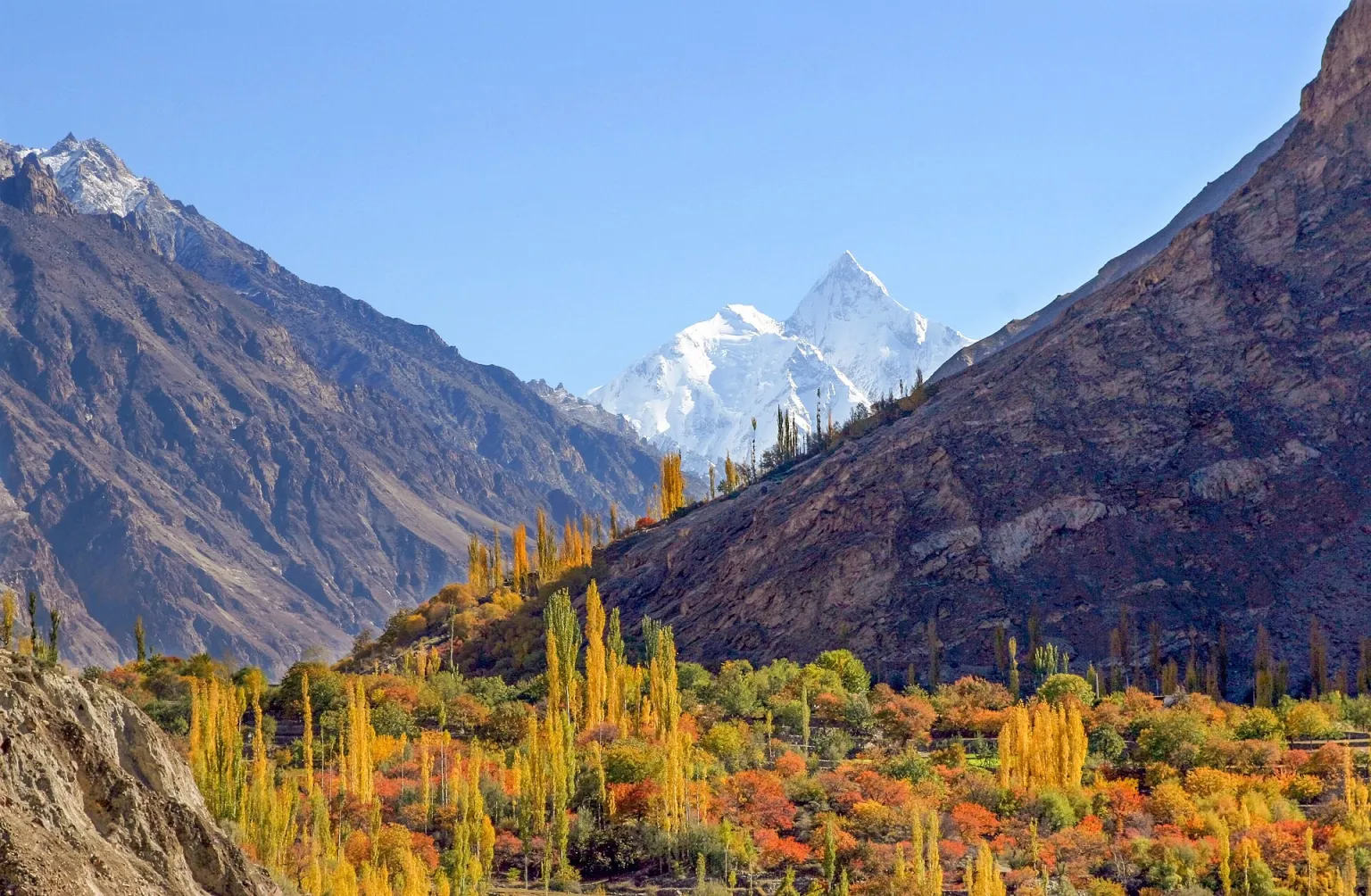
Autumn poplars and orchards below the snow peaks of the Hunza Valley
Start with the last mile, not the longest bus ride
Reaching Hunza and visiting Hunza are two different transport problems. A ticket into the valley does not necessarily put you at your guesthouse door, and a vehicle passing a landmark does not become a sightseeing service. The workable question is not whether you can avoid every taxi. It is whether you can use a main-town connection for the long leg and buy local transfers only where they make the day practical.
The official Ali Abad guide describes Aliabad as Hunza’s commercial and administrative centre on the Karakoram Highway, with connections to Karimabad and surrounding villages. That makes it a useful planning reference. Karimabad can suit a more concentrated sightseeing stay; the actual guesthouse location, slope and pickup access matter more than the village name on a booking page.
What the published distances tell you
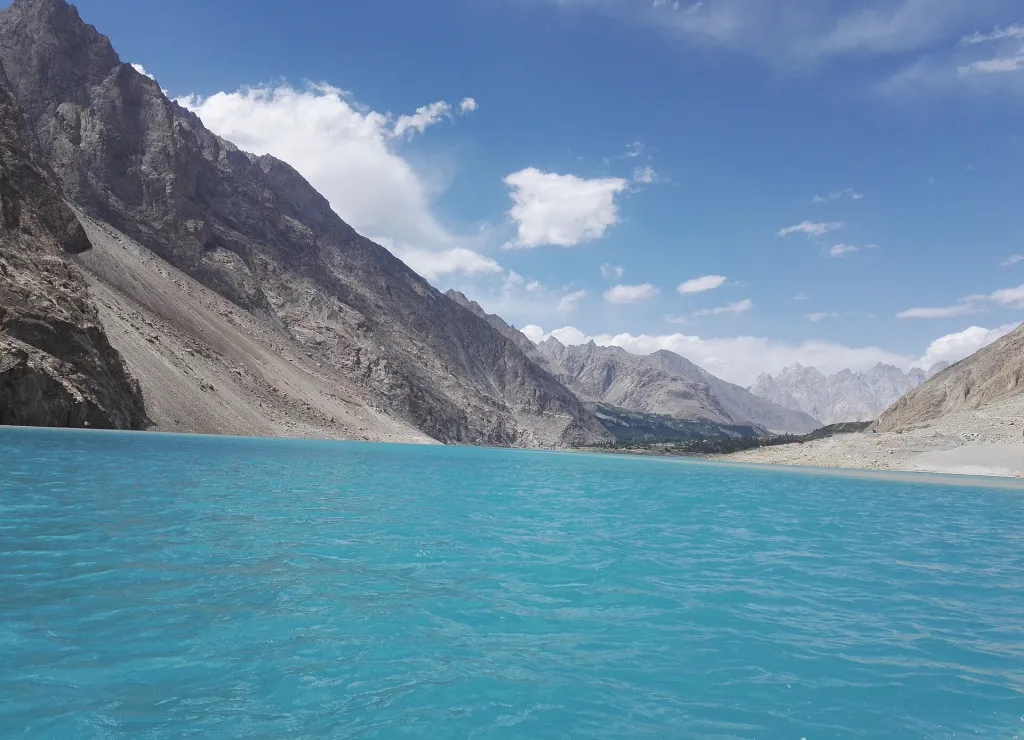
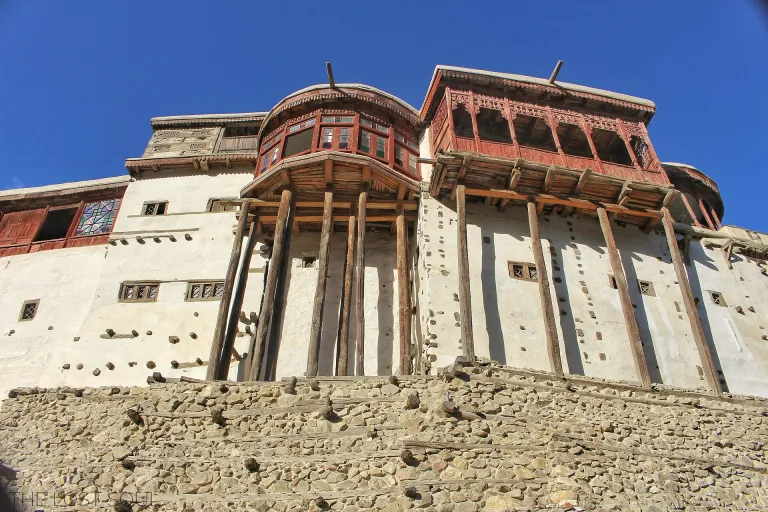
The PTDC district brochure gives road approaches from Aliabad of approximately 7 km to Baltit Fort, 9 km to Altit Fort, 28 km to Attabad Lake and 50 km to Passu. These are useful scale checks, not walking distances, current driving times or proof of transport frequency.
| Outing | Practical decision |
|---|---|
| Karimabad and a local heritage visit | Ask for the exact guesthouse-to-entrance approach; keep the day concentrated. |
| Altit and Baltit on the same day | Confirm transfers between them instead of assuming a continuous easy walk. |
| Attabad Lake | Arrange a return pickup before leaving; add boat activities only after checking the operator and conditions. |
| Passu or a farther Gojal stop | Consider a separate base or an agreed day vehicle rather than relying on an unconfirmed return seat. |
Three questions to settle before booking
- Which base keeps my planned outings close together?
- Who confirms each return transfer?
- What is my alternative if a connection does not run?
Keep the answers with your reservation and update them when the dates, travelers or route change.
Compare the three transport arrangements
NATCO’s official website provides its current booking channels and terminal contacts. Confirm the exact service, boarding point and destination directly; do not treat an old timetable screenshot as a booking.
| Arrangement | What it buys | What to confirm |
|---|---|---|
| Scheduled long-distance service | A defined journey between named points | Current operation, baggage, boarding location and arrival point |
| Shared local transport | A seat on a locally operating route | Whether it runs that day, how departures work, luggage and the last return |
| Prearranged local car or taxi | Control over a particular transfer or outing | Total price, waiting, stops, return time and cancellation terms |
A shared vehicle can be economical and still be the wrong fit for a tightly scheduled day. A private transfer can be sensible without turning the entire holiday into a chauffeured tour. Compare the total day, including waiting and changes, rather than the cheapest individual fare.
Places and travel context
Real photographs of the named places. Open each linked guide for its own visit information.

A realistic three-night planning example
This is an editorial outline, not a timed transport itinerary. On arrival day, make the transfer to one confirmed base, eat and keep sightseeing optional. Use the first full day for a concentrated heritage outing around your chosen base. Use the second full day for one farther excursion only after securing the return. Leave the final morning for departure rather than adding a remote stop.
If Passu is the main reason for your visit, reverse the logic: choose accommodation there and plan the central-Hunza sights as a separate transfer. Two village moves in three nights can consume the time you hoped to spend outside. Longer stays make changing bases easier; short stays reward restraint.
The return journey is the booking that matters
- Ask where you will stand for pickup and save a map pin that works offline.
- Agree who confirms the return, by what time, and what happens if a service is not running.
- Keep the guesthouse telephone number and one backup transport contact available offline.
- Ask whether bags can be stored and whether a late check-in is possible.
- Keep money for an agreed alternative transfer; a vague promise that someone will be available is not a return plan.
Families should price the whole group. Four separate seats, luggage handling and two short taxi legs can change the comparison with a prearranged vehicle. Solo travelers should calculate the premium for traveling alone before committing to a farther excursion.
Read the advice before choosing the route
Availability is not a safety endorsement. At this review, UK advice advises British travelers to avoid public transport and identifies serious road-travel risks. Its Pakistan warning page also specifies restricted or advised-against areas, including a section of the Karakoram Highway. Read the advice relevant to your nationality and exact route; a transport operator’s willingness to sell a seat does not settle that question.
Weather and access can change the plan after booking. Use NDMA advisories and current local information rather than assuming an alternative mountain road is open or appropriate.
Published experience and our editorial view
Into the Wild Unknown’s public-transport account describes variable departures and longer-than-expected journeys. That is an attributed traveler account, not a verified timetable or a basis for copying its prices.
Our view: the strongest version of car-light Hunza is one good base, concentrated outings and a small budget for essential transfers. The weakest is a packed checklist dependent on several uncertain connections every day. Choose flexibility because you enjoy a slower journey, not because you have been promised that every attraction is easy to reach without arrangements.
Continue with Hunza Valley, Pakistan Valleys Travel Directory and Overnight Buses in Pakistan: What to Check Before Booking.
Frequently Asked Questions
Can I visit Hunza without renting a car?
A car-light trip can be planned, but confirm current services, exact pickup points and local transfers. Check official travel advice before choosing a route.
Is Aliabad or Karimabad the better base?
Aliabad is useful for transport planning; Karimabad may suit a concentrated heritage stay. Compare the exact property location and your intended outings.
Can I rely on a return ride from Passu?
Do not assume one. Confirm the service or arrange a return before setting out.
Are the brochure distances walking distances?
No. They describe road approaches and do not measure the final walking route.
Keep Exploring
Related places and stories on DailyLife.pk

How we know this
- Type Practical guide
- Sources 7 (4 official/academic)
- Reviewed October 2026
- Disputed points None
Rules and fees change, confirm with the official links below before you act.
7 sources
- Ali Abad: official destination guide, Gilgit-Baltistan Tourism Department
- District Hunza visitor brochure, Pakistan Tourism Development Corporation
- NATCO: transport services and booking, Northern Areas Transport Corporation
- Pakistan: transport risks and road conditions, UK Foreign, Commonwealth & Development Office
- Pakistan travel advice: warnings and insurance, UK Foreign, Commonwealth & Development Office
- Current advisories, National Disaster Management Authority Pakistan
- Karakoram Highway by public transport: published experience, Into the Wild Unknown
Photo credits (4)
- Autumn color in Hunza Valley.jpg, Ghazi Ghulamraza, CC BY-SA 3.0, via Wikimedia Commons
- Baltit Fort, Karimabad, Hunza, Gilgit Baltistan.jpg, Fassifarooq, CC BY-SA 4.0, via Wikimedia Commons
- Khunjrab Pass - World's Highest Border.jpg, Aamir Ashraf Ch, CC BY-SA 4.0, via Wikimedia Commons
- Attabad Lake(Gojal Lake).jpg, M. Ali Alam, CC BY-SA 4.0, via Wikimedia Commons
