
Travel · Attractions
Separate standing architecture from buried history
Separate gateways, caravanserai planning and urban reuse from the deeper archaeological sequence beneath this Peshawar enclosure.
- Study the architecture
- Check current advice
- Confirm permission
Gor Khatri, Peshawar
Begin with two kinds of evidence
Gor Khatri combines an above-ground enclosure with archaeology below it. Its gateways and courtyard can be read as architecture; excavated deposits answer different questions about the longer history of Peshawar. Confusing those two forms of evidence produces the misleading impression that every wall visible today is as old as the deepest occupation layer. For UK audiences, the FCDO advises against all travel to Peshawar, including the city, as checked on 7 November 2026. This is a heritage study guide, not encouragement for a leisure trip.
The approach here focuses on the complex itself rather than using it as one stop in a paired old-city itinerary. Read documented plans and authorised photographs with attention to thresholds, cellular rooms, reuse and excavation context. None of those sources establishes present-day access to a trench, roof or particular interior.
Read the enclosure before the chronological list
Pakistan's 2026 Tentative List submission describes a near-square enclosure with monumental gateways on the eastern and western sides. It presents the courtyard, enclosure and surviving chambers as a coherent architectural group within the dense walled city. This is the useful starting scale: a bounded institutional space, rather than a loose assortment of monuments.
In an authorised overview, follow the edge of the court and identify where rooms form a repeated range. Then compare that repeated edge with the larger gateway openings. The observation suggests how entrances concentrated movement while the enclosure distributed accommodation or institutional activity around an internal space. It does not establish the original function of each room. A plan with reliable labels is necessary before assigning kitchens, stores or sleeping quarters. Leave unknown rooms unknown rather than filling gaps with a picturesque caravan story.
UNESCO World Heritage Centre; submission by Pakistan: Archaeological Complex of Gor Khatri.
Understand the caravanserai as infrastructure
The submitted UNESCO account associates Princess Jahan Ara Begum with the Mughal transformation of the site into the caravanserai known as Sarai Jahanabad. It records facilities for travellers alongside religious and water-related provisions. This makes the sarai a piece of urban infrastructure: lodging and movement required support, maintenance and organised space.
A useful hypothetical reading is to imagine the different spatial needs of arrival, accommodation and water supply, clearly as an exercise rather than a reconstruction of an observed historic day. The enclosure offered a framework within which those activities could be arranged. Ask which needs are supported by surviving fabric and which are known only through documents. The distinction prevents an attractive modern courtyard photograph from becoming evidence for an invented scene of merchants, animals and goods in precisely assigned positions.
Look for reuse without treating one period as the whole site
The complex's documented history includes Mughal, Sikh and colonial adaptations. The Tentative List description identifies a religious structure associated with Gorakhnath and an early twentieth-century fire brigade building among the elements of this layered ensemble. Each use asks different things of a courtyard and its surrounding rooms.
Read changes in function as part of the site's significance rather than as distractions from one supposedly pure phase. A civic building and a gateway may belong to different historical moments yet both help explain the enclosure's survival. At the same time, do not infer a date from appearance alone. Brick colour, an altered opening or a roof shape can prompt a research question, but construction drawings, inscriptions or conservation records are needed to answer it. The visible compound should be treated as a palimpsest whose parts need individual evidence.
Keep excavation depth separate from visible age
Archaeological investigation is central to Gor Khatri's importance, but the headline age of settlement should not be transferred to the standing gateway. A deep deposit records sequences of activity, rebuilding and material accumulation. Its meaning depends on stratigraphic relationships and the circumstances in which objects or walls were recorded.
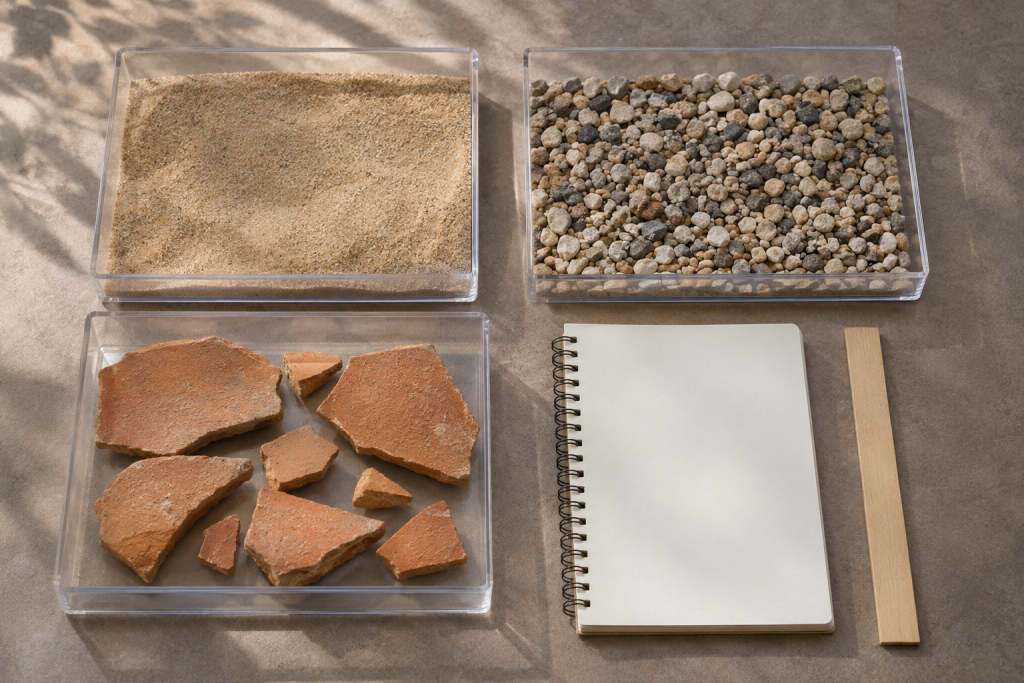
For a general reader, the most useful questions are modest: which excavation area is being discussed, which layer was recorded and how was it dated? A loose pottery fragment in a photograph cannot answer those questions by itself. Never enter a trench, step onto an exposed wall or collect a fragment for a closer look. Even an apparently unremarkable piece can lose much of its research value when removed from context. The modern sample arrangement accompanying this guide illustrates material comparison only; it shows neither finds nor a model of the excavation.
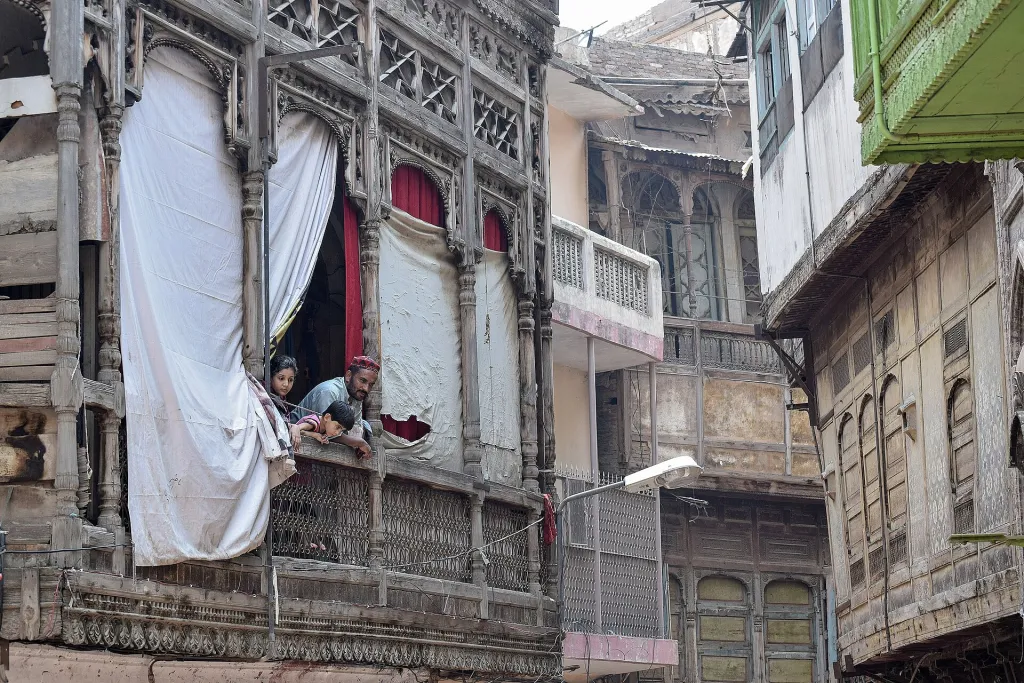
The Sethi-area street photograph provides urban context for the walled city. It does not document an excavated layer or establish the appearance of Gor Khatri’s gateways.
Read a gateway as a sequence of thresholds
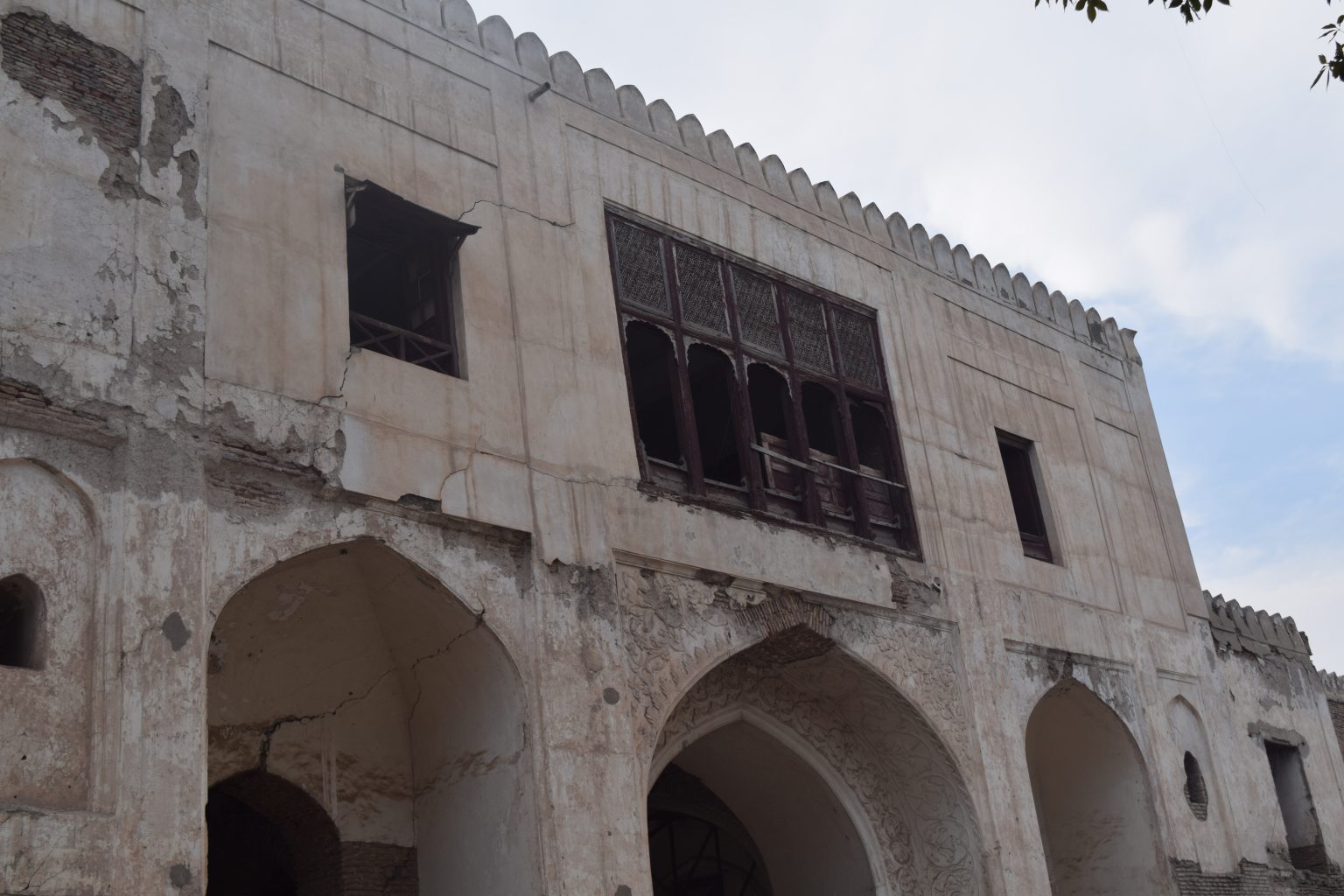
A gateway is more than its most photographed outer elevation. In photographs or a documented plan, look for the relationship between the exterior opening, the passage and the interior face towards the court. Different viewpoints can reveal whether the entrance reads as a thin boundary or a deeper building element.
Mark only what the evidence allows: an opening, a recess, a change in level or a room beside a passage. Avoid assigning guard functions to every chamber simply because the complex is enclosed. Likewise, a large arch is not proof that a particular kind of vehicle passed through it. This close reading gives the gateway architectural substance without requiring a spectacular historical anecdote. If any local observation is independently authorised, remain within the approved route and keep working passages clear while making notes or photographs.
Treat documentation as part of conservation
The Heritage Foundation of Pakistan records establishing a documentation centre at Gor Khattree in May 2010 in collaboration with the provincial archaeology directorate. That history matters because conservation begins with knowing what exists: recording material, form and condition before deciding what to repair.
A fresh-looking surface is not a sufficient measure of successful conservation. Ask whether a repair retains evidence, whether a changed opening is documented and whether the older fabric remains understandable. These are questions for project records and specialist interpretation, not conclusions a casual photograph can settle. A historic documentation initiative also does not guarantee that every room currently operates as a public exhibition. Consult the archaeology directorate for current arrangements. The directorate's virtual-tour listing offers a useful remote point of departure, while any individual image still needs its own date, location and descriptive context.
Use UNESCO status accurately
The Archaeological Complex of Gor Khatri was submitted to Pakistan's UNESCO Tentative List on 11 May 2026, under reference 7035. Tentative listing is not inscription on the World Heritage List. It records a proposal and the submitting state's description and justification; it should not be presented as an independent UNESCO endorsement of every historical claim in the text.
This distinction is especially helpful when researching online. An article using the phrase UNESCO site may be referring loosely to a proposed property, a funded project or a place actually inscribed on the World Heritage List. Check the specific record. For Gor Khatri, preserve the Tentative List wording in captions and introductions. Recognition status also does not determine public access: permission, security arrangements and conservation restrictions are separate operational questions for the responsible authority.
Directorate General of Archaeology & Museums, KP: Virtual Tour: Gor Khatri.
Study the layers without promising a route
For UK readers, the all-travel warning for Peshawar applied on 7 November 2026 and should be rechecked directly with the FCDO. The architectural questions in this guide can be pursued through official records, published research and authorised images. They do not require a leisure itinerary through the old city.
Anyone independently authorised to be locally present should ask which areas are open, whether excavation edges are protected, what photography is permitted and whether there are stairs or uneven surfaces on the allowed route. No fee or opening schedule is asserted here. A worthwhile result is a clearly labelled record of one gateway, one courtyard relationship and one documented change of use. That preserves the difference between what the architecture shows, what excavation establishes and what remains uncertain about the long life of this remarkable urban enclosure.
Documentary photograph: Gor Gathri (ancient Palace Peshawar).JPG by Azhar Razaq, CC BY-SA 4.0, via Wikimedia Commons. Display sizes may be scaled.
Frequently Asked Questions
Is Gor Khatri a World Heritage Site?
It is on Pakistan’s UNESCO Tentative List, submitted 11 May 2026, rather than inscribed on the World Heritage List.
Are the visible gateways as old as the earliest deposits?
No such equivalence should be assumed. Standing architecture and excavated occupation layers need separate dating.
What was Sarai Jahanabad?
Pakistan’s Tentative List description associates that name with the Mughal caravanserai established through Jahan Ara Begum’s patronage.
Can the excavations be entered?
No trench access is promised. Current routes and restrictions require confirmation from the responsible custodian.
How we know this
- Type Practical guide
- Sources 4 (1 official/academic)
- Reviewed November 2026
- Disputed points None
Rules and fees change, confirm with the official links below before you act.
4 sources
- Archaeological Complex of Gor Khatri, UNESCO World Heritage Centre; submission by Pakistan
- Peshawar Heritage, Heritage Foundation of Pakistan
- Virtual Tour: Gor Khatri, Directorate General of Archaeology & Museums, KP
- Pakistan travel advice: warnings and insurance, UK Foreign, Commonwealth & Development Office
Photo credits (1)
- Sethial street - Sethi House Complex, Peshawar.jpg, Teseum, CC BY-SA 4.0, via Wikimedia Commons

