
Travel · Attractions
Read the space around the great stupa
Explore Dharmarajika through its circular sacred focus, smaller monuments, monastic area and museum context, while keeping early foundations and later rebuilding distinct.
- Read the built landscape
- Observe from permitted paths
- Check current access
Dharmarajika, Taxila, Punjab
Start with the relationship between monument and landscape
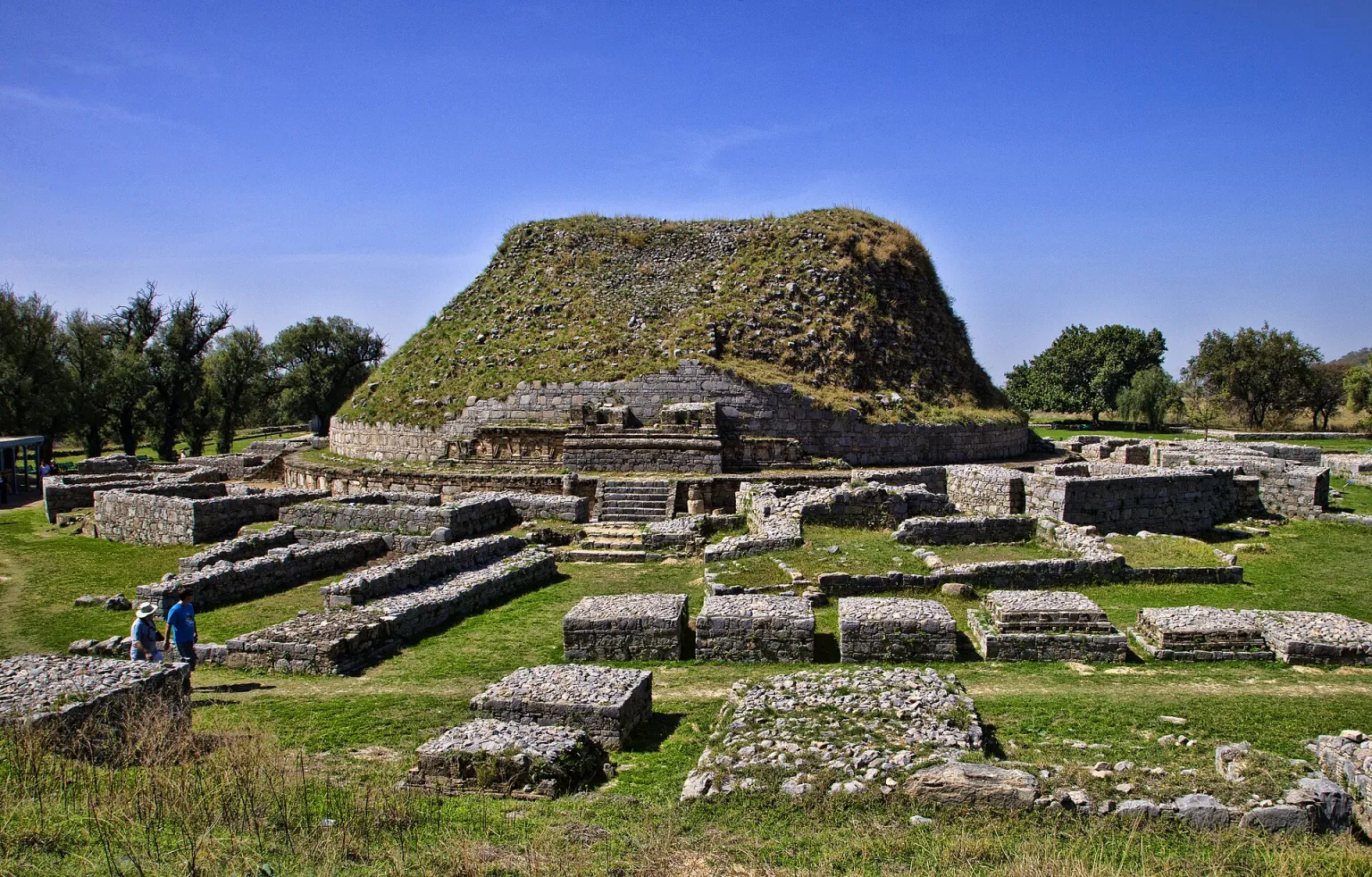
Dharmarajika is a Buddhist stupa and monastic complex within the wider archaeological landscape of Taxila. It is also known as Chir Tope. Its interest extends beyond the surviving mass of the principal stupa: smaller sacred structures, paths and the monastic area help explain a place that developed over time. Start by asking how those different parts fit together rather than looking for one object that summarises everything.
Taxila’s 1980 World Heritage inscription encompasses a group of archaeological sites. Dharmarajika is part of that larger property, not a separately inscribed monument with an unrelated designation. The Taxila Museum’s account links the complex with Buddhist history from the third century BCE to the seventh century CE. That is a broad history of the establishment. It does not assign the same date to every exposed wall, step or stone currently visible on a visit.
Keep the Ashoka connection carefully worded
The foundation is associated with the Mauryan emperor Ashoka and the enshrinement of Buddhist relics. Official accounts differ in emphasis: the museum states the Ashokan foundation directly, while the federal archaeological inventory uses more qualified language about an earlier stupa beneath the later monument. Preserve that distinction. The visible standing fabric should not simply be called an untouched third-century BCE structure.
The useful question is how an early sacred focus acquired later architectural forms. A rebuilt stupa can retain religious importance while its masonry, terrace and surrounding structures change. If a guide gives a precise date for a particular feature, ask which phase and evidence the date concerns. This is especially important when a popular explanation compresses centuries into the phrase “built by Ashoka”. You can recognise the traditional and archaeological association without pretending that every part of the complex has one securely observed building date.
Look at the circular plan from ground level
Use an official plan to identify the great stupa’s outline and the space around its base. The Taxila Museum describes a circular main monument, a raised terrace reached by steps and a paved route used for circumambulation. The federal inventory also identifies four flights of steps. Compare that description with the parts visible from permitted ground, without assuming every stair remains open or climbable.
Look for the relationship between the monument’s solid mass and the route around it. A stupa is not usefully understood as a ruined room awaiting entry; its exterior and the movement around it are central to interpretation. Keep the distinction between a historical circulation route and today’s visitor path. Where barriers interrupt access, follow the modern route. A wide photograph showing space between the stupa and neighbouring structures can be more informative than one taken close against masonry, because it records how the principal monument organises its surroundings.
Give the smaller stupas and chapels attention
The smaller monuments prevent the complex from becoming a story of scale alone. From a safe viewpoint, notice how much ground they occupy, how closely some stand to one another, and which parts are legible as separate bases. Use labels or a recognised plan to distinguish votive stupas from chapels and other structures. Do not name a donor, sect or ritual solely from a surviving outline.
The museum’s description places numerous smaller monuments around the principal stupa and explains that they belong to different periods. That is a reason to resist imagining the entire visible plan as a single construction project. Your notebook might separate “position observed” from “date supplied by interpretation”. For example, a structure can be visibly near the main stupa without necessarily being contemporary with its earliest core. Leave fragments and loose stones in place. Their value depends partly on archaeological context, which a visitor cannot recover by taking a souvenir home.
Move from sacred focus to monastic area
The official museum account distinguishes the stupa area from the monastic area to its north. Treat that as a useful organising framework for the visit. Identify the change from a space arranged around sacred monuments to the remains interpreted as living and working accommodation. Where present routes permit, observe how an entrance or passage connects a group of rooms to a shared area.
A low wall can tell you the shape of a compartment while leaving its upper form and exact use uncertain. Avoid filling that uncertainty with a vivid description of what a particular monk ate, owned or said. Compare the arrangement with a site plan instead. If only one part of the complex is accessible, concentrate on its visible relationship to the rest rather than attempting to reach every mapped feature. Archaeological understanding is not measured by the number of rooms entered, and restricted areas may protect fragile surfaces as well as visitors.
Use the museum to reconnect objects and place
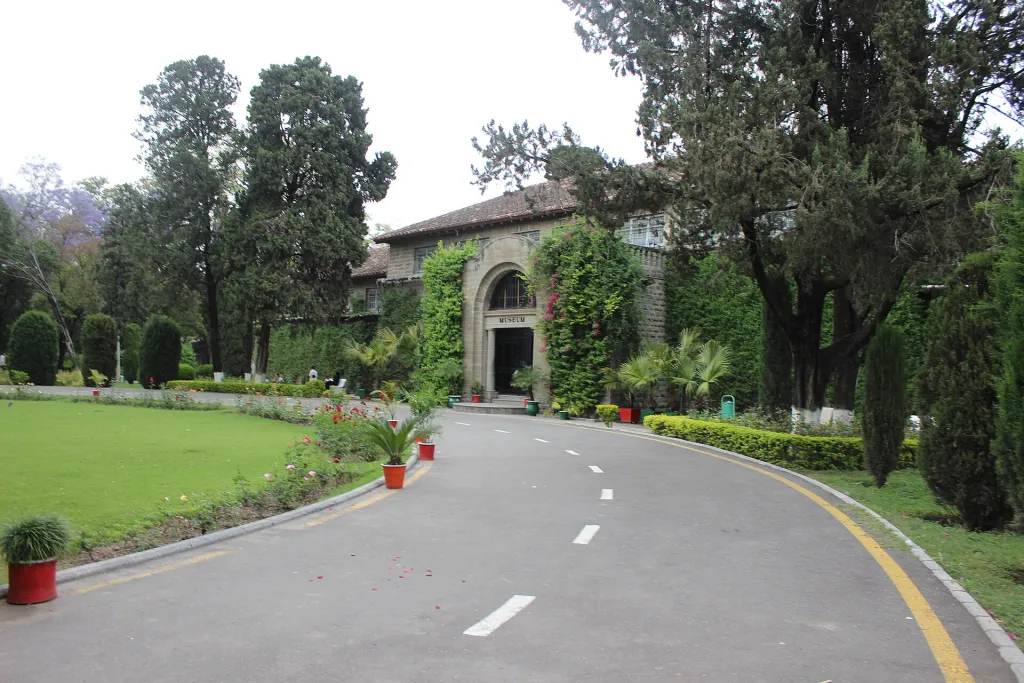
Taxila Museum’s collection includes material from several sites in the valley. A museum visit can add context to Dharmarajika, provided you read the provenance label rather than treating every Gandharan sculpture as an object from this particular complex. Note the recorded findspot, material, subject and date range. If the label is uncertain or gives only a broad origin, keep that uncertainty in your own account.
Try this hypothetical exercise: choose one labelled object explicitly associated with Dharmarajika and write two sentences about what the label establishes. Then add one question about its original architectural setting. Compare that question with the site’s surviving spaces, without inserting the object into a particular niche unless evidence supports the placement. This can connect museum and landscape more meaningfully than photographing every case. Confirm museum opening and entry arrangements independently; an open archaeological site does not establish that the museum is open at the same time.
Plan for exposure, uneven surfaces and separate tickets
Dharmarajika is an outdoor archaeological visit, so assess heat, shade and ground conditions for the actual date. Carry drinking water, use suitable footwear and allow time for pauses. Confirm the condition of the approach and the walking route if someone uses a wheelchair, has limited balance or cannot manage irregular steps. A site description that says “near Taxila” does not establish level access from a vehicle to every monument.
Ask the relevant Punjab archaeology or museum authority about current opening, admission, site and museum ticket arrangements, closures and photography restrictions. This guide does not publish unverified hours or a price. Check the exact travel route and applicable current security advice before departure. Plan fewer stops if that leaves time to understand the principal stupa and monastic area properly. Reaching Sirkap, Jaulian and several other sites in one rushed circuit is not necessary for this particular architectural reading.
A useful visit ends with a phase-aware account
At the end, make a simple distinction between three things: the early foundation association, the later visible architectural development, and your present-day observations. You might have observed a circular mass and neighbouring bases; learned an interpreted chronology from an official panel; and retained a question about one rebuilding phase. Those statements can coexist without becoming a falsely precise reconstruction.
Respect the site’s continuing religious significance as well as its archaeological importance. If a ceremony or devotional visit is taking place, follow staff directions, keep routes clear and ask before photographing identifiable participants. Do not use a sacred feature as a seat or stage a climbing photograph on masonry. A thoughtful account of Dharmarajika should make the relationship between principal monument, smaller structures and monastery easier to understand. It should also make clear where surviving fabric ends and scholarly interpretation begins, so the reader can continue exploring Taxila without inheriting an oversimplified foundation story.
Frequently Asked Questions
Is Dharmarajika a separate World Heritage inscription?
It belongs to the wider Taxila World Heritage property, inscribed in 1980.
Is every visible structure from Ashoka’s time?
No. The early foundation is associated with Ashoka, while the complex includes later development and rebuilding.
Can visitors climb the main stupa?
Follow present barriers and staff instructions. Historical steps do not establish current permission to climb.
Does every Taxila Museum object come from Dharmarajika?
No. Read the findspot label; the museum holds material from multiple sites in the Taxila landscape.
How we know this
- Type Practical guide
- Sources 4 (4 official/academic)
- Reviewed November 2026
- Disputed points None
Rules and fees change, confirm with the official links below before you act.
4 sources
- Dharmarajika Stupa, Taxila Museum, Government of Punjab
- Chir Tope Site (Dharma Rajika), Department of Archaeology and Museums, Pakistan
- Taxila, UNESCO World Heritage Centre
- Taxila Museum and its archaeological collections, Taxila Museum, Government of Punjab
Photo credits (2)
- Dharmarajika stupa,Taxila.jpg, Sasha Isachenko, CC BY-SA 3.0, via Wikimedia Commons
- Museum taxila front.jpg, Junaidgondal0, CC BY-SA 4.0, via Wikimedia Commons
