
Travel Planning
Choosing a Tour Operator in Pakistan: What to Check Before You Book
Licences, guides, permits, insurance and cancellation terms, verified before you pay a deposit.
How to choose a reliable tour operator
Before booking a tour in Pakistan, verify the operator's tourism licence, ask for a detailed written itinerary and confirm exactly what the price includes. For trekking or mountain trips, also check guide qualifications, permits, emergency arrangements, equipment and insurance.
A polished website or a large social-media following is not proof of reliability. A trustworthy operator identifies its legal business, explains payment and cancellation terms clearly, and answers reasonable safety questions without becoming defensive.
Licensed operator or informal fixer: what's the difference?
Pakistan's tourism market includes a mix of licensed providers and informal people who arrange trips, and the two do not offer the same legal protections or level of responsibility.
A licensed tour operator is a business authorised under the applicable regional tourism framework to organise and sell travel services, which may include transport, accommodation, sightseeing, guides and adventure activities depending on the licence category. Gilgit-Baltistan's Directorate of Tourist Services (DTS), for example, maintains separate licence categories for tour operators, tour guides and adventure tourism businesses. A licence does not guarantee excellent service or an accident-free trip, but it is the starting point for verification, not the end of it.
An informal fixer, by contrast, might simply be someone who arranges a vehicle, books a guesthouse or connects you with a driver. If something goes wrong on the trip, an informal arrangement can make it genuinely hard to establish who is responsible for fixing it.
"PTDC-registered" is not the same as licensed
The Pakistan Tourism Development Corporation (PTDC) handles tourism promotion, development and information, not business licensing. Tourism-business licensing runs through the relevant competent authorities, including regional Departments or Directorates of Tourist Services. If a company describes itself as "PTDC approved", "government recognised" or "officially registered", ask exactly what that means: the issuing authority, licence number, validity date and the specific activities it covers. If they cannot answer, treat the claim as unverified.
What to verify before you pay anything
- Tourism operator licence: ask for the licence number, issuing authority and expiry, and check it against an official directory where one exists. Don't assume a licence from one region automatically covers activities elsewhere in the country.
- Business registration: a legal business name and registered address, and ideally a formal company registration. Business incorporation alone does not establish permission to run regulated trekking or mountaineering activities.
- Tax registration: a National Tax Number can help identify the business, but it does not substitute for a tourism licence.
- Guide and adventure licences: for trekking, mountaineering or other regulated activities, confirm the assigned guide holds the appropriate credential, separately from the operator's own licence.
- Currency on the paperwork: confirm the licence is current and actually covers the specific service you're buying, not just tourism generally.
Full-service tour, guide-only, or self-drive?
| Arrangement | Usually includes | Main responsibility |
|---|---|---|
| Full-service tour | Coordinated accommodation, transport, itinerary and selected activities | Operator manages the contracted services |
| Guide-only booking | A guide for an agreed location, route or activity | Traveller arranges most other logistics |
| Vehicle and driver | Transport for an agreed route and period | Traveller typically arranges accommodation and activities separately |
Which arrangement makes sense for your trip
A full-service tour is useful when you're visiting several places, travelling with family, or need several suppliers coordinated together. Ask whether the company runs its own tours or subcontracts most services; subcontracting isn't automatically a problem, as long as responsibility stays clear.
A knowledgeable local guide can add real value to historic sites, cultural walks or well-established trails, and can suit travellers who already have accommodation and transport sorted. Confirm whether guiding alone is legally sufficient for the activity, or whether separate permits or operator involvement are required.
Self-drive offers flexibility but shifts most responsibility onto you: vehicle suitability, licensing, insurance, road closures and route planning all become your concern, which matters a great deal on unfamiliar mountain roads.
Questions to ask before paying a deposit
- What is your registered business name and tourism licence number?
- Which authority issued your licence, and when does it expire?
- Will you operate the trip directly, or subcontract any part of it?
- What hotels and room categories are included, by name?
- What vehicle will be used, and who is responsible for its maintenance?
- Are meals, entry tickets, guide fees, fuel and tolls included?
- What happens if weather prevents an activity?
- Who is the emergency contact during the trip?
- What deposit is required, and when is the balance due?
- What are the cancellation and refund rules, in writing?
Check the guide, not just the company
The quality of a trip often depends on the individual guide more than the company name on the invoice. Ask how long the guide has worked in the relevant area, whether they hold the appropriate first-aid and route training, and whether they can support the language needs of your group.
Some operators advertise experienced guides on their website but assign someone else at departure. Ask for the assigned guide's name and qualifications where practical, and if the guide changes, ask whether the replacement has equivalent credentials.
For demanding treks, confirm the guide-to-client ratio, any support staff, and the procedure if someone in the group needs to turn back. A guide who genuinely knows a particular valley will usually understand its seasonal hazards, access restrictions and evacuation routes far better than someone who has only visited occasionally.
Safety equipment and emergency planning
For road travel, ask whether the operator has a procedure for closures, landslides and unexpected overnight stops, and avoid itineraries that rely on unnecessary night driving on difficult mountain roads.
For trekking, the right equipment depends on altitude, terrain, season and technical difficulty. Ask exactly what the operator provides and what you must bring yourself. Depending on the activity, this can include suitable tents and sleeping systems, first-aid equipment, reliable communication devices, route maps, weather monitoring, appropriate ropes and helmets, safe drinking-water arrangements and an evacuation procedure. Ordinary hiking gear is not automatically sufficient for glacier travel or mountaineering.
Ask who makes the call to abandon a route, how the group will communicate if mobile coverage fails, and where the nearest realistic evacuation point actually is. A vague answer to any of these is worth treating seriously.
Insurance: yours, and the operator's
A standard travel insurance policy can exclude high-altitude activity, technical climbing, or travel through areas under official advisories, so check specifically whether your policy covers your planned destination and maximum altitude, any technical activities involved, search and rescue, medical evacuation, emergency treatment and trip disruption. If the wording is unclear, get written confirmation from the insurer rather than assuming it's covered.
Ask whether the operator carries appropriate liability cover for its guides, porters and expedition staff. Gilgit-Baltistan's tourism department issued a July 2025 advisory on insurance obligations for mountaineering expeditions, stating that compensation and coverage obligations follow the agreed insurance arrangements, not a blanket default. Don't assume the operator's policy automatically covers you as a client unless they confirm it in writing.
Trekking permits, restricted areas and foreigner registration
This is where booking through a properly licensed operator matters most. Some treks and expeditions require permissions beyond an ordinary tourist visa, and requirements can depend on nationality, location, mountain height, route and whether the area is officially restricted.
Gilgit-Baltistan's own guidance sets out permit requirements for specified trekking routes and restricted areas; applications can involve route details, participant passports, the operator's licensing documents, insurance and fees. Mountaineering expeditions can require further permissions, royalty or environmental fees, liaison arrangements and separate insurance, and a trekking permit should never be assumed to cover a major climbing expedition.
Foreign tourists are required to register with local authorities on arrival in Gilgit-Baltistan under its official regulations, and this does not apply to every border or restricted area equally. If an operator promises access to an area without the necessary permission, do not proceed.
There is no single official timeline for every permit. A Gilgit-Baltistan tourism information page gives broad processing estimates for some applications, a PTDC-hosted mountaineering and trekking guide advises allowing at least 45 days for trekking permits, and some foreign-travel advisories warn that complex permissions can take up to two months. For a major expedition, start early and ask the operator to confirm current processing requirements directly with the issuing authority. Never treat a permit as approved until it has actually been issued.
Deposits, payments and cancellation
Tour operators commonly request an advance payment to reserve accommodation, vehicles or staff, but there is no single universal deposit percentage across the industry, so get the deposit amount, balance-payment deadline, refund conditions, contact information and the procedure for itinerary changes written down before you pay.
Where possible, pay through a traceable channel and confirm the receiving account genuinely belongs to the contracted business; be cautious about sending a significant amount to an unrelated personal account, and verify any last-minute change of payment details independently through a previously established contact, not just the message asking for it.
Ask specifically what happens if you cancel voluntarily, the operator cancels, a flight is delayed, a road becomes inaccessible, government restrictions prevent travel, a required permit is refused, or an activity becomes unsafe. A booking can be labelled "non-refundable", but what that actually means legally depends on the contract and applicable consumer law, so ask for a written breakdown of the genuinely non-refundable supplier costs rather than accepting the label at face value.
Red flags that should make you walk away
- No verifiable licence: the operator claims to be government-approved but can't give you a licence number or issuing authority.
- Pressure to pay immediately, with the offer supposedly disappearing within minutes or a deposit demanded before any written itinerary exists.
- A price far below comparable packages, with no clear explanation of how hotels, transport, guides and permits are actually covered.
- Vague accommodation promises, such as "luxury hotel" with no named property or defined standard.
- No written cancellation terms, only verbal refund promises the operator won't put in the booking documents.
- Guarantees of access to seasonal or officially restricted roads regardless of weather or closures.
- No real emergency plan for a remote trek.
- A sudden, unverified change of payment details shortly before a deposit is due.
One red flag isn't automatically proof of fraud
A single unexplained inconsistency doesn't always mean an operator is dishonest. But several unexplained inconsistencies together should be enough to stop a booking until they're resolved.
Comparing two quotes for the same trip
| Item | Operator A | Operator B |
|---|---|---|
| Accommodation | Named hotels and room type | "Similar hotels" only |
| Transport | Vehicle type specified | Not specified |
| Driver | Experienced mountain driver confirmed | Unknown |
| Meals | Breakfast included, stated | Not explained |
| Weather contingency | Written policy | None |
| Licence | Verified | Not supplied |
| Payment terms | Written | Verbal only |
What a cheaper quote actually means
Operator B's quote might still become acceptable once the missing details are supplied and verified, but until then the two prices are not directly comparable: one of them is simply missing information, not necessarily offering better value. A useful approach is asking two or three operators to quote against the exact same itinerary and service requirements, so you are comparing like with like rather than comparing a detailed quote to a vague one.
Final checklist before you book
- The licence covers the services and region involved.
- The itinerary lists hotels, transport and major activities by name.
- You know which services, if any, are subcontracted.
- Guide qualifications are appropriate for the activity.
- Safety equipment matches the activity's actual demands.
- Emergency communication and evacuation plans are clear.
- Required permits and foreigner registration are addressed.
- Insurance coverage, both yours and the operator's, is understood.
- Deposit and refund terms are written down, not just promised verbally.
- The final price includes clearly stated taxes and charges.
- You've checked current weather and official travel advisories.
- You've received a booking confirmation and emergency contact details.
Frequently Asked Questions
How do I check whether a tour operator in Pakistan is licensed?
Ask for the current licence, the issuing authority and the licence number, then check it against the relevant Department or Directorate of Tourist Services directory, or contact the issuing authority directly to confirm it.
Is PTDC registration the same as a tourism licence?
No. PTDC handles promotion, development and information. Tourism-business licensing runs through the relevant regional competent authority, such as a Directorate of Tourist Services.
Do I need a permit for trekking in northern Pakistan?
Many trekking routes, and especially restricted areas and mountaineering expeditions, require specific permits beyond a standard tourist visa. Requirements vary by nationality, location and route, so confirm directly with the issuing authority and apply well in advance.
How early should I apply for a trekking or mountaineering permit?
There's no single official timeline. Guidance suggests at least 45 days for some trekking permit applications, and complex permissions can take up to two months, so start early for a major trip.
Does my travel insurance cover trekking or mountaineering in Pakistan?
Not automatically. A standard policy can exclude high-altitude activity, technical climbing or travel through advisory areas. Check your destination, maximum altitude, search-and-rescue and medical-evacuation coverage directly with your insurer in writing.
What deposit is normal when booking a tour in Pakistan?
There is no universal standard deposit percentage. Get the exact deposit amount, balance deadline and cancellation terms in writing before you pay anything.
What are the biggest red flags when choosing a tour operator?
No verifiable licence, pressure to pay immediately before seeing a written itinerary, prices far below comparable quotes with no explanation, and refusal to put cancellation terms in writing are the clearest warning signs.
Is a full-service tour better than hiring a guide only?
It depends on your trip. A full-service tour suits multi-stop trips needing coordinated logistics; a guide-only booking suits travellers who already have accommodation and transport arranged and just need local expertise.
How we know this
- Type Practical guide
- Sources 3 (3 official/academic)
- Reviewed October 2026
- Disputed points None
Rules and fees change, confirm with the official links below before you act.
3 sources
Photo credits (1)
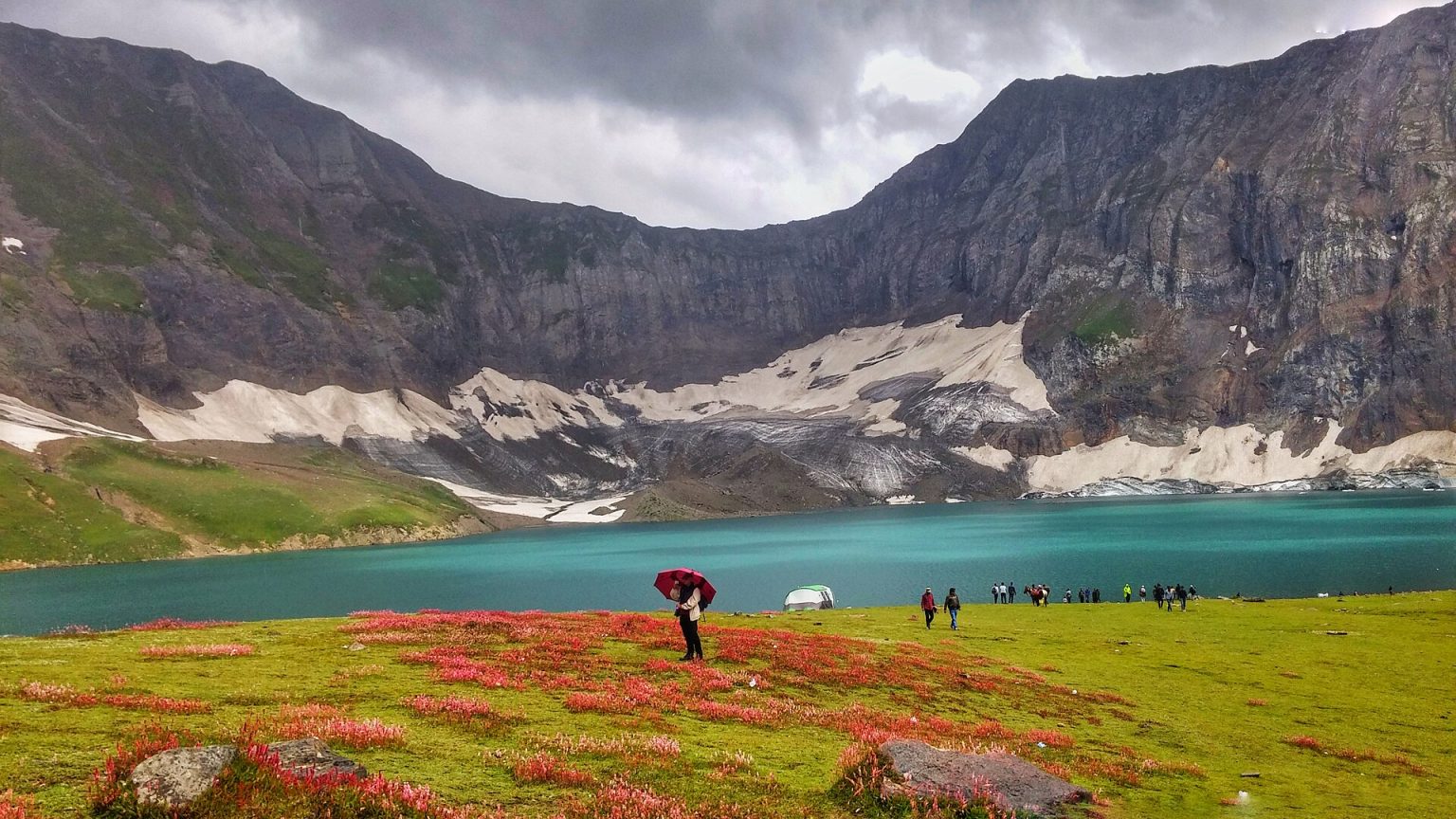
- Ratti Gali-2-01.jpg, ARFayyaz, CC BY-SA 4.0, via Wikimedia Commons
