
Travel · Attractions
Give Altit three kinds of attention
Understand Altit’s tower, inhabited settlement and royal garden as connected places with different access demands, histories and visiting boundaries.
- Architecture and context
- Confirm visiting arrangements
- Plan the approach
Altit Fort · Gilgit-Baltistan, Pakistan
One place, three different visits
Altit rewards a visit that separates three experiences: the fort’s compact vertical spaces, the settlement at its foot and the quieter garden. They are connected historically, but they ask different things of a visitor. Looking up through a tower is not the same as walking beside someone’s home; sitting for tea is not the same as entering a museum. Decide which experience matters most before assuming that a single ticket or a single hour covers everything.
AKDN describes the restored fort as a local history and cultural place, with the garden and KhaBasi Café nearby. Its account also makes the inhabited village central to conservation. Begin by asking staff which areas your visit includes, what requires a guide and where private or operational boundaries begin. This avoids turning a peaceful garden outing into an unplanned stair climb or a museum tour into an intrusion on residents.

The tower is a way to read height
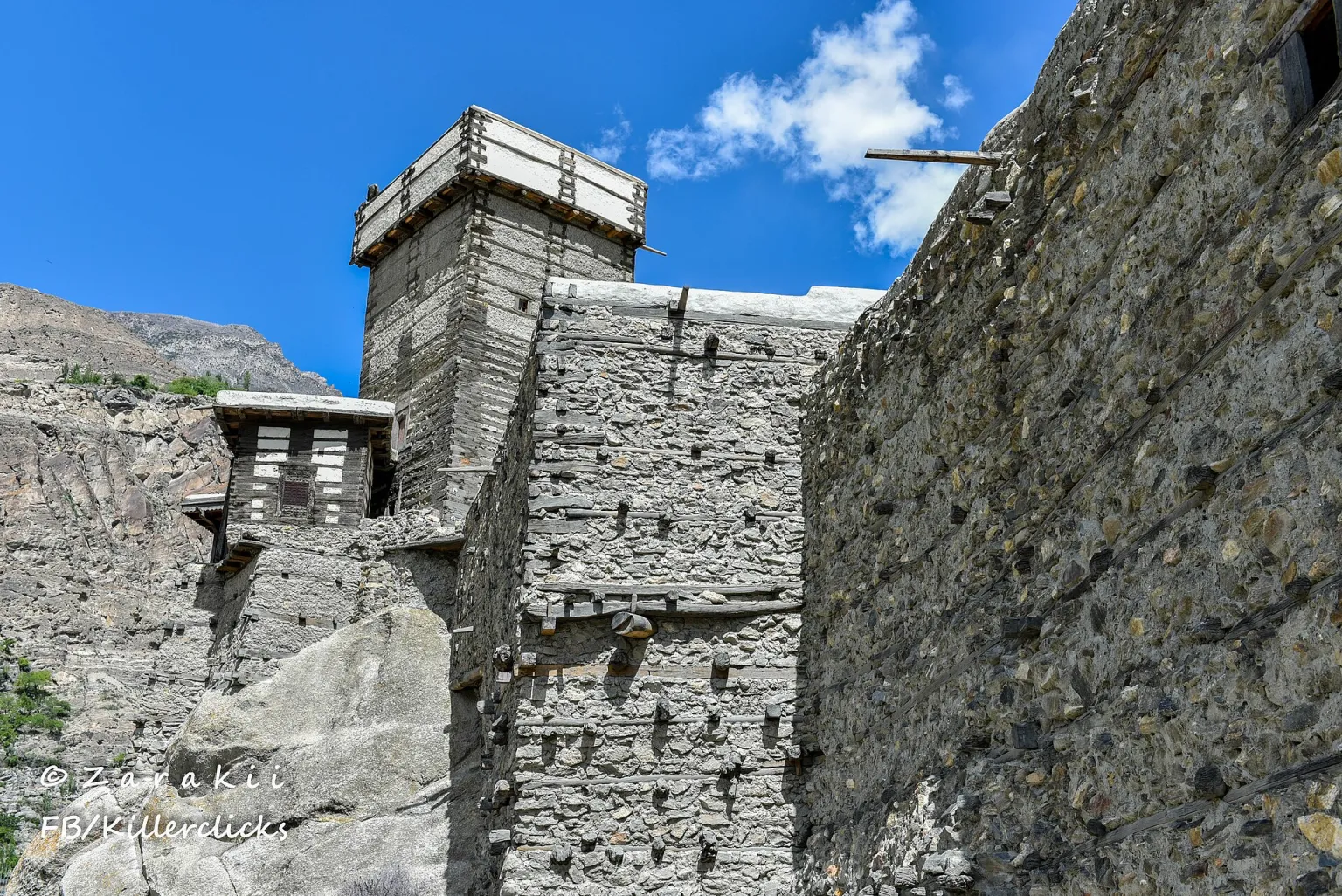
Archnet’s historical account describes a watchtower built in stages, with cribbage work, infill and windows oriented in different directions. The useful visitor question is how the tower relates to the uneven rock beneath it and the rooms around it. Where the authorised route allows, compare the sense of enclosure at a lower level with the outward view above. Do not interpret the experience as a test of courage.
Stop at a safe place to let others pass. Keep children within reach and avoid backing toward an opening while photographing. Ask which timbers have been repaired or replaced rather than judging age from colour alone. Dark surfaces may have more than one cause, and fresh-looking wood need not mean careless work. A guide’s explanation of a particular repair gives the fabric a clearer history than broad claims that every beam is original.
Look at the rooms around the tower
The tower should not consume the whole architectural visit. Archnet describes storage, a royal kitchen, royal rooms and later changes of use within the complex. These named spaces suggest a building that supported food, household life, ceremony and watchfulness together. They do not establish that the current public route passes every one of those rooms in the same sequence as the archived description.
Choose a room where you can look without blocking circulation. Compare its ceiling and openings with the neighbouring passage, and ask how its use is known. If the guide tells a dramatic story about a prince or hidden burial, ask whether it is oral tradition or a documented event. There is room for local storytelling without presenting it as excavated evidence. The distinction makes a visit richer because it recognises that buildings accumulate meanings as well as physical alterations.
Why some spaces are deliberately spare
AKDN says Altit was conserved as an essentially empty shell to reveal its traditional engineering. Its account lists work on structural defects, walls, roofs, timber decay and lighting, and dates completion to 2010, followed by a UNESCO Asia-Pacific Award of Distinction in 2011. An interior with limited furniture is therefore not necessarily an unfinished museum. The building itself is part of the exhibit.
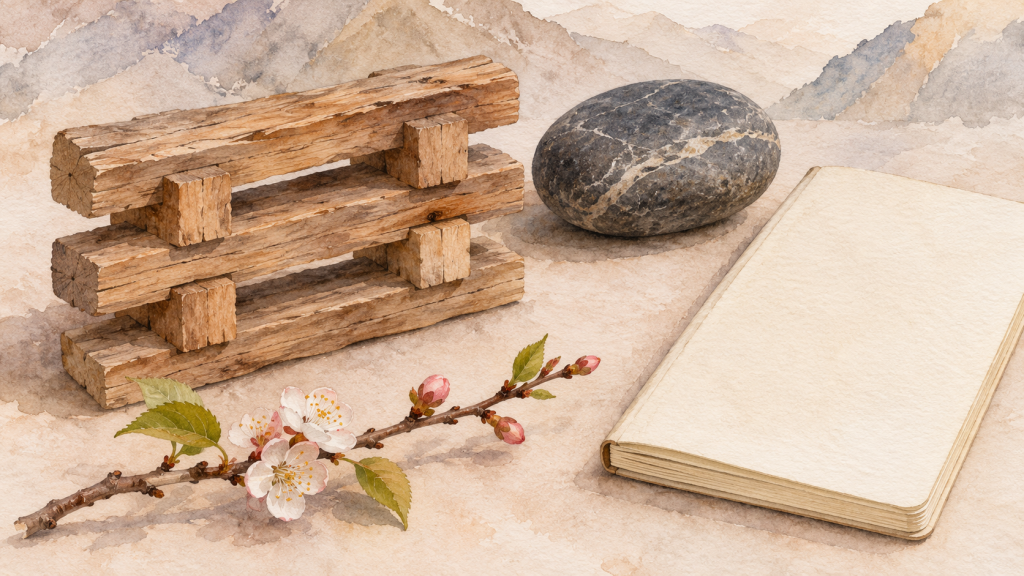
Ask what the conservation team chose to retain, repair and leave visible. A good question is why a particular wall needed support, not whether the whole structure is now earthquake-proof. The latter would require evidence this visitor guide cannot provide. The accompanying illustration is a modern arrangement of a generic timber sample, stone and notebook. It introduces materials as a subject for looking; it does not show Altit’s actual jointing, construction phases or a safe way to build.
Enter the settlement as a guest
In AKDN’s account, village rehabilitation preceded work on the fort. Water and sanitation were important to making the traditional settlement viable for residents, rather than encouraging further abandonment and construction on agricultural land. That order changes the story: the village was not simply beautified after the monument was completed. Everyday living conditions were part of the project’s purpose.
Walk through the permitted lanes at a pace that leaves room for residents and deliveries. A narrow passage lined with old buildings is still an access route, not a permanent photography set. Do not follow an open domestic door to discover a better angle. Ask before photographing a person at close range, particularly children, and respect a quiet refusal. If you want to understand changes to housing, ask a guide about documented rehabilitation rather than requesting a resident to display private rooms.
Let the garden set a slower pace
The garden offers a different way to spend time at Altit. AKDN describes it as undulating and identifies the café’s building as a reused winter residence. Treat the planted grounds as a managed place: follow marked paths, keep away from maintenance work and ask whether fruit picking, picnicking or professional photography is permitted. An orchard setting does not give visitors permission to harvest.
If you are planning tea or a meal, check the café’s current operation, seating and reservation arrangements. A restaurant bill and fort admission are different services; ask whether either includes entry to other areas. Someone who prefers the garden may have an enjoyable outing while companions visit the fort, provided meeting arrangements and access are clear. Do not promise a quiet atmosphere for a particular time: events, groups and ordinary operations can change the character of the space.
Use dates without a contest of antiquity
Altit is often introduced through a striking age claim. AKDN calls it roughly 900 years old, while the older architectural record describes early parts as more than 800 years old and subsequent building stages. These are broad descriptions recorded at different times, not a reason to announce an exact birthday for the entire complex. The secure modern milestones are easier to explain precisely than the earliest surviving fabric.
A productive question is which part of the tower or room belongs to which phase, and what evidence supports that sequence. Do not make the visit a competition between Altit and Baltit for the oldest or most authentic building. Their forms, later changes and conservation approaches provide more interesting comparisons. If visiting both, record one structural feature and one social use at each; that simple contrast helps keep their individual histories distinct.
Ask separate access questions for each area
For the fort, ask about narrow stairs, handrails, thresholds, headroom and places to pause. For the garden, ask about slope, surface, distance from drop-off, seating and an accessible toilet. For the settlement, ask whether the intended lane route involves steps or uneven paving. A positive answer about one part should not be assumed to cover the others. Describe your needs in practical terms before buying a combined visit.
Confirm current charges, guide arrangements and photography permissions directly; this guide does not establish present fees. AKDN’s account notes charges associated with the fort and rehabilitated village, but it is not a current rate card. Consider a shorter visit or split group if someone is uncomfortable with heights or enclosed passages. Make that choice before entering the tightest part, so nobody feels pressured to continue because others are waiting behind.
Build a workable Altit day
A sensible hypothetical sequence is a guided fort visit while you have energy, a respectful walk through the authorised settlement route, then a garden pause. Reverse it if staff advise a quieter admission time or someone needs to rest first. Allow time for conversation and waiting rather than adding every nearby stop to the same afternoon. In winter, ask about shaded ice and whether all sections are operating; in rain, obtain advice on slippery approaches.
Travel into Hunza needs its own checks. FCDO advice reviewed on 7 November 2026 warns of seasonal mountain-road restrictions, unreliable flights to northern airports and disruption on roads, and advises checking local security arrangements. On that date, the UK FCDO advised against all travel on the Karakoram Highway between Mansehra and Chilas via Battagram, Besham City, Dasu and Sazin up to the N15 junction. This is route-specific UK advice, not advice against all travel throughout Gilgit-Baltistan. Check the exact route and nationality-specific registration requirements before departure, and leave flexibility for an altered transfer rather than assuming a garden booking guarantees arrival.
Frequently Asked Questions
Does a garden visit include the fort?
Ask staff. Fort entry, garden access and café purchases can have different conditions.
Why are some interiors sparsely furnished?
AKDN describes a conservation approach that kept the fort largely empty to expose its engineering and fabric.
Is the garden necessarily step-free?
No access guarantee is established here. Ask about slope, surfaces, thresholds and toilets for your needs.
Was the village restored after the fort?
AKDN says settlement rehabilitation was undertaken before fort conservation, with water and sanitation central to the work.
How we know this
- Type Practical guide
- Sources 3
- Reviewed November 2026
- Disputed points Yes, see the debates
Rules and fees change, confirm with the official links below before you act.
3 sources
- Altit Fort Restoration, Archnet / Aga Khan Historic Cities Programme
- Conservation and development in Gilgit-Baltistan, Aga Khan Development Network
- Pakistan travel advice: Regional risks, UK Foreign, Commonwealth & Development Office
Photo credits (2)
- Altit Fort 01.JPG, Harismoghal, CC BY-SA 4.0, via Wikimedia Commons
- Autumn color in Hunza Valley.jpg, Ghazi Ghulamraza, CC BY-SA 3.0, via Wikimedia Commons
