
Your kitchen, your plan
Plan a meal. Cook with confidence.
Find recipes for ingredients you have, build a week of meals and keep one useful shopping list.
Find my next recipe
Start with what you have
Find your next recipe
A flexible week
Your weekly meal plan
Choose a day in the finder, then use “Plan meal +” on a recipe. Add up to twelve dishes to each day. Fractional personal portions are managed in Nutrition & Fitness; this plan records family quantities.
Plan fresh cooking or freeze suitable portions for later days. A seven-day plan does not mean storing a whole week of meals in the fridge. Read the chilling, rice and freezing guides below.
Shop once, cook thoughtfully
Your combined shopping list
Compatible measured amounts are combined. Different units, preparation forms and unspecified quantities stay separate.
Choose a useful starting point
Meal collections
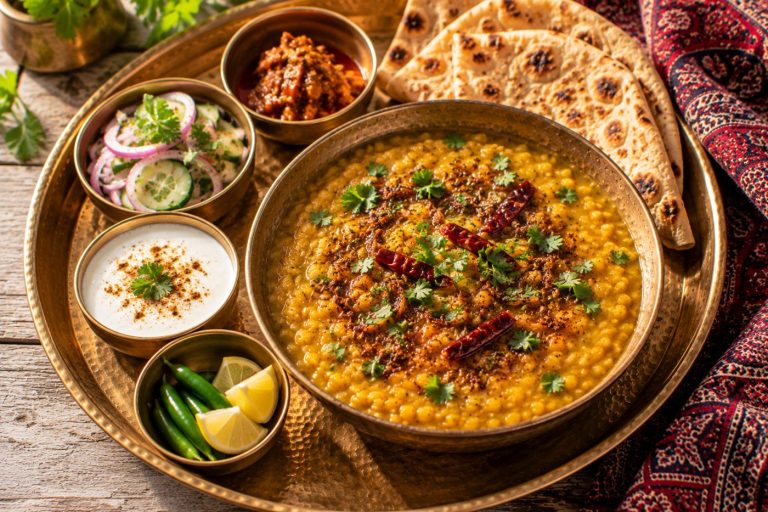
Everyday budget meals

Lunchbox ideas

Batch-cooking ideas
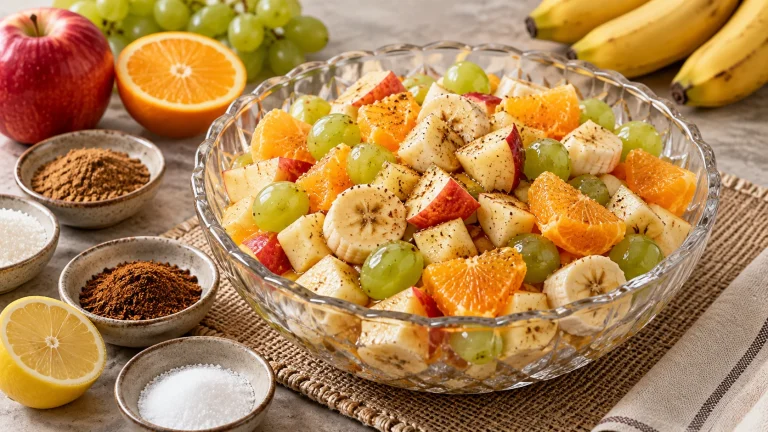
Sehri and iftar menu ideas

A family dawat

Regional dishes to compare
See the difference
Illustrated kitchen help
Open a guide for practical checks, ingredient comparisons and ideas to use with the full recipe.

Ingredient substitutions: match the job, then adjust
Use a substitution explicitly given in your recipe first. A swap that works in a salan may fail in a dough or mithai.
| Ingredient | Practical alternative | What changes |
|---|---|---|
| Fresh lemon juice in a finishing garnish | Start with the same measured amount of lime juice, then taste. | Acidity and aroma vary; do not transfer this swap to preservation recipes. |
| Fresh coriander garnish | Use the same small garnish amount of flat-leaf parsley, or omit. | A different flavour. It is not a replacement for ground coriander spice. |
| Cumin seeds | Use ground cumin only in a recipe that permits it; add with the ground spices. | Powder scorches more quickly. A seed tempering and a powder addition are different steps. |
| Dahi for a curry | Choose plain unsweetened natural yogurt with a similar thickness and fat level. | Thick Greek-style yogurt may need a little of the recipe’s water. Sweetened flavoured yogurt is unsuitable. |
| Atta | Look for chapati atta; whole-wheat supermarket flour can be a trial alternative for roti. | Water absorption and texture differ. Add water gradually; do not substitute it blindly in naan or pastry. |
Check allergens again after every substitution. Cream, milk, yogurt and plant drinks are not interchangeable in all recipes.
Buying Pakistani ingredients abroad
Use the ingredient name, preparation form and package label together. Translations help you find the shelf; they do not guarantee an identical product.
| Recipe name | English shopping name | German label to look for |
|---|---|---|
| Zeera | Cumin | Kreuzkümmel; Kümmel is caraway. |
| Dhania / dhaniya | Coriander seed or fresh coriander, as specified | Koriandersamen / frischer Koriander |
| Besan | Gram flour / chickpea flour | Kichererbsenmehl; grind and pulse variety may differ. |
| Dahi | Plain unsweetened yogurt | Naturjoghurt; check fat level and added sugar. |
| Masoor daal | Red split lentils | Rote Linsen; check split versus whole. |
| Atta | Chapati whole-wheat flour | Chapati-Atta; Weizenvollkornmehl can behave differently. |
| Ghee | Clarified butter | Ghee / Butterschmalz; contains milk-derived ingredients. |
| Moong | Mung beans or split mung lentils | Mungbohnen; whole green beans are not the same as yellow split moong. |
Asian and South Asian shops may stock the exact flour, pulse or spice. Compare ingredients and packet instructions rather than relying on a familiar-looking colour.
Allergens: check every ingredient and every swap
Read each recipe’s allergen notes and every package label. Stock cubes, spice mixes, sauces, bakery products and garnishes can introduce allergens that are not obvious from the dish name.
- Common ingredients to check include wheat flour, milk and ghee, egg, fish, prawns, peanuts, tree nuts, sesame, soy and mustard.
- Gluten-containing cereals, celery, lupin, molluscs and sulphites also need attention where relevant.
- Separate utensils, oil and work surfaces matter when avoiding cross-contact.
- The absence of an allergen note is not an allergy-free claim. Use professional advice for a diagnosed allergy.
Sources: Food Standards Agency allergen guidance and European Commission allergen information.
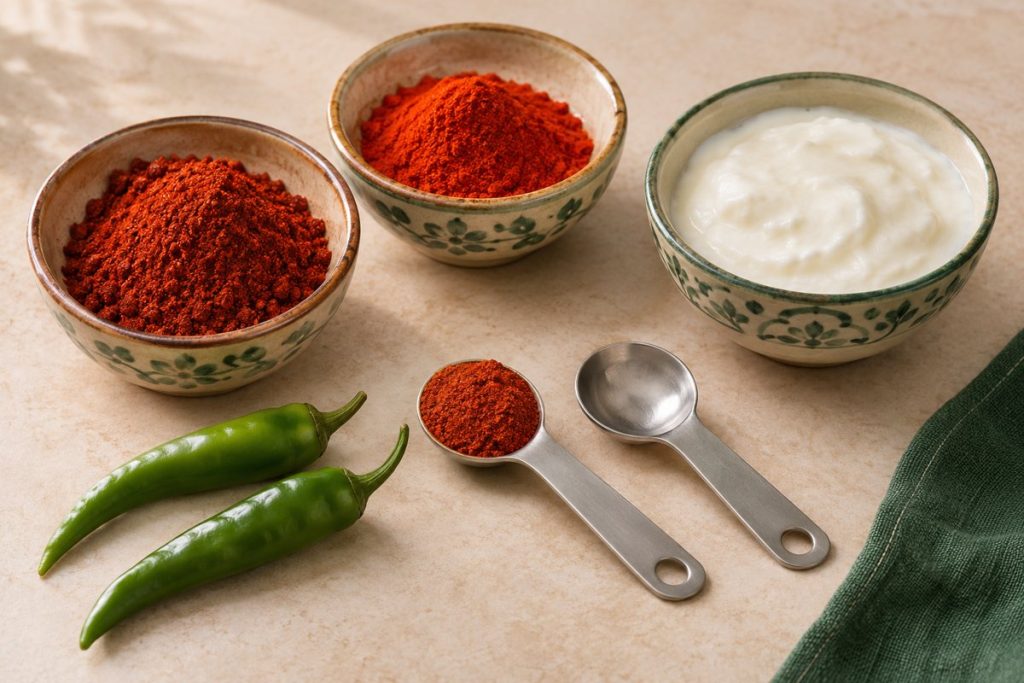
Adjust chilli without losing the flavour
- Read the recipe’s own mild or hot variation first.
- For a milder savoury dish, begin with less of the listed hot chilli, keeping the other ingredients and cooking stages unchanged.
- Cook thoroughly before tasting. Do not taste raw meat marinades.
- Increase heat in small measured additions where the method allows, rather than adding a large amount at once.
Chilli powders and fresh chillies differ greatly in strength. Kashmiri chilli, paprika and hot red chilli powder are not universally equivalent. Yogurt can change texture and allergens; adding it is a recipe change, not a universal heat correction.

Onion colour: pale, golden or burnt?
- Pale and translucent: the onion has softened but has not developed a deep fried flavour.
- Evenly golden: useful when your recipe calls for golden fried onions. Stir and watch closely near the end.
- Dark and burnt: a bitter base cannot be repaired by hiding it under more spice. Restart badly burnt onions.
Use the colour specified by your recipe. A golden qorma base and softened onions for a light curry are different targets; the picture shows a comparison, not a universal cooking time.

Bhunai: learn the texture, not only the clock
- Cook over the heat specified in the recipe and stir around the base and corners.
- As water evaporates, the masala becomes thicker and the raw tomato aroma changes.
- A visible spoon trail can help judge a reduced masala, where your recipe calls for that stage.
- If it catches, lower the heat and use the recipe’s permitted splash of water. Do not compensate for burning with more oil.
Not every curry should become a dry paste, and not every low-fat masala releases a pool of oil. Follow the dish’s own consistency and heat cues.

Roti dough: check softness before rolling
- Mix the recipe’s flour and water gradually. Flour brands absorb water differently.
- Knead until the dough holds together and feels pliable rather than crumbly.
- Rest covered for the period stated in the recipe.
- Use only a light dusting when rolling; too much dry flour changes the surface and can scorch on the tawa.
Roti, puri, naan and stuffed paratha use different doughs. Do not apply this soft-roti example to every bread. Open the exact bread recipe for quantities and the heat sequence.

Stovetop, oven, air fryer and pressure cooker
- Stovetop: use the pan size, heat and evaporation cues in the recipe.
- Oven or air fryer: look for a recipe with that method. Basket spacing and airflow differ from deep frying; do not copy the same time and temperature automatically.
- Pressure cooker: follow the appliance manufacturer’s minimum liquid, fill limit and release instructions. Thick daal and foaming pulses need particular care.
- Changing batch size: ingredient amounts may scale, but pan capacity, oil depth and cooking time do not scale in a straight line.
Use these notes to choose equipment, and follow a recipe written for that appliance. The method filter in the finder helps locate recipes that name your equipment.
Build a practical budget meal
Start with one main, one bread or rice, and one fresh or yogurt accompaniment rather than buying ingredients for many unrelated dishes.
- Choose a daal or chickpea dish, then reuse the same onions, tomatoes and herbs in another meal.
- Compare the usable amount, not just the packet or bone-in weight.
- Buy a larger pack only when you can store and use it safely.
- Portion expensive garnishes and choose seasonal produce available where you shop.
Prices vary by city, season and retailer. The budget collection is an ingredient-planning idea, not a promise of a fixed rupee cost.
Pack a lunchbox that travels well
- Choose a manageable portion and keep wet chutney or yogurt in a separate sealed container.
- Cool cooked food promptly before packing it cold.
- Use an insulated bag and cold packs for foods that need refrigeration; keep them cold until eating.
- If reheating is planned, check that a suitable appliance is available and heat the food throughout.
Rice needs extra care: cool it quickly, ideally within an hour, refrigerate and use within 24 hours; reheat only once until steaming hot throughout.
Sources: FSA cool-bag guidance and GOV.UK rice guidance.
Plan a second meal from leftovers
Plan the next use before you cook. Keep leftovers separate from raw ingredients and follow the original recipe’s storage instructions.
- Use safely stored cooked chicken in a wrap or sandwich recipe that explicitly accepts cooked chicken.
- Use leftover roti in a suitable roti-based dish; do not mistake it for raw dough.
- Use cooked chickpeas in chaat after checking the chilling and serving instructions.
- Start a cooked-rice dish only when the rice has been handled safely; reheating cannot undo poor storage.
Changing the dish does not restart its storage clock. For this guide, use the FSA’s conservative general rule of eating properly chilled leftovers within 48 hours or freezing them; rice has the shorter limit described above.
Freeze components, then plan the week
- Divide food into small, shallow portions so it can cool promptly.
- Label the dish, portions and preparation date. Follow the recipe’s freezer advice.
- Keep a freezer inventory so older suitable portions are used first.
- Defrost safely in the fridge and reheat thoroughly according to the recipe and food-safety guidance.
A weekly meal plan is a schedule of meals, not permission to keep seven days of cooked food in the fridge. Freeze suitable later portions. Avoid assuming that yogurt sauces, crisp fried foods and delicate greens retain their original texture.
Sources: GOV.UK chilling and freezing guidance and USDA reheating guidance.
Build an occasion menu without overloading the kitchen
Pick one centrepiece, a supporting dish, an accompaniment, a drink and a dessert. Check which items compete for the same burner or oven.
- Sehri: choose familiar portions, a main breakfast dish and a drink; prepare permitted components ahead.
- Iftar: plan dates, water, a savoury item and the later meal, avoiding a last-minute queue of several fried dishes.
- Dawat: pair biryani or qorma with suitable bread or rice, raita and one dessert; scale ingredients but cook in appropriate batches.
Use the planner for serving counts and the combined shopping list. Review allergens and chilling arrangements before guests arrive.
Compare regional versions respectfully
Read each recipe as one stated version. City, community and household recipes often differ.
- Compare Sindhi, Karachi and Lahori biryanis through their actual ingredients, layering and finishing steps.
- Compare the seasoning, cut and cooking method of karahi, sajji and chapli kebab instead of treating them as interchangeable meat dishes.
- For regional breads, follow their specific flour and cooking method.
Use the linked regional cuisine guides for history and context. Avoid calling one household version the only authentic version.
Read the masala, then adjust the heat
Compare moisture and texture with the written recipe. Colour varies with tomatoes, spices, pan and lighting; this picture does not prove a safe cooking temperature.
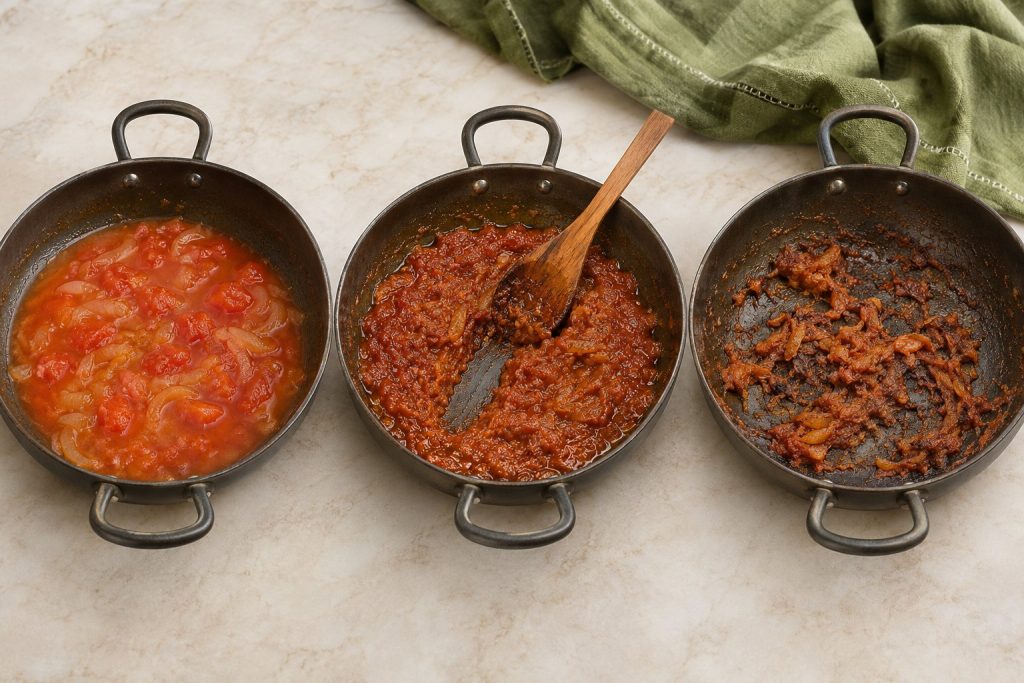
Still watery
The sauce flows back quickly into a spoon trail. If the recipe calls for reduction, keep it uncovered and stir as the excess moisture evaporates.
Reduced and glossy
The masala holds a brief spoon trail and small oil beads appear. Follow your recipe for the next ingredient; bhunai does not mean burning the spices.
Too dry or catching
Lower the heat. If it has only begun to stick, loosen it with a little water as the recipe allows. If it smells burnt or tastes bitter, start the masala again rather than mixing scorched patches through it.
