
Practical Information
Moving Back to Pakistan: A Practical Guide for Returning Overseas Pakistanis
Customs, shipping, banking, housing, schools, healthcare and the readjustment that comes with a permanent move home.
Planning a permanent move back
Moving back to Pakistan after years abroad takes more preparation than booking flights and shipping furniture. You may need to close foreign accounts, transfer savings, arrange schooling, find housing, sort out healthcare and understand the customs rules that apply to your belongings.
Start planning at least three to six months before the move, earlier still if you have children, own property abroad, or plan to import a vehicle. The academic calendar may be the biggest constraint for parents; an employment contract or notice period may matter most for employees; homeowners may need extra time to sell or rent out a foreign property. Avoid picking a date based only on cheap flights.
Keep one relocation folder
Keep a single household relocation folder, both digital and printed, with documents organised by family member and subject. It saves real time later when a bank, school or customs office asks for a specific record.
Choosing where to settle
Returning to your hometown can feel like the obvious choice, but it is not always the best long-term fit. The right city depends on employment, schools, healthcare and family support, not nostalgia alone.
Karachi has a large employment market, established business communities and a wide range of schools and hospitals, though commuting distances, traffic and neighbourhood infrastructure vary a lot between areas.
Lahore offers strong educational institutions, commercial activity and healthcare, but housing decisions should weigh commuting time, air quality and seasonal conditions.
Islamabad and Rawalpindi appeal to many returnees for employment, schools and residential choice, though cost and convenience trade-offs differ by sector.
Smaller cities can suit some families well, though curricula and employment options may be more limited. Choose based on your actual circumstances, not an assumption that one city is universally best.
Customs rules for returning residents
One of the costliest relocation mistakes is assuming all household belongings enter Pakistan duty-free. The Federal Board of Revenue's Baggage Rules set out a transfer-of-residence provision that generally applies to a Pakistani national returning after staying abroad for two years or more, though eligibility and treatment depend on the specific goods involved.
Used furniture, crockery, cutlery, kitchen utensils, carpets, bedding and similar items ordinarily used by a family abroad can qualify for an allowance under the rules, which distinguish ordinary used household goods from specified appliances. This is not the same as a blanket duty-free allowance, and the exact treatment of any shipment should be confirmed against the current consolidated rules, tariff classifications and customs assessment.
The rules also contain separate provisions for professional tools and equipment, subject to conditions and value limits. Do not assume office equipment or business inventory automatically qualifies as personal household goods.
Before shipping anything, ask a licensed customs-clearing professional for a written assessment, and request an itemised estimate covering freight, packing and insurance, port or terminal charges, customs clearance, applicable duties and taxes, storage or demurrage, and delivery to your final address. A cheap international shipping quote can turn expensive once these destination charges are added.
Read the 2026 vehicle-import rules carefully before shipping a car
Pakistan revised its vehicle-import schemes in 2026, including changes to the Personal Baggage and Transfer of Residence routes. The amendment introduced an eligibility period referring to 850 days spent abroad in the preceding three years for the relevant transfer-of-residence and gift provisions, and a restriction preventing the transfer of a vehicle imported under these schemes for one year from the date of import. Further conditions can apply depending on vehicle category, manufacture date and later amendments.
Vehicle import carries its own eligibility restrictions, age limits, duties and taxes, shipping and insurance costs, customs valuation, registration requirements and resale restrictions. A car that looks inexpensive abroad can cost considerably more once landed and registered in Pakistan. Get written confirmation of your eligibility and the applicable duty treatment before committing to ship a vehicle. The household-goods concession does not automatically extend to a car.
What to ship and what to buy locally
- Worth shipping: personal keepsakes, important documents, specialist tools, valuable equipment and anything genuinely difficult to replace.
- Often cheaper to buy locally: large furniture, ordinary kitchen appliances and bulky household items, especially once shipping, customs and voltage or plug compatibility are factored in.
- Keep an inventory of each item with approximate value, condition and identifying details, and photograph valuables before packing.
- Use reliable packaging and proper cargo insurance, and never put passports, medication or other essentials into checked shipping.
Banking, savings and your Roshan Digital Account
Transfer money through regulated banks or properly licensed financial institutions, and keep records of the original source of funds, foreign bank statements and transfer confirmations. Pakistani banks may ask for evidence of source of wealth for substantial transfers, so avoid informal transfer arrangements that make the money trail hard to establish.
If you hold a Roshan Digital Account, the State Bank of Pakistan's own FAQ explains that a returning overseas Pakistani can generally choose between keeping the RDA under specified restrictions or moving to resident banking arrangements. If you keep the RDA, existing eligible funds and investments may retain repatriable treatment, but ordinary domestic income generally cannot simply be deposited into it, and new investment options can change once your residency status changes.
If legally permitted by your former country and bank, keeping some overseas banking access can help you receive refunds, rental income, pension payments or other outstanding funds. Notify the bank of your actual residence and tax status rather than retaining an account on an inaccurate address.
Tax residency and foreign income
Relocating can change your tax position in both countries. Under Section 82 of Pakistan's Income Tax Ordinance, an individual generally becomes a tax resident after spending 183 days or more in Pakistan during the relevant tax year, alongside other statutory conditions that can apply.
Section 51 provides a specific exemption for qualifying foreign-source income of certain Pakistani citizens returning after a period abroad, though the treatment of pensions, capital gains and business earnings can require individual analysis.
Before you move, gather previous tax returns, employment records, investment statements and evidence of residency, and check whether a double-taxation agreement applies between Pakistan and your former country. Get professional advice before selling major assets or making large transfers — the tax consequences of a permanent move are very different from those of a short family visit.
Renting or buying a home
For many returning families, renting first is the safer move. A neighbourhood that felt ideal on a short visit can be inconvenient for everyday life once school transport, commuting, electricity, water supply, security and internet reliability all start to matter. A six- or twelve-month rental gives you time to understand local conditions and lets children settle before you commit to buying.
If you do plan to buy, verify ownership records and the seller's authority, check society approvals, transfer rules, encumbrances and property taxes, and use a qualified independent property lawyer rather than relying solely on an estate agent or family connection. Never make large payments without properly documented legal safeguards.
Enrolling children in school
- Start researching schools before the move; curriculum choice (local boards, Cambridge and other programmes) matters more than a school's general reputation.
- Gather official transcripts, report cards, identity documents and any study-abroad records needed for admission, well in advance.
- If a child is approaching O Levels, A Levels, SSC or HSSC, check subject and curriculum equivalence requirements before switching, since subject choices can affect eligibility for medicine, engineering and other regulated university programmes.
- Arrange school visits where possible and ask about learning support and the transition process.
- Give children room to adjust. A child who was confident overseas may need time to rebuild friendships and routines.
Healthcare and insurance transition
Do not wait until someone is unwell to work out your healthcare options. Pakistan has both public and private healthcare providers, but access, quality, cost and specialist availability vary a great deal by city and institution.
Before leaving your current country, request medical summaries and vaccination records, and collect copies of any ongoing prescriptions. If a family member needs specialist care, check that the relevant service is actually available where you plan to live, rather than assuming a major city has everything.
Review whether a foreign health policy continues to cover you after a permanent relocation; some international policies do extend to Pakistan, but the extent of coverage depends entirely on the contract. For a local policy, compare hospital networks, inpatient limits, exclusions, waiting periods, emergency treatment and cashless claims, and don't assume hospitalisation cover also includes routine outpatient visits or pre-existing conditions.
Keep essential medication in hand luggage in its original packaging where practical, carry enough for the initial transition subject to medicine-import rules, and put together a household emergency-contact list with nearby medical facilities identified in advance.
Returning to the Pakistani job market
Employment planning should start before relocation, not after your savings begin to run down. A foreign job title does not automatically translate into an equivalent local role, so compare the whole package, not exchange-rate-converted salary alone: purchasing power, housing costs, school fees and medical expenses all matter.
Rebuild your local network early, through former colleagues, relevant professional associations and established employers' own recruitment channels, so you understand what skills are actually in demand rather than relying only on informal referrals.
If your occupation or employer requires formal recognition of a foreign degree, check the Higher Education Commission's foreign-degree recognition and equivalence service, since regulated professions may also require registration with the relevant professional council. Where possible, secure employment or a clear income plan before you move; returning with no earnings strategy puts unnecessary pressure on the whole household.
Documents worth keeping
- Foreign passports and residence records
- Employment contracts and experience letters
- Tax returns and salary statements
- Pension and retirement-account information
- Foreign property records
- Birth and marriage certificates
- Educational certificates and transcripts
- Medical and vaccination records
- Insurance documents
- Bank statements showing major savings
Check what your foreign status requires before you leave
A permanent relocation can affect a foreign residence permit, settlement status or eligibility for future benefits, and some statuses can lapse after an extended absence. Check directly with the issuing country's government before departing, and if your children hold foreign nationality, keep their passports and birth records current and understand any requirements that apply specifically to them.
Reverse culture shock, and how to handle it
Pakistan itself may have changed while you were away. Friends have new routines, family expectations can be different, and once-familiar neighbourhoods may no longer feel familiar. This is sometimes called reverse culture shock, and it catches many returning families off guard precisely because they expected the adjustment to be easy.
Common difficulties include frustration with administrative delays, traffic or service interruptions; children struggling with language, classroom expectations or making friends; a spouse who did not grow up in Pakistan feeling particularly isolated; and relatives assuming you are financially comfortable simply because you lived overseas.
Set realistic expectations for the first three to six months, build routines rather than trying to fix everything at once, and discuss family boundaries and financial commitments openly rather than letting assumptions build up. Keep in regular contact with friends abroad while investing time in new local relationships, and give children room to express frustration without dismissing what they are going through.
The permanent relocation checklist
- Confirmed customs treatment for household goods and, separately, any vehicle
- Obtained itemised shipping and clearance quotes
- Reviewed tax-residency obligations in both countries
- Arranged temporary or permanent accommodation
- Contacted suitable schools and gathered academic records
- Collected medical and vaccination records and reviewed health insurance
- Developed a realistic employment or income plan
- Secured foreign legal and financial documents
- Understood the impact on foreign residency status
- Prepared the whole family, not just the logistics, for the adjustment period
If several items remain unresolved
If a significant part of this checklist is still unresolved close to your planned departure, consider delaying the move or using a phased relocation rather than making rushed, hard-to-reverse commitments.
Frequently Asked Questions
How early should I plan a permanent move back to Pakistan?
Three to six months is a practical minimum for most households. Families with school-age children, significant assets, property to sell, or vehicle-import plans may need longer.
Can returning overseas Pakistanis bring household goods duty-free?
Certain used household goods may qualify for an allowance under FBR's Baggage Rules and transfer-of-residence provisions, but this is not a blanket duty-free allowance, and specified appliances and professional equipment are treated differently. Confirm the current rules before shipping.
Should I ship my car to Pakistan?
Vehicle import rules changed in 2026 and carry eligibility periods, age limits, duties, valuation and a one-year transfer restriction. Get written confirmation of your eligibility and costs before committing, since a car that looks cheap abroad can cost far more once landed and registered.
What happens to my Roshan Digital Account if I move back permanently?
The State Bank of Pakistan's guidance allows a returning account holder to generally choose between keeping the RDA under specified restrictions or switching to resident banking. Domestic income ordinarily cannot simply be deposited into an RDA, and new investment options can change with your residency status.
When do I become a Pakistani tax resident after moving back?
Under Section 82 of the Income Tax Ordinance, an individual generally becomes resident after spending 183 days or more in Pakistan during the relevant tax year, alongside other statutory conditions. Section 51 provides a separate exemption for qualifying foreign-source income of certain returning citizens.
Should I rent or buy a home when I first move back?
Renting first is usually the safer choice. A six- to twelve-month rental lets you learn the realities of a neighbourhood, commuting and schooling before committing to a purchase.
How do I check if my foreign degree will be recognised in Pakistan?
The Higher Education Commission (HEC) provides an online foreign-degree recognition and equivalence service. Regulated professions may also require separate registration with their professional council.
What is reverse culture shock and how common is it?
It is the disorientation returning residents can feel when their home country has changed while they were away. It is common and normal; setting realistic expectations for the first three to six months and keeping communication open within the family both help.
How we know this
- Type Practical guide
- Sources 4 (4 official/academic)
- Reviewed October 2026
- Disputed points None
Rules and fees change, confirm with the official links below before you act.
4 sources
Photo credits (1)
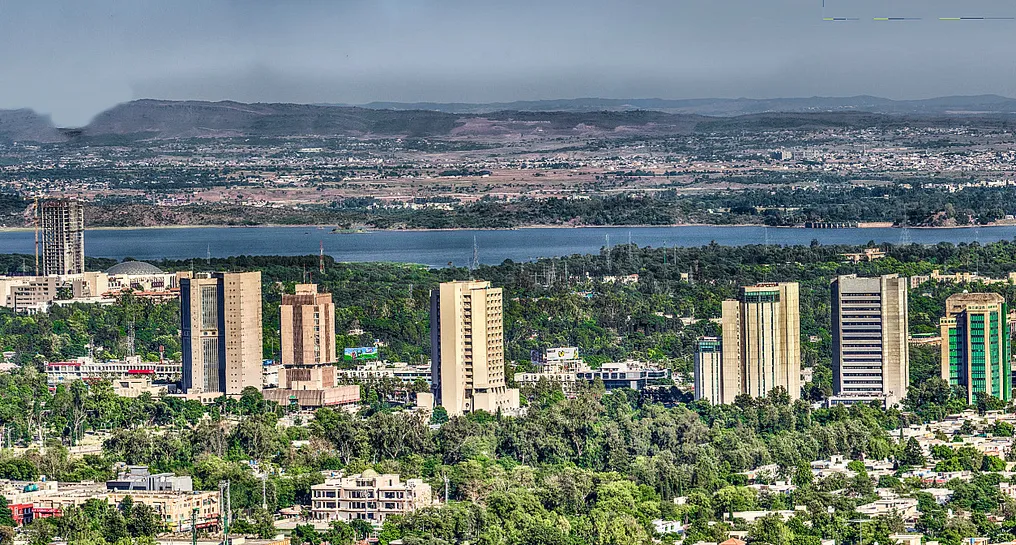
- Islamabad skyline.jpg, Kamranmangrio, CC BY-SA 4.0, via Wikimedia Commons
