
This guide follows the Hanafi school, which most Pakistanis follow. The photographs show one rakat in order. You repeat the standing, bowing and prostration for each rakat, and add the sitting (Tashahhud) after the second and the last rakat.
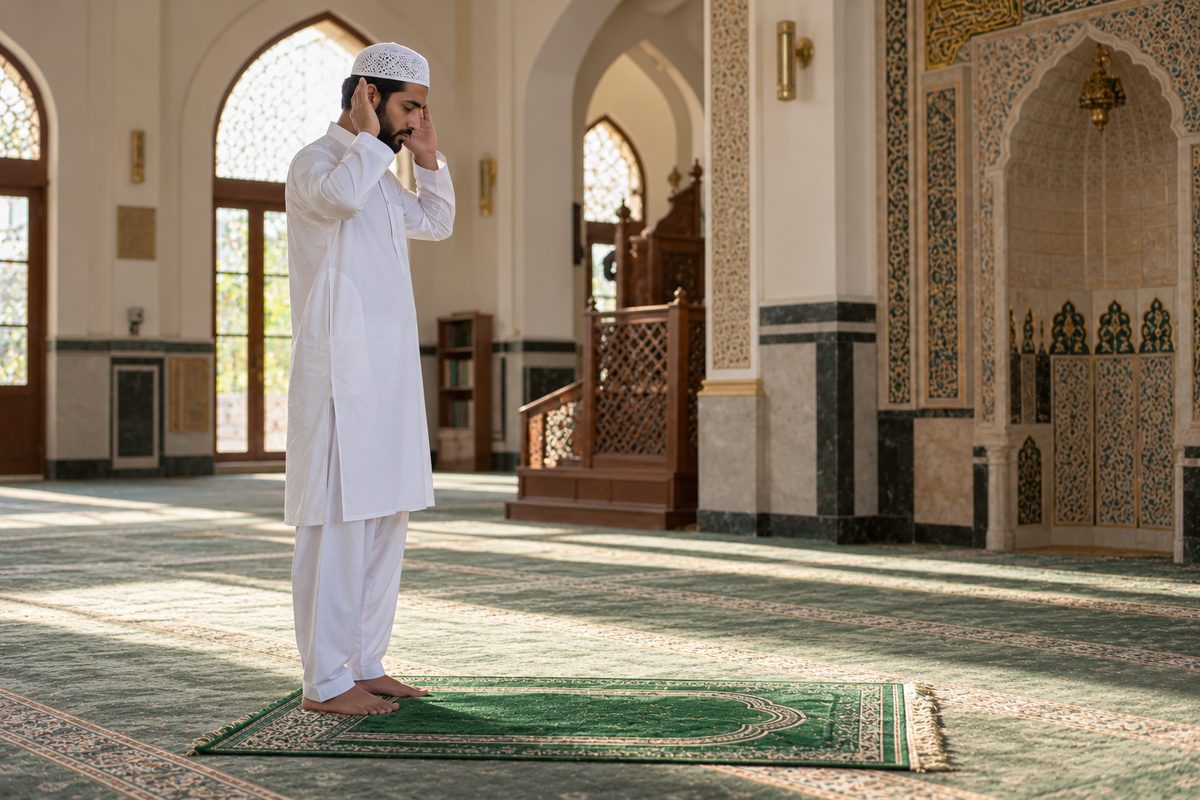
Intention and Takbir
Stand facing the qibla on a clean place. Make the intention in your heart for the prayer you are offering (no spoken words are required). Raise both hands to the ears (men) or shoulders (women), palms facing the qibla, and say the opening Takbir.
اللّٰهُ أَكْبَر
Allahu Akbar
Allah is the Greatest.
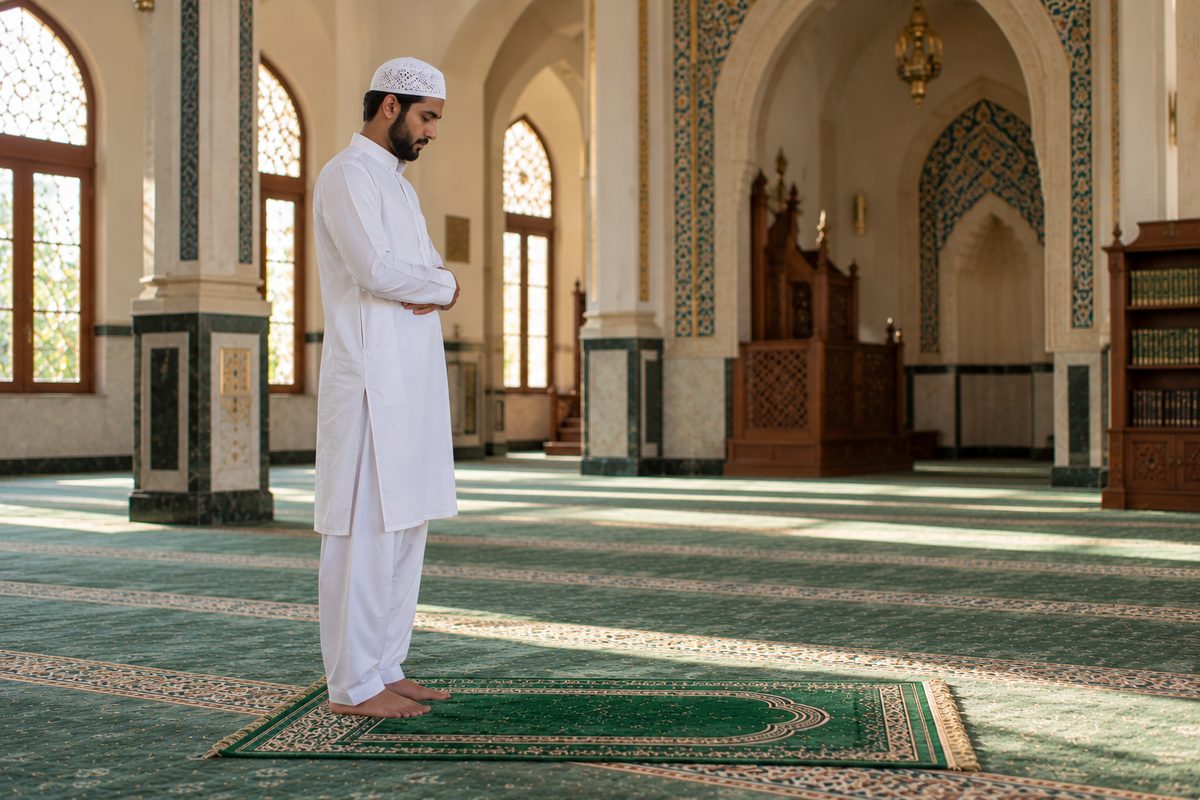
Qiyam: standing and recitation
Fold the hands: men place the right hand over the left below the navel, women place them on the chest. Look at the spot of prostration. Recite the opening supplication (Thana), seek refuge with Allah, say Bismillah, then recite Surah Al-Fatihah and another surah or at least three short verses (in the first two rakats of each prayer).
سُبْحَانَكَ اللَّهُمَّ وَبِحَمْدِكَ وَتَبَارَكَ اسْمُكَ وَتَعَالَى جَدُّكَ وَلَا إِلَهَ غَيْرُكَ
Subhanakal-lahumma wa bihamdika wa tabarakasmuka wa ta’ala jadduka wa la ilaha ghayruk
Glory and praise to You, O Allah; blessed is Your name, exalted is Your majesty, and there is no god but You.
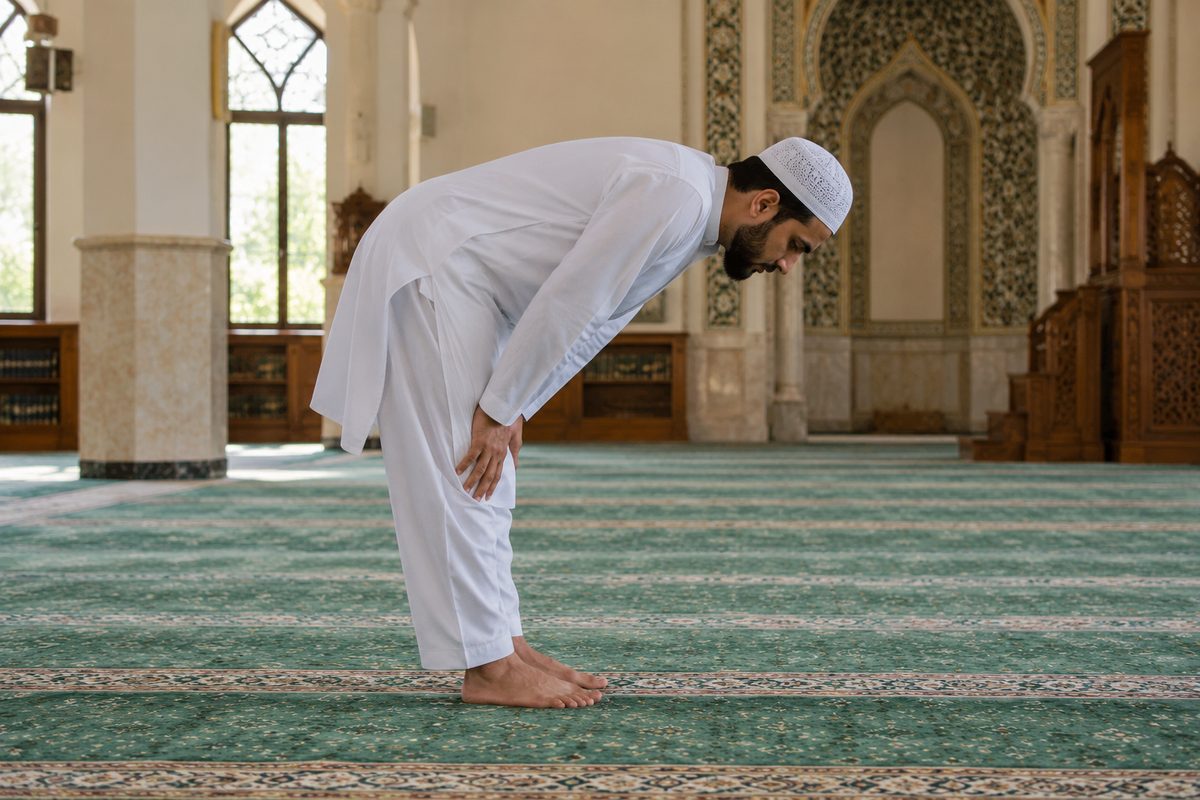
Ruku: bowing
Say Allahu Akbar and bow from the waist. Keep the back straight and level with the head, and grip the knees with the fingers apart. Say the tasbih at least three times.
سُبْحَانَ رَبِّيَ الْعَظِيمِ
Subhana Rabbiyal-Azim
Glory be to my Lord, the Magnificent.

Qawmah: rising from ruku
Rise to stand fully upright. The imam says the first phrase; the follower says the second, and the person praying alone says both.
سَمِعَ اللَّهُ لِمَنْ حَمِدَهُ ، رَبَّنَا لَكَ الْحَمْدُ
Sami’allahu liman hamidah, Rabbana lakal-hamd
Allah hears the one who praises Him. Our Lord, to You belongs all praise.

Sujud: prostration
Say Allahu Akbar and go down: knees, then hands, then forehead and nose on the ground. Palms are flat beside the face, fingers together, elbows lifted off the floor (men), toes pointing toward the qibla. Say the tasbih at least three times.
سُبْحَانَ رَبِّيَ الْأَعْلَى
Subhana Rabbiyal-A’la
Glory be to my Lord, the Most High.

Jalsa: sitting between prostrations
Say Allahu Akbar and sit up. Men sit on the left foot with the right foot upright; women sit with both feet to the right. Rest the hands on the thighs, pause briefly, then say Allahu Akbar and make the second sajdah the same way. Rise for the next rakat, or sit for the Tashahhud after the second rakat.
رَبِّ اغْفِرْ لِي
Rabbigh-fir li (optional between the two sajdahs)
My Lord, forgive me.
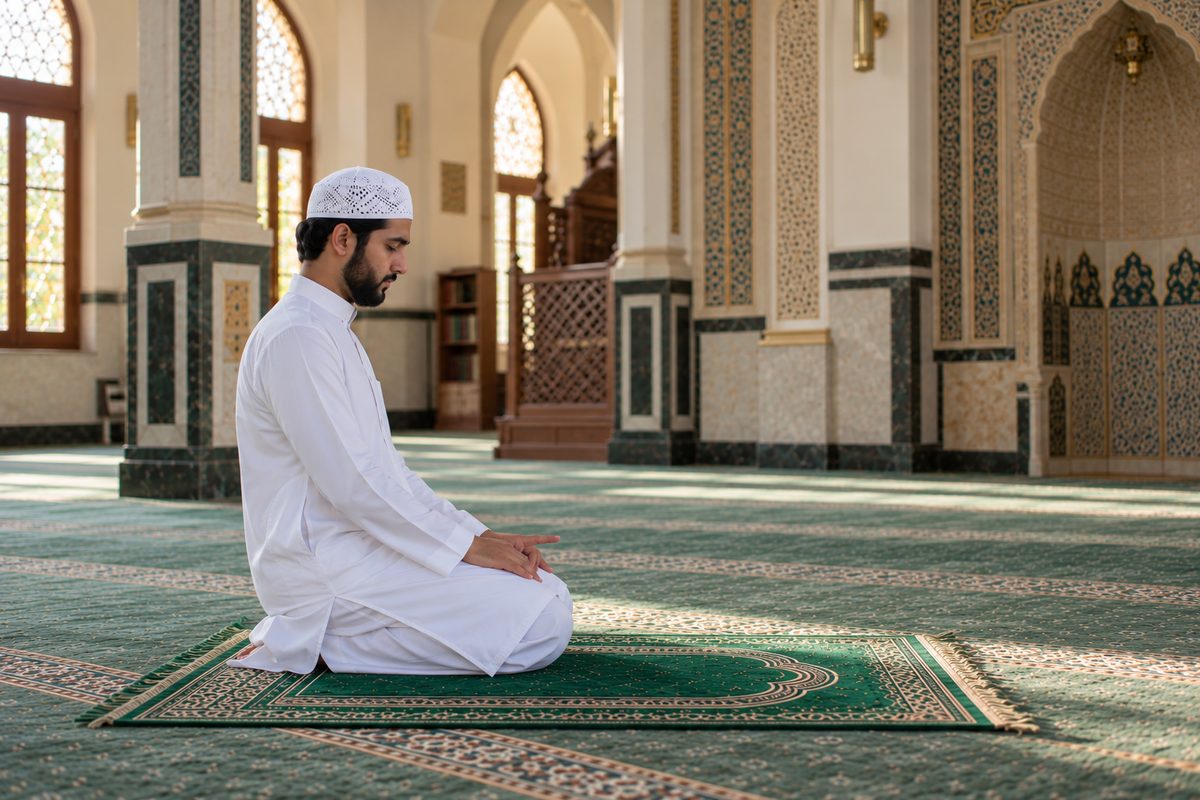
Tashahhud: the sitting
Sit as in the jalsa. After the second rakat (and the last rakat) recite At-Tahiyyat. At the testimony, form a circle with the thumb and middle finger and raise the index finger slightly. In the final sitting add Durood Ibrahim, then a dua such as Rabbana atina fid-dunya hasanah (Quran 2:201).
التَّحِيَّاتُ لِلَّهِ وَالصَّلَوَاتُ وَالطَّيِّبَاتُ ، السَّلَامُ عَلَيْكَ أَيُّهَا النَّبِيُّ وَرَحْمَةُ اللَّهِ وَبَرَكَاتُهُ ، السَّلَامُ عَلَيْنَا وَعَلَى عِبَادِ اللَّهِ الصَّالِحِينَ ، أَشْهَدُ أَنْ لَا إِلَهَ إِلَّا اللَّهُ وَأَشْهَدُ أَنَّ مُحَمَّدًا عَبْدُهُ وَرَسُولُهُ
At-tahiyyatu lillahi was-salawatu wat-tayyibat. As-salamu ’alayka ayyuhan-nabiyyu wa rahmatullahi wa barakatuh. As-salamu ’alayna wa ’ala ’ibadillahis-salihin. Ash-hadu an la ilaha illallah wa ash-hadu anna Muhammadan ’abduhu wa rasuluh
All greetings, prayers and good words are for Allah. Peace be upon you, O Prophet, and Allah’s mercy and blessings. Peace be upon us and upon Allah’s righteous servants. I bear witness that there is no god but Allah, and I bear witness that Muhammad is His servant and messenger.

Salam: ending the prayer
Turn the face to the right and say the salam, then to the left and say it again. The prayer is complete. Many people then remember Allah: SubhanAllah 33 times, Alhamdulillah 33 times and Allahu Akbar 34 times, and make dua.
السَّلَامُ عَلَيْكُمْ وَرَحْمَةُ اللَّهِ
As-salamu ’alaykum wa rahmatullah
Peace and Allah’s mercy be upon you.
Durood Ibrahim and dua in the final sitting
اللَّهُمَّ صَلِّ عَلَى مُحَمَّدٍ وَعَلَى آلِ مُحَمَّدٍ كَمَا صَلَّيْتَ عَلَى إِبْرَاهِيمَ وَعَلَى آلِ إِبْرَاهِيمَ إِنَّكَ حَمِيدٌ مَجِيدٌ ، اللَّهُمَّ بَارِكْ عَلَى مُحَمَّدٍ وَعَلَى آلِ مُحَمَّدٍ كَمَا بَارَكْتَ عَلَى إِبْرَاهِيمَ وَعَلَى آلِ إِبْرَاهِيمَ إِنَّكَ حَمِيدٌ مَجِيدٌ
O Allah, send blessings upon Muhammad and the family of Muhammad as You sent blessings upon Ibrahim and the family of Ibrahim; You are Praiseworthy and Glorious. O Allah, bless Muhammad and the family of Muhammad as You blessed Ibrahim and the family of Ibrahim; You are Praiseworthy and Glorious.
وَمِنْهُم مَّن يَقُولُ رَبَّنَآ ءَاتِنَا فِى ٱلدُّنْيَا حَسَنَةً وَفِى ٱلْـَٔاخِرَةِ حَسَنَةً وَقِنَا عَذَابَ ٱلنَّارِ ٢٠١But among them is he who says, "Our Lord, give us in this world [that which is] good and in the Hereafter [that which is] good and protect us from the punishment of the Fire."
اور بعضے ایسے ہیں کہ دعا کرتے ہیں کہ پروردگار ہم کو دنیا میں بھی نعمت عطا فرما اور آخرت میں بھی نعمت بخشیو اور دوزخ کے عذاب سے محفوظ رکھیو
Number of rakats
| Prayer | Sunnah before | Fard | After |
|---|---|---|---|
| Fajr | 2 (emphasised) | 2 | none |
| Zuhr | 4 (emphasised) | 4 | 2 sunnah, then 2 nafl |
| Asr | 4 (optional) | 4 | none |
| Maghrib | none | 3 | 2 sunnah, then 2 nafl |
| Isha | 4 (optional) | 4 | 2 sunnah, 2 nafl, then 3 witr |
How the rakats fit together
- Two rakats (Fajr): complete one rakat (standing, bowing, two prostrations), rise for the second, then sit for the full Tashahhud, Durood, dua and salam.
- Three rakats (Maghrib): sit for the Tashahhud after rakat two, rise without the salam and pray rakat three, then the final sitting.
- Four rakats: sit for the Tashahhud after rakat two, rise, and pray rakats three and four, then the final sitting. In the third and fourth rakat of a fard prayer, recite Al-Fatihah only.
Short surahs you can recite
قُلْ هُوَ ٱللَّهُ أَحَدٌ ١Say, "He is Allāh, [who is] One,
کہو کہ وہ (ذات پاک جس کا نام) الله (ہے) ایک ہے
ٱللَّهُ ٱلصَّمَدُ ٢Allāh, the Eternal Refuge.
معبود برحق جو بےنیاز ہے
لَمْ يَلِدْ وَلَمْ يُولَدْ ٣He neither begets nor is born,
نہ کسی کا باپ ہے اور نہ کسی کا بیٹا
وَلَمْ يَكُن لَّهُۥ كُفُوًا أَحَدٌۢ ٤Nor is there to Him any equivalent."
اور کوئی اس کا ہمسر نہیں
Read Surah Al-Fatihah, Al-Kawthar and Al-Ikhlas with audio to practise the pronunciation.
Common questions
Do women pray differently?
The words are the same. In the Hanafi school women raise the hands to the shoulders, place them on the chest, keep the body compact in ruku and sujud, and sit with both feet to the right.
Can I pray on a chair?
Yes, if illness or disability stops you standing or going down to the floor. Pray sitting, and bow and prostrate by lowering the head, the prostration lower than the bow.
What if I do not know the Arabic yet?
Learn Al-Fatihah and one short surah first, using the audio on this site. Keep the postures, and keep learning; ask your imam or a teacher for help.
What if I forget a rakat?
Forgetfulness in prayer is covered by the prostration of forgetfulness (sajdah sahw). Ask a scholar about the case in front of you.
Differences between schools (hand position, raising the hands, saying Ameen aloud) are valid and old. Follow your own school or ask your imam.
