
History & heritage · Reading the evidence
The Indus Script: What the Evidence Establishes and What Remains Unread
Learn what seals, sign sequences and excavated contexts reveal about the Indus script, and why a proposed reading is different from an accepted decipherment.
- Read the original source
- Check context and version
- Separate fact and inference
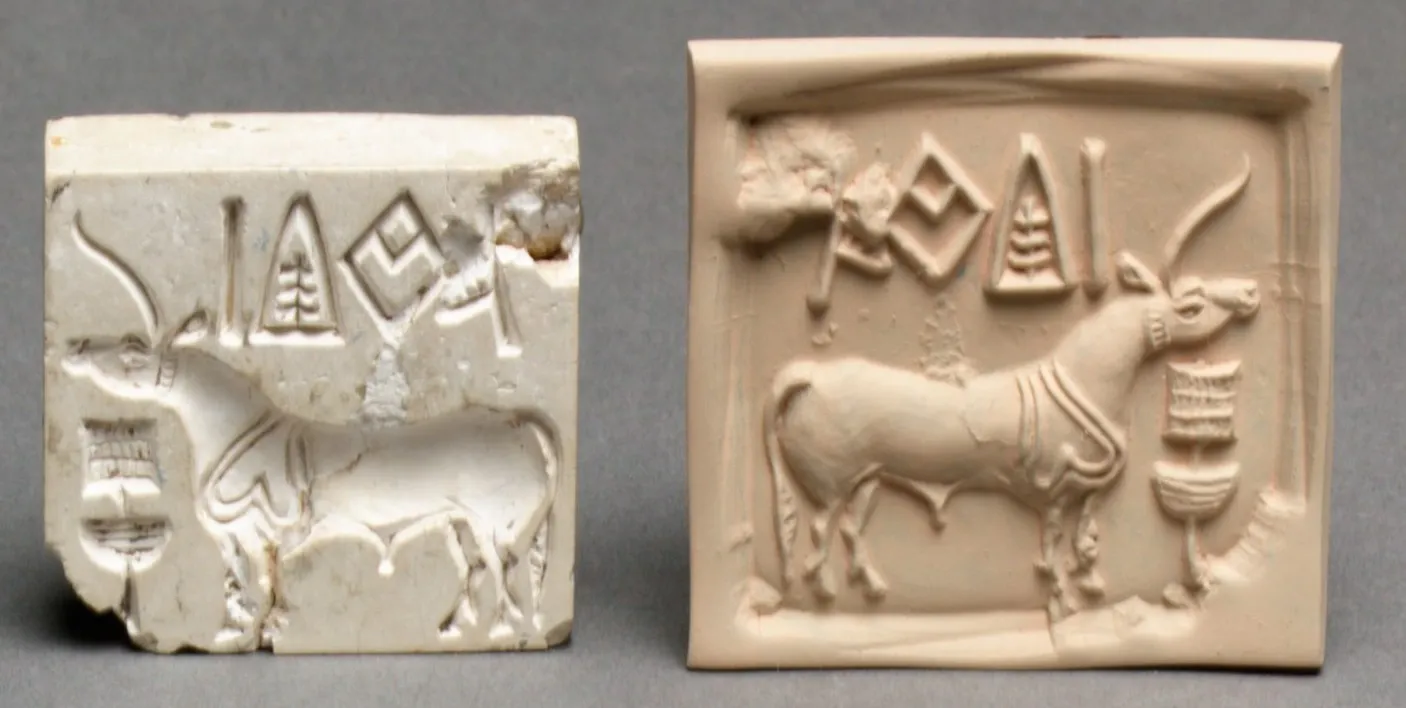
Indus stamp seal and impression · see original collection credit
An inscription can be evidence without a translation
A small seal can hold an enormous historical question. Its material, carving and findspot may be carefully recorded, while the signs along its upper edge remain unread. Those are different kinds of knowledge. Archaeologists can investigate when an inscribed object was made, how it circulated and where it was discarded without claiming to know the sentence it supposedly contains.
The urban or Mature Harappan period is generally placed around 2600–1900 BCE. Indus signs appear on seals and other objects across a much wider landscape than a single modern province. The geographical distribution matters, but it does not establish the language of every user. When a headline announces that the script has finally been solved, ask what new evidence allows other researchers to reproduce the reading.
Start with the object and its excavation record
Jonathan Mark Kenoyer and Richard Meadow’s study of inscribed objects recovered at Harappa between 1986 and 2007 makes an essential distinction: unread inscriptions can still be studied through documented archaeological contexts. A seal recovered in a recorded layer has a different evidential value from a loose object with an uncertain history.
Build a simple object record before discussing meaning. Include the excavation number, site, material, dimensions, archaeological phase, publication and whether the picture shows the original object or an impression. Keep missing entries visible. A photograph circulating online may have been cropped, reversed or detached from its catalogue caption. If the findspot is unknown, say so rather than filling the gap with the name of the most famous Indus city.
A seal and its impression face opposite ways
An engraved seal is a working surface designed to make an impression. The resulting image is reversed. A reader comparing two photographs therefore needs to know which image shows the seal and which shows its impression before deciding that a sequence has changed direction.
For a practical exercise, put two published images beside their captions and note the direction of the animal, the order of visible signs and any damaged edge. Do not trace uncertain strokes as though they were complete. Sign shapes can vary, and damage may create apparent differences. Your first result might simply be that the two images cannot be compared reliably at their present resolution. That is a useful finding because it prevents a mistaken argument from becoming the foundation of a translation.
Patterns are not yet a dictionary
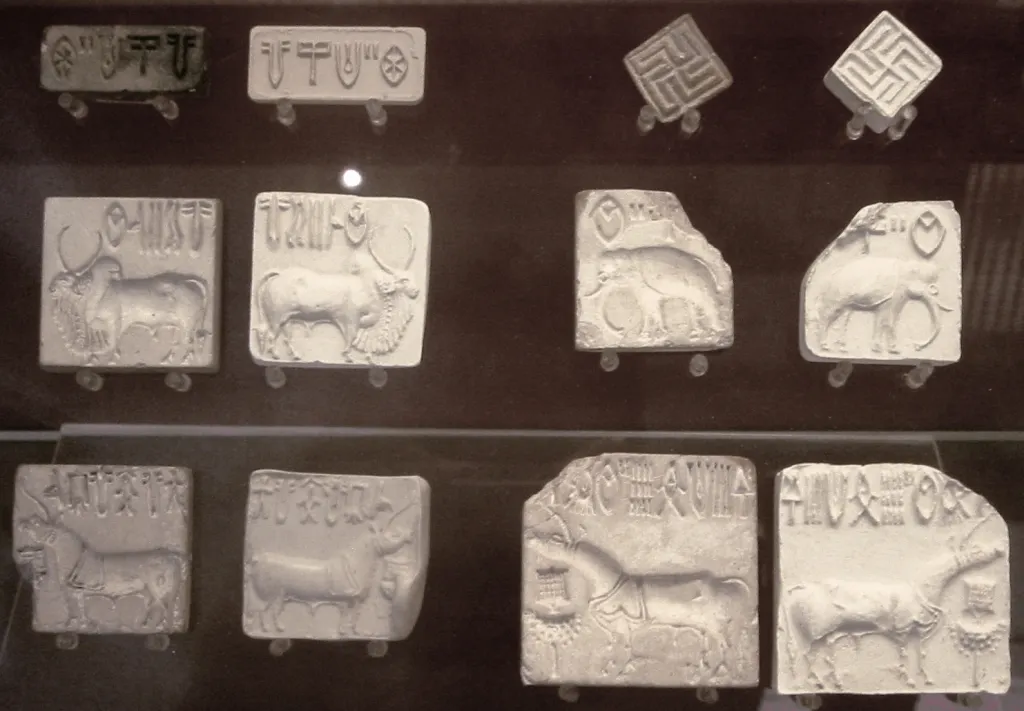
Repeated signs and recurring sequences allow researchers to investigate structure. Statistical work can ask whether signs occur independently, whether some combinations are common or whether particular positions favour particular signs. Those are meaningful questions about the corpus.
Such patterns alone do not tell us that a sign means a king, a grain measure or a particular spoken syllable. Different systems can produce regularities, and scholars disagree about aspects of the relationship between the signs and language. Some researchers propose linguistic readings, including Dravidian connections; others challenge those assumptions. Present these as arguments with methods and limitations. A computational result becomes stronger when its dataset, sign classification and tests are available for scrutiny, rather than when its visualisation looks especially convincing.
Ask what would count as a successful decipherment
A persuasive reading needs to explain more than a few conveniently selected signs. Ask whether the proposed values work across independent inscriptions and whether another reader can apply the same rules without repeatedly changing them. Look for treatment of damaged texts, sign variants and examples that do not fit.
An independently understood bilingual text can be extremely valuable in decipherment, but no equivalent to a universally accepted Indus Rosetta Stone has settled the problem. Avoid treating a resemblance to a modern letter as sufficient proof. Similar shapes can arise independently, and thousands of years of linguistic change cannot be bridged by appearance alone. The central question is not whether a reading sounds possible; it is whether the evidence distinguishes it from competing possibilities.
Read the scholarly disagreement fairly
A fair comparison begins by describing what each author is actually claiming. One study may investigate chronology, another sign order, and another a proposed language family. A disagreement over language does not automatically invalidate an excavation date; a disputed sign classification does not make every artefact meaningless.
Use a three-column notebook: observation, interpretation and unresolved question. An observation might be that a sequence occurs on several published objects. An interpretation might connect those objects to administration. The unresolved question might be what the signs conveyed to their users. Keep the author and publication year alongside each entry. This approach lets readers appreciate substantial archaeological progress while recognising that the central problem of reading the inscriptions remains open.
A responsible caption and a useful research question
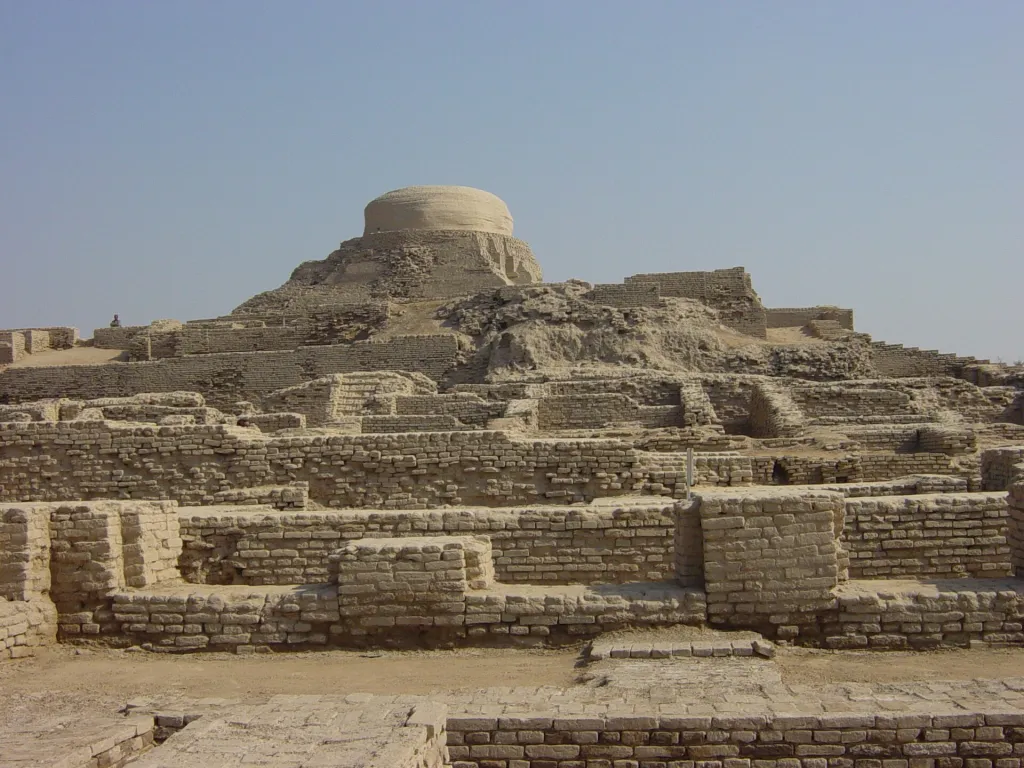
A careful caption can be short: identify the object, its site or attributed origin, date range, material, collection and source of the image. If the inscription is unread, avoid printing a confident English translation beneath it. If discussing a proposed translation, name its author and label it as a proposal.
For a school project, choose a question the available evidence can answer: how inscribed objects differ in material, where seals were excavated, or how researchers distinguish seal faces from impressions. These projects are more productive than inventing an alphabet. They also encourage respect for archaeological collections. Never buy an unprovenanced object to perform an experiment, take a rubbing without permission or assume that a museum photograph is automatically free to reproduce.
Compare phases before merging a corpus
The chronology published by Kenoyer distinguishes early marks and seal forms from later Mature Harappan examples. That sequence makes a practical research exercise possible: select two securely dated catalogue entries, record their phases, and compare the object type before comparing signs. An earlier mark resembling a later sign is a useful observation, but it does not automatically establish that both communicated the same word. Objects separated by centuries may belong to changing systems of use. If a modern sign list combines variants from many phases, note that aggregation when discussing its size. Otherwise a reader may mistake a research classification assembled across time for an alphabet that every ancient user encountered in one place and period.
Try a claim-checking exercise with one published seal
Choose a seal with an accessible catalogue record and write five statements about it. Two should concern directly recorded characteristics, such as material and dimensions; one should concern the excavation context; one should describe an interpretation made by a named scholar; and one should identify an unanswered question. Check that the grammar makes these evidential differences visible. The object is made of a recorded material is different from a researcher proposes that its inscription names an office.
Now examine a popular caption for the same object. Does it turn an animal identification into a deity identification, a possible administrative function into a certainty, or an unread sequence into a personal name? Replace only the unsupported part and retain what the record establishes. This exercise does not require dismissing the original caption wholesale. It teaches a more useful skill: preserving real knowledge while reducing overstatement. If the catalogue itself is qualified, carry those qualifications into the corrected caption. Keep a link to the complete record so readers can distinguish your observation from the scholar’s argument and can inspect the object rather than rely solely on your summary.
Frequently Asked Questions
Has the Indus script been deciphered?
There is no generally accepted decipherment. Numerous proposed readings exist, and their claims should be assessed against the full corpus and independent tests.
Does unread mean useless?
No. Materials, archaeological layers, distributions and repeated sequences support research even when the spoken content cannot be recovered.
Can a fish-shaped sign simply mean fish?
Its appearance is an observation; its linguistic or symbolic meaning requires additional evidence. A resemblance alone does not establish a reading.
Should a school project reproduce signs?
Use properly credited published examples, distinguish damaged from complete signs, and avoid presenting a homemade sign chart as an authentic alphabet.
How we know this
- Type Historical & cultural research
- Sources 4
- Reviewed November 2026
- Disputed points None
4 sources
- Kenoyer and Meadow: inscribed objects from Harappa, harappa.com
- Kenoyer: chronology and origin of the script, harappa.com
- Parpola: an influential proposed approach, harappa.com
- Probabilistic analysis and its research questions, harappa.com
Photo credits (3)
- Stamp seal and modern impression- unicorn and incense burner (?) MET DP23101 (cropped).jpg, This file was donated to Wikimedia Commons as part of a project by the Metropolitan Museum of Art. See the Image and Data Resources Open Acc, CC0, via Wikimedia Commons
- IndusValleySeals.JPG, World Imaging, CC BY-SA 3.0, via Wikimedia Commons
- Archaeological Ruins at Moenjodaro-108221.jpg, Junhi Han, CC BY-SA 3.0 igo, via Wikimedia Commons
