
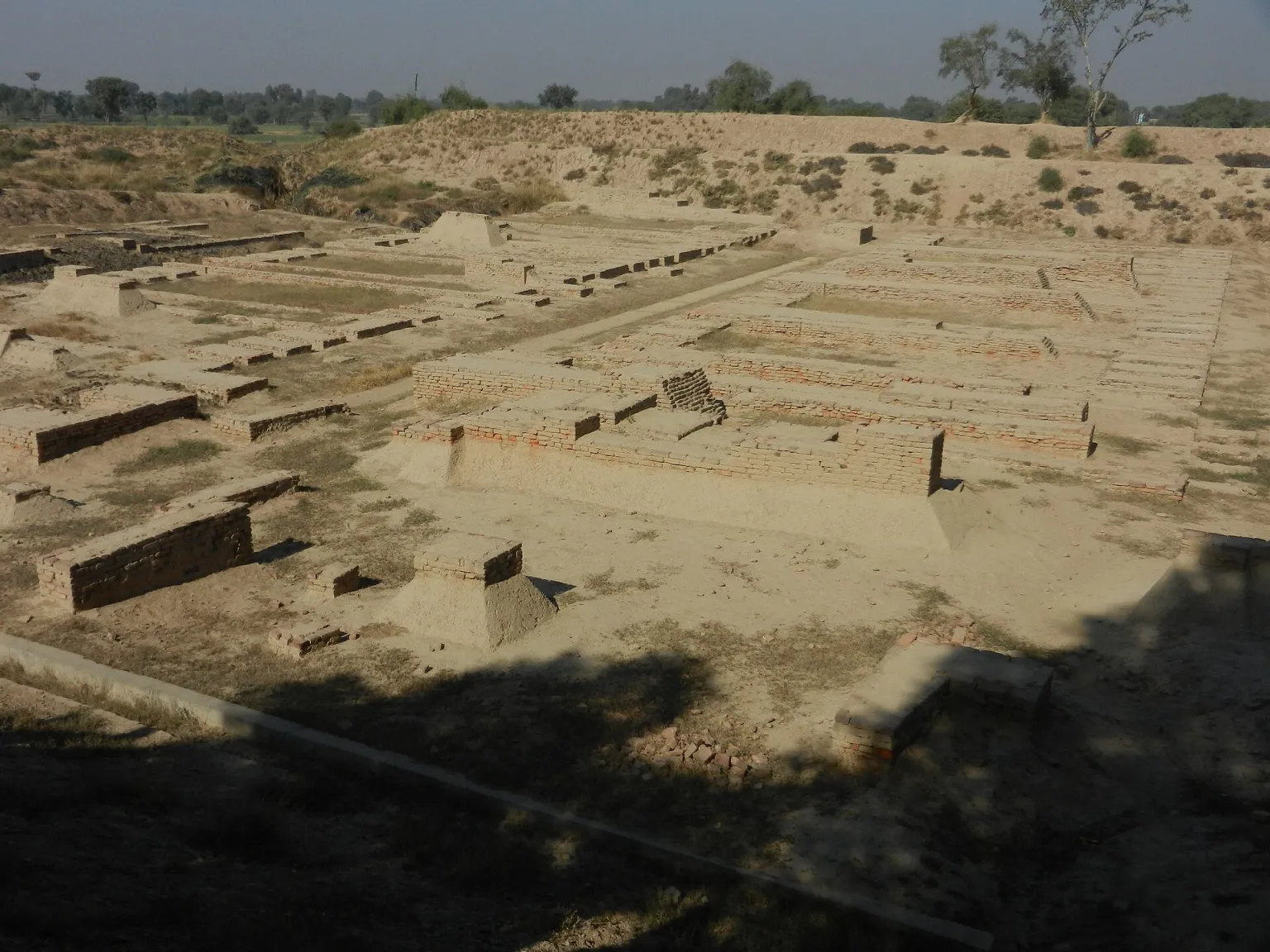
History & heritage · Reading the evidence
Harappan Weights and Trade: Reading Small Objects as Historical Evidence
Use material, mass, ratios and excavation context to understand Harappan weights without turning standardisation into an invented story about ancient government.
- Read the original source
- Check context and version
- Separate fact and inference
Harappa · archaeological setting
Small objects, large questions
A row of stone cubes can look less dramatic than a ruined city, yet it offers unusually concrete evidence about shared practices. Harappan weights survive in graduated sizes, and measured groups show recurring relationships. The important historical question is how much those relationships allow us to infer about exchange.
Begin with an object rather than a sweeping claim that the Indus civilisation invented modern commerce. What is its material? Was it excavated at Harappa or assigned that origin later? Is its mass recorded? Was it found with other weights? An artefact becomes useful evidence through these details. Standardisation suggests that people needed recognisable measures, but it does not by itself reveal the language of a transaction, the identity of a merchant or the institutions enforcing an agreement.
What the published Harappa examples show
The Harappa Archaeological Research Project’s presentation of graduated cubical weights describes a binary progression among smaller denominations and decimal increases among larger ones. Its illustrated series includes a smallest example of 0.856 grams and a commonly occurring weight around 13.7 grams. Those are measurements and an interpretation of a particular published group.
Do not turn either number into a universal value for every excavated object. Archaeological samples differ, and a worn weight need not preserve its original mass exactly. Other studies classify the series in somewhat different ways. Record the publication and sample before comparing figures. A precise decimal copied without its archaeological context can create the appearance of certainty while concealing important differences between datasets.
Measure ratios before telling a trade story
A useful classroom exercise uses modern counters rather than archaeological objects. Imagine a set weighing 1, 2, 4, 8 and 16 units. Combining the pieces allows many totals, and the relationships remain recognisable even if the unit itself changes. This illustrates what a binary series means; it does not recreate a specific Harappan transaction.
When examining a published table, divide each measured mass by the proposed base unit and record the result. Note whether the author uses an idealised class value or an average of actual objects. A ratio close to sixteen may support placement in a weight class, but it is not an inscription saying sixteen. Show the calculation and the rounding rule so another reader can repeat the exercise.
Material and context can change the identification
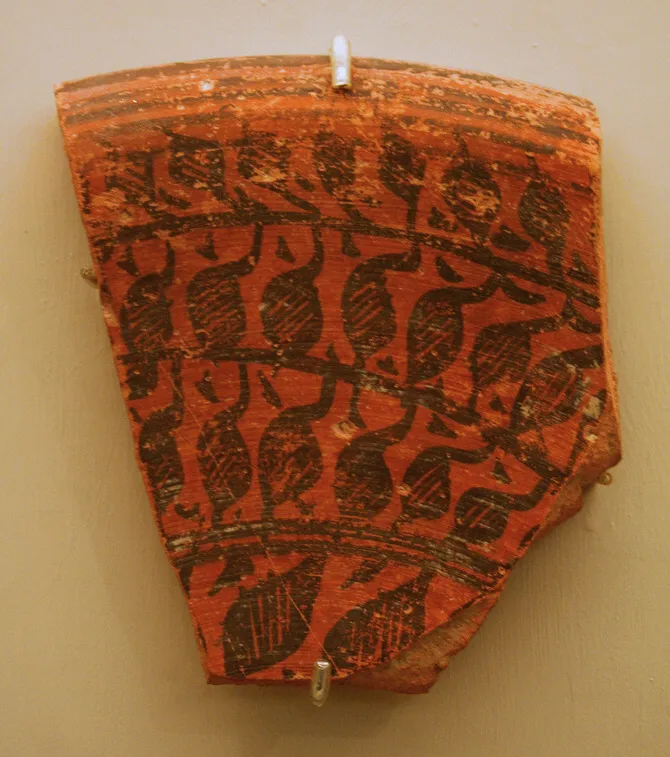
A small stone cube is not automatically a weight, and a museum group can include objects that only resemble one another. The Harappa website’s discussion of a displayed collection explicitly notes that a conical piece is a carved shell object rather than a weight. This is a valuable reminder to read the caption instead of classifying everything by appearance.
Archaeologists consider workmanship, dimensions, measured mass, comparisons and find context together. An object from a workshop may prompt different questions from one recovered in a domestic area or a burial. An isolated find cannot establish that its owner was a professional trader. Avoid using a tidy display photograph as evidence that all the pictured objects were originally stored or used together.
What standardisation supports, and what it leaves open
Repeated weight relationships across settlements support an argument for shared measuring practices and networks of interaction. Exchange is a reasonable line of interpretation. Published researchers also discuss possible administrative or taxation uses, but a possibility is different from a directly documented institution.
Write that the weights are consistent with organised exchange rather than claiming that they prove a central treasury, a particular tax rate or an empire with uniform enforcement. Different political arrangements can sustain common measures. Merchants, craft groups and local authorities might all have reasons to recognise compatible units. The evidence does not require us to choose a detailed institutional story before that story can be tested. The unanswered question is part of the historical explanation, not a defect to conceal.
Connect weights to other kinds of evidence
Weights become more informative when studied alongside manufacturing debris, raw materials, seals, transport routes and the distribution of finished goods. Even then, each type of evidence has limits. A material found far from its geological source indicates movement; identifying every person involved in that movement requires more.
For a research notebook, separate three questions: where a material originated, where an object was manufactured and where it was deposited. These places may differ. Do not draw a direct shipping route from two dots on a modern map without considering intermediate exchange. Likewise, an imported-looking object does not establish that its final owner travelled abroad. A network can move goods through many hands while leaving no written record we can currently read.

Build an evidence-led museum note
Choose one clearly catalogued group and write a paragraph that identifies its measured characteristics before discussing significance. Explain whether the date comes from an archaeological layer or a stylistic attribution. Give the collection or excavation reference so readers can locate the original information.
Then add a short uncertainty statement: the likely function, degree of standardisation and institutional setting need not have equal confidence. If the published author qualifies a suggestion with may or possibly, preserve that qualification in your paraphrase. For images, retain the photographer’s credit and check reuse permission. Do not handle or weigh museum objects yourself. A respectful visit can produce a strong research question without removing an object from its protective context or pretending that a display offers the whole history of trade.
Compare samples before comparing precision
A published study can report an average, a range or a proposed ideal mass for a weight class. Those quantities answer different questions. Imagine three hypothetical objects weighing 13.4, 13.7 and 14.0 grams: the average is 13.7 grams, but none of that arithmetic establishes the intended manufacturing tolerance. Wear and measurement methods also matter. When comparing two studies, first check whether they examined the same excavated group and whether damaged examples were included. Then compare class definitions and sample sizes. This prevents a small difference in reported base units from becoming a dramatic claim that one settlement used a wholly different economy. Preserve the underlying measurements where the publication supplies them.
Design a comparison that can test a historical explanation
Suppose you want to investigate whether weights from two settlements reflect compatible measuring practices. Start with published measurements from securely identified groups, not a photograph of differently sized cubes. Record the dates, class definitions, measurement units and number of objects. If the studies use different conventions, explain how you converted them and retain the original values alongside your calculations.
Look first for similarity in relationships among classes rather than demanding that every worn object match an ideal mass. Then ask what the similarity supports. It can strengthen a case for shared conventions, but it does not identify a central authority or reveal whether users agreed voluntarily. To investigate those institutional questions, you would need additional evidence about production, distribution and administration. Write the inference in two stages so the second does not quietly ride on the first. A clear research design can conclude that the mass pattern is comparable while the mechanism behind that comparability remains uncertain. That conclusion respects the technical achievement reflected in the objects without inventing the political organisation that made it possible.
Frequently Asked Questions
Were all Harappan weights identical?
They occur in different classes and show variation within classes. Compare measured samples rather than assuming perfect modern factory precision.
Do weights prove taxation?
They can support discussion of administration, but taxation is an interpretation requiring further evidence; a weight alone does not identify a tax system.
What does binary mean here?
It describes relationships such as doubling between smaller weight classes. It does not mean the civilisation used a modern computer number system.
Can a replica demonstrate an ancient transaction?
It can explain a possible measuring principle. Label the exercise as an illustration, not a recovered account of what a particular merchant did.
How we know this
- Type Historical & cultural research
- Sources 4
- Reviewed November 2026
- Disputed points None
4 sources
- HARP: graduated weights at Harappa, harappa.com
- Published study: Harappan Weights, harappa.com
- Collection identification and caution, harappa.com
- Regional interaction research, harappa.com
Photo credits (2)
- View of Granary and Great Hall on Mound F - Archaeological site of Harappa.jpg, Muhammad Bin Naveed, CC BY-SA 3.0, via Wikimedia Commons
- Red pottery, IVC.jpg, amy dreher from Brooklyn, NY, United States, CC BY 2.0, via Wikimedia Commons
