
Ingredients & Spices · The complete guide
Yellow mustard
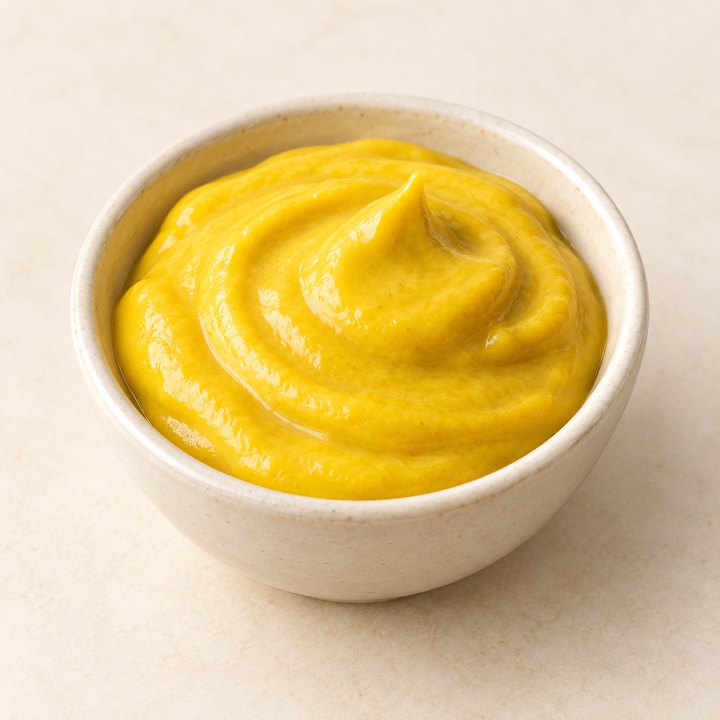
Yellow mustard is a mild prepared mustard, often coloured bright yellow with turmeric. It is different from raw sarson seed, mustard oil and hotter Dijon mustard.
What it is and names used in Pakistan
Yellow mustard is a mild prepared mustard, often coloured bright yellow with turmeric. It is different from raw sarson seed, mustard oil and hotter Dijon mustard.
Origin and historical context
The familiar American-style yellow condiment developed within modern commercial mustard-making, drawing on much older uses of mustard seeds as seasonings.
Types, manufacture and buying
Ground yellow mustard seeds are blended with vinegar, water, salt and spices; sugar and thickeners vary. Wholegrain, brown and Dijon products are distinct styles.
Read the first few ingredients to understand what supplies most of the sauce’s body: vegetables, water, sugar, oil, fermented paste or starch. Compare a regular serving rather than only the front-label claims. A product described as mild, natural or premium can still be salty or sweet. Heat ratings and thickness are not standardised across all manufacturers, so opening a new brand is a good time to taste cautiously. Small packs can be useful when an unfamiliar sauce will only be used occasionally.
Reference: USDA AMS: Condiment commercial product descriptions.
Production, trade and the Pakistani pantry
The United States and European countries have prepared-mustard industries; Pakistan sells imported and locally produced or bottled versions.
Cooking uses and practical substitutions
Use a thin line on burgers or Korean-style corn dogs. For a milder dressing, combine with yogurt or mayonnaise. Dijon can substitute in smaller amounts but gives more pungency and less familiar yellow colour.
Whisk a small quantity into a dressing before adding oil gradually, or dissolve it into a sauce where a smooth distribution is wanted. Mustard can sharpen a rich dish without needing a large serving. Prolonged heating can soften its pungency, so the time of addition changes the result. For a mild condiment, mix the serving portion with yogurt or mayonnaise rather than altering the storage jar. Dry mustard powder is not a ready-to-use equal-volume replacement: hydration, acidity and resting affect its flavour and heat.
Nutrition, benefits and limitations
Prepared mustard is usually eaten in small quantities, so its main contribution is pungent flavour rather than a substantial amount of protein, fibre or micronutrients. Sodium and added sugar vary by style. It can help make a dressing interesting without adding much fat itself, but mayonnaise, cream or oil mixed with it changes the finished condiment. Mustard is also an important allergen and can cause serious reactions even when used sparingly. Tolerance of mustard oil, seeds or a different sauce does not justify assuming every mustard product is safe for an allergic person.
Mustard allergy matters even when the flavour is mild. The small condiment serving limits its nutrient contribution.
Practical notes and common mistakes
Yellow mustard is often chosen for its mild tang and familiar colour rather than intense heat. Use it to complement a burger’s meat, pickle and sauce rather than burying the filling under a thick layer. Turmeric can stain porous surfaces and clothing, so wipe spills promptly. If using Dijon instead, begin with less because its pungency can be stronger. Mustard powder mixed into water is a different preparation with its own developing heat; it is not a direct ready-made substitute for the smooth acidic yellow condiment.
Storage and safe handling
Keep unopened products as the manufacturer directs and check that the seal is intact. After opening, follow refrigeration and use-within instructions; shelf stability before opening does not guarantee the same storage afterwards. Write the opening date on an infrequently used jar. Keep the rim clean and avoid returning sauce that has touched raw meat to the container. Discard products with mould, an unexpectedly swollen pack or other clear deterioration. Homemade adaptations should be refrigerated and made in modest batches unless a properly tested preservation method is followed.
Recipes and related pantry reading
Use the form and quantity specified in each recipe, then adjust for the concentration, salt and moisture of the product you have bought. These dishes show where the ingredient fits in a complete preparation.
For related local names and pantry ingredients, see the Pakistani ingredients and spices guide.
Names and forms used in our recipes
View the recipe names covered by this guide
- mustard
- yellow mustard
Frequently Asked Questions
Why is prepared yellow mustard bright yellow?
Turmeric commonly contributes the colour, alongside the mustard formulation.
Can Dijon replace yellow mustard?
Usually in a smaller amount, accepting stronger pungency and a different colour.
Keep Exploring
Related places and stories on DailyLife.pk

How we know this
- Type Explainer
- Sources 2 (2 official/academic)
- Reviewed November 2026
- Disputed points None
