
Ingredients & Spices · The complete guide
Thai basil
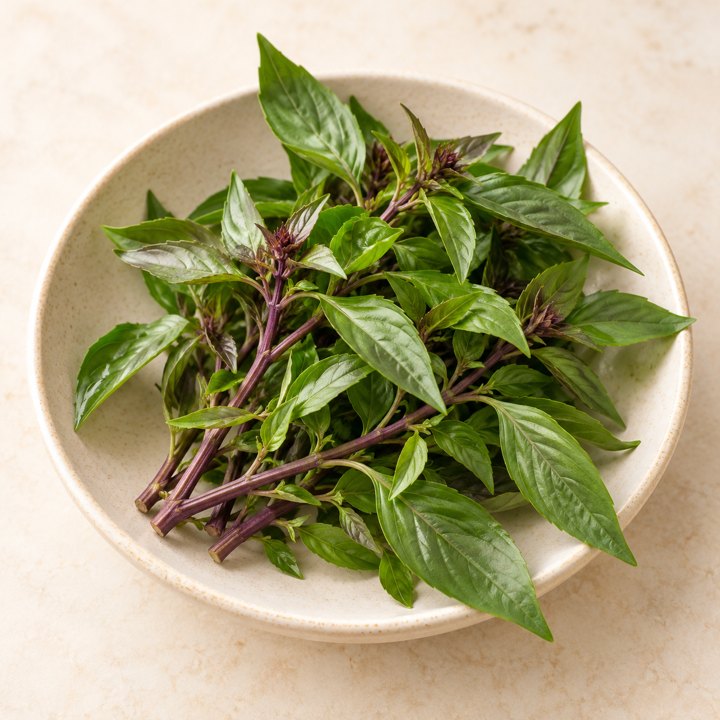
Thai basil is a culinary form of Ocimum basilicum, often recognisable by purple stems, firm leaves and a sweet anise-like aroma. It differs from peppery holy basil and from softer Italian sweet basil.
What it is and names to know
Thai basil is a culinary form of Ocimum basilicum, often recognisable by purple stems, firm leaves and a sweet anise-like aroma. It differs from peppery holy basil and from softer Italian sweet basil.
Origins, producing regions and Pakistan context
Its use belongs to Southeast Asian food traditions within the much wider cultivation history of basil. The name describes a culinary type, not proof that one person or modern nation discovered basil.
Thailand, Vietnam and other countries grow it, and it can be cultivated by specialist growers elsewhere. In Pakistan fresh or frozen supplies may be available through imported-food sellers or local herb growers.
Background: Royal Botanic Gardens, Kew: plant identity and range.

Types and buying advice
Choose fragrant Thai basil with its anise-like character, rather than assuming holy basil or sweet Italian basil gives the same result.
How to cook with it
Fold leaves into Thai green curry, noodle soup or a quick stir-fry near the end. Their firmer texture tolerates heat better than delicate sweet basil, while the aroma still benefits from short cooking.
Strip tender leaves from thick stems and add a small handful first. If an unfamiliar dish calls for holy basil, recognise that Thai basil creates a sweeter anise note.
Add most leaves near the end of a curry rather than boiling them for the full cooking time. Their aroma should remain distinct alongside coconut milk, chilli and the other herbs. Thicker stems can be set aside instead of leaving woody pieces in a bowl. For a basil stir-fry, confirm whether the recipe intends Thai basil or holy basil: the sweeter anise note and the pepperier leaf lead to noticeably different results, even when both dishes are enjoyable.
Try the ingredient in Thai Green Curry. Follow each recipes specified form and quantity, since whole pieces and fine powder season food differently.
For related pantry ingredients, see the Pakistani ingredients and spices guide.
For a coconut curry, strip the leaves from thick stems before the pan is ready, then fold them through near the end. Leave a few small sound leaves for serving if a fresh finish is wanted. In a noodle bowl, whole tender leaves may be added at the table. Dried sweet basil gives a different result and should be treated as an adaptation rather than increased until it appears to equal a fresh handful.
Nutrition and realistic benefits
Fresh leaves add aroma, variety and some micronutrients to food. The nutritional contribution depends on whether you eat a few garnish leaves or a substantial chopped-herb portion. They cannot replace the volume and diversity of vegetables in a meal. Their most useful everyday role is making ordinary dishes enjoyable with a fresh aromatic finish. Claims based on isolated oils, extracts or laboratory tests should not be transferred to a spoonful of chopped leaves or an everyday homemade tea.
Disadvantages and precautions
Use edible correctly identified basil rather than assuming every ornamental or medicinal basil preparation is interchangeable. Extracts and essential oils are separate products.
Clean handling matters even for a small garnish. FDA food-safety guidance explains practical handling. Buying from a traceable food supplier is more dependable than trying to judge safety from appearance alone.
Substitutions and storage
Sweet basil with a little mint is a practical adaptation, but no exact match. Do not use a large amount of star anise merely to imitate the leaf aroma.
Choose sound leaves with a clear characteristic aroma, and discard rotten or slimy material. Rinse under fresh running water before use and dry gently; household soap and detergent are unsuitable for washing food. Keep most fresh herbs chilled with their moisture controlled so leaves do not sit wet. Tender basil is particularly sensitive to cold and bruising. Freezing can preserve a surplus for cooked dishes, though thawed leaves usually lose the texture needed for an attractive raw garnish.
Names and forms used in our recipes
View the recipe names covered by this guide
- thai basil leaves
Frequently Asked Questions
When should Thai basil enter a curry?
Add most leaves near the end of a curry rather than boiling them for the full cooking time. Their aroma should remain distinct alongside coconut milk, chilli and the other herbs.
What can I use instead of thai basil?
Sweet basil with a little mint is a practical adaptation, but no exact match. Do not use a large amount of star anise merely to imitate the leaf aroma.
What is the main caution with thai basil?
Use edible correctly identified basil rather than assuming every ornamental or medicinal basil preparation is interchangeable. Extracts and essential oils are separate products.
Keep Exploring
Related places and stories on DailyLife.pk

How we know this
- Type Explainer
- Sources 3 (1 official/academic)
- Reviewed November 2026
- Disputed points None
3 sources
Photo credits (1)
- I-11 Sabze Mande, Islamabad.jpg, Pakieditor, CC BY-SA 4.0, via Wikimedia Commons
