
Ingredients & Spices · The complete guide
Sumac
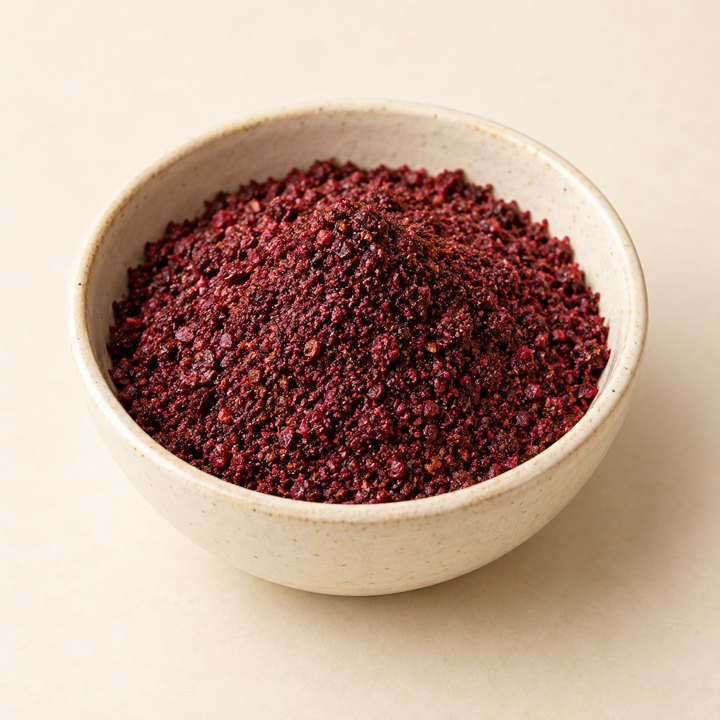
Culinary sumac is commonly the dried ground fruit of Rhus coriaria. The burgundy powder has a tangy berry-like flavour.
What it is and names to know
Culinary sumac is commonly the dried ground fruit of Rhus coriaria. The burgundy powder has a tangy berry-like flavour. Some retail products include salt, so it is important to distinguish pure sumac from a seasoning blend.
Origins, producing regions and Pakistan context
Kew places the species across the Mediterranean toward Afghanistan. It has longstanding West Asian and Mediterranean food uses, especially as a dry souring ingredient, without an identifiable sole inventor.
Turkey and other West Asian or Mediterranean countries are associated with the culinary trade. In Pakistan it is most often a speciality ingredient for shawarma, salads and related dishes. Whole and processed forms can cross borders separately: a spice may be imported, milled and repacked before sale in Pakistan. The growing countries listed here are not a claim about the direct supplier of a particular Pakistani packet.
Background: Royal Botanic Gardens, Kew: plant identity and range.

Types and buying advice
Check whether the burgundy powder is pure sumac or includes salt. A clearly labelled food product is essential; wild berries are unsuitable substitutes.
How to cook with it
Toss with sliced onion, sprinkle over kebab or stir into a yoghurt dressing. It supplies acidity without the wetness of lemon juice, making it useful for dry meat and bread toppings.
Taste before adding salt, and add some close to serving to preserve the fresh sour impression. Strain a steeped infusion if an especially smooth sauce is required.
A sumac-and-onion garnish is best mixed close to serving when distinct crisp slices are wanted. The powder stains the surface attractively and provides dry acidity, while lemon juice creates a wetter result. If the sumac includes salt, season the accompanying meat or yoghurt accordingly. In a smooth dressing, let the powder hydrate briefly before judging its texture. Do not assume that every red sour powder is pure sumac; a clear ingredient list is valuable.
Try the ingredient in Beef Shawarma. Follow each recipes specified form and quantity, since whole pieces and fine powder season food differently.
For related pantry ingredients, see the Pakistani ingredients and spices guide.
For a simple onion garnish, slice the onion finely, toss with a modest amount of sumac and taste before adding salt or lemon. Pure sumac supplies dry tang, while a salted product already contributes seasoning. Mix shortly before serving when crispness matters rather than letting the onion sit for hours in a wet dressing.
Nutrition and realistic benefits
Ground spices contain plant compounds and varying amounts of fibre and minerals, but a normal recipe uses only a small quantity shared among several people. A high nutrient figure per 100 grams is therefore a poor description of what one serving supplies. The useful everyday benefit is flavour, colour or acidity in ordinary food. There is no need to increase the dose to pursue antioxidant claims, and a capsule or concentrated extract cannot be evaluated as if it were the powder in a curry.
Disadvantages and precautions
Buy food-grade sumac; the common name is not permission to gather unidentified wild berries. Do not confuse edible Rhus coriaria with toxic plants sharing similar common names.
Dry spices are not sterile foods. FDA food-safety guidance explains practical handling. Buying from a traceable food supplier is more dependable than trying to judge safety from appearance alone.
Substitutions and storage
Amchur supplies dry acidity but lacks the same berry flavour. Lemon zest and juice can work if extra moisture is acceptable.
Store in a tightly closed container away from light, steam and cooking heat. Take the required amount with a dry spoon rather than shaking the open packet over a boiling pan. Ground particles expose more surface to air, so buying a modest pack is usually better than keeping a large stale supply. Check aroma as well as the printed date. Caking from dampness, visible mould, insects or an unusual musty smell calls for disposal, not extra roasting.
Names and forms used in our recipes
View the recipe names covered by this guide
- sumac
Frequently Asked Questions
When should I make a sumac-onion garnish?
A sumac-and-onion garnish is best mixed close to serving when distinct crisp slices are wanted. The powder stains the surface attractively and provides dry acidity, while lemon juice creates a wetter result.
What can I use instead of sumac?
Amchur supplies dry acidity but lacks the same berry flavour. Lemon zest and juice can work if extra moisture is acceptable.
What is the main caution with sumac?
Buy food-grade sumac; the common name is not permission to gather unidentified wild berries. Do not confuse edible Rhus coriaria with toxic plants sharing similar common names.
Keep Exploring
Related places and stories on DailyLife.pk

How we know this
- Type Explainer
- Sources 3 (1 official/academic)
- Reviewed November 2026
- Disputed points None
3 sources
Photo credits (1)
- Spice market @ Walled City @ Lahore (15449651456).jpg, Guilhem Vellut from Annecy, France, CC BY 2.0, via Wikimedia Commons
