
Ingredients & Spices · The complete guide
Star anise
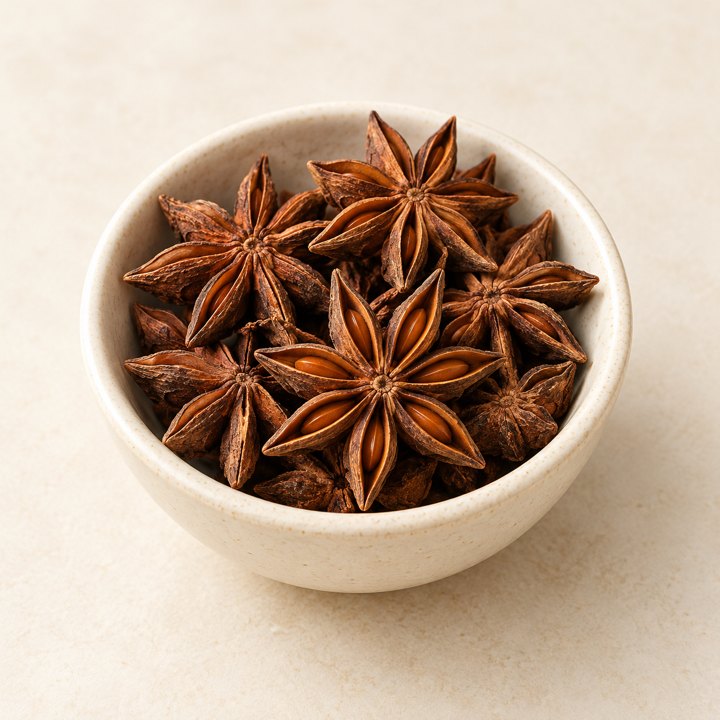
Culinary star anise is the star-shaped dried fruit of Illicium verum. It has a strong liquorice-like aroma, but is not aniseed.
What it is and names to know
Culinary star anise is the star-shaped dried fruit of Illicium verum. It has a strong liquorice-like aroma, but is not aniseed. Japanese star anise and other similar plants must not be confused with the edible species.
Origins, producing regions and Pakistan context
It is associated with southern Chinese and Southeast Asian spice traditions and later international trade. The familiar star shape does not identify a named first user or an exact invention date.
China and Vietnam are established cultivation and trade sources. Pakistan generally receives it as an imported whole spice for selected rice, tea and meat preparations. Whole and processed forms can cross borders separately: a spice may be imported, milled and repacked before sale in Pakistan. The growing countries listed here are not a claim about the direct supplier of a particular Pakistani packet.
Background: Spices Board: crop and ingredient reference.

Types and buying advice
Buy traceable culinary Illicium verum. Do not use ornamental or unidentified star-shaped fruits merely because they resemble a kitchen spice.
How to cook with it
Add a small broken star to chai, stock, braised meat or a whole-spice blend. Remove the woody fruit before serving. In a light dish, a fragment may be enough.
Count pieces carefully because an entire large star can dominate a small pot. For a smooth sauce, infuse and strain instead of leaving sharp fragments in the food.
The woody fruit is useful for infusion, not as a crunchy garnish. Keep fragments large enough to retrieve or use a spice pouch. In a small milk drink, start with a fragment rather than an entire star, especially when cardamom and cinnamon are already present. If the liquorice-like note becomes dominant, remove the star promptly and extend the liquid. More sugar can make the drink sweeter but cannot remove the aroma that has already infused.
Try the ingredient in Kashmiri Chai. Follow each recipes specified form and quantity, since whole pieces and fine powder season food differently.
For related pantry ingredients, see the Pakistani ingredients and spices guide.
For a lightly spiced tea, use a small recognisable fragment that can be strained out with the other whole aromatics. For a meat braise, a whole star may be appropriate for a larger pot, but taste during cooking. Its liquorice-like character can become dominant alongside other sweet spices. Do not leave woody fragments in a cup where someone could mistake them for an edible topping.
Nutrition and realistic benefits
At the quantities usually used in a household dish, the main benefit is flavour rather than a large contribution of protein, vitamins or minerals. Composition tables often describe 100 grams, far more than an ordinary serving. A small seasoning quantity should not be advertised as a practical way to meet a daily mineral requirement. Aromatic food can help make simple lentils, vegetables and rice appealing, but the whole meals balance of ingredients, salt and fat still matters.
Disadvantages and precautions
Use only traceable culinary Illicium verum. Do not forage lookalikes or recommend star-anise teas to infants; common-name confusion can have serious consequences.
Dry spices are not sterile foods. FDA food-safety guidance explains practical handling. Buying from a traceable food supplier is more dependable than trying to judge safety from appearance alone.
Substitutions and storage
A tiny amount of fennel or aniseed supplies a related note, though neither duplicates the whole flavour. Black cardamom gives a different warm aroma.
Keep in a clean, tightly closed food container in a cool dry cupboard, away from the cooker and direct sun. Whole pieces generally retain aroma better than the same spice left ground. Date the jar when opened and buy an amount you can use while fragrant. Crush a small sample periodically: fading aroma means weaker flavour, while dampness, insects or a musty smell are reasons to discard it. Never tip a wet spoon into a dry-spice jar.
Names and forms used in our recipes
View the recipe names covered by this guide
- star anise
Frequently Asked Questions
Should diners chew the whole star?
The woody fruit is useful for infusion, not as a crunchy garnish. Keep fragments large enough to retrieve or use a spice pouch.
What can I use instead of star anise?
A tiny amount of fennel or aniseed supplies a related note, though neither duplicates the whole flavour. Black cardamom gives a different warm aroma.
What is the main caution with star anise?
Use only traceable culinary Illicium verum. Do not forage lookalikes or recommend star-anise teas to infants; common-name confusion can have serious consequences.
Keep Exploring
Related places and stories on DailyLife.pk

How we know this
- Type Explainer
- Sources 4 (2 official/academic)
- Reviewed November 2026
- Disputed points None
4 sources
Photo credits (1)
- Spice market @ Walled City @ Lahore (15449651456).jpg, Guilhem Vellut from Annecy, France, CC BY 2.0, via Wikimedia Commons
