
Ingredients & Spices · The complete guide
Silver leaf (Varq)
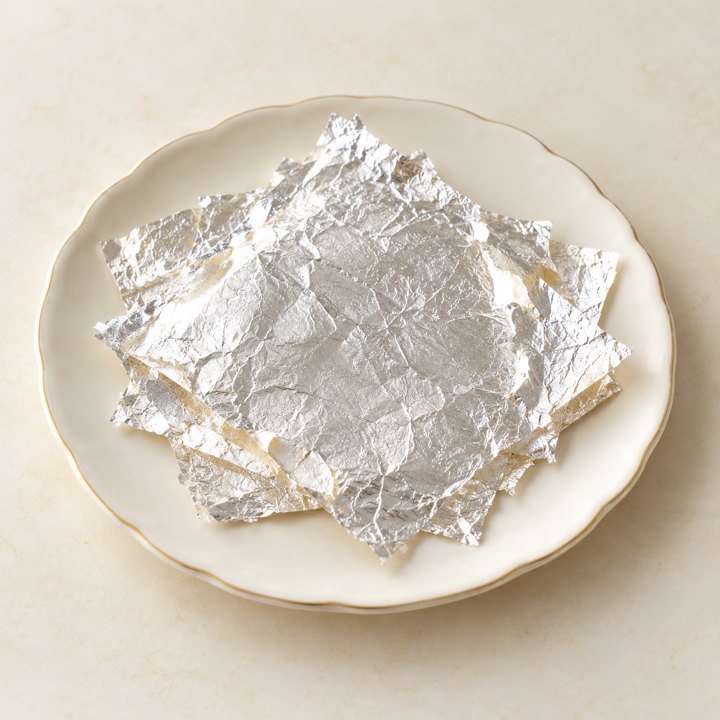
Edible silver leaf is an extremely thin sheet of food-grade silver used as decoration on sweets. In Pakistan it is called varq, warq or chandi ka varq.
What it is and local names
Edible silver leaf is an extremely thin sheet of food-grade silver used as decoration on sweets. In Pakistan it is called varq, warq or chandi ka varq. It is different from aluminium foil, craft metallic leaf and glitter that is merely labelled non-toxic.
Origins and documented history
Metal leaf has a long history in decoration and food presentation across several cultures. South Asian mithai is a familiar culinary setting. An exact first edible use or one known inventor is not established, and historical prestige is not evidence of a nutritional benefit.
Types and manufacture
Silver is beaten or processed into very thin sheets and supplied between protective papers. Food-grade purity and manufacturing hygiene matter. Indian food standards specifically address silver leaf, but their requirements should not be represented as Pakistan’s legal rules without separate verification.
Reference: FSSAI: Food products standards compendium.
Production, trade and Pakistan
Edible leaf is made by specialized producers in South Asian and other markets and traded through confectionery suppliers. Pakistan’s sweet shops use purchased leaf. Ask for a traceable food-grade product and its dietary manufacturing assurance rather than relying on a loose shop description.
How to use it
Lay a small piece on a slightly tacky sweet or dessert surface using its backing paper. Avoid handling directly because it tears and sticks easily. For sheer khurma, place sparingly near serving where the surface and garnish can support it.
Nutrition, benefits and limits
Its role is visual. Silver leaf is not a meaningful source of dietary minerals and should not be promoted as strengthening, detoxifying or curative. The attractive finish can be achieved with a very small decorative quantity.
Drawbacks, allergens and precautions
Use only explicitly edible food-grade leaf from a reliable supplier. Metallic craft materials may contain unsuitable metals or coatings. Check whether manufacturing meets vegetarian or halal expectations rather than assuming all beating materials are identical.
Reference: Punjab Food Authority: Pure Food Regulations 2018.
Substitutions and storage
Omit it without affecting flavour or cooking. Finely chopped nuts, rose petals explicitly sold for food, or another suitable garnish can provide visual interest, with different allergens and texture. Household foil is never a replacement.
Keep dry and protected between its papers, away from drafts and handling. Retain original packaging and supplier details. Do not use tarnished, dirty or unidentified loose metallic sheets.
Using the backing paper
The sheet is fragile enough that lifting it like ordinary foil usually destroys it. Open the protective paper away from a fan or a draught, bring it close to the chosen dessert surface, and transfer gently using the backing as support. A very dry, powdery surface may not hold it, while a wet moving liquid can tear and scatter it. Use a small trial on one portion before decorating a whole serving dish. The aim is a delicate visual accent; a thick metallic covering adds no useful flavour.
Choosing the serving moment
Add the decoration after most handling is complete. Stirring a milk dessert after applying leaf breaks the sheet into fragments, and pressing a garnish through it tears the surface. For sheer khurma, decide where nuts or another garnish will sit, then apply a small amount where it can remain visible. Keep the dessert under its appropriate temperature control while decorating. Time spent arranging an elaborate finish still counts toward the time a perishable milk dish is outside refrigeration. Prepare backing papers and utensils in advance to work efficiently.
Food-grade identity matters
Edible leaf must be identified by the supplier as intended for food. Craft silver-coloured leaf may be another metal or alloy, and a decorative powder marked non-toxic is not necessarily edible. A shiny appearance cannot establish purity, and improvised household tests are not a substitute for a traceable product specification. Retain the wrapper so that the item can be checked later. If the supplier cannot establish what the leaf contains or how it is made, omit it; the recipe’s cooking process does not require metallic decoration.
Dietary expectations and alternatives
Ask about the manufacturing process when vegetarian or halal suitability matters, because the way very thin leaf is produced is separate from the identity of silver itself. Use a documented product claim rather than a general claim about all modern or all traditional methods. For another finish, use a small amount of food-grade dried rose petals, chopped pistachios or another garnish that belongs in the dessert. Nuts introduce allergens, petals introduce flavour and neither recreates a metallic sheen. Omitting leaf leaves the flavour and texture of the underlying recipe intact.
Recipes and the Pakistani pantry
Use this ingredient in Sheer Khurma. Explore related ingredients in the Pakistani ingredients and spices pantry.
Names and forms used in our recipes
View the recipe names covered by this guide
- edible silver leaf (varq), to garnish
Frequently Asked Questions
What should I check when buying silver leaf?
Require an explicitly edible food-grade product with traceable composition and manufacturing information. Non-toxic craft leaf is not the same specification.
What can replace silver leaf in a recipe?
Omit it without affecting flavour or cooking. Finely chopped nuts, rose petals explicitly sold for food, or another suitable garnish can provide visual interest, with different allergens and texture.
How should silver leaf be stored?
Keep dry and protected between its papers, away from drafts and handling. Retain original packaging and supplier details.
Keep Exploring
Related places and stories on DailyLife.pk

How we know this
- Type Explainer
- Sources 4 (2 official/academic)
- Reviewed November 2026
- Disputed points None
