
Ingredients & Spices · The complete guide
Sesame seeds (Til)
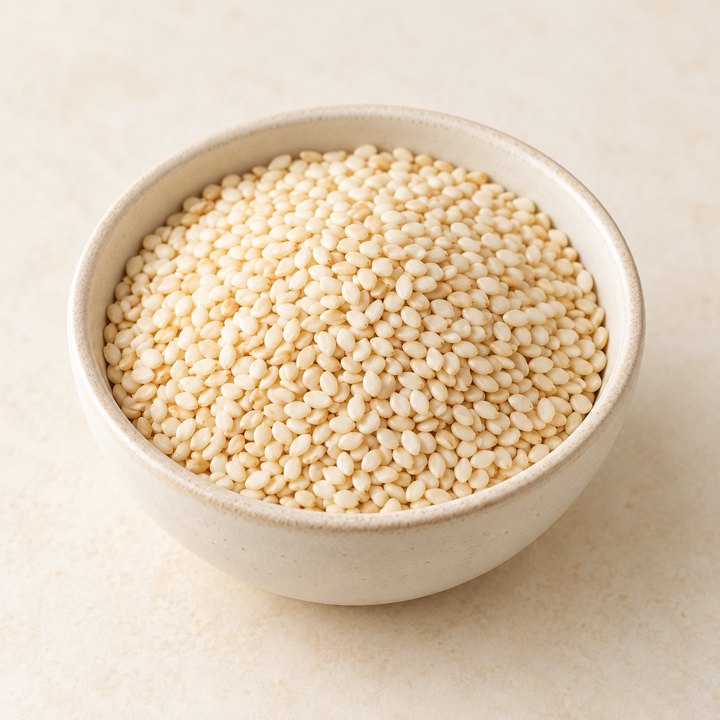
Til is sold as natural unhulled seed and as paler hulled seed. The white sesame used here is usually chosen for a mild flavour and attractive topping.
What it is and what to buy
Til is sold as natural unhulled seed and as paler hulled seed. The white sesame used here is usually chosen for a mild flavour and attractive topping. Black sesame is not merely white sesame burnt dark; it is a different colour type with its own market uses. A very small seed size does not make it allergenically insignificant. Sesame can be visible on naan or ground invisibly into a salan and sweet.
Sesame is the small oil-rich seed of Sesamum indicum and is called til in Urdu. White, cream, brown and black seeds occur in trade; hulling removes the outer coat and changes colour, flavour and nutrient distribution. Tahini is a paste made by grinding sesame, usually hulled seeds, rather than a separate botanical ingredient. A jar of plain tahini is also different from a ready-mixed tahini sauce that already contains water, lemon, garlic or salt.
Origins and food history
Sesame has a long history as an oilseed and food crop in Africa and Asia, including ancient South Asian agriculture. Its exact domestication history is more complex than a simple discovery story. No named inventor can be reliably assigned to the seed, and an ancient use of sesame oil does not precisely date the first modern tahini recipe. Regional cuisines developed their own roasting, grinding, bread-topping and sweet-making uses over time.
Reference: Kew: sesame native range.
Growing regions, trade and Pakistan
Sesame is grown in India, Sudan, Myanmar, Nigeria, Ethiopia, Türkiye and Pakistan, among other countries. Pakistan participates in sesame exports as well as domestic food use. The Netherlands and Germany are important European trading destinations, while Mediterranean markets use sesame in breads, sweets and pastes. Buyers distinguish hulled and natural seed, colour, cleanliness and microbial quality. Processing and packing can occur in a different country from cultivation, so a tahini brand’s address is not necessarily the seed origin.
Reference: CBI: sesame and Pakistan trade.
How to prepare and cook it
Dry-toast seed gently in a pan, stirring and watching closely because small seeds can scorch before they look dramatically coloured. Cool before grinding a spice or nut paste. For naan, apply the seed so it adheres to the surface before baking; loose seed scattered after cooking falls away. In gachak, the temperature and consistency of the sugar or jaggery syrup determine the set, while sesame contributes crunch and flavour. Add to a sauce in the form the recipe specifies: whole seed and a smooth paste create different textures.
Put this form of the ingredient to work in Mirchi Ka Salan; Roghni Naan; Gachak. The method in each recipe determines whether it should be raw, soaked, ground, freshly cooked or chilled before it enters the dish.
Nutrition, benefits and their limits
Sesame supplies mostly fat, including unsaturated fats, with protein, fibre and minerals. Hulled and unhulled forms differ substantially in some mineral values; calcium figures for whole unhulled seed should not automatically be applied to a spoon of pale tahini. Portion size matters because the seeds and paste are energy dense. Sesame can add useful flavour and dietary variety, but a sprinkling does not replace a balanced meal or justify claims that it independently treats bone disease.
Allergies, disadvantages and safe handling
Sesame is an important food allergen, including when ground invisibly into a sauce or mixed into bread dough. Roasting does not remove that risk. Seeds and tahini have also been associated with microbial contamination, so buy reputable products and heed recalls rather than assuming a dry seed or oily paste is sterile. For someone avoiding gluten, plain sesame is naturally gluten-free, but bakery mixtures and sauces may contain wheat. Confirm all the ingredients in a substitute.
Practical substitutions
Poppy seed, suitable crushed nuts or other tolerated seeds can change a sauce’s body but do not reproduce sesame’s exact flavour. Nigella is a strongly flavoured bread topping, not a direct equivalent by quantity. Tahini supplies ground sesame and oil, so substituting it for dry seed needs recipe adjustments.
Keeping it fresh
Store seed in an airtight container protected from heat and light; refrigerate larger quantities in warm conditions. Ground tahini is particularly sensitive to stale flavours after opening. Follow the jar’s storage directions, use clean utensils and stir normal oil separation thoroughly before measuring. Once tahini is diluted with water or lemon for a sauce, treat it as a perishable prepared food and refrigerate promptly. Dry seed, unopened paste and freshly mixed sauce should not be given the same storage instructions.
For related ingredients and shopping terms, see the Pakistani ingredients and spices pantry guide.
Working with other forms of this ingredient
Tahini
Tahini is a ground sesame paste, typically fluid enough to stir or pour after its separated oil is mixed back in. Hulled tahini is usually paler and milder, while whole-seed versions can taste more robust and bitter. Plain tahini normally has a short ingredient list. A jarred tahini dressing with water, lemon, garlic, salt or preservatives is already a prepared sauce and should not be measured as if it were pure sesame paste.
Sesame is the small oil-rich seed of Sesamum indicum and is called til in Urdu. White, cream, brown and black seeds occur in trade; hulling removes the outer coat and changes colour, flavour and nutrient distribution. Tahini is a paste made by grinding sesame, usually hulled seeds, rather than a separate botanical ingredient. A jar of plain tahini is also different from a ready-mixed tahini sauce that already contains water, lemon, garlic or salt.
Stir the jar thoroughly before measuring. When lemon juice or a little water first meets tahini, the mixture may become pale and surprisingly thick; keep whisking and add water gradually until it loosens into a smooth sauce. This temporary thickening is normal and does not mean the paste has curdled. For shawarma, balance acidity, garlic and salt only after the texture is right. A sauce that looks thin while warm may thicken as it rests, so adjust close to serving.
Put this form of the ingredient to work in Beef Shawarma. The method in each recipe determines whether it should be raw, soaked, ground, freshly cooked or chilled before it enters the dish.
Names and forms used in our recipes
View the recipe names covered by this guide
- sesame seed
- sesame seeds
- tahini
- white sesame seeds
Frequently Asked Questions
Should sesame always be toasted?
No. Toast only when the recipe wants roasted flavour. Seeds on bread may toast during baking.
Is white sesame always hulled?
Not always. Colour alone does not reliably establish hulling. Read the product description if the distinction matters.
Keep Exploring
Related places and stories on DailyLife.pk

How we know this
- Type Explainer
- Sources 5 (2 official/academic)
- Reviewed November 2026
- Disputed points None
