
Ingredients & Spices · The complete guide
Sago (Sabudana)
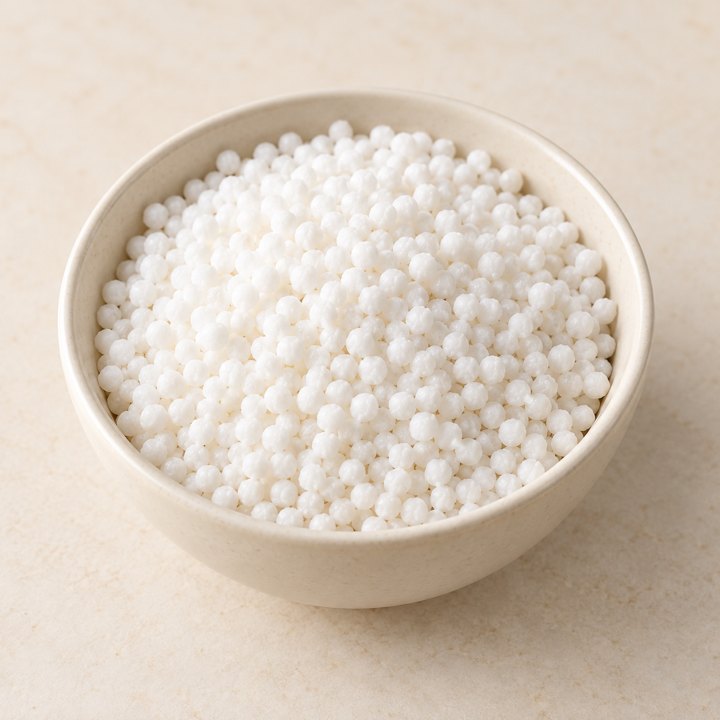
Sago or sabudana is a potentially ambiguous market name. True sago starch comes from the pith of sago palms, especially Metroxylon sagu.
What it is and what to buy
Sago or sabudana is a potentially ambiguous market name. True sago starch comes from the pith of sago palms, especially Metroxylon sagu. In South Asian retail markets, pearls called sabudana may instead be made from cassava or tapioca starch. The small pearls in gil-e-firdaus need the type and size specified by the recipe. Both can provide translucent starch pearls, but they are not botanically the same ingredient and may hydrate at different speeds.
A cooking starch is separated from a plant’s starch-rich tissues and processed into a fine powder or pearls. It is not equivalent to grinding the entire grain, root or palm pith into a whole-food flour. When heated with water, starch granules absorb liquid and swell, thickening the mixture. The botanical source, degree of processing and any pregelatinisation influence clarity, viscosity and texture. These practical differences explain why two white powders can produce quite different sauces or coatings.
Origins and food history
True sago is linked to longstanding food traditions of New Guinea and Southeast Asian wetland regions, where the palm’s trunk pith supplies a staple starch. FAO distinguishes this palm starch from tapioca obtained from cassava roots. Cassava itself is an American crop with a different agricultural history. A shop name that groups the pearls together does not erase these separate origins. No individual inventor or exact first date is asserted for sago pearls in South Asian desserts.
Reference: FAO: Metroxylon sagu crop profile.
Growing regions, trade and Pakistan
Indonesia, Malaysia and Papua New Guinea are important true-sago growing and processing areas. Tapioca pearl supply instead connects to cassava-growing and starch-processing countries, including Thailand, Vietnam and India. Pakistan’s sabudana market can therefore contain imported products with different raw-material origins. A packet’s processing country is not necessarily the growing source. Buy a clearly labelled food-grade product and compare pearl size and preparation instructions rather than assuming every white bead called sago will cook alike.
Reference: FAO: starch products including sago.
How to prepare and cook it
Check the packet’s starch source and preparation directions before soaking. Some small pearls cook directly in liquid, while other products need a measured soak first. Rinse only if instructed, because careless soaking can leave the outside gummy while the centre remains hard. Simmer gently, stir to prevent sticking and judge the centre of the largest pearl. Add milk and sugar at the recipe’s prescribed stages. The pudding will thicken further during cooling, so stop at the correct hot consistency rather than reducing it until already spoon-stiff in the pan.
Put this form of the ingredient to work in Gil E Firdaus. The method in each recipe determines whether it should be raw, soaked, ground, freshly cooked or chilled before it enters the dish.
Nutrition, benefits and their limits
Purified starch primarily supplies carbohydrate. It generally contributes much less protein, fibre and micronutrient variety than a wholegrain flour or pulse flour. This does not make a spoonful used to thicken a family pot nutritionally significant in the same way as a large serving used as a staple. Balance starch-based foods with protein, vegetables and other nutrient-rich ingredients. A naturally gluten-free botanical source is useful, but a retail product still needs appropriate labelling if strict gluten avoidance is required.
Allergies, disadvantages and safe handling
Raw starch is not a ready-to-eat supplement and should be cooked according to its intended use. Allergy to its source plant is possible, and mixtures may contain additional ingredients. Thickened foods still contain carbohydrate; transparency or a silky texture does not make them suitable for unlimited portions in a diabetes meal plan. Hot starch gels can hold heat and burn the mouth. Let puddings and sauces cool to a safe eating temperature, especially when serving children.
Practical substitutions
Tapioca pearls and true sago pearls can sometimes be exchanged when size and hydration are matched, but test a small amount first. Large bubble-tea pearls are not a direct replacement for small pudding pearls. Rice can thicken a dessert but gives a different grain texture. Cornstarch thickens the liquid without creating separate pearls.
Keeping it fresh
Keep dry starch in an airtight container with a clean dry scoop. Humidity causes clumping and creates opportunities for spoilage; never return a wet measuring spoon to the packet. Check the product label for storage and best-before guidance, particularly for fresh or partially hydrated products. Once starch has been cooked into a sauce or pudding, the finished dish is perishable and needs prompt chilling. Its storage life then depends on milk, meat, vegetables and other recipe ingredients as well as the starch.
For related ingredients and shopping terms, see the Pakistani ingredients and spices pantry guide.
Names and forms used in our recipes
View the recipe names covered by this guide
- small sago pearls
Frequently Asked Questions
Is sabudana always made from a palm?
No. Many products sold under that name are tapioca or cassava starch pearls. Read the label for the botanical source.
Why are the pearls hard in the centre?
The product may need more hydration or cooking, or the wrong pearl size may have been used. Follow the packet and test the largest pearl.
Keep Exploring
Related places and stories on DailyLife.pk

How we know this
- Type Explainer
- Sources 5 (2 official/academic)
- Reviewed November 2026
- Disputed points None
