
Ingredients & Spices · The complete guide
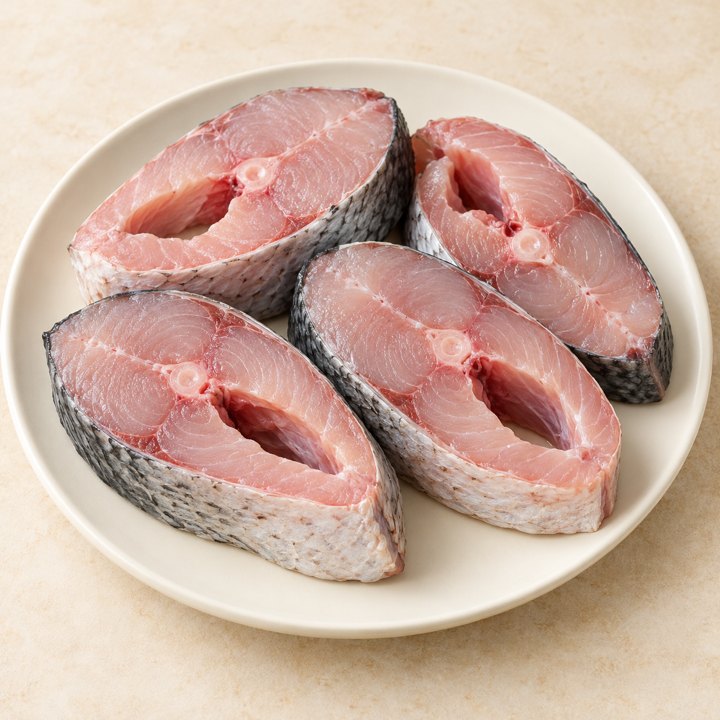
Rohu steaks
Rohu steaks are cross-cut pieces of Labeo rohita, a South Asian freshwater carp. Rohu is also called rahu in some markets; it is not the same fish as marine white-fish fillet.
What it is and what to ask for
Rohu steaks are cross-cut pieces of Labeo rohita, a South Asian freshwater carp. Rohu is also called rahu in some markets; it is not the same fish as marine white-fish fillet.
Choose even steak thickness and ask for proper scaling and gutting before cutting. Rohu contains fine bones beyond the central spine, so a cross-cut steak is not a boneless portion.
History, production and the Pakistan context
Rohu has long been used in river fisheries, while modern induced breeding and pond polyculture expanded reliable supply. FAO documents its role among the region's major farmed carps.
India, Bangladesh and Pakistan produce rohu. In Pakistan it is associated with carp pond culture as well as market fish sales; a steak's precise source depends on the supplier.
How to use it successfully
Salt and spice evenly, blot before coating for Lahori fried fish, and turn gently. In curry, add steaks without aggressive stirring so the flesh stays attached to its central bone.
Fish scales can remain trapped at the skin edge after cross-cutting. Ask for careful scaling before the steaks are made and inspect each portion before seasoning. In frying, a dry surface helps gram-flour coating adhere. Let the coating set before turning; repeated early movement can detach skin and flesh from the central bone.
Nutrition, benefits and limits
Rohu supplies protein and some fish fats, but should not be assigned the same omega-3 content as salmon. Fine bones require careful serving, especially for children.
Choosing a replacement
Another firm bone-in carp steak can work, with attention to bones and flavour. Boneless sea-fish chunks simplify eating but alter the structure and cooking time.
When changing seafood, compare thickness, firmness, bones or shells and whether it is raw or already cooked. Preserve the recipe’s cooking logic rather than only its purchase weight. Ask for the actual species, because a similar market name does not establish identical allergy, mercury or nutrition considerations.
Safe handling and storage
Buy fish from an effective cold display and keep it cold on the journey home. FDA advises using refrigerated seafood within two days or freezing it. Store raw fish in a leakproof container separate from foods served without further cooking, and thaw frozen portions in the refrigerator rather than leaving them on a warm counter.
Check for scales, pin bones and packaging instructions before seasoning. Acidic marinades can change the surface texture, but lemon juice does not reliably make raw fish safe. A fresh smell and firm flesh are useful quality observations, not laboratory tests for every pathogen or contaminant. Avoid using an unidentified common name to assign exact mercury advice.
FoodSafety.gov lists 63°C/145°F for finfish. Measure the thickest flesh with a thermometer without touching the pan or a bone. For whole fish, check more than one thick area if needed. Refrigerate leftovers promptly, and follow FDA–EPA species-specific fish advice for pregnancy, breastfeeding and children. Vary the species eaten; removing skin or cooking longer does not reliably remove mercury from the flesh.
Planning, portions and serving
For Sindhi-style curry, build the sauce first and add steaks in a layer that allows gentle movement without repeated stirring. For fried fish, serve promptly after draining so the coating stays crisp. Explain the fine-bone issue even if the fish has been professionally cut. If making a bone-free adaptation with fillets, reduce handling and cooking to suit their thinner structure rather than reproducing the steak method minute for minute.
Recipes and pantry links
Use rohu steaks according to the form specified in the linked recipe: raw versus cooked, bone-in versus boneless, sweetened versus plain, and the stated cut or processing style all affect the result. The ingredient discussion above explains which differences matter most here. Read the complete recipe before shopping, then measure the prepared usable quantity rather than assuming every package has the same yield.
For related ingredient names, local terminology and flavour pairings, browse the Pakistani ingredients and spices pantry guide.
Names and forms used in our recipes
View the recipe names covered by this guide
- firm bone-in fish steaks
- rohu steaks
Frequently Asked Questions
Are rohu steaks boneless apart from the centre?
No. Fine bones can remain throughout the flesh in addition to the central spine. Serve carefully, especially to children, and do not describe a cross-cut steak as a boneless fillet.
What should I check before buying rohu steaks for these recipes?
Choose even steak thickness and ask for proper scaling and gutting before cutting. Rohu contains fine bones beyond the central spine, so a cross-cut steak is not a boneless portion. Keep the recipe’s cut and prepared weight in mind, because changing them affects cooking and serving yield.
What is a practical substitute for rohu steaks?
Another firm bone-in carp steak can work, with attention to bones and flavour. Boneless sea-fish chunks simplify eating but alter the structure and cooking time. Make a small test where binding, melting or a delicate final texture is central, and adjust the recipe rather than treating different ingredients as identical.
Keep Exploring
Related places and stories on DailyLife.pk

How we know this
- Type Explainer
- Sources 8 (4 official/academic)
- Reviewed November 2026
- Disputed points None
8 sources
- FAO GLOBFISH: species production and trade analysis
- FAO: edible yield and composition of commercial fish species
- FDA: selecting and serving fresh and frozen seafood safely
- FDA–EPA: advice about eating fish
- FoodSafety.gov: cold food storage chart
- FDA: food allergies
- FAO: cultured aquatic species — Labeo rohita
- FAO: freshwater fish culture in Pakistan
