
Ingredients & Spices · The complete guide
Ricotta
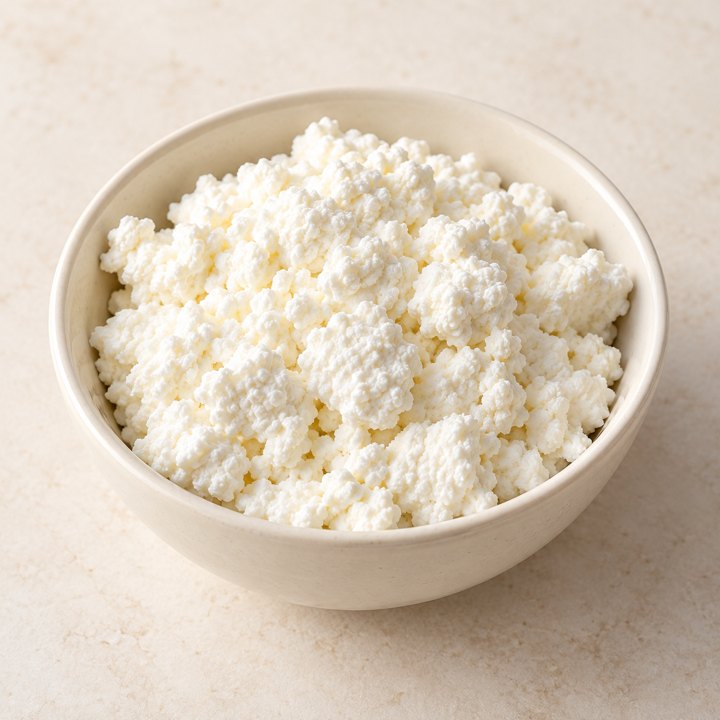
Ricotta is a soft fresh cheese traditionally made by recovering proteins from whey, though modern retail products may also include milk or cream. It is moist and grainy rather than stretchy.
What it is and what to ask for
Ricotta is a soft fresh cheese traditionally made by recovering proteins from whey, though modern retail products may also include milk or cream. It is moist and grainy rather than stretchy.
Choose pasteurised, chilled ricotta and check whether it is salted or enriched with cream. A tub with substantial free liquid can make a crust or pastry soggy unless drained.
History, production and the Pakistan context
The Italian name refers to recooking, reflecting a way to use whey left from other cheese making. Modern commercial formulas broaden that traditional process, so product labels matter.
Italy produces traditional ricotta, and many dairy industries elsewhere make milk-enriched versions. Pakistani shoppers may encounter imports or local fresh alternatives with different moisture contents.
How to use it successfully
Drain excess liquid before using on pizza or in a filling. Fold gently to preserve its light texture; it does not form the elastic layer expected from mozzarella.
Excess whey can collect after a tub is opened. Drain only as much as the intended filling needs, because over-draining can make the result dry. For a pizza topping, small spoonfuls distribute more evenly than a thick continuous layer. For a smooth dessert, a brief whisk or sieve can refine texture without pretending ricotta is naturally mascarpone-smooth.
Nutrition, benefits and limits
Ricotta supplies dairy protein, with fat and calcium varying by formulation. Its fresh high-moisture nature means that opening and refrigeration instructions deserve close attention.
Choosing a replacement
Well-drained fresh paneer crumbled finely can approximate some fillings but is firmer. Cottage cheese is often saltier and curdier; mascarpone is richer and smoother.
When changing a dairy product, compare moisture, fat, acidity, sweetness and whether it must melt, whip or hold its shape. Preserve the recipe’s functional balance rather than only the spoonful count. A substitute should also meet the household’s actual dietary requirement; similar texture does not establish identical allergen suitability.
Safe handling and storage
Choose a product made from pasteurised dairy ingredients and keep it refrigerated according to the pack. Fresh high-moisture cheeses need particularly careful cold handling. Use clean utensils, reseal promptly and note the opening date; the unopened shelf life does not continue unchanged after a container has been opened.
Follow specific storage directions for liquid-packed or brined cheese rather than assuming every soft cheese should be stored in water. A product intended for baking may have a different moisture level from a spreadable tub. If mould or another clear spoilage change develops in soft cheese, do not scrape the surface and use the rest; its moisture allows contamination beyond the visible spot.
Freezing can alter graininess, whey separation and the ability to spread smoothly, so reserve frozen portions for cooked uses only when the producer permits it and quality remains acceptable. Milk allergy is different from lactose intolerance: a lower-lactose cheese can still contain allergenic proteins. Compare portions by weight when judging fat, sodium or protein because a loosely crumbled spoonful is not equivalent to a dense block of the same apparent volume.
Planning, portions and serving
Ricotta can lighten the texture of a mixed cheese topping because it remains in soft curds rather than becoming one elastic sheet. Distribute in small portions and account for moisture in the sauce beneath it. For a savoury filling, season gently before adding a salty hard cheese. For a dessert, check whether the product is already salted and avoid automatically adding cream until the actual texture and richness have been assessed.
Recipes and pantry links
Use ricotta according to the form specified in the linked recipe: raw versus cooked, bone-in versus boneless, sweetened versus plain, and the stated cut or processing style all affect the result. The ingredient discussion above explains which differences matter most here. Read the complete recipe before shopping, then measure the prepared usable quantity rather than assuming every package has the same yield.
For related ingredient names, local terminology and flavour pairings, browse the Pakistani ingredients and spices pantry guide.
Names and forms used in our recipes
View the recipe names covered by this guide
- ricotta
Frequently Asked Questions
Can ricotta stretch across a pizza like mozzarella?
No. Ricotta softens into moist curds rather than forming an elastic layer. Use it in small drained spoonfuls and combine with a melting cheese if the recipe also needs stretch.
What should I check before buying ricotta for these recipes?
Choose pasteurised, chilled ricotta and check whether it is salted or enriched with cream. A tub with substantial free liquid can make a crust or pastry soggy unless drained. Match the stated plain or flavoured form and read the storage directions before opening the pack.
What is a practical substitute for ricotta?
Well-drained fresh paneer crumbled finely can approximate some fillings but is firmer. Cottage cheese is often saltier and curdier; mascarpone is richer and smoother. Make a small test where binding, melting or a delicate final texture is central, and adjust the recipe rather than treating different ingredients as identical.
Keep Exploring
Related places and stories on DailyLife.pk

How we know this
- Type Explainer
- Sources 8 (3 official/academic)
- Reviewed November 2026
- Disputed points None
8 sources
- FAO: dairy product types and characteristics
- FAO: milk processing
- FAO: traditional milk products in developing countries
- FAO: milk and dairy products in human nutrition
- OECD–FAO: dairy production and trade context
- FDA: raw milk questions and answers
- NIDDK: lactose intolerance definition and facts
- FDA: food allergies
Photo credits (1)
- Milk glass.jpg, Stefan Kühn, CC BY-SA 3.0, via Wikimedia Commons
