
Ingredients & Spices · The complete guide
Prepared jalebi
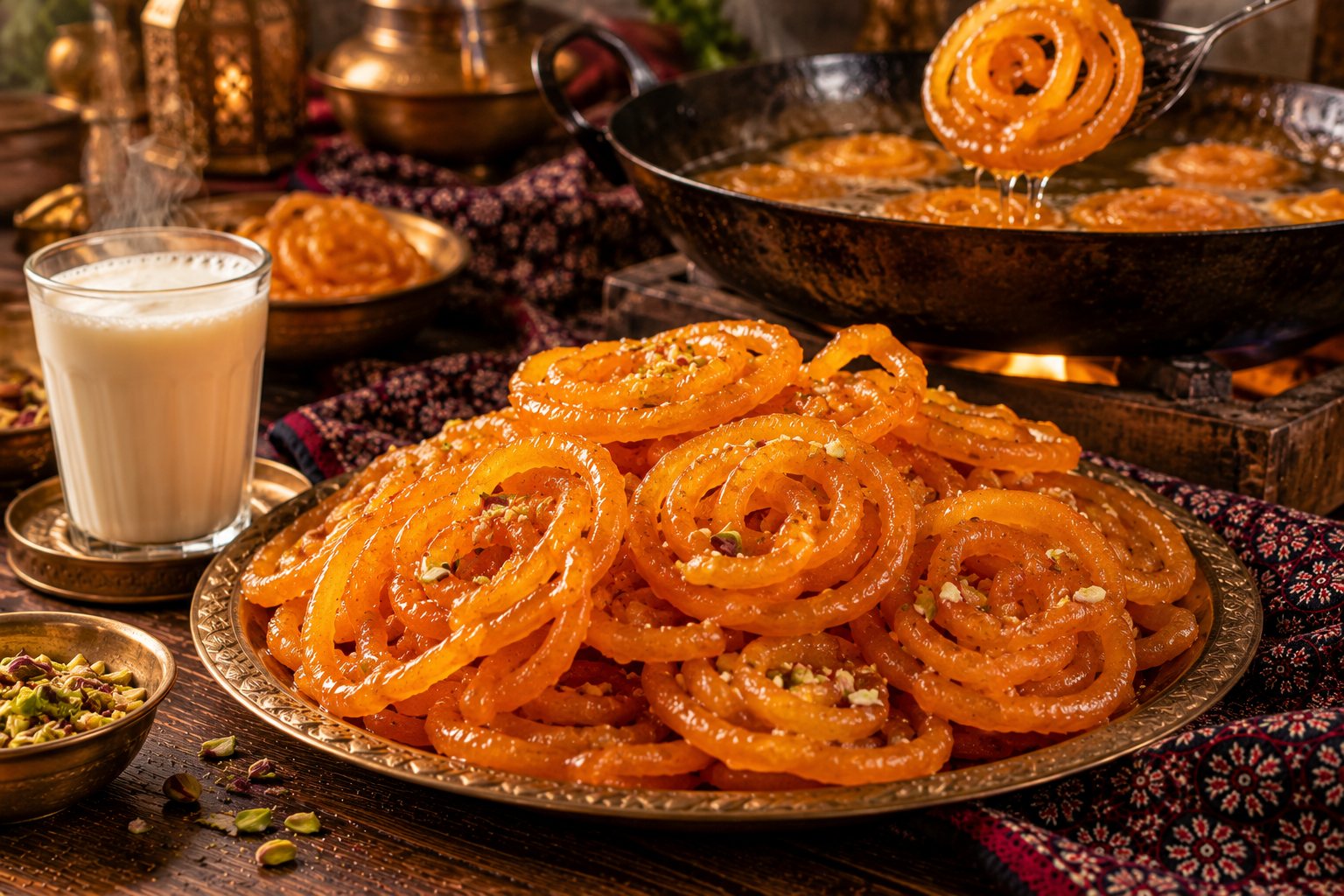
Prepared jalebi is a fried coiled batter sweet saturated with sugar syrup. In Pakistan it is bought fresh from sweet shops and used in doodh jalebi as well as eaten alone.
What it is and local names
Prepared jalebi is a fried coiled batter sweet saturated with sugar syrup. In Pakistan it is bought fresh from sweet shops and used in doodh jalebi as well as eaten alone. It is different from an uncooked batter or a dry instant mix.
Origins and documented history
Jalebi has a broader history connected with West Asian zulabiya and South Asian fried syrup sweets. Similar names do not prove that every regional method is identical. A precise first inventor or one exclusive country of origin is not claimed here.
Types and manufacture
Batter is piped into hot oil in coils, fried and dipped into syrup. Some methods ferment batter; others use a faster acid-and-leavener approach. Flour, gram flour, starch, colour and flavouring vary. Thick soft jalebi differs from a thin crisp freshly fried version.
Production, trade and Pakistan
Pakistan and India both have extensive fresh jalebi production, and packaged versions are sold through diaspora trade. Fresh texture depends on local frying, syruping and holding. Imported flour or sugar does not define where the finished sweet was made.
How to use it
For doodh jalebi, add pieces to safe warm or chilled milk according to the recipe and serve promptly. Expect the coil to soften. Fresh crisp jalebi gives a stronger contrast than an already wet piece, while excessive packing syrup makes the milk too sweet.
Nutrition, benefits and limits
It mainly contributes refined carbohydrate, sugar and frying fat. Milk in doodh jalebi supplies additional protein and minerals, but does not remove the sweet’s energy density. Use a measured portion rather than an undefined handful.
Drawbacks, allergens and precautions
Wheat is common and milk, pulses or shared-fryer allergens may occur. The combined milk dessert is perishable. Very bright colour is not proof of quality, and stale oil flavour is a reason to reject the batch.
Substitutions and storage
Another fried syrup sweet can make a different milk dessert, but no substitute recreates jalebi’s thin coils. For a simpler variation, use a small portion of plain crisp pastry and measured syrup, acknowledging the changed texture.
Follow the supplier’s directions and eat fresh for crispness. Keep separate from milk until serving. Refrigerate any milk mixture promptly; reheating cannot reliably restore the original crisp texture.
Crispness and syrup balance
A jalebi’s contrast comes from fried structure and absorbed syrup. Leaving it in syrup for a long time makes it softer, while a thin fresh piece may remain crisp briefly. For a milk dessert, decide whether the intended result is an immediate crisp contrast or a fully softened sweet. Add only the amount of packing syrup needed for flavour. Extra syrup adds both water and sugar, so it can turn a balanced bowl of milk into an overly sweet thin mixture.
Choosing a fresh batch
Look for a supplier with clean covered handling and a fresh turnover. The smell of old frying oil or a stale greasy coating is a useful reason to choose another batch. Colour is less informative: a bright orange can come from added colouring rather than a special ingredient or superior frying. Check thickness and sweetness with a small purchase if using an unfamiliar shop for a large dessert. Very thick coils absorb and soften differently from thin ones, so count by weight when consistency matters.
Combining with milk
Use milk that has been safely treated and stored, and follow the intended hot or cold recipe. Warm jalebi can melt a frozen dairy component, while hot milk rapidly softens the fried shell. Assemble only the amount that will be served soon if texture matters. A dry sweet’s handling instructions do not transfer to the mixed dairy dessert. Keep a chilled reserve of milk and add fresh measured sweet pieces for later servings rather than leaving one large assembled batch warm on a counter.
Portioning and alternatives
A small portion can provide considerable sweetness because syrup is distributed through a fried batter structure. Balance the amount against any extra sugar in the milk, and taste before adding another spoon. A different fried sweet will give another shape, density and soaking behaviour, so call the variation by its own name. For serving ahead, keeping the components separate usually preserves quality better than trying to restore crispness after soaking. Reheating can warm a sweet but cannot reverse all the structural changes caused by absorbed milk.
Recipes and the Pakistani pantry
Use this ingredient in Doodh Jalebi. Explore related ingredients in the Pakistani ingredients and spices pantry.
Names and forms used in our recipes
View the recipe names covered by this guide
- prepared fresh jalebi
Frequently Asked Questions
What should I check when buying prepared jalebi?
Choose a fresh batch without a stale oil aroma. Check coil thickness, ingredients and handling rather than judging quality by bright colour.
What can replace prepared jalebi in a recipe?
Another fried syrup sweet can make a different milk dessert, but no substitute recreates jalebi’s thin coils. For a simpler variation, use a small portion of plain crisp pastry and measured syrup, acknowledging the changed texture.
How should prepared jalebi be stored?
Follow the supplier’s directions and eat fresh for crispness. Keep separate from milk until serving.
Keep Exploring
Related places and stories on DailyLife.pk

How we know this
- Type Explainer
- Sources 5 (3 official/academic)
- Reviewed November 2026
- Disputed points None
5 sources
Photo credits (1)
- Jalebi (illustration), DailyLife.pk, Illustrative image
