
Ingredients & Spices · The complete guide
Pickle relish
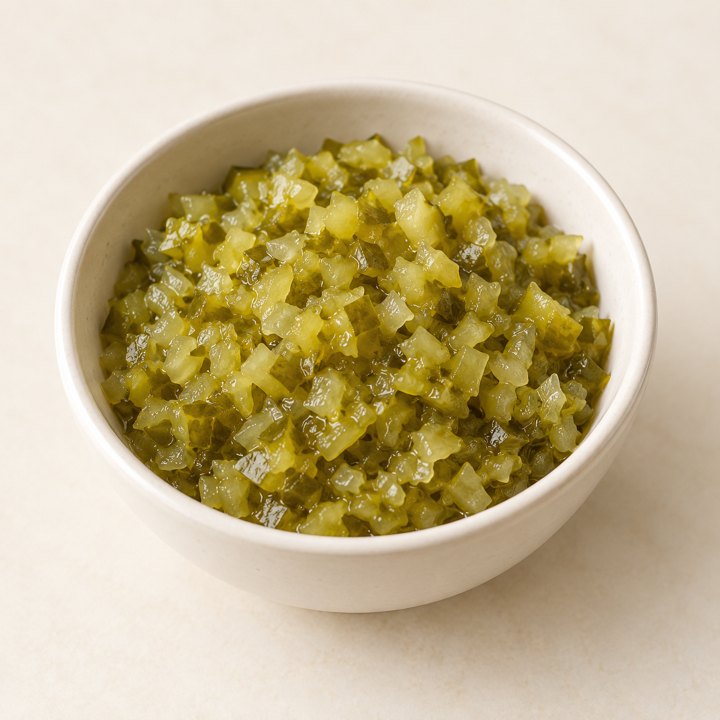
Pickle relish is finely chopped preserved vegetables, usually cucumber, suspended in a seasoned liquid. Sweet relish and dill relish are different condiments.
What it is and names used in Pakistan
Pickle relish is finely chopped preserved vegetables, usually cucumber, suspended in a seasoned liquid. Sweet relish and dill relish are different condiments.
Origin and historical context
Relishes belong to broad preserving and condiment traditions; the modern jarred cucumber form is especially familiar in North American sandwich service.
Types, manufacture and buying
Vegetables are chopped, salted or drained, acidified and often sweetened before commercial packing. Mustard seeds, peppers and thickeners may be added.
Check whether the food is preserved in vinegar, fermented brine, salt or oil, since the surrounding liquid affects flavour, sodium and handling. A chilled fermented product is not necessarily interchangeable with a heat-processed shelf-stable jar. Look for intact seals, clear identification and a storage instruction you can follow. The liquid may contain sugar, spices, mustard or other ingredients absent from the fresh vegetable. Drained weight can be more useful than total jar weight when comparing how much food is actually supplied.
Reference: National Center for Home Food Preservation: General information on pickling.
Production, trade and the Pakistani pantry
Relish is made by pickle manufacturers in many countries, and Pakistan has access to local sauces as well as imported jars.
Cooking uses and practical substitutions
Fold a little into burger sauce or serve on hot dogs. Drain excess liquid if the bread is soft. Chopped dill pickles substitute for a less sweet result; add sweetness separately only if wanted.
Take out portions with a clean utensil and let excess liquid drain before putting them into bread or onto a pizza base. Add a small quantity first, because preserved ingredients season the dish as well as adding texture. If rinsing to soften saltiness, rinse only the portion about to be eaten rather than diluting the whole storage jar. Do not return food from a serving plate to the jar. Use fresh acid and seasonings for homemade substitutes, recognising that a quick flavour adjustment is not a validated long-term preservation process.
Nutrition, benefits and limitations
Preserved vegetables and fruits can bring useful variety and flavour, but small condiment portions usually supply fewer nutrients than a full serving of fresh produce. Sodium often comes from the cure or brine, and sweet versions can also contain substantial added sugar. Draining and rinsing may reduce surface salt, though the result is not salt-free. Fermented products are not automatically probiotic, particularly after heat processing. The nutritional value of an oily pickle also includes its oil; a thin coating and a large spoonful of oil are quite different portions.
Sweet versions can contribute both sodium and added sugar. Mustard and other ingredients require allergen review.
Practical notes and common mistakes
Relish can replace separate pickle pieces in a sauce, but its added liquid needs attention. Drain a spoonful if the burger sauce must remain thick, then adjust the mayonnaise or yogurt gradually. Sweet relish and dill relish should not be treated as interchangeable without tasting: one may supply a noticeable sugar note. For hot dogs, place it where the bun can support the chopped vegetables. A jar of chopped pickles remains a preserved product with storage instructions, not a condiment that can be left open indefinitely on the counter.
Storage and safe handling
Follow the product’s refrigeration instructions after opening and keep food covered by its intended preserving medium where the label requires it. Avoid adding water, fresh vegetables or leftover brine from another jar, because that changes the formulation. For home canning, use a tested recipe with specified acid strength and proportions; sour taste alone is not a safety test. A refrigerator pickle is not automatically safe on a pantry shelf. Discard mouldy, leaking or unexpectedly swollen products, and never taste a suspicious preserved food to decide whether it is safe.
Recipes and related pantry reading
Use the form and quantity specified in each recipe, then adjust for the concentration, salt and moisture of the product you have bought. These dishes show where the ingredient fits in a complete preparation.
For related local names and pantry ingredients, see the Pakistani ingredients and spices guide.
Names and forms used in our recipes
View the recipe names covered by this guide
- dill pickle relish
Frequently Asked Questions
Is sweet relish the same as dill relish?
No. Sweetness and seasoning differ, so taste before substituting.
Why drain relish for a sandwich sauce?
Excess preserving liquid can thin the sauce and make soft bread soggy.
Keep Exploring
Related places and stories on DailyLife.pk

How we know this
- Type Explainer
- Sources 2 (2 official/academic)
- Reviewed November 2026
- Disputed points None
