
Ingredients & Spices · The complete guide
Papri
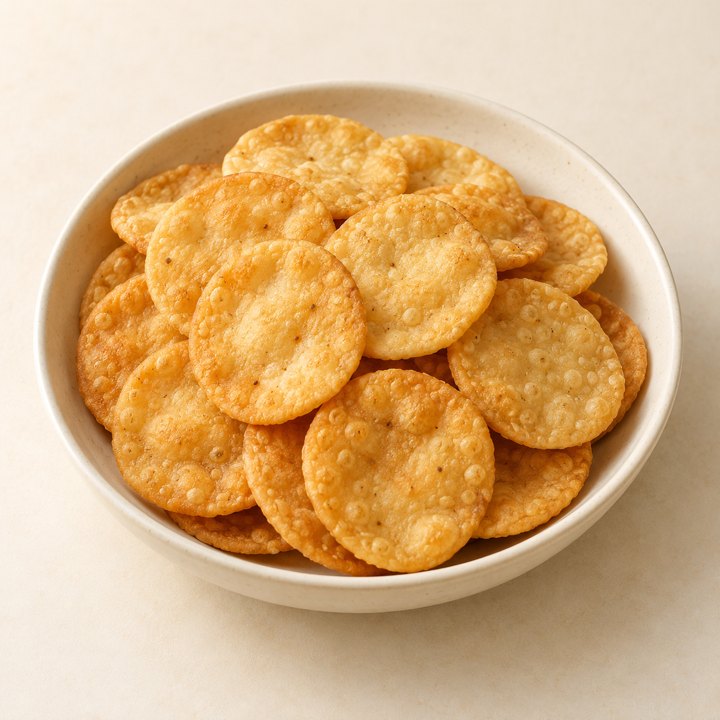
Papri are thin crisp savoury crackers, often made from wheat flour, used as the crunchy base of chaat. Papdi is another common spelling.
What it is and names used in Pakistan
Papri are thin crisp savoury crackers, often made from wheat flour, used as the crunchy base of chaat. Papdi is another common spelling.
Origin and historical context
They belong to South Asian snack and chaat traditions, which evolved through regional street-food and household cooking rather than one documented inventor.
Types, manufacture and buying
A stiff flour dough, often containing fat, salt and ajwain or cumin, is rolled thin, docked and fried. Baked versions and different flour blends are also sold.
Match crumb size to the intended result. Fine crumbs make a more continuous coating or smooth binder; larger flakes create a rougher crisp surface. Plain products offer more seasoning control than cheese- or herb-flavoured versions. Read the full bread ingredient list where available, because crumbs can carry milk, egg, sesame, soy and wheat from their source loaf. A product called golden may have seasoning or colour added. Compare dry products with other dry products; fresh crumbs contain more water and should not be substituted blindly by weight.
Further reference: Nimco Bazaar Pakistan: Papri types and chaat uses.
Production, trade and the Pakistani pantry
Pakistani snack shops and packaged-food manufacturers produce papri locally, as do Indian and other South Asian producers.
Reference: Trade Development Authority of Pakistan: FoodAg 2025 manufacturer directory.
Cooking uses and practical substitutions
Layer papri chaat just before serving so yogurt and chutney soften only part of the cracker. Broken papri can garnish dahi bhallay. Plain crisp crackers substitute, but adjust salt and expect a different spice profile.
Keep crisp crackers dry until the final assembly stage. Wet yogurt, chutney and cooked pulses soften them quickly, so serve a layered chaat promptly if crunch is the aim. For a larger gathering, keep the wet and dry components separate and assemble small batches. Drain cooked ingredients before spooning them onto the base. Broken pieces can still be used as a topping when clean and fresh. Baking an alternative dough requires an appropriate recipe rather than simply placing raw deep-fry dough in an oven and expecting the same puff and texture.
Nutrition, benefits and limitations
These crackers mainly provide refined-wheat carbohydrate and some protein, with additional fat when fried or enriched. The completed chaat can also contain useful pulses, yogurt and vegetables, although sweet sauces and extra salt may increase sugar and sodium. A crisp texture is not evidence of low fat. Portioning the dry base before adding toppings makes the serving easier to judge. Wheat is usual, while recipes or shared frying oil may introduce other allergens. People avoiding gluten need a verified suitable alternative and compatible toppings rather than simply omitting visible bread crumbs.
Traditional papri is often fried and refined-flour based; wheat and possible shared-oil allergen exposure matter.
Practical notes and common mistakes
A papri chaat is easier to balance when the crisp base is portioned first and the wet toppings are added in thin layers. Too much yogurt at once hides the crackers and can make the dish heavy before the chutneys are distributed. Keep cooked chickpeas or potatoes drained and cooled appropriately, then assemble close to serving. If using salted crackers as a substitute, reduce salt in the other toppings. Leftover dry papri can be kept separately, while a completed wet chaat should be treated as a perishable dish.
Storage and safe handling
Dry crumbs need an airtight container in a cool dry place, away from steam and insects. Homemade crumbs should be fully dried and cooled before sealing; residual moisture shortens keeping quality. Fresh soft crumbs should be refrigerated briefly or frozen rather than treated like a dry cupboard ingredient. Discard musty, mouldy or rancid crumbs. Once crumbs have contacted raw meat, fish, egg or a wet coating mixture, do not return them to the clean storage jar. Keep a small working portion separate and discard contaminated leftovers.
Recipes and related pantry reading
Use the form and quantity specified in each recipe, then adjust for the concentration, salt and moisture of the product you have bought. These dishes show where the ingredient fits in a complete preparation.
For related local names and pantry ingredients, see the Pakistani ingredients and spices guide.
Names and forms used in our recipes
View the recipe names covered by this guide
- papri crackers
- papri or sev
Frequently Asked Questions
When should papri chaat be assembled?
Close to serving, so wet toppings do not eliminate all the crunch.
Can plain crackers replace papri?
Yes for an adapted chaat, with adjustments for salt, spice and texture.
Keep Exploring
Related places and stories on DailyLife.pk

How we know this
- Type Explainer
- Sources 3 (2 official/academic)
- Reviewed November 2026
- Disputed points None
