
Ingredients & Spices · The complete guide
Mixed pickles
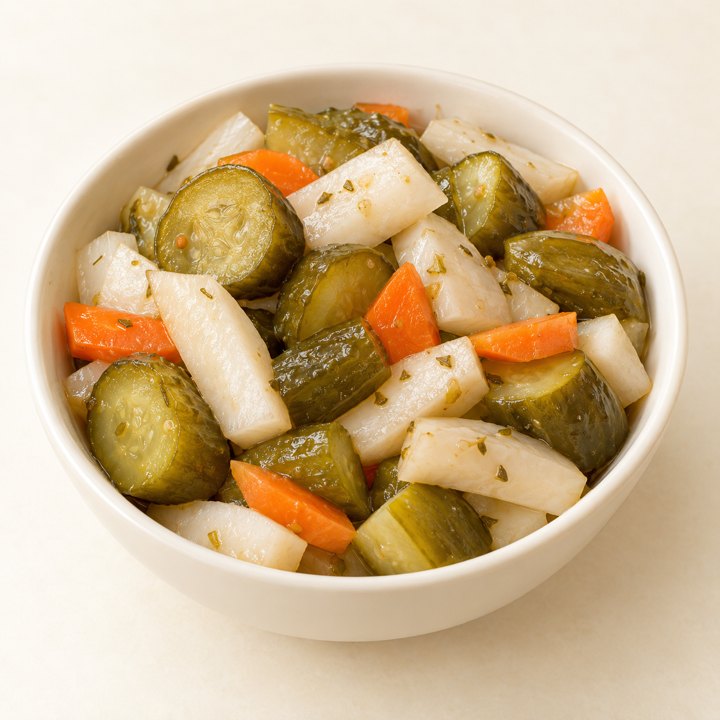
Mixed pickles can mean Pakistani mixed achar with vegetables, fruit, oil and spices, or Western-style vegetables in vinegar. The recipe must identify the intended style.
What it is and names used in Pakistan
Mixed pickles can mean Pakistani mixed achar with vegetables, fruit, oil and spices, or Western-style vegetables in vinegar. The recipe must identify the intended style.
Origin and historical context
Preserving seasonal produce is a longstanding practice across South Asia and beyond. Different regional achar traditions developed their own spice and acid balances.
Types, manufacture and buying
Mango, lime, carrot, chilli and other ingredients may be salted, acidified, fermented or mixed with oil. Commercial heat treatment and formulations differ.
Check whether the food is preserved in vinegar, fermented brine, salt or oil, since the surrounding liquid affects flavour, sodium and handling. A chilled fermented product is not necessarily interchangeable with a heat-processed shelf-stable jar. Look for intact seals, clear identification and a storage instruction you can follow. The liquid may contain sugar, spices, mustard or other ingredients absent from the fresh vegetable. Drained weight can be more useful than total jar weight when comparing how much food is actually supplied.
Reference: Shangrila Foods: Mixed pickle ingredients.
Production, trade and the Pakistani pantry
Pakistan and India have established achar industries and regional exports; vinegar-pickle imports represent another product family.
Cooking uses and practical substitutions
Serve a small spoonful beside rice, daal or paratha, or finely chop a compatible pickle into a sandwich. Lemon pickle can replace mixed achar for sharpness; cucumber dill pickles will change the spice profile completely.
Take out portions with a clean utensil and let excess liquid drain before putting them into bread or onto a pizza base. Add a small quantity first, because preserved ingredients season the dish as well as adding texture. If rinsing to soften saltiness, rinse only the portion about to be eaten rather than diluting the whole storage jar. Do not return food from a serving plate to the jar. Use fresh acid and seasonings for homemade substitutes, recognising that a quick flavour adjustment is not a validated long-term preservation process.
Nutrition, benefits and limitations
Preserved vegetables and fruits can bring useful variety and flavour, but small condiment portions usually supply fewer nutrients than a full serving of fresh produce. Sodium often comes from the cure or brine, and sweet versions can also contain substantial added sugar. Draining and rinsing may reduce surface salt, though the result is not salt-free. Fermented products are not automatically probiotic, particularly after heat processing. The nutritional value of an oily pickle also includes its oil; a thin coating and a large spoonful of oil are quite different portions.
Oil is not by itself a guarantee of microbiological safety. Mustard, sesame and other allergens may occur.
Practical notes and common mistakes
For a Pakistani achar-style accompaniment, decide whether you want its fruit pieces, spice-infused oil or both. Taking a large spoonful of oil can add more richness than a few drained pieces. In a sandwich, finely chopping the chosen vegetables spreads flavour while reducing large hard bites. A Western vinegar pickle can supply acidity, but it will not recreate fenugreek, mustard or other achar spices. If a jar contains very firm mango or lemon pieces, consider the eater’s ability to chew them comfortably rather than assuming every preserve is soft.
Storage and safe handling
Follow the product’s refrigeration instructions after opening and keep food covered by its intended preserving medium where the label requires it. Avoid adding water, fresh vegetables or leftover brine from another jar, because that changes the formulation. For home canning, use a tested recipe with specified acid strength and proportions; sour taste alone is not a safety test. A refrigerator pickle is not automatically safe on a pantry shelf. Discard mouldy, leaking or unexpectedly swollen products, and never taste a suspicious preserved food to decide whether it is safe.
Recipes and related pantry reading
Use the form and quantity specified in each recipe, then adjust for the concentration, salt and moisture of the product you have bought. These dishes show where the ingredient fits in a complete preparation.
For related local names and pantry ingredients, see the Pakistani ingredients and spices guide.
Names and forms used in our recipes
View the recipe names covered by this guide
- commercial cucumber or turnip pickles
- pickles
Frequently Asked Questions
Does mixed pickle mean the same product everywhere?
No. Pakistani achar in oil differs from vinegar-packed mixed vegetables.
Does an oil layer guarantee safe preservation?
No. Safety depends on the complete formulation, process and handling.
Keep Exploring
Related places and stories on DailyLife.pk

How we know this
- Type Explainer
- Sources 3 (2 official/academic)
- Reviewed November 2026
- Disputed points None
