
Ingredients & Spices · The complete guide
Melon seeds
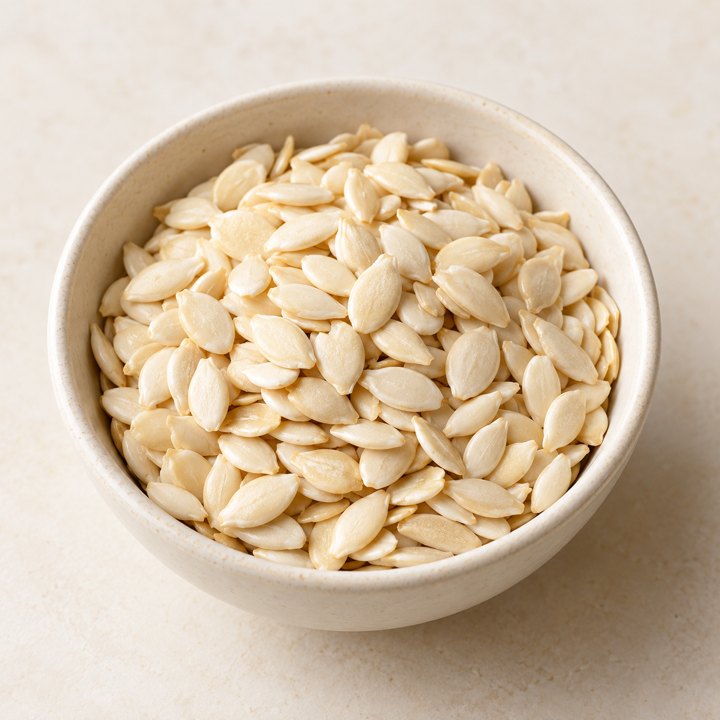
Melon seed kernels are the pale inner seeds used after their hard outer shells are removed.
What it is and what to buy
Melon seed kernels are the pale inner seeds used after their hard outer shells are removed. Magaz or char magaz can appear on Pakistani market labels, but char magaz traditionally refers to a mixture of seed kernels and is not a guaranteed synonym for one melon species. A packet may include melon, watermelon, cucumber or related seed types. For the motichoor laddu recipe, buy clean, unsalted edible kernels rather than planting seed or a mixed product with unidentified ingredients.
Melons belong to the cucurbit family, but the seeds sold for cooking can come from several different cucurbit crops. Muskmelon is Cucumis melo, whereas watermelon is Citrullus lanatus. Removing the shell exposes an oil-rich kernel with a mild nutty flavour. This identity matters for a consistent result and for allergy enquiries. Appearance alone cannot establish the exact species in a mixed market packet, so preserve the supplier’s label after decanting it into a jar.
Origins and food history
Melon crops have a complex domestication and dispersal history involving Africa and Asia, and different edible cucurbits should not be assigned one shared origin. Cucumis melo has diverse cultivated forms and a long history in Asian farming, including South Asia. The use of their edible kernels developed within regional cooking traditions rather than through a documented individual discovery. A broad name such as char magaz does not establish the earliest use of every seed in the mixture.
Reference: Kew: Cucumis melo.
Growing regions, trade and Pakistan
China, Türkiye, Iran, India and Pakistan grow melon crops, but fruit production and the commercial production of edible shelled kernels are different markets. Some kernels are collected as a secondary product and others come from seed-oriented varieties. Pakistani shops may offer local or imported kernels and mixed magaz. No current trade ranking for edible melon kernels is established here. Clean hulling, freshness, species identification and food-grade handling are more useful buying criteria than a fruit-production league table.
Reference: PROSEA: melon crop and seed diversity.
How to prepare and cook it
Use the hulled kernels in the form the recipe specifies. For laddu, a light toast can enhance flavour, but the small kernels colour quickly, so stir gently and remove from heat before they scorch. Fold into the sweet mixture at the prescribed temperature so they distribute without burning or turning completely soft. For a smooth gravy paste, soak or soften as directed and grind finely with a measured amount of liquid. Whole kernels add a delicate bite; ground kernels thicken and enrich, which is a different culinary role.
Put this form of the ingredient to work in Motichoor Laddu. The method in each recipe determines whether it should be raw, soaked, ground, freshly cooked or chilled before it enters the dish.
Nutrition, benefits and their limits
Melon kernels contribute fat, protein and minerals, although exact values depend on the species and whether the shell is included in the analysis. A small garnish in laddu contributes less than a large ground-kernel paste. They can add variety and richness, but do not make a sugar-rich sweet a low-energy food. Do not transfer nutrient figures from whole unhulled watermelon seed to a spoon of another pale kernel. The complete recipe and realistic serving size matter.
Allergies, disadvantages and safe handling
Seed allergy is possible even when a food is not commonly discussed as a major allergen. Mixed magaz creates an additional identification problem, so check all components for someone with an allergy. Hard shells and whole seeds can be unsuitable for small children or people with swallowing difficulty. Buy food-grade kernels from a clean, traceable source; planting seed can be treated and is not food. Discard mouldy, stale or damp kernels rather than attempting to cover defects with roasting.
Practical substitutions
Suitable hulled pumpkin or sunflower kernels can provide a different seed texture. Cashews can make a smooth gravy but add a tree-nut allergen and a different flavour. A char-magaz mixture may be acceptable where the recipe permits it, provided every component is identified and suitable. Unhulled hard seeds are not a direct substitute for tender edible kernels.
Keeping it fresh
Buy from a seller with good stock rotation and keep nuts sealed away from light, heat, moisture and strong smells. Shelled and especially ground nuts lose freshness faster than intact in-shell nuts because more oil is exposed. Refrigeration or freezing is useful in a hot Pakistani kitchen. Bring a sealed container to room temperature before opening to limit condensation. Date the packet and discard kernels that smell paint-like, bitterly stale or musty; normal colour alone does not prove freshness.
For related ingredients and shopping terms, see the Pakistani ingredients and spices pantry guide.
Names and forms used in our recipes
View the recipe names covered by this guide
- melon seed kernels
Frequently Asked Questions
Is magaz always melon seed?
The name can be loose in retail use. Confirm the actual seed or mixture, especially when the label says char magaz.
Can I use seeds saved from a fruit?
Only when they are correctly identified, clean, food-safe and prepared appropriately. They are not automatically equivalent to shelled, dried commercial kernels.
Keep Exploring
Related places and stories on DailyLife.pk

How we know this
- Type Explainer
- Sources 4 (2 official/academic)
- Reviewed November 2026
- Disputed points None
