
Kitchen item guide
Tawa: ChoosingUsing and Caring for It
Match a roti or paratha tawa to your hob, dough size, lifting comfort and preferred cooking surface.
DailyLife.pk kitchen equipment collection
The griddle job
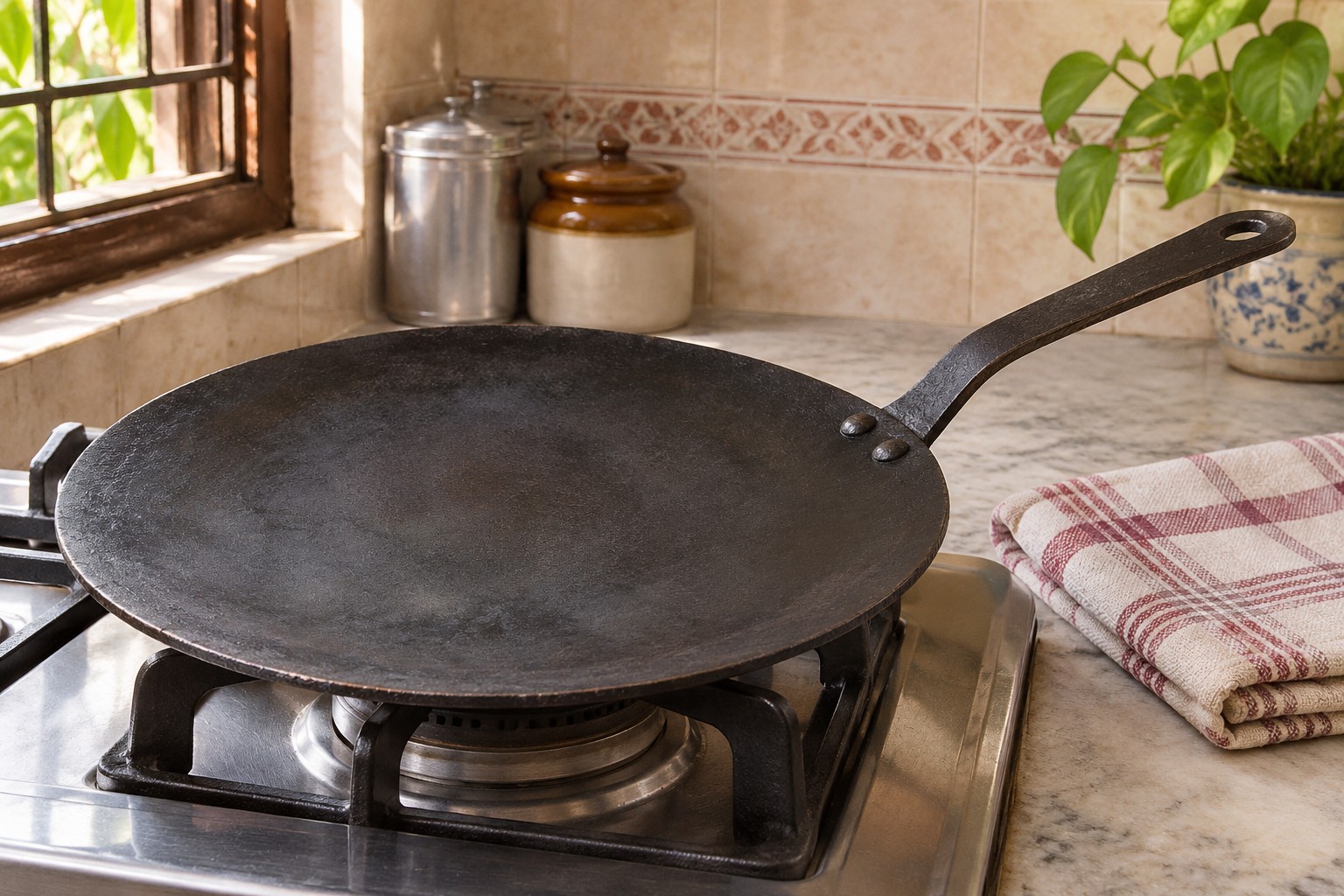
A tawa is a broad griddle used for direct contact cooking. For everyday Pakistani meals its main jobs are setting roti, cooking paratha and warming breads without containing a deep layer of gravy. A slightly concave tawa keeps small amounts of fat near the centre; a flatter model gives a more level surface for pancakes, eggs or a large paratha. It is useful to decide which of those tasks is primary. A tawa with a very low rim offers easy spatula access but provides little protection if oil or liquid is poured onto it.
Iron, steel or coated
Cast iron has substantial weight and takes patience to heat; carbon steel can be lighter but still needs care against rust. Aluminium tawas may have an anodised or nonstick cooking surface, and those surfaces need their own instructions. Stainless steel griddles also exist, but the appearance of a metal disk tells little about its heat distribution. Handle construction matters as much as material: an integral metal handle may heat, while a handle with an insulating grip may have limits for oven use. Ask for the exact construction and the maker's instructions before choosing a surface to suit your roti routine.
Choose diameter and fit
An editorial comparison is a 25 cm tawa for smaller rotis versus a 30 cm model for more generous paratha space. Measure your usual rolled bread rather than choosing from a serving claim. The bread should sit inside the usable heated area with room for a turner. Check that the handle does not obstruct another burner, and that the base sits without rocking. An induction hob requires a compatible base and sufficient contact with the zone; a concave cooking surface can still have a flat underside. Check both sides of the product instead of assuming they share the same shape.
Work with the dough
Roll and stage one bread before heating. Warm the tawa gradually at a setting appropriate to its material, then test with a small first bread and adjust. Set the roti flat without folds. Turn when the underside has set and the surface changes, then finish according to your recipe. For paratha, add fat in a controlled amount and press gently with the turner where contact is poor. If the centre burns before the outer area cooks, lower heat and allow the metal to equalise rather than adding more flour. Brush away loose burnt flour between breads once it is safe to do so.
Respect the surface
Do not use a coated tawa as an empty high-heat roasting plate. Health Canada guidance warns against overheating nonstick cookware. If your method includes moving roti to a separate flame, keep that task separate from the tawa's own care limits and use suitable tools. A tawa is also unsuitable as a general heat diffuser under a pot unless its maker explicitly permits that use. Keep oil away from the handle and maintain a secure grip. A heavy griddle with an awkward handle can be harder to manage than a smaller, less ambitious purchase.
Care between bread sessions
Allow the metal to cool before washing; sudden cold water on hot cookware is an avoidable stress. Remove flour deposits and wipe handle joints. Seasoned iron and steel need prompt drying and a light oil film for storage; Lodge Cast Iron guidance describes material-specific care. Coated models need soft cleaning tools and protection from stacked metal utensils. Persistent rocking, a cracked casting, a failing handle or a peeling cooking surface warrants replacement or a proper manufacturer repair. A superficial seasoning problem on sound iron is different from structural damage, so assess the actual defect before discarding the whole item.
When another pan works
A flat skillet can cook smaller roti if you can reach in with a turner; the higher walls make large breads more awkward. A ridged grill pan is a poor substitute because the dough needs broad contact. Shop locally to feel the balance or request the total weight and handle dimensions online. Buy a second tawa only when a different diameter or surface serves a distinct routine. For occasional paratha, one manageable griddle is usually more practical than a collection whose heavier pieces stay in the cupboard. Store it completely dry and protect the cooking face from scratches.
Frequently Asked Questions
Should the tawa be flat or concave?
Choose according to bread and hob fit; a shallow concavity can hold fat but the underside must still sit securely.
Why is my roti burnt at the centre?
Reassess heat, preheating and burner-to-pan fit before replacing the tawa.
Can a nonstick tawa be seasoned like iron?
Follow its coating instructions. Iron seasoning methods do not automatically apply to a coated pan.
How we know this
- Type Explainer
- Sources 3
- Reviewed November 2026
- Disputed points None
3 sources
- Safe use of cookware and bakeware, Health Canada
- Carbon steel care, Lodge Cast Iron
- How to clean seasoned cast iron, Lodge Cast Iron
Photo credits (1)
- a black iron flat round roti tawa griddle, shallow slightly concave disk and one long iron handle, on a cold hob beside a folded cotton cloth, DailyLife.pk, All rights reserved
