
Kitchen item guide
Water dispenser: choosingusing and caring for it
Choose a dispenser for convenient serving, safe hot-water handling and a cleaning routine that protects the supplied water.
DailyLife.pk kitchen equipment collection
Serving water rather than automatically purifying it
A water dispenser delivers water from a bottle, reservoir or plumbed connection. Powered models may cool or heat it, while simpler units dispense at room temperature. A bottle-fed hot-and-cold dispenser does not automatically filter or disinfect its incoming water. If a treatment system is built in, its specific performance and maintenance must be checked separately.
In a Pakistani kitchen or dining area, a dispenser can provide accessible drinking water without repeatedly moving a large bottle. It can also supply hot water where the model is designed for that use. Convenience does not establish source-water quality, and hot-water dispensing does not make every contaminant harmless. Use a suitable water supply and maintain the dispenser's water-contact parts.
Top loading, bottom loading and plumbing
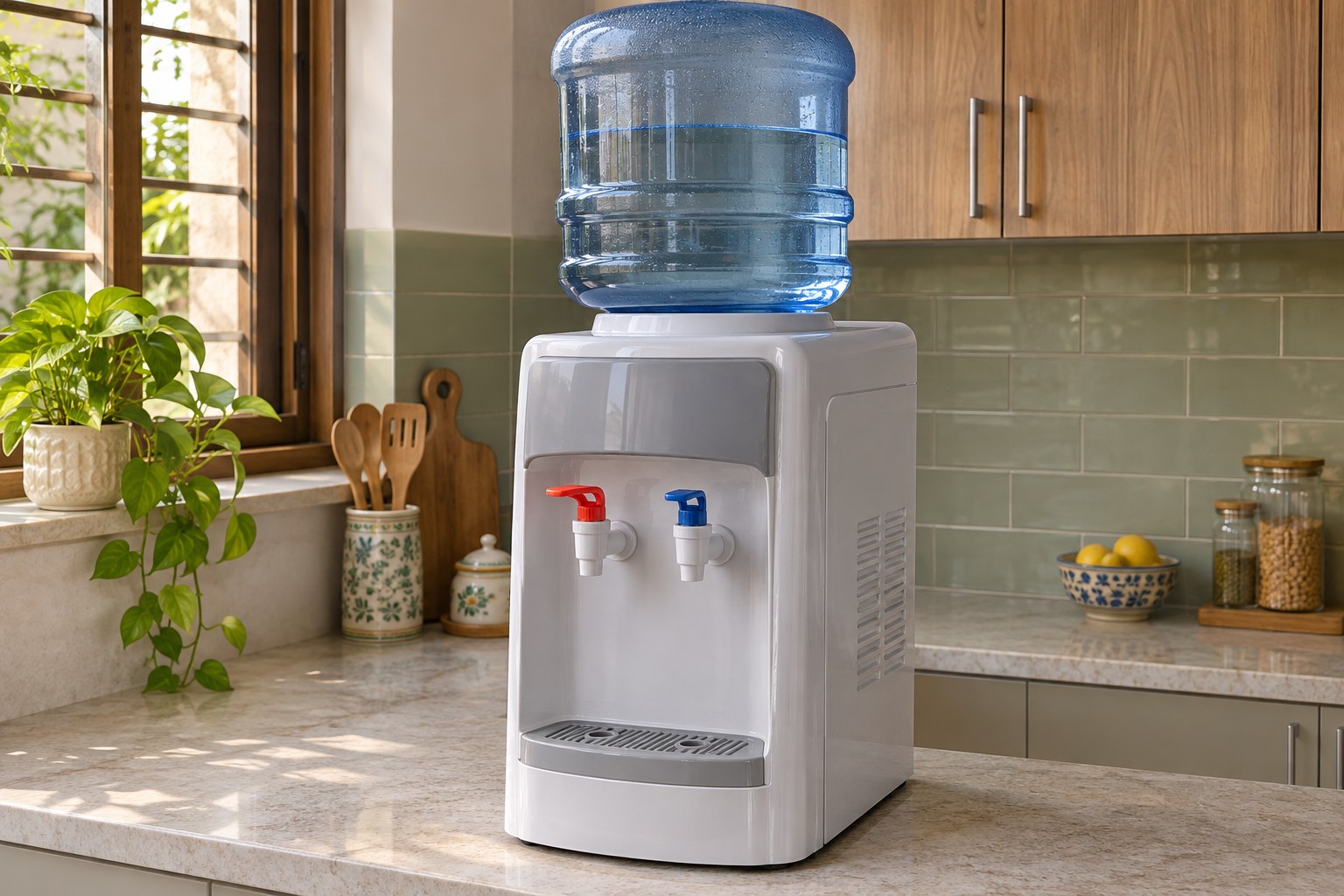
A top-loading unit supports an inverted bottle above its reservoir. A bottom-loading design uses a bottle in a lower compartment and a pump or other feed arrangement. A plumbed model needs a suitable water connection and sometimes separate treatment. Compare those systems by bottle-handling effort, service access and the supplies available to the household.
As an editorial planning check, consider who will replace a full bottle and whether they can do so without unsafe lifting or spilling. Check the bottle format, available height above the appliance, cup clearance, drip-tray size and access to the rear drain. A hot tap should have the manufacturer-provided child-safety arrangement where applicable, but no latch makes boiling or very hot water safe for unsupervised children. Confirm local parts, warranty and service before buying.
Install and fill before enabling heat
Place the dispenser level on a dry stable surface, leave the required ventilation clearance and keep the cord away from water spills and hot equipment. Follow the model's settling, flushing and first-use cleaning procedure. For bottled systems, fit only the compatible container and cap arrangement. Do not cut or force a bottle neck to make it fit.
Fill and prime the reservoirs exactly as instructed before switching on any heating function. A dry heater can be damaged, and a hot tank may require a particular filling check. Primo's equipment support separates setup and manuals by dispenser model. Use that level of model-specific guidance for your own appliance. If the unit contains filtration, commission and flush that system according to its own instructions too.
Keep cups, taps and water clean
Dispense into a stable clean vessel without touching the outlet with the cup rim or fingers. Keep bottles and refill containers clean and stored as their supplier directs. Prevent raw-food preparation, dirty cloths and splashing sink water from contaminating the taps. Empty spills from the drip tray instead of allowing standing water to accumulate around the base.
For hot water, operate the safety control as designed, keep hands out of the stream and do not overfill a light cup that can tip. Remember that hot tanks and drain water can remain hot after power is switched off. A child lock is a delay or control feature, not a substitute for supervision and safe placement. Electrical Safety First's kitchen advice is relevant wherever water and powered heating or cooling components share a working area.
Clean the internal system by its manual
Set a cleaning schedule from the exact manual and actual use. Primo's dispenser-cleaning guidance includes isolation, draining, cleaning and thorough flushing. Its solution and sequence should not be transferred blindly to another brand, especially where hot-tank precautions or incompatible materials differ. Never mix cleaning chemicals or leave unflushed cleaning solution in drinking water.
Clean the taps, reservoir or feed tube, removable tray and accessible bottle-contact area as instructed, and dry external electrical areas. A self-clean button does not necessarily replace all manual cleaning. Leaks, slime, damaged taps, a failed hot-water safety control, unusual electrical heat or persistent off-odours require assessment; use an alternative safe water source while the issue is resolved. There is no universal service life. A dispenser offers convenient serving but adds cleaning and sometimes electricity and bottle lifting. A clean covered jug or simple bottle pump can suit a smaller household. Choose the system you can keep hygienic and serviceable.
Frequently Asked Questions
Does a water dispenser purify bottled water?
Not unless it includes a documented treatment system with appropriate verified claims.
Can I turn the heater on before filling?
Follow the exact priming instructions and confirm the hot reservoir is filled before enabling heat.
Does self-cleaning remove every cleaning task?
No. Follow the manual for taps, trays, bottle-contact parts and internal maintenance.
How we know this
- Type Explainer
- Sources 4 (1 official/academic)
- Reviewed November 2026
- Disputed points None
4 sources
- Dispenser cleaning guidance, Primo Water
- Dispenser setup and manuals, Primo Water
- Electrical safety in the kitchen, Electrical Safety First
- Home water filter capabilities, US Centers for Disease Control and Prevention
Photo credits (1)
- Freestanding top-loading water dispenser with clear inverted blue water bottle seated correctly on top, two distinct taps over a drip tray, no labels, tidy kitchen., DailyLife.pk, All rights reserved
