
Kitchen item guide
Tea tray: ChoosingUsing and Caring for It
Choose a tea tray for a balanced load, firm handles and the cups you regularly carry.
DailyLife.pk kitchen equipment collection
Carry a tea service as one load
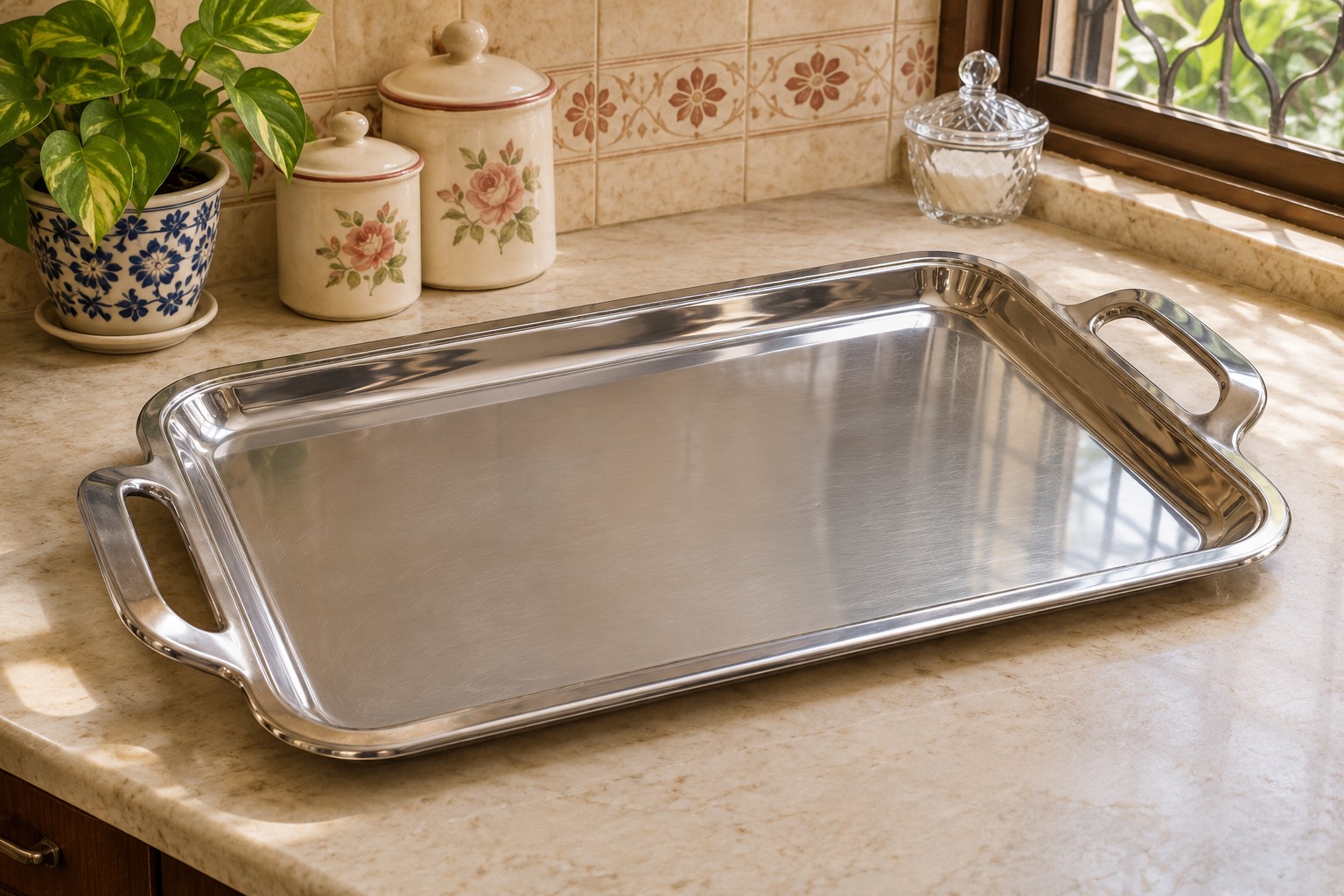
A tea tray groups cups, a teapot and small dishes for carrying from kitchen to table. In a Pakistani home it can simplify serving chai with biscuits or a small snack. It is a carrying surface, not automatically a baking sheet or hot-pan stand. A raised rim contains minor drips, but should not be treated as protection against spilling a kettle or pot of boiling tea.
Plan the actual load. A large attractive tray becomes inconvenient if it cannot pass through a doorway or cannot be held steadily when filled.
Materials and grip styles
Stainless steel is relatively straightforward to wash; wood needs protection from soaking; plastic and melamine trays require their own heat and food-contact guidance. Handles may be integral cut-outs or attached fittings. An editorial fit example is to arrange four empty cups and their saucers on a paper rectangle, leaving room to grip the tray before choosing its size.
Borosil’s stainless tea-tray instructions explicitly exclude oven and microwave use for that product. This illustrates why a shiny metal serving tray should not be confused with bakeware. For direct food contact, check the tray’s documented suitability rather than assuming every decorative surface is intended for snacks.
Balance before lifting
Set the tray level, place heavier items near the centre and keep the outer edge clear for gripping. Use cups filled below their rims and allow enough space that handles do not hook together. Test the balance with a small load first. Lift with both hands where the design calls for it, and keep the route clear.
Set it down fully before guests remove cups. Do not hold a loaded tray while people pull from one side. Wipe drips before the next trip and use a suitable stable liner only if it cannot slide or wrinkle under dishes. Burn-prevention guidance supports keeping hot items where they cannot be knocked over.
Shop for a realistic load
Check handle attachment, rim smoothness, a flat base and the weight when empty. A deeply raised border may secure dishes yet make sliding a saucer off awkward. Look for care and heat instructions from an identifiable maker. A non-slip claim should not replace a practical check with your cool cups.
Household shops and crockery stores let you judge grip clearance. For online shopping, request internal carrying dimensions rather than only the widest outside measurement. Consider where the tray will stand or hang, and whether your sink can accommodate it for washing.
Clean the underside and handles
Wash or wipe according to the material. Remove sugar, milk drips and crumbs around handles and rim joints. Borosil’s cited steel-tray directions call for mild washing liquid, a soft sponge and thorough drying. Do not put a wooden, painted or laminated tray into a dishwasher unless expressly permitted.
Inspect attached handles regularly for looseness, cracks and corrosion. Replace a tray with a failing handle, a sharp damaged rim or a base that flexes unpredictably under its normal load. A decorative scratch may be cosmetic; a lifting-point failure is a structural problem.
When smaller trips work better
A tray reduces trips but increases the load in each lift. A smaller tray or several light trips may suit limited grip strength or a crowded room. Carry individual cups by their safe handles when practical. A baking sheet can feel awkward as a serving tray because of its rim and grip; do not repurpose one while it is still hot from the oven.
Frequently Asked Questions
Can I bake on a tea tray?
Only if it is expressly rated as ovenware. Many serving trays exclude oven use.
Does a non-slip surface prevent every spill?
No. Balance, load size and carrying method remain essential.
Should guests take cups while I hold it?
Set the tray down securely first so the balance cannot change unexpectedly.
How we know this
- Type Explainer
- Sources 3 (2 official/academic)
- Reviewed November 2026
- Disputed points None
3 sources
- Stainless steel serving tray: use and care, Borosil
- Prevent burns and scalds in the kitchen, US Fire Administration
- Four steps to food safety, FoodSafety.gov
Photo credits (1)
- One rectangular stainless steel tea serving tray with raised rim and two integral side handles, empty and prominent., DailyLife.pk, All rights reserved
