
Kitchen item guide
Sweet mould: ChoosingUsing and Caring for It
Choose a sweet mould for the recipe’s temperature and release method, with cavities you can clean fully.
DailyLife.pk kitchen equipment collection
A shape for a particular sweet
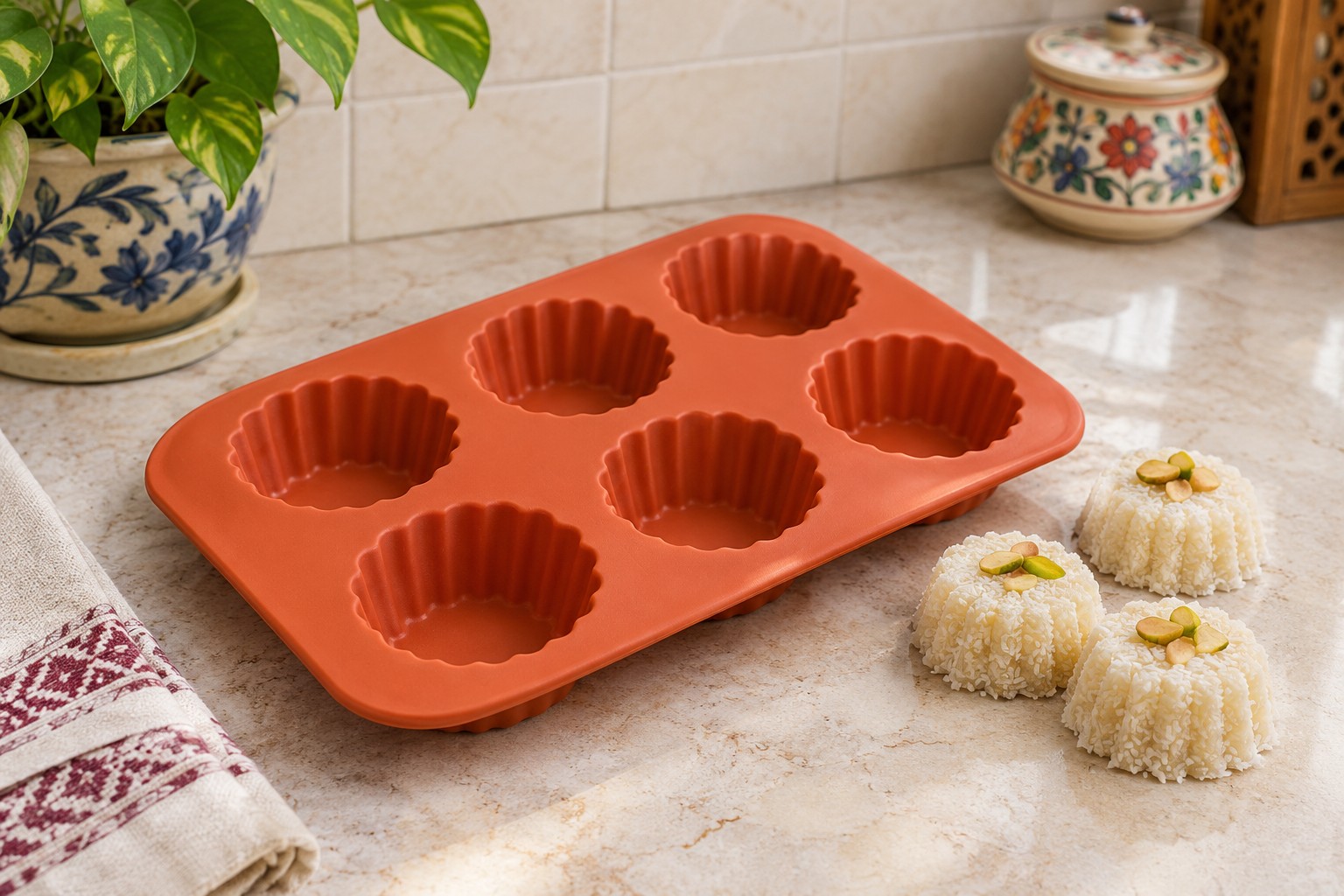
A sweet mould gives a mixture a repeated outline while it sets, chills or is pressed. It can shape small coconut sweets, chocolate pieces or suitable pressed mithai for an Eid box. A mould is not automatically a baking pan: some are designed only for cool chocolate, while others have explicit oven or hot-food permission. Identify the method before choosing the shape.
A mould made for resin, candles or soap should never be reused for food. Even a visually identical craft product may have unsuitable materials or prior contamination.
Rigid, flexible and pressed shapes
Flexible silicone moulds peel back to release set sweets. Rigid food-use plastic moulds may depend on the sweet contracting or a gentle tap; metal shapes have their own greasing and release needs. Hinged press moulds form a portion rather than hold a liquid while it sets. Wilton’s candy-mould guide distinguishes its plastic and silicone moulds and their different care requirements.
As an editorial example, a shallow 3 cm cavity makes a different portion from a deep cavity of the same width. Consider the whole volume, whether decoration has undercuts and whether the set mixture can support itself after removal.
Prepare and release gently
Read both the recipe and mould directions. Wash before first use and dry thoroughly, especially for chocolate work. Apply grease only when the method calls for it. Fill or press evenly, avoiding large air pockets, then support flexible sheets on a level tray. Chill or set under the recipe’s conditions rather than trying to force a still-soft sweet out.
For release, follow the product method: peel silicone away gently or use the instructed tapping technique for a rigid mould. Do not stab a knife down a cavity to prise out food. Never pour boiling sugar or a very hot milk mixture into an unmarked plastic mould.
Buying for cleanable detail
Look for food-contact identification, temperature instructions and care guidance from an identifiable producer. Check thin flexible areas for tearing, rigid edges for cracks and detailed grooves for roughness. Choose a pattern you can clean with a soft brush. A deep elaborate shape may look appealing but trap a crumbly sweet during release.
Baking shops and household suppliers often mix oven moulds, chocolate moulds and ice moulds in one display. State the intended sweet and temperature. Online listings should show cavity depth and the underside, not only a styled box of finished mithai.
Wash every cavity
Remove remaining fat and crumbs promptly using the maker’s approved cleaning method. Work into grooves with a soft brush, rinse well and dry all recesses before storage. Dishwasher permission is product-specific: Wilton’s cited guidance distinguishes its silicone moulds from its clear plastic versions. Do not generalise from one silicone label to every mixed-material tool.
Store flexible sheets supported without sharp folding. Replace splits, tacky deteriorating surfaces, loose fragments or cracked rigid cavities. Persistent residue in inaccessible details is a reason to reconsider use. Food staining alone is different from structural damage, but condition should be inspected before each large batch.
When a tray is easier
Moulds create consistent festive shapes but take time to fill and clean. A suitable tray lets you press a slab and cut squares or diamonds instead. Hand shaping may work for a recipe designed to hold together. Do not use an unknown decorative container merely because its pattern looks suitable; food use, temperature and release must all be established.
Frequently Asked Questions
Can every silicone mould go in the oven?
No. Check its own stated uses and temperature limit.
Why do sweets break when released?
The recipe may be too soft, the cavity too intricate or the sweet insufficiently set.
Can a craft mould become a food mould after washing?
Do not repurpose a mould exposed to non-food materials.
How we know this
- Type Explainer
- Sources 3 (1 official/academic)
- Reviewed November 2026
- Disputed points None
3 sources
- How to use candy moulds, Wilton
- Four steps to food safety, FoodSafety.gov
- Recipe Success Guide, King Arthur Baking
Photo credits (1)
- One shallow food-grade flexible terracotta silicone sweet mould with six small round fluted cavities, three pale coconut sweets nearby., DailyLife.pk, All rights reserved
