
Kitchen item guide
Sink strainer: A Practical Pakistani Kitchen Guide
Fit a removable sink strainer that catches food scraps without preventing drainage, and empty and clean it before residue builds up.
DailyLife.pk kitchen equipment collection
Catch scraps at the drain opening
A sink strainer sits over or within a kitchen drain opening to retain loose food particles while allowing water to pass. It can catch rice grains, onion pieces and other small scraps released during washing up in a Pakistani kitchen. It is not a food sieve and should remain separate from equipment used to rinse ingredients. Nor is it a complete solution for blocked drains: it collects only material that its openings retain. Scrape dishes before washing so the strainer handles incidental debris rather than an entire pan of leftovers.
Mesh, perforated baskets and combination plugs
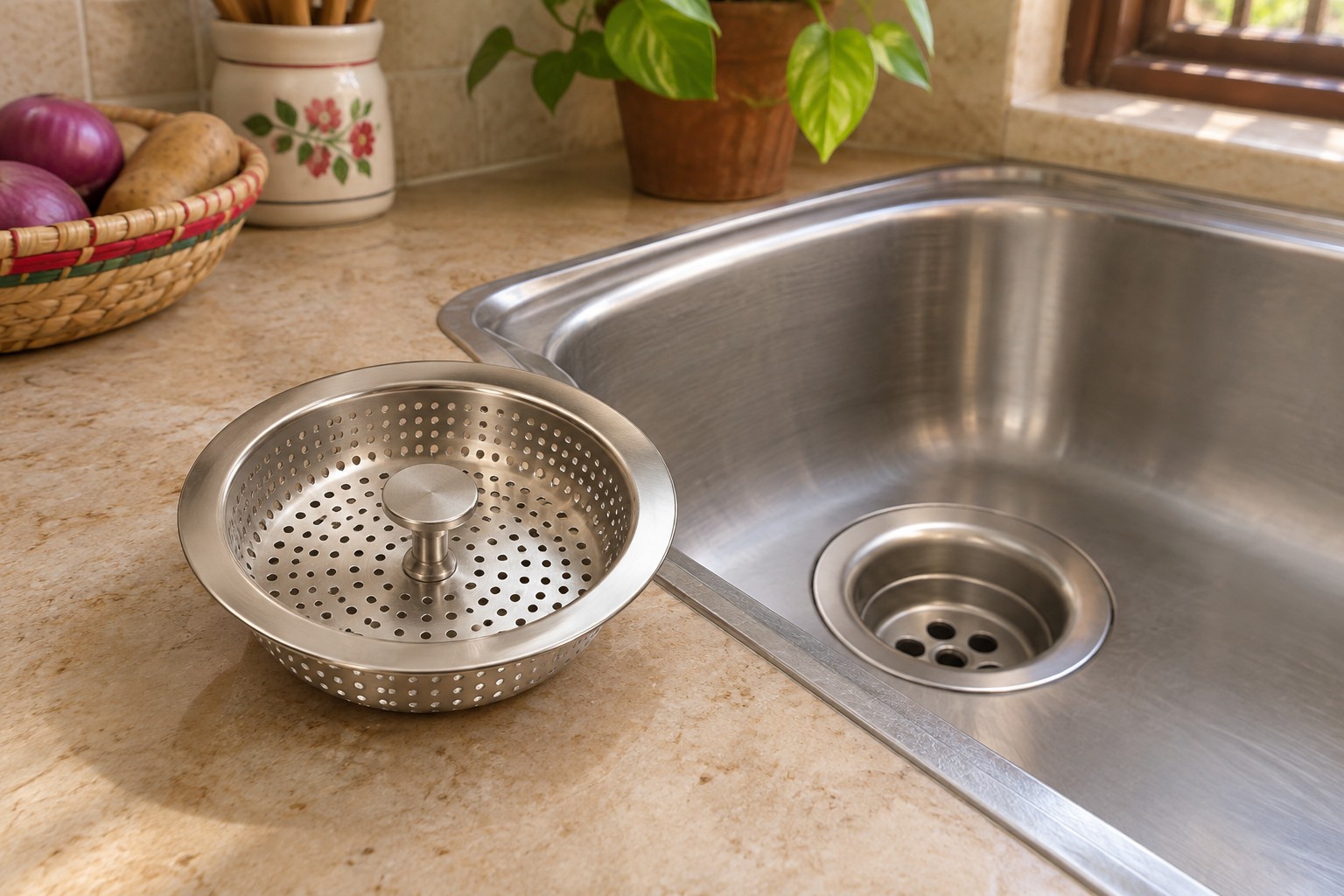
Fine mesh catches smaller particles but can clog quickly and needs careful cleaning. Perforated steel baskets can be sturdier, although the hole size determines what passes through. Flexible silicone designs may invert for emptying. Some products combine strainer and stopper functions, while a simple loose cover does not seal the sink. As editorial fit examples, compare a shallow cover with a drop-in basket, measuring the drain opening, seating ledge and available depth. A similar-looking replacement may have a different stem or plug mechanism. Match an integrated basket to the sink fitting rather than relying on its outer diameter alone.
Fit, observe and empty during washing
Place the clean strainer as instructed and run a little water to check that it seats securely and drains normally. Empty accumulated scraps into appropriate household waste collection before the basket is packed solid. Lift using the provided grip rather than pressing fingers through dirty mesh. Manufacturer designs such as the OXO silicone strainer have a specific emptying method; use the method for your own unit. Replace it after cleaning so it is present before the next washing session. Do not leave it on a food preparation board.
It cannot catch dissolved or liquid grease
A strainer does not make it acceptable to pour cooking oil and fatty liquid down the sink. Thames Water explains the problems caused by fats, oils and grease in drains. Keep that waste out using appropriate local collection and disposal arrangements. If the sink drains slowly with a clean properly fitted strainer, investigate the drainage problem rather than removing the strainer permanently or forcing debris through it. Keep drain-cleaning chemicals separate from dishwashing and follow their labels; do not mix products in an attempt to clear a blockage.
Buying, cleaning and replacement
Inspect mesh edges, perforations, grips and any rubber seal for sound construction and easy access. Ask the plumbing or kitchenware supplier about compatibility, replacement parts and cleaning permissions. Wash debris from both sides and clean the rim and underside, using a dedicated suitable tool if needed. Dry when stored out of use. Replace torn mesh, sharp edges, loose components or a deteriorated plug seal. A basic correctly sized removable strainer can be an adequate substitute for a complex combination unit. The benefit is visible scrap collection; the daily obligation is emptying it promptly so water can keep flowing.
Frequently Asked Questions
Does it replace scraping plates?
No. Scrape food into suitable waste collection first and use the strainer for incidental debris.
Will it stop oil reaching the drain?
No. Liquid grease can pass through; keep it out of the sink separately.
Why does a clean basket not fit my drain?
The seating shape, depth or plug mechanism may differ even if the outer diameter looks similar.
How we know this
- Type Explainer
- Sources 2
- Reviewed November 2026
- Disputed points None
2 sources
- Sink Strainer Product Details, OXO
- Fats Oils and Grease, Thames Water
Photo credits (1)
- Perforated stainless steel sink basket strainer with central lift knob beside a sink drain., DailyLife.pk, All rights reserved
