
Kitchen item guide
Saucer: ChoosingUsing and Caring for It
Choose a saucer that seats the cup securely and leaves usable space for drips and a teaspoon.
DailyLife.pk kitchen equipment collection
A stable landing place for a cup
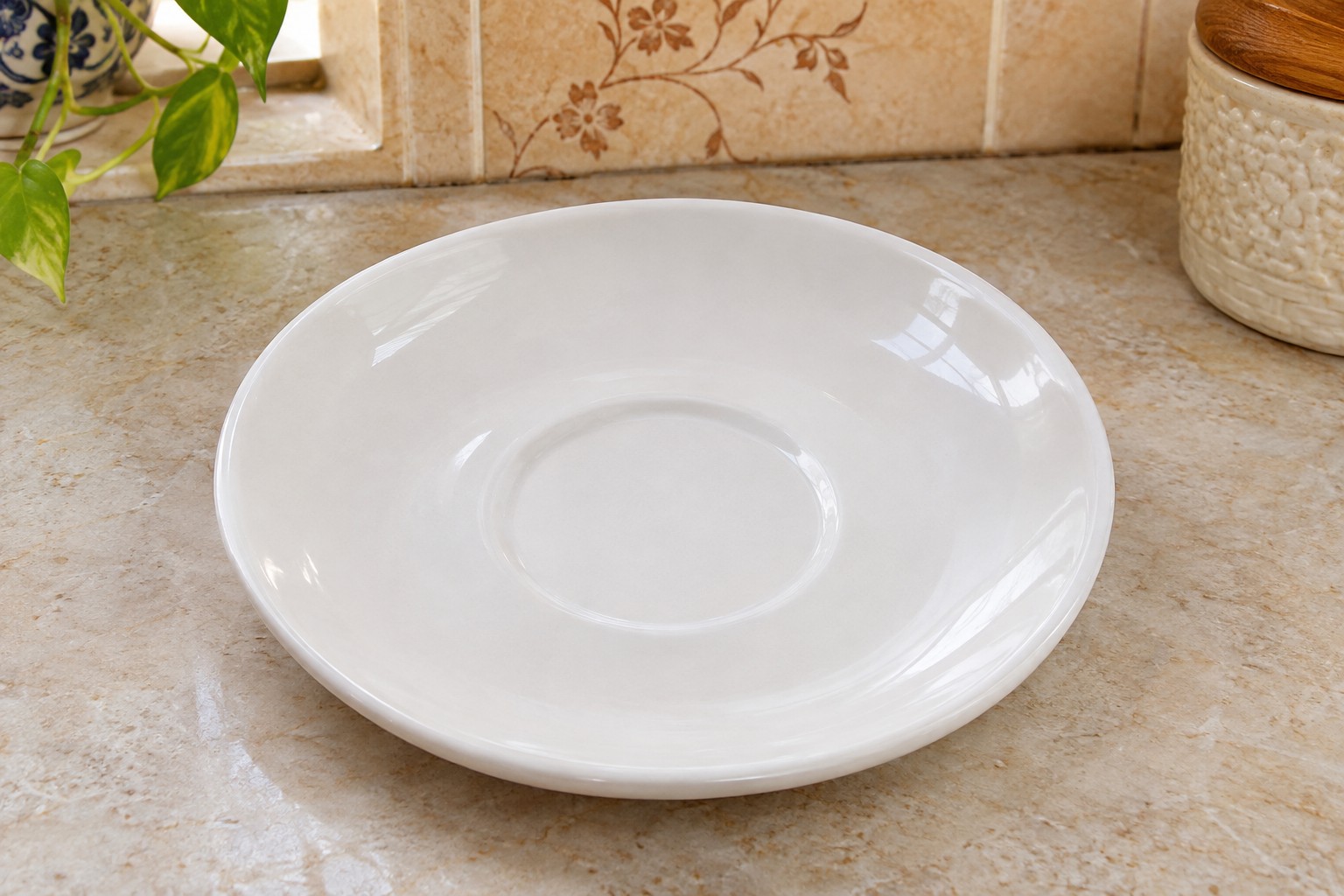
A saucer is the small shallow dish placed beneath a tea cup. Its centre often has a recess or raised ring that locates the cup’s foot. It catches small drips and gives a place for a teaspoon during a Pakistani tea service. It is not designed to contain a spilled full cup, and carrying a saucer does not remove the risk of hot liquid moving above it.
The cup-and-saucer fit matters more than matching colour alone. A beautiful loose pairing may slide when carried.
Shape, material and fit
Ceramic saucers commonly match a cup set; glass and stainless versions also exist. Some have a deep locating well, while flat small plates offer less guidance. As an editorial buying check, set the actual cup in the centre and see whether the foot fits without rocking or perching on a raised ring.
Choose identified foodware if snacks or a spoon will touch it. FDA guidance on lead and foodwares is relevant to unknown ceramic glazes and decorative pieces. A decorative saucer marked for display should remain outside food service even if it appears the right shape.
Serve without overloading
Place a filled cup in its well on a stable tray, keeping enough space between settings for a hand. Leave the cup below its rim when pouring. Set a teaspoon where it will not lever against the handle or slide beneath the cup. A biscuit can go on the rim only if it leaves the cup seated securely and the saucer remains balanced.
Keep hot settings away from table edges and avoid stacking a second dish on top of a filled cup. US Fire Administration burn-prevention guidance recommends positioning hot items so they cannot be knocked over or pulled down. Use a tray for several settings rather than trying to balance them in one hand.
Check replacements and storage
Take a cup or its foot measurements when looking for replacement saucers. The advertised outer diameter does not tell you whether the centre well fits. Check the base for a smooth foot, the rim for chips and the surface for wobble. Compare the weight of the combined cup and saucer if guests will carry it.
Crockery shops may sell open-stock pieces, while online sets may require buying several replacements at once. Ask about dishwasher directions and metallic decoration. Consider cupboard space: high deep saucers take more room than a tidy shallow stack.
Cleaning and damage checks
Wash tea drips and sugar residue promptly, rinse and dry. Inspect the underside foot because rough edges can scratch tables or other plates. Follow the product’s dishwasher advice, and use a soft separator for delicate decorated pieces where appropriate. Do not bang a stack down to settle it.
Replace a saucer with a sharp chip, a spreading crack or a badly damaged foot that makes it unstable. Never glue a broken food-contact piece and return it to serving without a repair method explicitly approved for that use. Cosmetic surface marks and structural damage need different decisions.
A small plate as an alternative
A saucer suits formal cup service and catches minor drips, but adds another piece to wash. A mug on a stable coaster can simplify daily chai. A small food-safe plate can hold a cup if it sits securely, although it may lack a locating well. Avoid a saucer that is too small merely to preserve the visual match of an incomplete set.
Frequently Asked Questions
Must a saucer match the cup brand?
No. It must fit securely and be suitable for its intended contact with food.
Can I use it as a snack plate?
Yes if it is identified foodware and the shape suits the food.
Does it make a cup safe to carry one-handed?
No. Balance, hot-liquid level and a secure grip still matter.
How we know this
- Type Explainer
- Sources 3 (3 official/academic)
- Reviewed November 2026
- Disputed points None
3 sources
- Lead in food and foodwares, US Food and Drug Administration
- Prevent burns and scalds in the kitchen, US Fire Administration
- Four steps to food safety, FoodSafety.gov
Photo credits (1)
- One plain white ceramic tea saucer with a shallow circular recessed cup well and gently raised rim, empty and prominent, no cup., DailyLife.pk, All rights reserved
