
Kitchen item guide
Rice platter: ChoosingUsing and Caring for It
Choose a rice platter with a usable centre, steady grip and a size that suits the table and batch.
DailyLife.pk kitchen equipment collection
A broad shared presentation
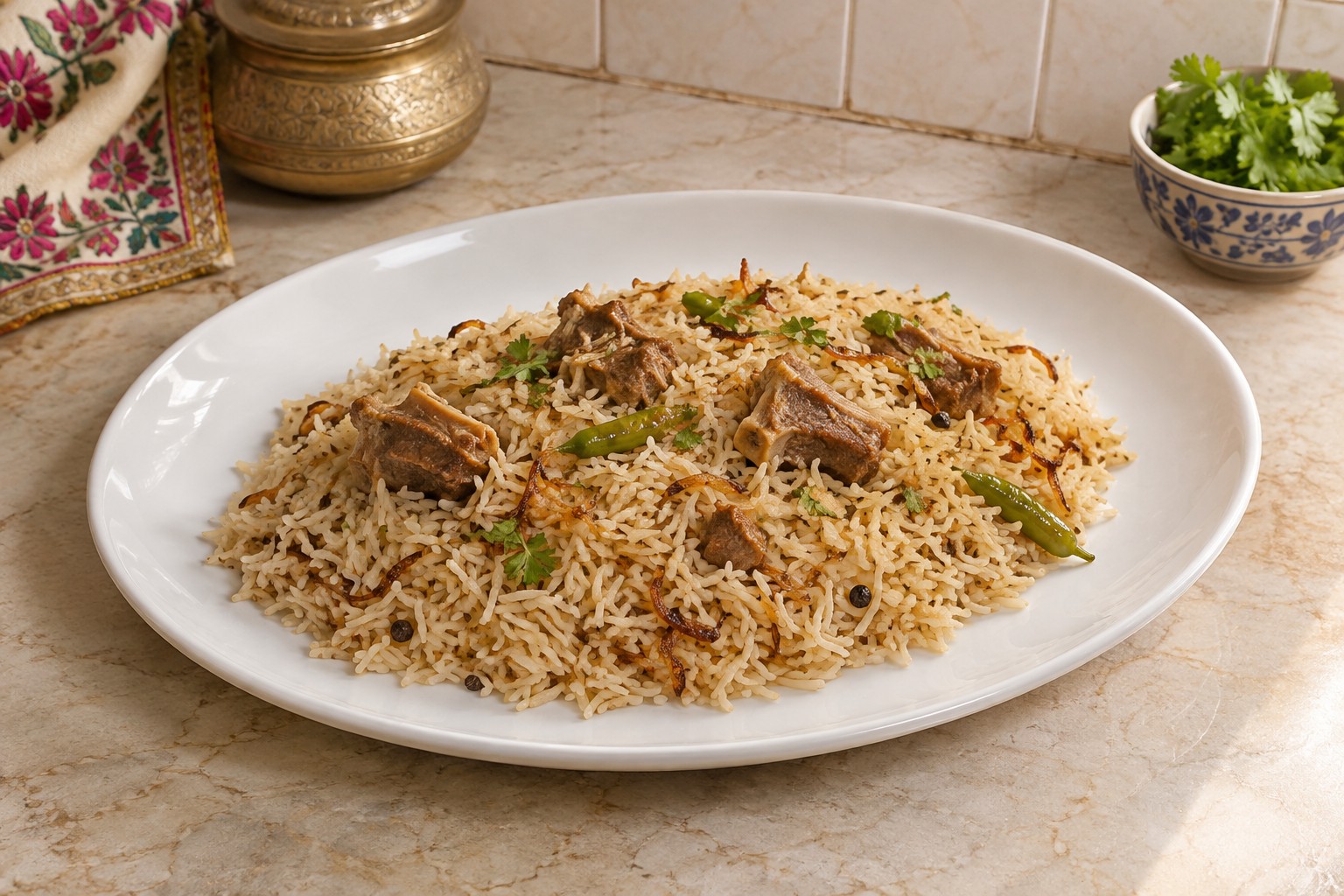
A rice platter is a broad shallow serving dish for biryani, pulao or plain rice. It lets a Pakistani family or guests take portions with a wide spoon while showing the rice and garnish. The shallow shape spreads food across a larger area than a deep bowl. It is servingware, not the pot in which the rice was cooked, and does not keep rice safely hot on its own.
Choose the platter around the food you actually serve. A grand catering-sized dish can be awkward to carry, wash and store in a home.
Oval, round and raised rims
Oval platters fit lengthwise on a table; round platters may suit a central shared setting. A modest rim helps contain grains and sauce, while a steep decorative edge can reduce spoon access. Stainless steel is sturdy; ceramic and glass add different weight and breakage considerations.
As an editorial comparison, map a dish around 35 cm long against your table and sink before considering a larger one. Look at the flat serving area rather than only overall length. Identified foodware matters for decorative ceramics, as explained by FDA guidance on lead in food-contact wares.
Transfer rice without a precarious mound
Set the platter near the pot on a stable surface and use a suitable broad spoon to transfer rice. Keep the mound manageable and leave a grip margin. Carry level with both hands when necessary. Place a hot platter on an appropriate support and keep serving spoon handles accessible rather than buried beneath rice.
Serve a practical amount and refill from food kept under appropriate conditions. FoodSafety.gov’s guidance covers prompt refrigeration and safe handling of perishable food; a decorative platter does not replace that process. Transfer leftovers to suitable shallow containers rather than leaving a large rice mound on the dining table indefinitely.
Buying for carrying and washing
Check the empty weight and imagine the added weight of rice. Lift a cool empty platter by its intended grips to see whether the rim is secure or slippery. Inspect the base for rocking and the underside for rough spots that could scratch a table. Handles should be soundly attached and wide enough to use.
Crockery shops and household suppliers may list “biryani plate” or “serving dish” without dimensions. Ask for length, width and usable depth. Check storage and refrigerator fit if you expect another use, but obtain separate microwave or oven permission before reheating in it.
Clean grains from edges and seams
Remove rice and oily masala residues promptly, then wash with the method suited to the material. Clean the underside and any handle joins. Use soft tools on glaze and polished surfaces and dry before storage. A platter used to carry raw ingredients must be properly washed before it serves cooked rice.
Replace sharp chipped rims, cracks, loose handles or corrosion that leaves rough uncleanable surfaces. Store large ceramic pieces where a heavy stack cannot press against a projecting handle. Do not use ordinary glue to return a broken serving platter to hot-food use.
Alternatives for a smaller table
A platter presents rice attractively and makes spoon access easy, but spreading rice can make it lose heat more quickly than a covered deep vessel. A suitable serving bowl or the cooking pot may be simpler for a small family meal. Several smaller platters can reduce carrying weight at a larger gathering; choose documented food-use dishes rather than oversized decorative trays.
Frequently Asked Questions
Can I reheat rice on the platter?
Only if its maker permits the heating method and you follow safe food-handling directions.
Does a large platter keep rice hot?
No. It is a serving surface, not a warming appliance.
What size is best for a family?
Match the usable area, carrying weight and table space to your actual meal; there is no universal size.
How we know this
- Type Explainer
- Sources 3 (2 official/academic)
- Reviewed November 2026
- Disputed points None
3 sources
- Lead in food and foodwares, US Food and Drug Administration
- Four steps to food safety, FoodSafety.gov
- Stainless steel flatware use and care, Tramontina
Photo credits (1)
- One large oval white ceramic rice platter with shallow raised rim containing a modest mound of long-grain Pakistani pulao, platter edges fully visible., DailyLife.pk, All rights reserved
