
Kitchen item guide
Rice cooker: choosingusing and caring for it
Choose rice capacity and programmes carefully, then measure consistently and keep the cooking pan and steam path clean.
DailyLife.pk kitchen equipment collection
A controlled pot for rice
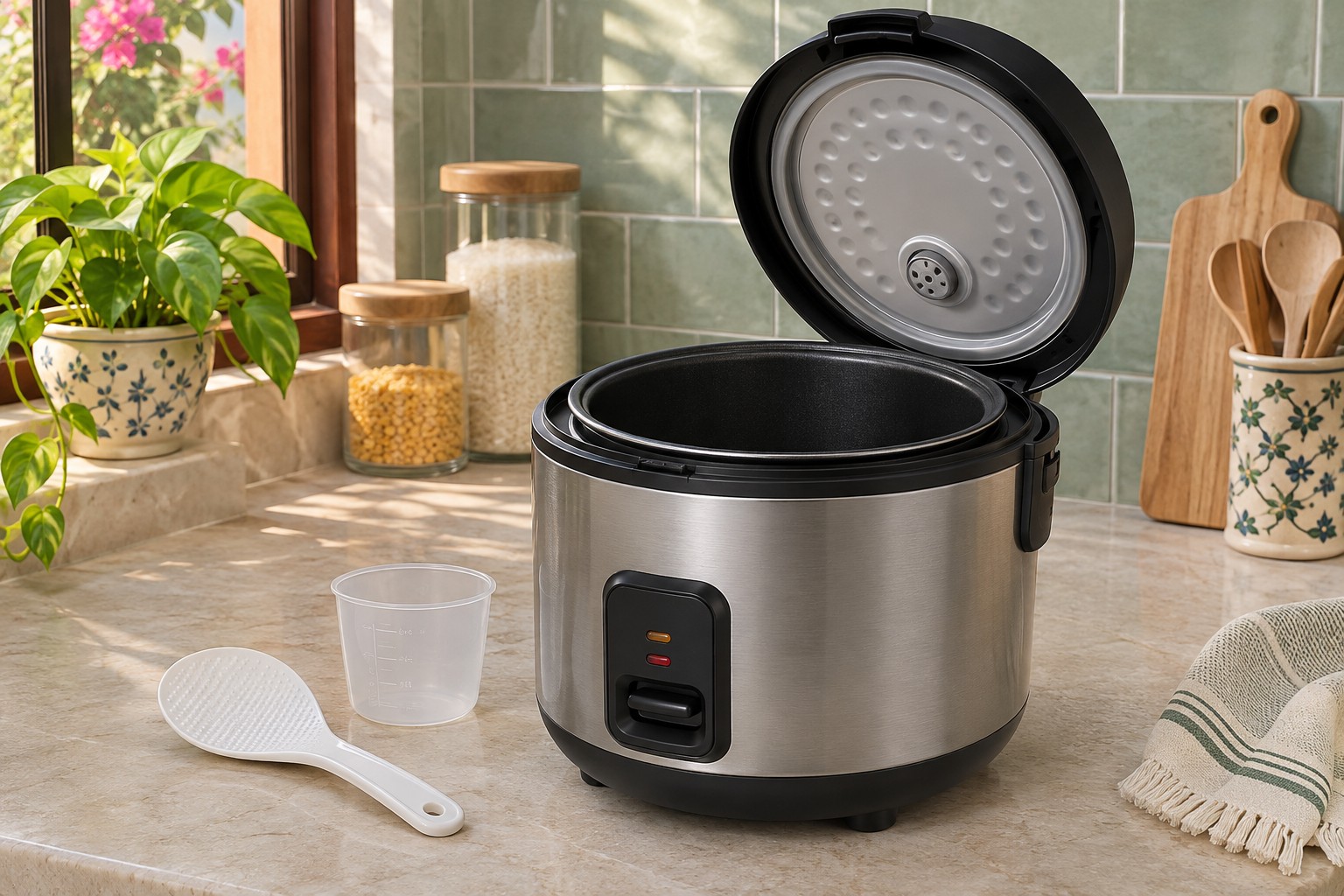
A rice cooker heats a removable inner pan and manages a cooking cycle before stopping or changing to a keep-warm function. Basic units may have a single cook switch; electronic models can offer programmes for different grains and textures. Some rice cookers also use induction or pressure internally, so do not assume all models have identical handling or lid rules.
In a Pakistani kitchen it can free a hob while plain basmati cooks, leaving the cook to manage salan and roti. A suitable model may support particular seasoned-rice recipes, but it does not automatically reproduce a large degchi's pulao method or layered dum biryani. Choose it for documented rice tasks and quantities rather than treating it as a universal pot.
Read capacity in the maker’s terms
Check whether the advertised cup capacity refers to uncooked rice and which measuring cup is used. Zojirushi's rice-cooker FAQ tells users to measure with its supplied cup and follow the appropriate water markings. A household drinking cup and an appliance rice cup are not interchangeable without checking their volumes. The markings also belong to particular rice programmes.
As an editorial buying exercise, measure the household's ordinary uncooked-rice batch and compare it with both the minimum and maximum permitted amounts. An oversized cooker may be inconvenient for a small daily quantity. Check the inner-pan coating, handles, steam vent, detachable lid parts and replacement availability. If a steamer basket is supplied, verify the combined water, food and rice limits rather than filling every component independently to its maximum.
Prepare the pan and rice consistently
Wash or prepare the rice according to the recipe and rice-cooker instructions, using a separate bowl if the maker advises against washing in the coated pan. Measure rice accurately and add water using the relevant programme guidance. Basmati type, soaking and desired texture can affect recipe choices, so start with a manufacturer-supported method and adjust only within its permitted range.
Dry the outside of the inner pan before seating it in the base and ensure no grains or debris lie on the heating contact surface. Fit the lid and removable steam parts correctly. Put the cooker on a stable dry counter with room for steam to escape safely, away from overhead materials that could be damaged. Never pour rice or water directly into the electrical base without the inner pan.
Cook, rest and handle leftovers safely
Select the correct cycle and leave the steam outlet unobstructed. Keep hands and face away from escaping steam, and open the lid as directed after the cycle. Allow any prescribed resting period before fluffing gently with the supplied or otherwise suitable non-scratching paddle. Do not place a cloth over a steam vent to catch condensation unless the manufacturer explicitly provides such an accessory.
Keep-warm is a specific function with model and food restrictions, not indefinite storage and not necessarily a reheating programme. Food Standards Scotland advises removing rice from a cooker or pan for prompt cooling when it will be stored. Follow its safe chilling guidance rather than leaving an unplugged cooker full of rice on the counter. Do not assume repeated reheating makes poorly stored rice safe.
Clean the lid as well as the bowl
Switch off, disconnect and cool before cleaning. Wash the inner pan gently by the approved method, clean detachable lid and steam parts, and wipe the base without immersing it. Zojirushi's maintenance guidance highlights lid seals and model-specific care. Rinse detergent from food-contact surfaces and dry every part before refitting. Avoid metal scraping and preserve legible water markings.
A scratched or peeling inner coating, distorted pan, damaged lid seal, blocked steam parts or unreliable switching needs replacement-part or service advice. There is no universal lifespan. A rice cooker offers repeatable dedicated cooking and frees hob space, but needs storage, cleaning and electrical power and may not suit every rice style. A well-fitting lidded saucepan remains an effective substitute for smaller quantities. An electric multicooker can cover more tasks, but its pressure and programme rules add complexity. Choose the appliance that supports your actual daily rice routine.
Frequently Asked Questions
Does a rice cup mean my normal mug?
Use the supplied measuring cup or confirm its exact volume and the manual’s measurements.
Can I leave rice in an unplugged cooker overnight?
No. Follow safe cooling and refrigerated storage guidance for cooked rice.
Can every rice cooker make biryani?
Only use methods and loads supported by that model; a plain-rice programme is not a universal biryani method.
How we know this
- Type Explainer
- Sources 4
- Reviewed November 2026
- Disputed points None
4 sources
- Rice-cooker FAQ, Zojirushi
- Rice-cooker maintenance, Zojirushi
- Safe food storage, Food Standards Scotland
- Electrical safety in the kitchen, Electrical Safety First
Photo credits (1)
- Compact electric rice cooker with lid open revealing black removable nonstick inner bowl, rice paddle and small measuring cup beside, off., DailyLife.pk, All rights reserved
