
Kitchen item guide
Radiant electric hob: choosingusing and caring for it
Understand glass-ceramic radiant heating, pan contact and residual heat before fitting an electric cooking surface.
DailyLife.pk kitchen equipment collection
Radiant heating beneath glass
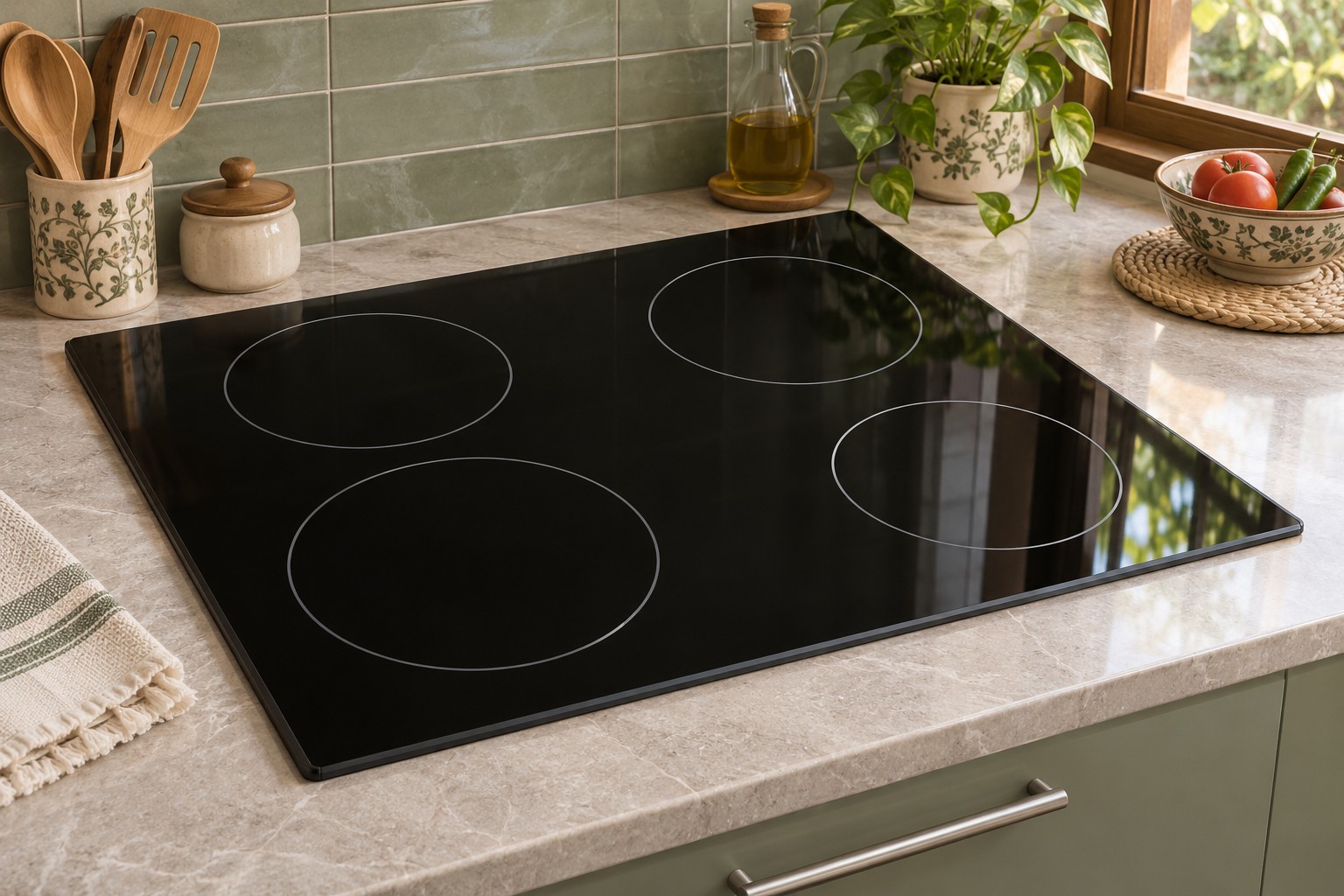
A radiant electric hob has electric heating elements beneath a glass-ceramic cooking surface. The hot zone transfers heat into suitable cookware resting above it. Although a black glass radiant hob can look like induction, the heating system is different: induction generates heat in a compatible magnetic pan, while radiant cooking heats the cooking surface. Confirm the technology on the specification sheet rather than guessing from its appearance.
For Pakistani meals it can simmer daal, boil potatoes, heat a tawa and cook a covered rice pot. Its smooth deck avoids exposed burner rings, but the glass becomes hot and retains heat after the control is reduced. That behaviour affects milk, dry masala and any recipe where stopping the heat promptly matters.
Match the base to the zone
Choose stable, clean, flat-bottomed pans whose base fits the indicated zone. Beko's ceramic-hob guidance explains cookware suitability and distinguishes hob-safe vessels from glass containers designed only for an oven. A bowl labelled ovenproof is not automatically a saucepan. Check both pan and hob instructions, particularly for cast iron, glass or unusual surface finishes.
As an editorial fit example, a broad tawa needs enough supported contact without covering controls, while a small milk pan should not sit on an unnecessarily large active zone. Inspect older degchis for warped bases. Rocking or a narrow contact ring can make cooking awkward even if the vessel material is otherwise suitable. A rounded karahi that stands happily on a gas support may be unsuitable on flat glass.
Evaluate the fitted appliance
Measure the worktop opening, cabinet space below, pan clearances and access to controls. Have a qualified electrician establish the required supply and protective arrangements. Multiple powerful electric cooking appliances should not simply be combined on an extension board. Electrical Safety First's kitchen guidance stresses keeping cords away from hot and wet areas and maintaining safe electrical installations.
Check how the model shows a hot zone, whether controls remain readable with a large pot present, and how accidental activation is prevented. Expandable zones can offer useful fit options, but compare their actual dimensions with your pans. Ask about replacement glass, controls, warranty conditions and local repair access. These practical matters are more useful than assuming every shiny surface offers the same cooking experience.
Adjust earlier during cooking
Begin with a dry pan and base, select the right zone, add ingredients and heat according to the recipe. Reduce before the food reaches the final intensity you need, then observe the response. When making chai, remain beside the saucepan and leave generous headroom. During bhunai, keep the masala moving and lower the setting before moisture disappears. A thick pan also holds heat, so the combined pan-and-hob response takes practice.
A red glow may cycle as a control maintains output; it does not necessarily mean the unit has stopped working when it dims. Conversely, a surface that no longer glows may remain hot. Use the residual-heat indication and the manual rather than a visual guess. Move a pan to a safe, unheated resting position only if that position is suitable and stable; do not set it over touch controls. Turn all zones off when finished.
Protect the surface and plan repairs
Let the hob reach the cleaning condition specified in its manual. Wipe spills using the approved glass-ceramic method, keep pan bases free of grit and lift heavy pots instead of dragging them. NEFF's ceramic cleaning advice excludes abrasive or aggressive products. Sugar and melted plastics may require a special immediate response, so read that part of the manual before the first spill occurs.
Never use cracked glass, faulty controls or a hob that trips its supply repeatedly. Isolate it as instructed and arrange qualified assessment. There is no dependable universal replacement age; cracking, damaged wiring and unavailable essential parts are more meaningful signs. Radiant cooking offers a flat, easily surveyed deck and broader cookware compatibility than induction. Its drawbacks include retained heat and glass-care demands. A solid hotplate is a simpler alternative with similar thermal lag; induction may respond faster but requires compatible pans. Select around your cooking habits and electrical provision.
Frequently Asked Questions
Is every glass hob induction?
No. Radiant glass-ceramic hobs heat the surface using electric elements beneath it.
Can I use ovenproof glass on it?
Only if both the cookware and hob instructions explicitly permit that use.
Why does the element glow on and off?
Some radiant controls cycle their output. Consult the manual, and continue to treat the surface as hot.
How we know this
- Type Explainer
- Sources 3
- Reviewed November 2026
- Disputed points None
3 sources
- Pans for ceramic hobs, Beko
- Cleaning induction and ceramic hobs, NEFF
- Electrical safety in the kitchen, Electrical Safety First
Photo credits (1)
- Black glass radiant ceramic electric hob with four outlined circular cooking zones, all switched off, no induction branding., DailyLife.pk, All rights reserved
