
Kitchen item guide
Pour-over cone: matching filters and controlled brewing
A supported cone, suitable paper and measured pouring make manual filter coffee easier to repeat.
DailyLife.pk kitchen equipment collection
Coffee through a filter
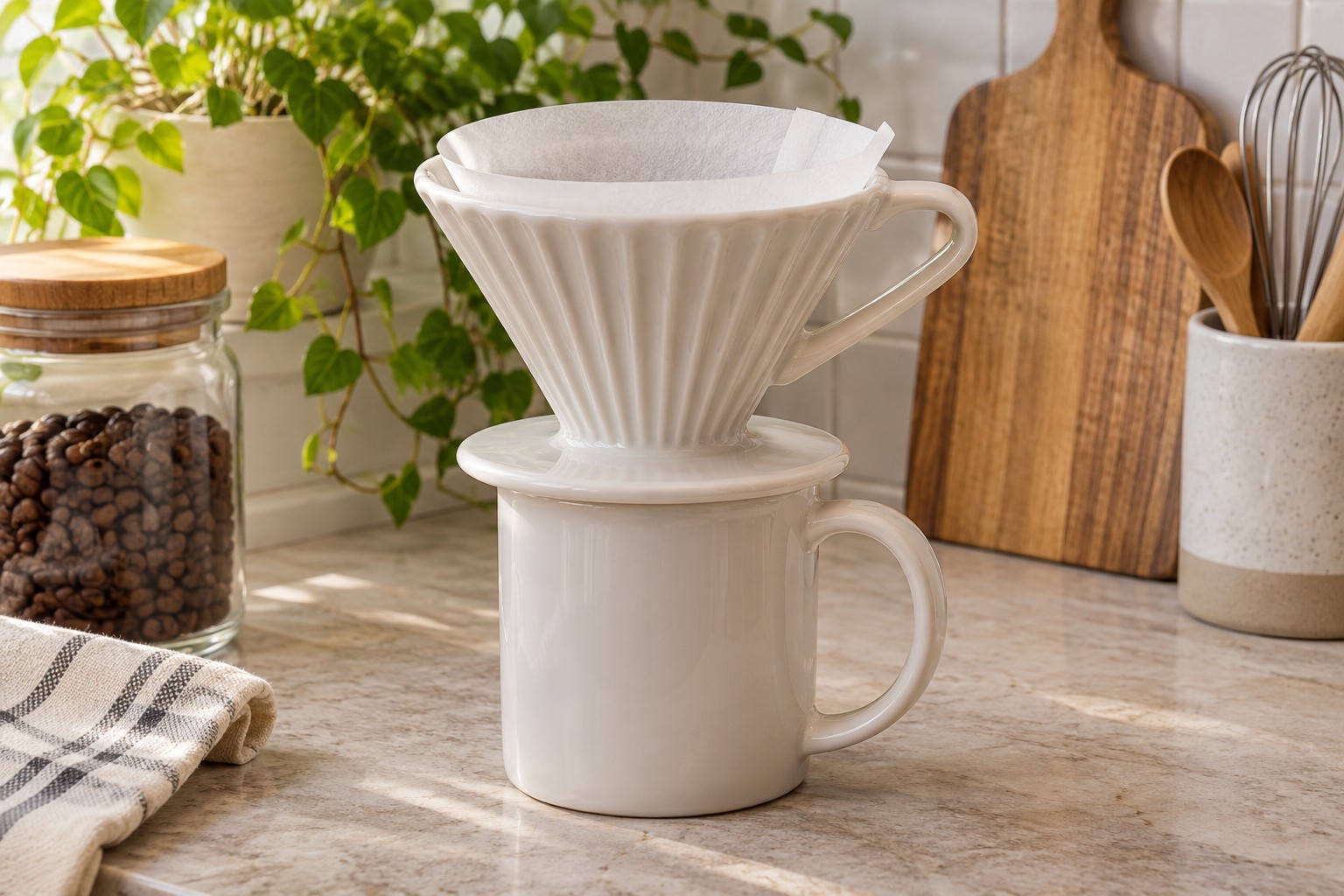
A pour-over cone holds a filter and ground coffee above a cup or server. Hot water passes through the coffee bed and the brewed drink drains below. It needs no electric brewing unit, but it does need a safe hot-water source and attention while pouring. In a Pakistani kitchen, it can be a compact alternative to a full coffee machine for an occasional fresh cup. It is a filter brewer rather than a tea strainer: the cone shape, drainage holes and matching paper all influence how the water moves.
Match cone and paper
Cones come in ceramic, plastic, glass and metal, with one large outlet or several smaller holes. Filters may be pointed or flat at the bottom; a paper that happens to fit inside can still fold badly or block drainage. Reusable mesh inserts make a different style of cup and require thorough cleaning. Choose a model whose specified papers you can obtain again. As an editorial example, a small cone may suit a single mug, while a larger supported cone and server are more comfortable when brewing for two people.
Check the receiving vessel
Look at the support ring as carefully as the cone body. It should sit securely across your actual mug or server without wobbling or slipping inside. A narrow travel bottle may need an approved stand rather than balancing a broad cone on its rim. At a kitchenware or coffee-equipment seller serving Pakistan, confirm the cone size, required filter number, heat rating and cleaning method. Check whether the quoted set includes papers and a server. The attractive photograph may show accessories sold separately, including a scale, grinder and pouring kettle.
Begin with a reproducible recipe
Use suitable drinking water, fresh ground coffee and a measured recipe before adjusting by eye. Hario’s expert V60 guide gives an example using 15g coffee and 250ml water with medium-fine grounds and a matching size 02 paper. This is a named V60 starting recipe, not a required dose for every cone. Weighing water and coffee makes the next cup easier to compare. If you do not own scales, use consistent utensils initially, understanding that a spoonful of one coffee may weigh differently from another.
Set up before adding hot water
Stand the receiving vessel on a stable, heat-resistant counter with room for the full finished drink. Fit the correct filter, rinse or prepare it according to the brewing instructions and dispose of any rinse water before brewing. Add and level the coffee without compacting it. Keep the cone supported throughout the process. A low, controlled pour is easier to manage than water falling from a great height. Do not brew while holding the receiving cup in one hand; it needs a dependable base as its weight increases.
Control flow without overflow
Follow the chosen recipe’s wetting and staged-pouring method, leaving room below the filter rim. Watch the liquid level rather than adding the entire kettle regardless of drainage. A stalled bed is a reason to stop pouring, let it drain and review grind or paper fit for the next batch. Do not push the grounds down with a spoon to force hot liquid through. When dripping has finished, place the hot cone in a suitable dish before handling the server. Keep used grounds and paper away from children until cooled.
Adjust one thing at a time
If the result is weak, bitter or slow, review the recipe, grind and water quantity rather than replacing the cone immediately. Hario’s guide suggests a coarser grind when drainage is too slow; treat that as a starting adjustment for the stated method. Coffee freshness and personal preference also matter. A gooseneck kettle can help controlled pouring but adds another item to store and maintain. If you use a stovetop kettle, follow its manufacturer’s heating and safe-pouring directions; a brewing recipe does not override the kettle’s fill or handling limits.
Clean and decide whether it fits
Discard the cooled grounds and disposable filter appropriately. Wash the cone and server as their makers direct, including grooves and the lower outlet. Rinse and dry before storing where a ceramic edge will not be knocked against other utensils. Stop using a cracked body, loose support or damaged reusable mesh. A French press avoids recurring paper purchases but leaves more sediment; instant coffee needs less equipment and has a different preparation routine. Choose a pour-over cone when you enjoy the short hands-on brew and can keep the correct filters available.
Frequently Asked Questions
Can any cone-shaped paper fit?
Use the shape and size specified for the brewer; an approximate fit can obstruct drainage or collapse.
Must I buy a pouring kettle?
It can improve control, but a stable setup and careful compatible hot-water vessel come first.
Why does the cone overflow?
Stop pouring; review the paper fit, grind and recipe after the hot equipment is safe to handle.
How we know this
- Type Explainer
- Sources 2
- Reviewed November 2026
- Disputed points None
2 sources
- Expert V60 Brew Guide, Hario UK
- Care and Use, Le Creuset
Photo credits (1)
- Pour over cone displayed clearly in a clean kitchen setting., DailyLife.pk, All rights reserved
