
Kitchen item guide
Pot lid: ChoosingUsing and Caring for It
Replace a pot lid by actual rim fit, material and heat limits, keeping ordinary lids separate from pressure systems.
DailyLife.pk kitchen equipment collection
More than a cover
An ordinary pot lid limits splashes and changes how moisture escapes during cooking. In Pakistani kitchens it helps simmer dal, cover salan and manage rice cooking, while removing it can help a gravy reduce. Glass lets you see some activity without opening; metal can be lighter or more resistant to impact depending on construction. A lid does not guarantee a particular cooking time or turn a pot into a pressure cooker. Buy it for the vessel and recipe stage you actually need to cover, with a knob or handle you can grasp securely.
Measure the seating rim
Measure the pot’s lid seat rather than relying on the diameter printed on a different pan. An editorial comparison of 24 cm and 26 cm lids illustrates that a small nominal difference can still prevent proper seating. Check whether the lid rests inside a lip, over a rolled rim or on a stepped edge. It should sit without rocking or dropping into the pot. Universal stepped lids need the same cold-fit assessment. Check replacement knob attachment and whether screws or washers can contact food or condensation. A smooth fit matters more than matching the pot’s colour.
Use it for the recipe stage
Set the lid on the prepared pot without trapping a utensil unless the recipe deliberately calls for a gap. Adjust heat when a simmer is established and watch for starchy boil-over. Lift the lid away from your face, keeping fingers clear of the steam path. Let condensation drain safely back into the pot where appropriate, then place the lid on a prepared heat-resistant support. Do not balance it where it can slide toward a burner. A vent hole permits some steam movement but does not guarantee that a vigorous boil will remain contained.
Material and heat limits
Confirm oven permission separately for the lid, knob and any seal. A metal pan with an oven-safe body may still have a lid grip with a lower limit. Pyrex guidance gives product-specific precautions for hot glass, including avoiding abrupt temperature changes and damaged pieces. Do not place a hot glass lid on a wet surface or in cold washing water. Never attach an ordinary lid to a pressure cooker for pressure use. Hawkins guidance explains why pressure cooking requires its complete correctly closed system and clear release devices.
Clean, store and replace
Cool appropriately and wash the underside, vent, rim and handle joint. Remove trapped grease around screws without disassembling parts the maker does not permit. Dry before storage, and support glass lids so they cannot knock against hard cookware. Replace chipped or cracked glass, a distorted rim or a handle that cannot be securely repaired. A suitable plate is not automatically an oven or stovetop lid; use only an arrangement its maker permits. Buy an exact replacement where possible from a cookware or parts supplier, checking dimensions and returns online. The best time to replace a damaged lid is before another cooking session, while a safe cold-fit check is still possible.
Frequently Asked Questions
Can any same-diameter lid fit?
Check the actual rim seat and stability; nominal diameter alone is insufficient.
Can I weight it to create pressure?
No. Ordinary cookware must not be improvised into a pressure vessel.
Can hot glass go into cold wash water?
Avoid sudden thermal change and follow its maker’s instructions.
How we know this
- Type Explainer
- Sources 3
- Reviewed November 2026
- Disputed points None
3 sources
- Product safety and usage, Pyrex
- Important safeguards, Hawkins
- Safe use of cookware and bakeware, Health Canada
Photo credits (1)
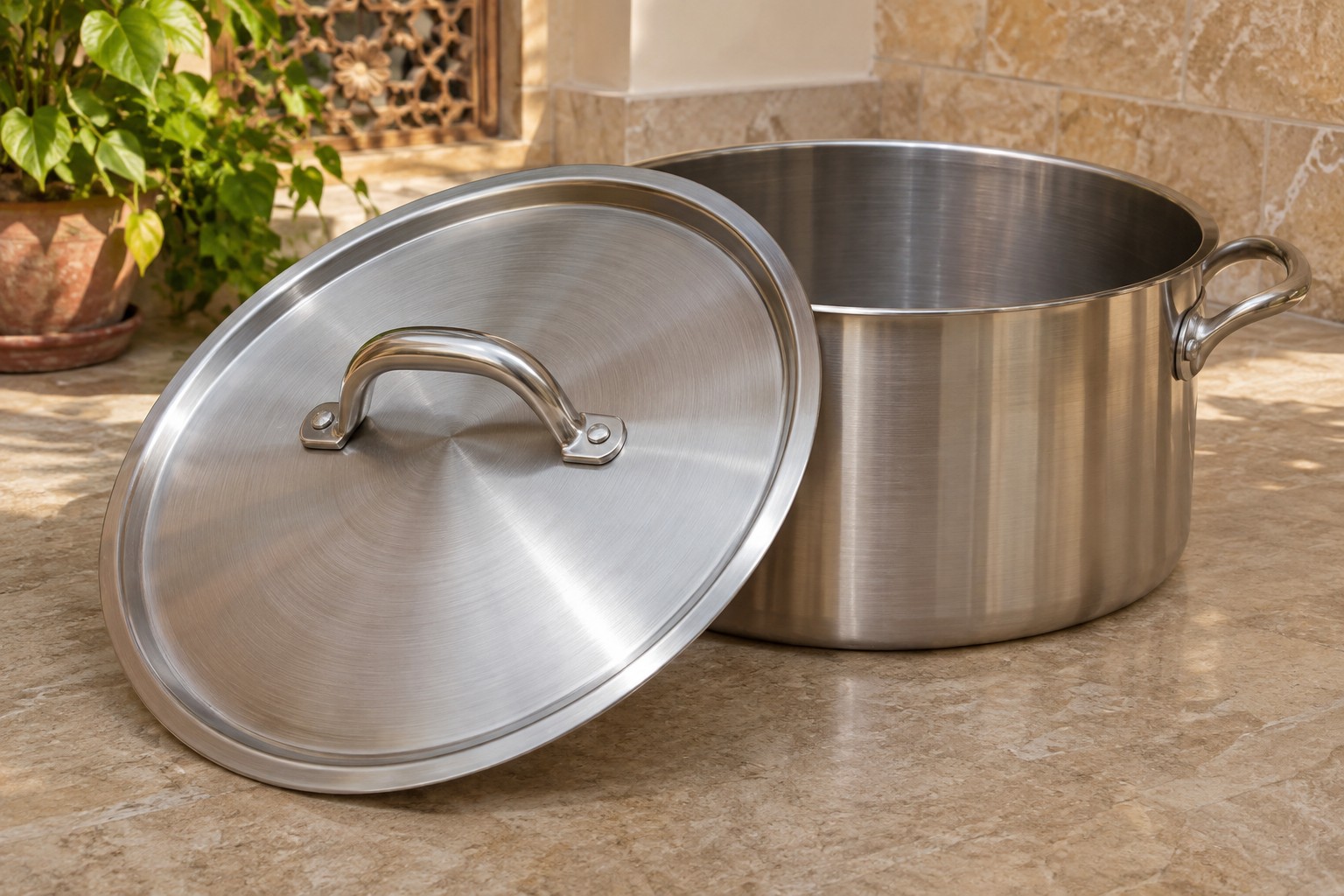
- a round stainless steel cooking pot lid with rolled edge and sturdy central loop handle, resting slightly tilted on a clean kitchen counter beside a compatible open straight-sided pot, DailyLife.pk, All rights reserved
