
Kitchen item guide
Patila: ChoosingUsing and Caring for It
Choose a straight-sided patila for everyday boiling and simmering, with attention to base quality and safe pouring.
DailyLife.pk kitchen equipment collection
An everyday straight pot
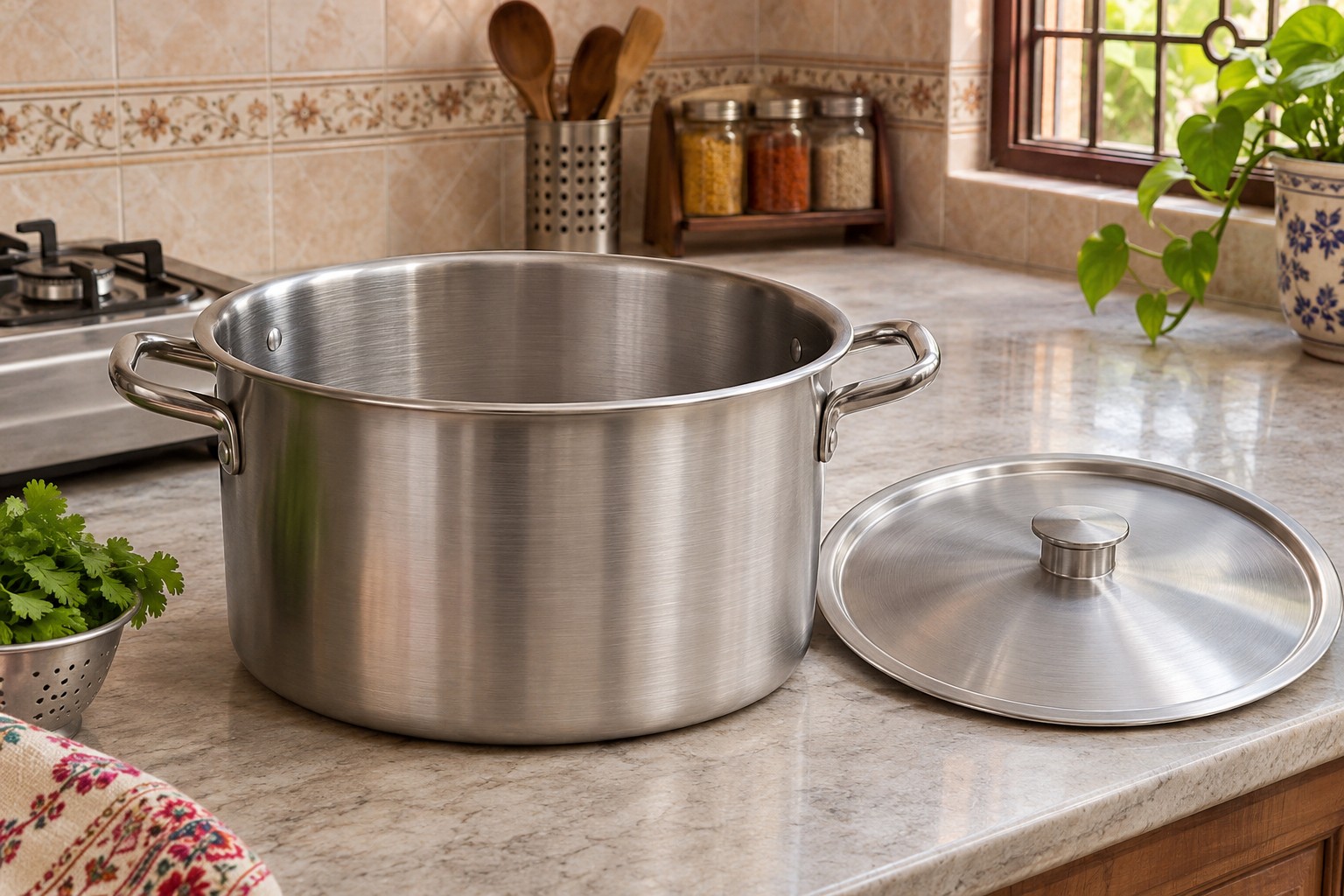
A patila is commonly understood as a relatively straight-sided cooking pot used for milk, dal, water and salan. Names overlap with degchi in Pakistani shops, so this guide focuses on the practical cylindrical shape. Its open mouth gives useful spoon access, while the depth provides more capacity than a frying pan on the same patch of hob. A small patila can serve daily chai preparation; a much larger one can handle a family curry. A single enormous pot is awkward for both jobs because a shallow amount of milk spreads over too much hot metal.
Choose the cooking surface
Stainless steel is convenient for a pot that changes between milk and savoury dishes, although stubborn milk residue still needs cleaning. Bare aluminium is lighter and common in household cookware, but it needs a different food-contact decision from stainless steel or coated aluminium. A heavy base can be useful when a recipe requires steady heat, but total weight is not proof of an even base. Ask how the base is constructed and which hobs are permitted. Hawkins guidance provides an example of instructions tied to a specified stainless steel range, rather than to every silver-coloured pot.
Capacity for normal cooking
Use a 2 litre versus 4 litre patila as editorial examples for comparing a small daily job with a larger household batch. Neither example predicts servings because dal thickness, milk quantity and other ingredients vary. Leave space for milk foam and boiling liquid to rise without reaching the rim. Check whether a ladle reaches the bottom without your hand sitting over the steam. A taller pot needs enough space below an overhead cabinet, and its lid should lift freely beneath the hood. Verify that the base sits securely on the hob supports when the pot is empty.
Control a simmer
Wash the new pot and check its handles before cooking. For milk, begin with the recipe quantity and remain nearby as it heats; the straight sides do not stop boil-over. Stir across the bottom with a suitable spoon when required. For dal, bring the recipe liquid and ingredients to a controlled simmer, then reduce heat and position the lid as the recipe directs. Scrape the junction between wall and base gently so a ring of food does not catch there. If the lid rattles and starchy liquid rises, lower the heat rather than pressing the lid down.
Pour and lift deliberately
Before lifting, switch off the heat, prepare a stable destination and use two secure handholds if the filled weight requires them. A pot without a pouring lip may dribble; ladling milk or curry into smaller containers can be more manageable than tipping a full vessel. Never grip a rolled rim with a loose cloth as a substitute for proper handles. On food contact, Health Canada guidance advises against extended cooking or storage in aluminium and against using it for acidic or salty food. The pot's material and condition matter more than a claim that it is traditional.
Remove milk and starch
Let the patila cool enough for safe cleaning. Loosen milk skin and dal residue with warm water and a method suitable for the surface instead of gouging it with a knife. Wash around rivets, beneath the rim and inside the lid. Dry thoroughly before nesting other cookware inside. Do not confuse removable rainbow discolouration on steel with a cracked base or deep pits. Retire a leaking seam or a handle joint that cannot be made secure through an appropriate repair. When saving a large cooked batch, divide it for prompt cooling as described by USDA FSIS guidance.
Buy one useful workhorse
A saucepan covers smaller jobs and gives a long handle for pouring; a stockpot supplies more depth for larger quantities. A patila sits between those roles when it has the right dimensions for your stove and cupboard. Inspect a shop sample for wobble, a sharp rolled edge and rough internal fittings. For an online purchase ask for capacity, base diameter, empty weight and photographs of the inside. Replacement lids are useful only if they really fit the rim. Choose an ordinary usable pot over an elaborate set when your recurring need is simply controlled daily boiling.
Frequently Asked Questions
Can I boil milk in a patila?
Yes, when its food-contact surface and hob use are appropriate; watch closely for foam and boil-over.
Is thicker always better?
Judge construction, balance and burner fit together. Weight alone does not establish quality.
Does every patila work on induction?
No. Confirm the specific base is compatible with your hob.
How we know this
- Type Explainer
- Sources 3 (1 official/academic)
- Reviewed November 2026
- Disputed points None
3 sources
- Stainless steel tri-ply cookware manual, Hawkins
- Safe use of cookware and bakeware, Health Canada
- Can you put hot food in the refrigerator?, USDA FSIS
Photo credits (1)
- a plain brushed stainless steel straight-sided cylindrical patila cooking pot with rolled rim and two small side handles, matching flat lid resting beside it, DailyLife.pk, All rights reserved
